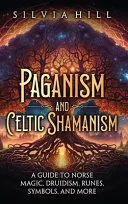
Paganism and Celtic Shamanism
 71
71

Paganism and Celtic Shamanism
Silvia Hill's Paganism and Celtic Shamanism attempts to bridge the gap between historical pagan traditions and modern magical practice, with a particular focus on Celtic shamanism. The book's strength lies in its accessibility; it presents complex ideas without overwhelming the reader, making it a useful introduction for those new to these specific paths. The discussion on the symbolic resonance of the Celtic Ogham script as a tool for divination and spiritual insight is particularly well-handled. However, the work occasionally simplifies historical nuances for the sake of narrative flow. For instance, the distinction between reconstructed Norse paganism and the more speculative nature of some modern Druidic interpretations could be more rigorously delineated. Despite this, the book offers a coherent framework for understanding how ancient European spiritualities can inform contemporary magical work, providing a grounded perspective on the evolution of pagan practices.
📝 Description
71
Silvia Hill's 2023 book examines paganism and Celtic shamanism.
This 2023 work by Silvia Hill investigates ancient European spiritual paths and their current relevance. Hill looks at various pagan traditions, including reconstructed Norse practices and nature-centered Druidry. She emphasizes Celtic shamanism as a unique system for spiritual development and magical skill. The book compares these traditions within the framework of pre-Christian European beliefs and their modern revival.
Readers interested in the origins of European paganism and its varied forms will find this book useful. Those seeking to connect Norse, Celtic, and Druidic traditions will discover pertinent details. The text is for individuals wanting to understand European shamanic practices, distinct from those found in other cultures. It also suits modern witchcraft and neo-pagan practitioners aiming to enrich their magical work with historical and cultural context.
The book emerges from the late 20th century's revival of pagan and nature-based spiritualities. It considers academic research on early European religions, especially Norse mythology and ancient Celtic societies. The renewed interest in shamanism, initially focused on Siberian and Indigenous American cultures, serves as a backdrop. Hill addresses how these concepts were adapted in Europe, noting influences on groups like the Order of Bards, Ovates & Druids.
💡 Why Read This Book?
• Gain a structured understanding of Celtic shamanism as presented by Silvia Hill, moving beyond general paganism to a specific, culturally-rooted practice. This offers a unique lens for spiritual exploration absent in broader esoteric texts. • Learn about the interconnections and distinctions between Norse paganism, Druidry, and Celtic shamanism, providing historical context and comparative insights not found in single-tradition guides. • Discover practical applications for spiritual growth and magical evolution, grounded in specific concepts like animism and the significance of sacred landscapes as discussed within the book's framework.
⭐ Reader Reviews
Honest opinions from readers who have explored this book.
❓ Frequently Asked Questions
What is the primary focus of Silvia Hill's Paganism and Celtic Shamanism?
The book primarily focuses on exploring ancient European spiritual traditions, with a significant emphasis on Celtic shamanism. It examines how these practices can be understood and applied for modern spiritual growth and magical development.
How does the book differentiate Celtic shamanism from other shamanic traditions?
Hill distinguishes Celtic shamanism by rooting it in the specific cultural, mythological, and archetypal landscape of Celtic peoples, rather than drawing solely from traditions of the Americas or Siberia. It emphasizes connection to the land and specific Celtic symbolism.
What historical pagan traditions are discussed alongside Celtic shamanism?
The book also explores Norse paganism and Druidry, presenting them as related but distinct paths within the broader spectrum of ancient European spirituality. This comparative approach provides context for Celtic shamanism.
Is Paganism and Celtic Shamanism suitable for beginners?
Yes, the book is designed to be accessible to beginners interested in paganism and shamanic practices. It offers a clear introduction to key concepts and historical contexts without requiring prior extensive knowledge.
When was Paganism and Celtic Shamanism first published?
Paganism and Celtic Shamanism by Silvia Hill was first published on May 31, 2023.
What kind of magical practices might readers learn about?
Readers can expect to learn about practices related to spiritual growth, connection with nature, divination, and healing, all framed within a Celtic shamanic worldview and drawing upon ancient European spiritual archetypes.
🔮 Key Themes & Symbolism
Celtic Shamanic Pathways
This theme centers on understanding Celtic shamanism not as a direct historical relic but as a modern spiritual framework rooted in Celtic culture. It explores the concept of the shaman as a mediator between worlds, focusing on practices like journeying, divination, and healing. The work emphasizes the unique archetypal field of Celtic mythology, including figures and sacred places, as integral to this path. It suggests that by engaging with these elements, practitioners can foster a deeper connection to the land and their own spiritual potential, distinct from other shamanic traditions.
Comparative European Paganism
The book situates Celtic shamanism within a broader context of European pagan revivals, notably Norse paganism and Druidry. This comparative approach highlights both shared animistic beliefs and distinct cultural expressions. It examines how these traditions, often originating from reconstructed historical sources and modern spiritual insights, offer diverse routes to spiritual growth. By contrasting them, the text illuminates the unique characteristics of Celtic shamanism while also showing its place within the larger set of contemporary neo-paganism and nature-based spirituality.
Spiritual Evolution and Magic
A core theme is the potential for personal and spiritual evolution through engagement with ancient pagan paths. The book posits that practices derived from Norse, Druidic, and Celtic shamanic traditions can serve as catalysts for developing magical abilities. This evolution is framed not merely as acquiring skills but as a deeper alignment with natural cycles and spiritual forces. Concepts like animism and the sacredness of the natural world are presented as foundational elements that support this transformative process, encouraging a more potent and integrated magical practice.
Animism and Sacred Nature
The pervasive theme of animism underscores the belief in the inherent spirit or consciousness within all natural phenomena – plants, animals, stones, and landscapes. This perspective is crucial for understanding Celtic shamanism and its connection to the land. The book explores how recognizing the sacredness of nature fosters a reciprocal relationship between the practitioner and the environment. This worldview is presented as essential for effective shamanic work, enabling deeper communion with the spirit world and facilitating healing and insight drawn directly from the earth.
💬 Memorable Quotes
Direct passages from the work, attributed to the author.
“Ancient pagan religions offer many ways for spiritual growth and the evolution of one's magical practices.”
— This statement captures the book's central premise: that historical pagan traditions are not mere relics but vibrant sources for contemporary spiritual and magical development. It suggests a practical, evolutionary approach to magic.
“From Norse paganism to Druidry to Celtic shamanism...”
— This phrase highlights the comparative nature of the work, indicating its scope across several related but distinct European pagan paths. It sets the stage for exploring their unique characteristics and interconnections.
“Celtic shamanism provides a distinct path for magical development.”
— This interpretation emphasizes the unique contribution of Celtic shamanism within the broader pagan landscape. It suggests that this specific tradition offers particular methods or perspectives for enhancing magical abilities.
💡 Key Ideas
Editorial paraphrase of the work's core concepts — not direct quotes.
The book explores the concept of the spirit in all things.
This paraphrased concept points to the animistic worldview central to the discussed traditions. It signifies a belief system where nature is imbued with consciousness, forming a foundation for shamanic practice.
Modern applications of ancient European spiritualities.
This paraphrase indicates the book's focus on bridging historical practices with contemporary life. It suggests an interest in how ancient wisdom can be actively used and adapted today.
🌙 Esoteric Significance
Tradition
The work fits within the broad umbrella of Western Esotericism, specifically engaging with neo-pagan and nature-based spiritual traditions. It draws from reconstructed pre-Christian European beliefs, particularly Celtic and Norse, and integrates concepts akin to shamanism. While not strictly Hermetic, Gnostic, or Kabbalistic, it shares the esoteric library's aim of exploring alternative spiritual paths that often operate outside mainstream religious frameworks, focusing on immanent divinity and direct experience.
Symbolism
Key symbols likely explored include the Ogham alphabet, often used in Celtic divination and magical practice, representing trees and their associated energies. Sacred landscapes, such as ancient stone circles or specific natural sites, function as symbolic loci of power and connection to the Otherworld. The concept of the Otherworld itself, a spiritual realm in Celtic mythology, serves as a potent symbol for the destination of shamanic journeys and the source of spiritual insight.
Modern Relevance
Contemporary thinkers and practitioners in neo-paganism, ecological spirituality, and modern shamanism draw upon the renewed interest in traditions like those discussed. Authors focusing on Celtic reconstructionism, animistic practices, and nature-based witchcraft often find resonance with the themes presented. The book's approach to integrating ancient archetypes with personal spiritual evolution is relevant to modern esotericists seeking embodied, nature-connected spiritual paths.
👥 Who Should Read This Book
• Aspiring practitioners of Celtic-based magic and spirituality seeking a foundational text that bridges historical concepts with modern application. • Students of comparative religion and paganism interested in the distinctions and connections between Norse, Druidic, and Celtic shamanic traditions. • Individuals exploring animistic worldviews and seeking to deepen their connection with the natural world through established esoteric frameworks.
📜 Historical Context
Published in 2023, Silvia Hill's work emerges during a period of sustained interest in neo-paganism and esoteric spirituality, a trend that gained significant traction from the late 20th century onwards. The book engages with the historical scholarship on early European religions, particularly the efforts to reconstruct Norse paganism and the practices of ancient Celtic societies. It implicitly acknowledges the work of scholars and practitioners who, since the mid-20th century, have sought to revive these traditions. Hill's exploration of Celtic shamanism occurs against the backdrop of a broader global interest in shamanism, which, since the ethnological studies of the early 20th century, has been increasingly examined and adapted within Western esoteric circles. This work contrasts with more purely academic or strictly reconstructionist approaches by focusing on the potential for modern spiritual practice, positioning itself alongside contemporary authors who explore nature-based magic and comparative European spirituality.
📔 Journal Prompts
Reflect on the concept of animism as presented in the text, considering its implications for your relationship with the natural world.
Consider the symbolic meanings attributed to the Ogham in Celtic shamanism and how they might inform your spiritual practice.
Explore the differences between Norse paganism, Druidry, and Celtic shamanism as discussed in the book. Which resonates most and why?
Journal about the potential for spiritual growth offered by engaging with ancient European paths.
How might the concept of the Otherworld, as understood in Celtic traditions, inform your understanding of altered states of consciousness?
🗂️ Glossary
Animism
The belief that all natural things—plants, animals, rocks, rivers, weather phenomena—possess an individual spirit or consciousness, and are imbued with spiritual energy.
Druidry
A spiritual or religious path associated with the ancient Celtic priests known as Druids. Modern Druidry often emphasizes reverence for nature, ancestor veneration, and the pursuit of wisdom.
Norse Paganism
A modern religious movement based on the pre-Christian religious practices of the North Germanic peoples (e.g., Vikings). It often involves worship of the Æsir and Vanir pantheon.
Celtic Shamanism
A contemporary spiritual practice that integrates shamanic techniques with the cultural and mythological archetypes of the ancient Celts, focusing on connection to the land and spirit realms.
Ogham
An ancient Celtic alphabet, primarily used for inscriptions on stone monuments. In modern practice, it is often used for divination and magical purposes, with each letter associated with a tree or plant.
Otherworld
In Celtic mythology, a supernatural realm often associated with spirits, deities, and the deceased. It is frequently accessed through sacred sites or during specific times.
Spiritual Growth
The process of developing one's understanding of spiritual matters, deepening one's connection to the divine or transcendent, and evolving one's consciousness and ethical framework.