Numerology Magick
 74
74

Numerology Magick
Kuriakos's *Numerology Magick* offers a structured approach to a subject often treated with vagueness. The author's strength lies in presenting numerology not as a divinatory tool alone, but as a foundational element for magical workings. The insistence on numbers as active forces, rather than passive descriptors, is compelling. However, the book occasionally suffers from a dense, academic tone that might alienate absolute beginners. A particular strength is the detailed breakdown of the 'Ninefold Path' and its correspondences, moving beyond simplistic chart-based numerology. While comprehensive, a more visual appendix detailing sigil construction based on these principles would have been beneficial. It’s a solid, theory-heavy addition for serious students.
📝 Description
74
Kuriakos's 2007 book connects numerical symbolism to practical occult results.
Numerology Magick examines how numbers, beyond simple calculation, are potent forces usable in occult work. Kuriakos argues that numbers possess inherent magical qualities and specific geometric forms that practitioners can consciously manipulate for magical effect. The book moves past abstract theory to detail practical applications for those engaged in Western esoteric traditions.
It is designed for practitioners of Hermeticism, Kabbalah, and ceremonial magic who wish to weave numerological principles into their existing magical frameworks. The author emphasizes a rigorous, theory-based approach, appealing to students interested in the philosophical underpinnings of numerical relationships. Individuals seeking a systematic method for applying numerology in their rituals will find this work particularly useful.
Published in 2007, Numerology Magick revives interest in practical number magic within Western esotericism. It draws on a lineage from Pythagorean philosophy and Neoplatonism, where numbers held cosmic importance. The book also engages with later figures like Eliphas Lévi, offering a more structured system for numerical magic than many preceding texts. It seeks to bridge the gap between theoretical number systems and tangible magical outcomes.
💡 Why Read This Book?
• Gain a framework for actively employing numerical forces in ritual, moving beyond simple calculation to understanding number as a magical agent, as detailed in the chapter on the 'Monad and its Manifestations'. • Learn to correlate specific numbers with planetary intelligences and elemental qualities, enabling more precise magical intent, a concept thoroughly explored in the sections on the 'Seven Liberal Numbers'. • Understand the geometric underpinnings of numerical magic, connecting sacred geometry to practical spellcraft and sigil creation, a core principle discussed throughout the book.
⭐ Reader Reviews
Honest opinions from readers who have explored this book.
❓ Frequently Asked Questions
What is the primary focus of Kuriakos's Numerology Magick?
The book focuses on the practical application of numerical symbolism in occult and magical practice, asserting that numbers are potent forces that can be consciously manipulated for specific magical outcomes.
Who would benefit most from reading Numerology Magick?
Practitioners of Western esotericism, students of Hermeticism and Kabbalah, and those interested in the philosophical and magical aspects of number theory will find this book particularly valuable.
Does the book explain how to calculate personal numerology charts?
While it discusses the inherent qualities of numbers, its primary emphasis is on using numbers as magical forces rather than solely for personal divination charts. It presupposes some familiarity with basic numerological systems.
What makes this book different from standard numerology guides?
Unlike typical guides that focus on interpretation of personal numbers, *Numerology Magick* treats numbers as active agents for magical construction and invocation, detailing their energetic signatures and correspondences.
When was Numerology Magick first published?
The work by Kuriakos was first published in 2007, placing it within a contemporary resurgence of interest in practical esoteric studies.
What esoteric traditions does Numerology Magick draw upon?
It draws heavily on Pythagorean philosophy, Neoplatonism, and Kabbalistic principles, integrating them into a system of practical magical application.
🔮 Key Themes & Symbolism
Number as Active Force
The core argument posits numbers not as inert mathematical concepts but as dynamic, sentient forces with distinct magical properties. Each number, from the foundational Monad (1) to the Ennead (9), is presented as a unique energetic signature capable of influencing reality when properly invoked. This perspective shifts numerology from a passive divinatory art to an active magical discipline, emphasizing conscious manipulation of these forces for specific outcomes.
The Monad and Divine Manifestation
The concept of the Monad, or the number One, is explored as the primordial source from which all other numbers and phenomena manifest. This section explores the symbolism of unity and singularity as the origin point of creation, reflecting Neoplatonic and Hermetic ideas of emanation. Understanding the Monad is presented as crucial for grasping the underlying structure of the cosmos and the potential for direct interaction with divine principles.
Sacred Geometry and Sigil Craft
The book connects numerical symbolism directly to sacred geometry, illustrating how numbers correspond to specific shapes and forms that hold inherent magical power. This understanding is then applied to the creation of sigils and talismans, where numerical correspondences are used to imbue magical diagrams with targeted energies. It provides a method for constructing potent magical tools based on mathematical and geometric principles.
Planetary and Elemental Correspondences
A significant portion of *Numerology Magick* details the established correspondences between numbers, planets, elements, and divine intelligences. This mapping allows practitioners to select specific numerical energies that align with their magical goals, whether invoking planetary influence or directing elemental forces. It serves as a practical guide for aligning magical operations with cosmic forces through numerical frameworks.
💬 Memorable Quotes
Direct passages from the work, attributed to the author.
“The Monad is not merely a number; it is the divine root from which all multiplicity springs.”
— This highlights the book's central thesis that numbers are active principles, not abstract concepts. It positions the number one as the ultimate source, aligning with mystical traditions that view unity as the origin of all existence.
“Each number possesses a distinct vibration, a unique color, and a specific resonance within the cosmic symphony.”
— This emphasizes the sensory and energetic nature attributed to numbers. It suggests that numerical forces can be perceived and interacted with through various means, not just intellectual calculation, forming the basis for magical invocation.
“To wield number is to engage with the architect's blueprint of creation itself.”
— This interpretation frames numerology as a tool for understanding and manipulating the fundamental laws governing reality. It elevates numerical practice to a profound level of engagement with cosmic order.
“The geometry of the Triangle (3) informs its potency in manifestation and synthesis.”
— This connects a specific number to its geometric form and subsequent magical application. It illustrates the book's method of deriving magical properties from the interplay of number and form.
“The Septenary order, reflecting the seven visible planets, provides a stable framework for magical operations.”
— This points to the significance of the number seven and its association with celestial bodies. It suggests that this numerical order is a fundamental structure for organizing and executing magical rituals.
🌙 Esoteric Significance
Tradition
This work is firmly rooted in the Western Esoteric Tradition, drawing heavily from Pythagorean and Neoplatonic philosophies, which posit numbers as fundamental building blocks of reality. It also integrates Kabbalistic concepts, particularly regarding the emanation of divine forces and the symbolic meanings of numerical sequences. While not strictly Theosophical, it shares the broader esoteric aim of uncovering hidden universal laws through symbolic systems.
Symbolism
Key symbols include the Monad (1), representing primordial unity and the divine source; the Triangle (3), symbolizing manifestation, synthesis, and the trinity of spirit, soul, and body; and the Septenary (7), representing the seven classical planets and their associated energies. The book explores how these numerical symbols are not abstract but possess potent, active magical qualities and geometric forms.
Modern Relevance
Contemporary practitioners of ceremonial magic, chaos magic, and Hermetic orders often utilize the principles outlined in *Numerology Magick*. Its systematic approach to numerical correspondences influences modern sigil craft, talismanic magic, and ritual design. Thinkers and practitioners focused on the intersection of mathematics, consciousness, and magical theory find its rigorous framework valuable for contemporary occult research and practice.
👥 Who Should Read This Book
• Students of Western Esotericism seeking to integrate numerical symbolism into their magical practice, particularly those familiar with Pythagorean or Kabbalistic concepts. • Practitioners of ceremonial magic and ritualists who desire a structured method for imbuing spells and talismans with specific numerical energies. • Researchers of occult philosophy interested in the practical applications of number theory beyond mere divination, focusing on number as a magical force.
📜 Historical Context
Published in 2007, *Numerology Magick* arrived during a resurgence of interest in practical occultism, a trend that saw many previously obscure texts gain wider readership. Kuriakos's work positions itself within a long lineage tracing back to ancient Pythagoreanism and the Neoplatonists, who viewed numbers as fundamental cosmic principles. It implicitly engages with figures like Eliphas Lévi, whose 19th-century work revitalized interest in Kabbalistic symbolism and occult correspondences, but offers a more systematized approach to numerical magic. Unlike purely historical or philosophical treatments of number, this book aimed at active practitioners. It emerged in an era where online communities and independent publishers facilitated the dissemination of esoteric knowledge, allowing such specialized works to find dedicated audiences beyond traditional academic or occult circles.
📔 Journal Prompts
Reflect on the Monad as the root of all manifestation in your personal cosmology.
Analyze the geometric form associated with the number Five and its potential magical applications.
Consider the planetary correspondences of the number Six and how they might influence ritual intention.
Explore the concept of 'Number as Force' in relation to your own magical workings.
Meditate on the Triadic (3) principle and its presence in your lived experience.
🗂️ Glossary
Monad
The number One, representing primordial unity, the divine source, and the absolute principle from which all multiplicity emanates in esoteric thought.
Septenary
Pertaining to the number seven, often associated with the seven classical planets, seven days of the week, and fundamental structures in esoteric cosmology and magical systems.
Ennead
The number Nine, often seen as the culmination of the single digits and representing completion, universal love, and spiritual wisdom in numerological systems.
Number as Force
The concept that numbers are not merely abstract quantities but possess inherent energetic properties and active magical potential that can be consciously directed.
Sigil Craft
The practice of creating magical symbols (sigils) often based on specific intentions, where numerical and geometric correspondences can be employed to amplify their power.
Emanation
In esoteric philosophy, the process by which reality flows or issues forth from a divine or ultimate source, often described in terms of sequential steps or levels.
Pythagorean Philosophy
An ancient philosophical system emphasizing the importance of numbers and mathematical relationships as the underlying principles of the universe and the key to understanding reality.
🔮 Readers Also Liked
Browse all →








More by Kuriakos
All books →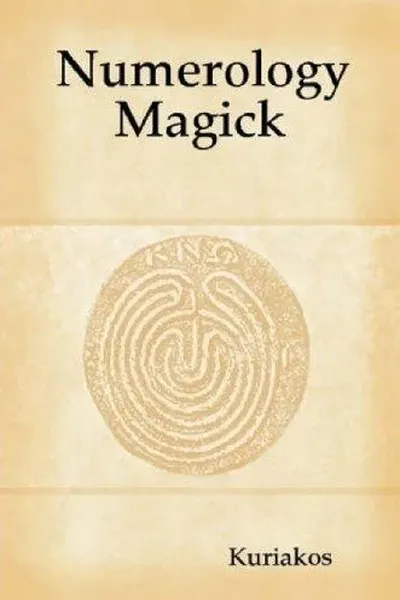





More Free Occult Philosophy Books
View all →