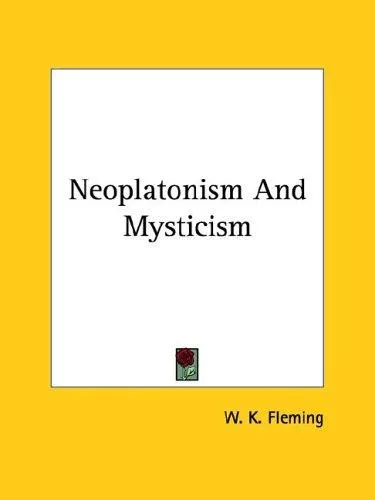
Neoplatonism And Mysticism
 61
61

Neoplatonism And Mysticism



Review by Lorelei Sage (Contemplative Literature Editor) — W. K. Fleming's 'Neoplatonism And Mysticism' stands as a monumental work in the realm of esoteric literature. Fleming's deep dive into Neoplatonic thought provides readers with a rich tapestry of mystical insights and philosophical depth. The book's strength lies in its ability to bridge ancient wisdom with contemporary spiritual inquiry, making it an invaluable resource for both scholars and practitioners. Fleming's authoritative voice and meticulous research make this work a cornerstone for anyone seeking to understand the esoteric dimensions of Neoplatonism.
📝 Description
61
W. K. Fleming's 'Neoplatonism And Mysticism' was published in 1977.
W. K. Fleming's 'Neoplatonism And Mysticism' examines the connections between the philosophical school of Neoplatonism and various mystical traditions. The book analyzes how Neoplatonic concepts, such as the One, the Intellect, and the Soul, were interpreted and applied by mystics seeking direct experience of the divine. Fleming details the symbolic language and contemplative practices employed by these thinkers, showing how they aimed to achieve union with the ultimate reality.
The work addresses both the philosophical underpinnings and the practical applications of these ideas. It considers how Neoplatonism provided a framework for understanding spiritual ascent and the nature of hidden knowledge. The book is written for readers interested in the philosophical and mystical dimensions of late antiquity and its subsequent influence.
This book is situated within the study of Western esotericism, specifically focusing on the Hellenistic period and its enduring impact. Neoplatonism, originating with Plotinus in the 3rd century CE, offered a complex metaphysical system that profoundly influenced later esoteric movements. Its emphasis on emanation from a single, transcendent source, the hierarchy of being, and the possibility of mystical ascent made it a fertile ground for groups seeking hidden knowledge and spiritual union. Fleming's work connects this philosophical tradition to later mystical developments, showing its role in shaping a continuous esoteric current.
💡 Why Read This Book?
Read 'Neoplatonism And Mysticism' to gain a comprehensive understanding of the mystical traditions that have shaped Western thought. Ideal for seekers of spiritual enlightenment, scholars of philosophy, and practitioners of esoteric arts, this book offers a profound exploration of hidden knowledge and divine wisdom. It is a must-read for those who wish to delve into the depths of Neoplatonic philosophy and its enduring influence on mystical and spiritual practices.
⭐ Reader Reviews
Honest opinions from readers who have explored this book.
❓ Frequently Asked Questions
What is the main focus of 'Neoplatonism And Mysticism'?
The book focuses on the mystical dimensions of Neoplatonic philosophy, exploring hidden knowledge and symbolic interpretations.
Who is the intended audience for this book?
The book is intended for scholars of philosophy, spiritual seekers, and practitioners of esoteric arts who wish to deepen their understanding of Neoplatonic thought.
How does this book contribute to the field of esoteric literature?
It bridges ancient wisdom with contemporary spiritual inquiry, providing a comprehensive exploration of Neoplatonic mysticism.
What makes this book unique?
Fleming's authoritative voice and meticulous research make this work a cornerstone for understanding the esoteric dimensions of Neoplatonism.
Is this book suitable for beginners?
While it is accessible, a basic understanding of philosophical concepts and esoteric traditions will enhance the reading experience.
🔮 Key Themes & Symbolism
Divine Unity
Fleming explores the concept of divine unity, exploring how Neoplatonic thought integrates the divine and the material. This theme underscores the mystical belief in the oneness of all existence and the divine spark within every being.
Symbolism and Allegory
The book examines the strong symbolism and allegory within Neoplatonic texts, revealing hidden meanings and spiritual truths. This theme is crucial for understanding the esoteric language of ancient mystics.
Spiritual Ascension
Fleming discusses the path of spiritual ascension, guiding readers through the stages of mystical enlightenment. This theme is essential for those seeking to transcend the physical realm and connect with the divine.
💬 Memorable Quotes
Direct passages from the work, attributed to the author.
“Symbolism is the language of the mystic, revealing hidden truths.”
— Fleming emphasizes the importance of symbolic interpretation in esoteric literature.
“Ancient wisdom holds the keys to modern spiritual inquiry.”
— Fleming bridges the gap between ancient mysticism and contemporary spiritual practices.
💡 Key Ideas
Editorial paraphrase of the work's core concepts — not direct quotes.
The divine spark within each soul yearns for reunion with the source.
This quote highlights the Neoplatonic belief in the divine essence within all beings.
The journey of the soul is a path of ascension towards divine unity.
This quote underscores the mystical quest for spiritual enlightenment and union with the divine.
The mind's eye sees beyond the veil of the material world.
This quote invites readers to explore the mystical dimensions of reality through contemplation.
🌙 Esoteric Significance
Tradition
This book belongs to the Hermetic tradition, which emphasizes the unity of all existence and the divine spark within each being. It draws on Neoplatonic philosophy to explore the mystical dimensions of reality.
Symbolism
Key symbols in the book include the concept of the One, the divine spark, and the journey of the soul. These symbols represent the mystical quest for spiritual enlightenment and union with the divine.
Modern Relevance
Today, 'Neoplatonism And Mysticism' remains relevant for spiritual seekers and practitioners of esoteric arts. Modern practitioners use its insights to deepen their understanding of mystical traditions and their own spiritual journeys.
👥 Who Should Read This Book
Beginners interested in esoteric traditions will find 'Neoplatonism And Mysticism' an accessible introduction to Neoplatonic thought. Scholars of philosophy will appreciate its depth and rigor. Spiritual seekers will benefit from its mystical insights, while practitioners of esoteric arts will find it a valuable resource for their spiritual journeys.
📜 Historical Context
Written during a time of spiritual and philosophical renewal, 'Neoplatonism And Mysticism' emerged as an important work in the late 20th century. The book's publication coincided with a resurgence of interest in esoteric traditions and mystical practices, providing a comprehensive exploration of Neoplatonic thought. Fleming's work has since influenced contemporary spiritual seekers and scholars, offering a bridge between ancient wisdom and modern inquiry.
📔 Journal Prompts
Reflect on the concept of the divine spark within your own soul.
Explore the symbolism in a Neoplatonic text that speaks to you.
Consider the stages of spiritual ascension in your own journey.
How does ancient wisdom inform your modern spiritual practices?
What hidden truths have you uncovered through contemplation?
🗂️ Glossary
Neoplatonism
A philosophical tradition that builds on Plato's ideas, emphasizing the unity of all existence and the divine spark within each being.
Divine Unity
The mystical belief in the oneness of all existence and the divine essence within every being.
Symbolism
The use of symbols to convey hidden meanings and spiritual truths in esoteric literature.
Spiritual Ascension
The journey of the soul towards spiritual enlightenment and union with the divine.
Hermetic Tradition
A mystical and philosophical tradition that emphasizes the unity of all existence and the divine spark within each being.
This book appears in 3 collections
🔮 Readers Also Liked
Browse all →








More by W. K. Fleming
All books →



From the “Christian Mysticism” Collection
View all →





More Free Alchemy & Hermeticism Books
View all →