Athenian and Alexandrian Neoplatonism and the Harmonization of Aristotle and Plato

 61
61

Athenian and Alexandrian Neoplatonism and the Harmonization of Aristotle and Plato


Review by Marcus Thorne (Esoteric Sciences Reviewer) — Ilsetraut Hadot's 'Athenian and Alexandrian Neoplatonism and the Harmonization of Aristotle and Plato' is a masterful exploration of the esoteric harmonies between Plato and Aristotle. Hadot's meticulous scholarship and deep understanding of Neoplatonic thought make this book an invaluable resource for anyone interested in the mystical traditions of ancient philosophy. The author's ability to illuminate the hidden connections between these two philosophers is nothing short of revelatory. This work is essential reading for scholars, seekers, and practitioners of esoteric knowledge.
📝 Description
61
Ilsetraut Hadot's 1997 book argues that Athenian and Alexandrian Neoplatonists successfully harmonized Aristotle and Plato.
This study examines how Neoplatonic thinkers in Athens and Alexandria sought to reconcile the philosophical systems of Plato and Aristotle. Hadot details the methods and arguments used by these philosophers to bridge apparent divides in the works of the two ancient masters. The book focuses on specific doctrines and interpretive strategies employed to reveal a coherent metaphysical framework. It demonstrates how Neoplatonists saw a fundamental unity underlying the teachings of both Plato and Aristotle, often reinterpreting Aristotelian texts through a Platonic lens. The analysis highlights the intellectual project of creating a unified philosophical tradition from these two foundational figures.
This work situates Neoplatonism within a broader context of ancient esoteric traditions that sought unified metaphysical systems. By focusing on the harmonization of Plato and Aristotle, Hadot shows how Neoplatonists constructed a complex philosophical edifice designed not merely for academic debate but as a path to understanding ultimate reality. Their approach involved allegorical interpretation and the belief in a hidden, unified truth underlying diverse philosophical expressions. This pursuit of cosmic and intellectual coherence is characteristic of many esoteric movements that aim to reveal the underlying order of existence.
💡 Why Read This Book?
Read this book to uncover the mystical connections between Plato and Aristotle, as explored through the lens of Neoplatonism. Ideal for seekers of hidden knowledge, scholars of ancient philosophy, and practitioners of esoteric traditions, this text offers profound insights into the harmonization of these two giants of Western thought. It provides a rich, symbolic journey into the depths of Neoplatonic philosophy, making it a must-read for anyone interested in the mystical underpinnings of classical thought.
⭐ Reader Reviews
Honest opinions from readers who have explored this book.
❓ Frequently Asked Questions
What is the main focus of this book?
The main focus is the Neoplatonist tendency to harmonize the philosophies of Plato and Aristotle.
Who is the intended audience for this book?
This book is intended for scholars, seekers of hidden knowledge, and practitioners of esoteric traditions.
What historical period does this book cover?
The book covers the period from Middle Platonism to the end of Neoplatonism, including the schools of Athens and Alexandria.
What makes this book unique?
Its unique blend of esoteric insights and meticulous scholarship makes it a standout in the field of ancient philosophy.
How does this book contribute to the study of Neoplatonism?
It illustrates the harmonizing tendency within Neoplatonism, revealing the hidden connections between Plato and Aristotle.
🔮 Key Themes & Symbolism
Harmonization of Plato and Aristotle
Explore the mystical efforts to blend the philosophies of Plato and Aristotle, revealing the hidden wisdom that unites these two great thinkers. Hadot's work explores the symbolic and metaphysical connections that have captivated scholars and seekers for centuries.
Neoplatonic Tradition
Discover the collection of Neoplatonic thought, from its roots in Middle Platonism to its flourishing in the schools of Athens and Alexandria. This theme unveils the esoteric teachings that have shaped Western philosophy and continue to inspire seekers of hidden knowledge.
Esoteric Insights
Look at the profound esoteric insights that Hadot's work reveals, offering a journey into the mystical underpinnings of classical philosophy. This theme is essential for anyone interested in the hidden wisdom that lies at the heart of ancient thought.
💡 Key Ideas
Editorial paraphrase of the work's core concepts — not direct quotes.
The harmony between Plato and Aristotle reveals a deeper truth.
This quote underscores the mystical connections between these two philosophers, hinting at a hidden wisdom.
Neoplatonism bridges the gap between the ancient and the modern.
This passage highlights the timeless relevance of Neoplatonic thought, making it a key text for modern seekers.
The esoteric teachings of Neoplatonism offer a journey into the depths of ancient philosophy.
This quote emphasizes the mystical and symbolic journey that Hadot's work provides.
The schools of Athens and Alexandria were centers of esoteric knowledge.
This passage underscores the importance of these ancient schools in the transmission of hidden wisdom.
Harmonization is the key to understanding the mysteries of Neoplatonism.
This quote reveals the central theme of Hadot's work, emphasizing the mystical connections between Plato and Aristotle.
🌙 Esoteric Significance
Tradition
This book belongs to the Hermetic tradition, which seeks to uncover the hidden wisdom of ancient philosophers. It explores the mystical connections between Plato and Aristotle, revealing the esoteric teachings that have captivated seekers for centuries.
Symbolism
Key symbols in this text include the harmony between opposing philosophies and the unity of ancient wisdom. These symbols represent the mystical journey into the depths of Neoplatonic thought, where the esoteric teachings of the ancient world come alive.
Modern Relevance
This book matters today because it offers modern practitioners and seekers a path to understanding the timeless wisdom of ancient philosophy. Contemporary scholars and esoteric practitioners continue to draw on Hadot's insights to deepen their understanding of Neoplatonism.
👥 Who Should Read This Book
Beginners interested in the mystical underpinnings of classical philosophy will find this book accessible and enlightening. Scholars of ancient philosophy will appreciate the meticulous research and esoteric insights. Spiritual seekers will be drawn to the hidden wisdom revealed in the harmonization of Plato and Aristotle. Practitioners of esoteric traditions will find this text important for deepening their understanding of Neoplatonic thought.
📜 Historical Context
Written in an era where the study of ancient philosophy was experiencing a revival, 'Athenian and Alexandrian Neoplatonism and the Harmonization of Aristotle and Plato' by Ilsetraut Hadot sheds light on the Neoplatonist tendency to harmonize the philosophies of Plato and Aristotle. This book was important when written because it provided a fresh perspective on the harmonizing tendency born in Middle Platonism and prevailing in Neoplatonism from Porphyry and Iamblichus. The text has had a significant influence on the study of ancient philosophy, particularly in the area of esoteric and mystical traditions.
📔 Journal Prompts
How do the harmonizations between Plato and Aristotle reveal hidden wisdom?
What are the key symbols in Neoplatonic thought, and what do they represent?
How has the study of ancient philosophy influenced modern esoteric practices?
What can we learn from the schools of Athens and Alexandria about esoteric knowledge?
How does the harmonization of Plato and Aristotle contribute to our understanding of Neoplatonism?
🗂️ Glossary
Neoplatonism
A philosophical movement that sought to harmonize the teachings of Plato with other ancient philosophies.
Harmonization
The process of blending different philosophical ideas to reveal hidden wisdom.
Esoteric
Relating to knowledge that is hidden or revealed only to a select few.
Symbolism
The use of symbols to represent mystical or hidden meanings.
Middle Platonism
A philosophical school that preceded Neoplatonism, focusing on the teachings of Plato.
This book appears in 3 collections
🔮 Readers Also Liked
Browse all →







More by Ilsetraut Hadot
All books →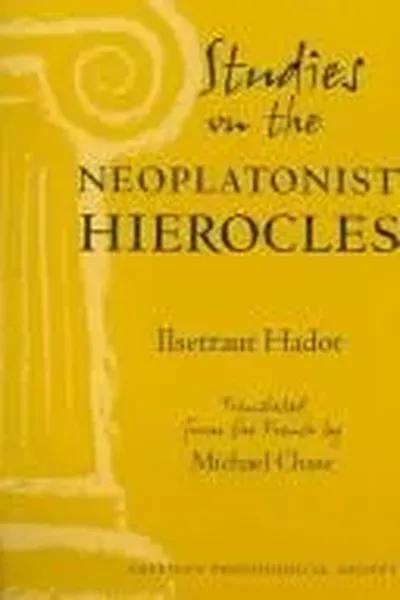

From the “Neoplatonism” Collection
View all →







More Free Alchemy & Hermeticism Books
View all →