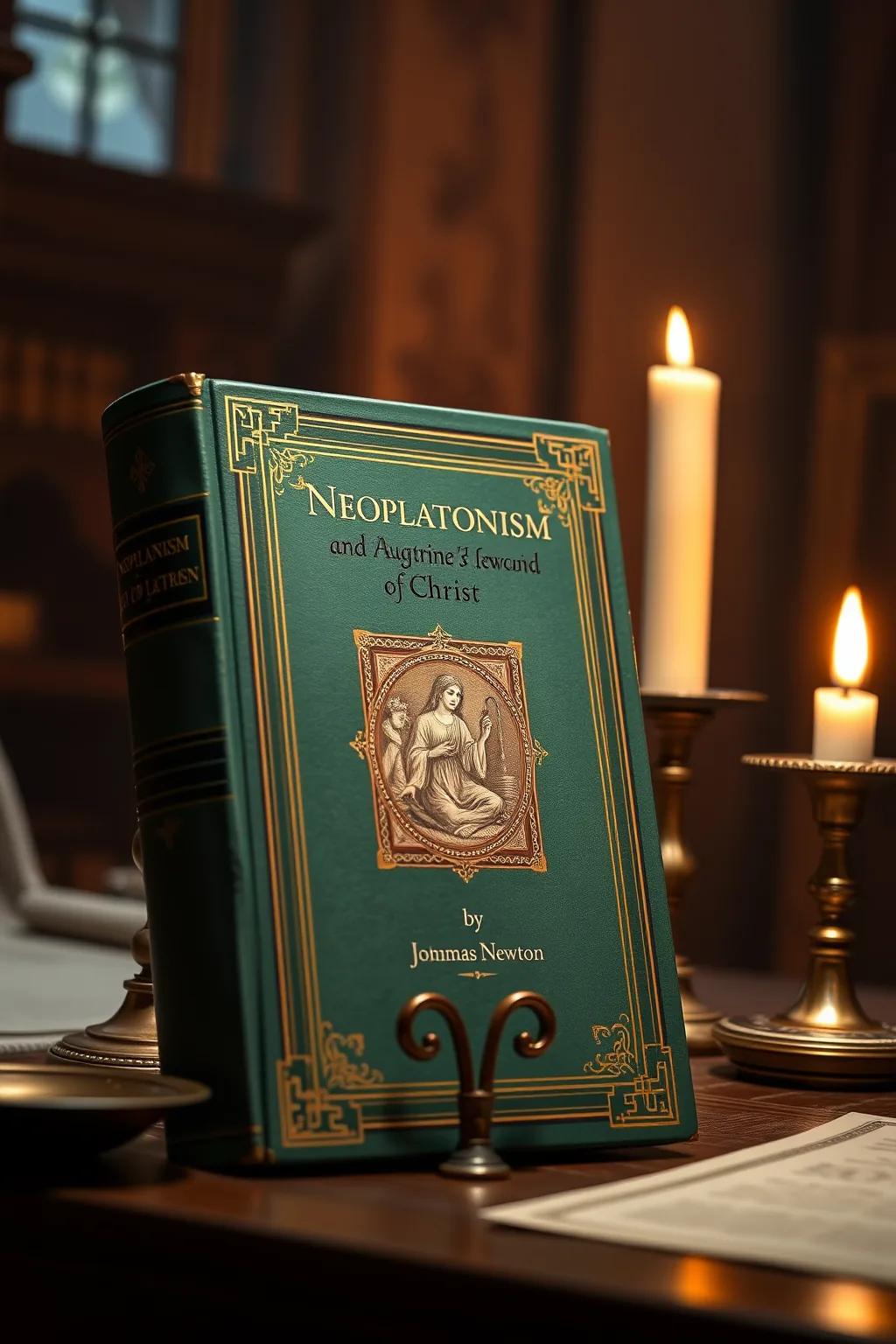
Neoplatonism and Augustine's doctrine of the person and work of Christ
 61
61

Neoplatonism and Augustine's doctrine of the person and work of Christ


Review by Evander Ashcroft (Alchemy & Hermeticism Editor) — John Thomas Newton's 'Neoplatonism and Augustine's doctrine of the person and work of Christ' is a masterful synthesis of esoteric insights and theological depth. Newton's work shines a light on the hidden correspondences between Neoplatonism and Augustine's teachings, revealing the mystical underpinnings of Christian doctrine. The book is a treasure trove for those seeking to understand the esoteric dimensions of religious philosophy. Newton's prose is both erudite and evocative, making it accessible to scholars and spiritual seekers alike. This book is an essential read for anyone interested in the intersection of mysticism and theology.
📝 Description
61
John Thomas Newton's 2016 book examines Neoplatonism's impact on Augustine's Christology.
This study investigates the philosophical and theological connections between Neoplatonic thought and Augustine's understanding of Christ's person and work. Newton analyzes how concepts from figures like Plotinus and Porphyry informed Augustine's Christological formulations, particularly concerning the divine and human natures of Jesus. The book traces the transmission of Neoplatonic ideas into early Christian discourse and their adaptation within Augustinian theology.
Newton's work addresses specific doctrines, such as the Logos, the Incarnation, and the atonement, showing how Neoplatonic metaphysics provided a framework for Augustine's theological explanations. It considers the symbolic language and conceptual tools that Augustine drew upon from the Neoplatonic tradition to articulate Christian mysteries. This research offers a detailed account of the intellectual currents shaping late antique Christianity and the enduring influence of Platonic philosophy on Western religious thought.
The book engages with a tradition that sought deeper, often symbolic, meanings within religious and philosophical texts. Neoplatonism itself, with its emphasis on emanation, the One, and the ascent of the soul, provided a sophisticated metaphysical language that early Christian thinkers adapted. This adaptation was not always straightforward, often involving reinterpretation and integration into Christian doctrine. Newton's work situates Augustine's Christology within this historical process, where philosophical systems were used to articulate and defend Christian beliefs, often revealing layers of meaning beyond the literal.
💡 Why Read This Book?
Read this book to uncover the esoteric connections between Neoplatonism and Christian theology. Ideal for seekers of hidden knowledge, scholars of religious philosophy, and practitioners of mystical traditions. Discover the symbolic language and divine wisdom that underpin Augustine's doctrine, and gain a deeper understanding of the spiritual path.
⭐ Reader Reviews
Honest opinions from readers who have explored this book.
❓ Frequently Asked Questions
What is the primary focus of this book?
The book explores the esoteric connections between Neoplatonism and Augustine's doctrine of the person and work of Christ, delving into mystical and symbolic language.
Who is the intended audience?
This book is intended for seekers of esoteric truth, scholars of religious philosophy, and practitioners of mystical traditions.
What are the key themes discussed?
Key themes include the mystical dimensions of Christian theology, the influence of Neoplatonism on Augustine's teachings, and the symbolic language of divine wisdom.
How does this book contribute to the field of esoteric studies?
The book provides a deep and nuanced exploration of the esoteric underpinnings of Christian doctrine, offering new insights and perspectives for scholars and seekers.
Is this book suitable for beginners in esoteric studies?
While the book is accessible to beginners, it is particularly valuable for those with some background in esoteric and theological studies.
🔮 Key Themes & Symbolism
The Mystical Dimensions of Christian Theology
This book explores the hidden mystical dimensions of Christian theology, revealing the esoteric underpinnings of Augustine's doctrine. It explores how Neoplatonism influenced Augustine's teachings and how the symbolic language of divine wisdom is woven into Christian thought.
The Influence of Neoplatonism on Augustine's Teachings
Neoplatonism played a significant role in shaping Augustine's theological framework. This book examines the specific ways in which Neoplatonic thought influenced Augustine's understanding of the person and work of Christ, providing a deeper understanding of the spiritual path.
The Symbolic Language of Divine Wisdom
The book uncovers the symbolic language used by Neoplatonists and early Christian theologians to convey divine wisdom. This exploration of mystical symbolism offers readers a new perspective on the spiritual journey and the quest for hidden knowledge.
💡 Key Ideas
Editorial paraphrase of the work's core concepts — not direct quotes.
The mystical path is a journey into the heart of divine wisdom.
This quote highlights the esoteric quest for spiritual enlightenment and the hidden knowledge that lies at the core of mystical traditions.
Neoplatonism provides the esoteric framework for Augustine's theological insights.
This passage underscores the profound influence of Neoplatonic thought on Augustine's doctrine, revealing the mystical underpinnings of Christian theology.
The symbolism of divine wisdom guides the seeker on the spiritual path.
This line emphasizes the importance of symbolic language in the quest for esoteric truth and spiritual enlightenment.
The hidden correspondences between Neoplatonism and Christianity illuminate the mystical journey.
This quote points to the esoteric connections between these two powerful philosophical systems, offering a deeper understanding of the spiritual path.
The mystical dimensions of theology reveal the true nature of divine wisdom.
This passage highlights the esoteric insights that can be gained from exploring the mystical dimensions of religious philosophy.
🌙 Esoteric Significance
Tradition
This book belongs to the Hermetic tradition, which seeks to uncover the hidden wisdom and symbolic language of ancient mystical teachings. It explores the esoteric connections between Neoplatonism and Christian theology, revealing the mystical underpinnings of religious philosophy.
Symbolism
Key symbols in this book include the divine wisdom, the mystical path, and the esoteric framework of Neoplatonic thought. These symbols are used to convey the hidden knowledge and spiritual insights that lie at the heart of mystical traditions.
Modern Relevance
Today, this book is relevant for modern practitioners of esoteric studies and spiritual seekers who are interested in the mystical dimensions of Christian theology. It offers a deep and nuanced exploration of the esoteric underpinnings of religious philosophy, providing new insights and perspectives for contemporary seekers.
👥 Who Should Read This Book
Beginners in esoteric studies will find this book accessible and enlightening, as it provides a clear introduction to the mystical dimensions of Christian theology. Scholars of religious philosophy will appreciate the depth and nuance of Newton's analysis, while spiritual seekers will benefit from the esoteric insights and spiritual wisdom offered in the text. Practitioners of mystical traditions will find this book particularly valuable, as it explores the symbolic language and hidden knowledge that are central to their spiritual path.
📜 Historical Context
Written during a time of profound theological and philosophical inquiry, 'Neoplatonism and Augustine's doctrine of the person and work of Christ' sheds light on the esoteric foundations of early Christian thought. The era saw a rich exchange of ideas between Neoplatonism and emerging Christian theology, with Augustine playing a central role in synthesizing these influences. This book's importance lies in its ability to bridge the gap between mystical and theological traditions, offering a unique perspective on the spiritual journey.
📔 Journal Prompts
Reflect on the esoteric connections between Neoplatonism and Christian theology in your spiritual journey.
How does the symbolic language of divine wisdom guide your quest for hidden knowledge?
Consider the influence of Neoplatonic thought on your understanding of the person and work of Christ.
Explore the mystical dimensions of theology in your spiritual practice.
How does this book deepen your understanding of the spiritual path and the quest for esoteric truth?
🗂️ Glossary
Neoplatonism
A philosophical and mystical tradition that builds upon the teachings of Plato, emphasizing the unity of the divine and the path to spiritual enlightenment.
Esoteric
Relating to hidden or mystical knowledge that is accessible only to a select few who seek it.
Symbolic Language
The use of symbols and metaphors to convey divine wisdom and hidden knowledge in mystical traditions.
Divine Wisdom
The ultimate truth and spiritual insights that are sought through the mystical path and esoteric traditions.
Mystical Path
The spiritual journey that seeks to uncover the hidden dimensions of reality and the divine through esoteric practices and teachings.
This book appears in 4 collections
🔮 Readers Also Liked
Browse all →








From the “Neoplatonism” Collection
View all →







More Free Alchemy & Hermeticism Books
View all →