Nature Spirits And What They Say

 84
84

Nature Spirits And What They Say
Weirauch's "Nature Spirits And What They Say" offers a surprisingly structured approach to a topic often relegated to romanticized folklore. The author’s attempt to categorize and systematically analyze nature spirits, particularly drawing on elemental theory, provides a solid framework for readers unfamiliar with such concepts. The section detailing methods of perceived communication, while speculative, is grounded in practical advice for developing inner sensitivity. A notable strength is the book's refusal to shy away from the potential challenges and ethical considerations of engaging with these entities. However, the work occasionally leans towards a more dogmatic presentation of these beliefs, presenting alleged phenomena as established fact without sufficient critical distance. The exposition on sylphs, for instance, feels particularly unassailable within its own framework. Despite this, the book serves as a valuable primer for those seeking a serious, if somewhat uncritical, introduction to the lore and perceived reality of nature spirits.
📝 Description
84
Wolfgang Weirauch's 2005 book explores conscious entities in nature.
Published in 2005, Wolfgang Weirauch's "Nature Spirits And What They Say" examines animistic beliefs about conscious entities within the natural world. The book moves past simple folklore to consider the philosophical and practical aspects of engaging with elemental beings and other nature intelligences. Weirauch structures his work to help readers understand the perceived characteristics, communication methods, and roles of these beings within both ecological and spiritual systems.
This text is for readers interested in esoteric traditions, animism, and comparative mythology. It appeals to those seeking a deeper understanding of folklore and the possibility of non-human consciousness in nature. It is especially useful for practitioners of nature-based spiritual paths, occultists, and scholars of comparative religion who want detailed accounts of supposed interactions and theoretical frameworks.
Emerging in the early 21st century, a time of renewed interest in traditional spiritualities and skepticism toward purely materialistic views, "Nature Spirits And What They Say" offers a perspective distinct from dominant scientific thought. The book connects to a historical current of thinkers who explored the unseen world, including figures like Eliphas Lévi and those within the Theosophical movement. It draws upon enduring folklore and esoteric interpretations of nature's inherent vitality.
💡 Why Read This Book?
• Gain practical methods for attuning to nature spirits, as detailed in Weirauch's discussion of intuitive communication techniques derived from elemental lore. • Understand the classification of elemental beings, such as gnomes and undines, and their attributed characteristics, moving beyond simplistic fairy tales. • Explore the ethical considerations and potential consequences of interacting with nature spirits, as presented in the text's cautionary advice.
⭐ Reader Reviews
Honest opinions from readers who have explored this book.
❓ Frequently Asked Questions
What are the four classical elemental spirits discussed in the book?
The book discusses the four classical elemental spirits: gnomes for earth, sylphs for air, salamanders for fire, and undines for water, detailing their perceived roles and natures.
When was Wolfgang Weirauch's Nature Spirits And What They Say first published?
Wolfgang Weirauch's 'Nature Spirits And What They Say' was first published in 2005, reflecting a renewed interest in esoteric and animistic traditions at the turn of the millennium.
Does the book offer practical advice for communicating with nature spirits?
Yes, the book provides guidance on developing intuition and sensitivity, suggesting methods for perceived communication beyond ordinary language, as explored in its chapters on interaction.
What is the primary focus of Nature Spirits And What They Say?
The primary focus is the systematic exploration of nature spirits, their characteristics, their place in animistic belief systems, and the potential for human interaction with them.
Is this book suitable for beginners in esoteric studies?
Yes, it serves as a comprehensive introduction for beginners interested in animism and elemental magic, presenting complex ideas in an accessible, albeit specialized, manner.
What philosophical underpinnings does Weirauch explore regarding nature spirits?
Weirauch delves into the philosophical basis for animistic beliefs, contrasting them with materialistic worldviews and exploring the concept of non-human consciousness in natural phenomena.
🔮 Key Themes & Symbolism
Elemental Beings and Their Realms
The work meticulously details the traditional classification of elemental spirits: gnomes of the earth, sylphs of the air, salamanders of fire, and undines of water. Weirauch elaborates on their distinct characteristics, temperaments, and the specific domains they inhabit within the natural world. It posits that these entities are not mere fantasies but conscious forces integral to the planet's energetic matrix, influencing weather, growth, and geological formations. The book provides specific attributes for each, moving beyond generic folklore to offer a more structured understanding of their perceived natures and functions.
Communication with Nature Intelligences
A significant portion of the book addresses the methodologies and challenges of communicating with nature spirits. Weirauch suggests that such interactions require a refined inner perception, emphasizing intuition, visualization, and energetic resonance over verbal discourse. The text offers practical exercises and philosophical considerations for developing the necessary sensitivity. It explores the idea that nature spirits communicate through subtle signs, synchronicities, and direct inner impressions, advocating for a respectful and focused approach to establishing contact.
Animism and Ecological Spirituality
Weirauch's work is deeply rooted in animistic principles, viewing the natural world as imbued with spirit and consciousness. It challenges the anthropocentric perspective, advocating for a recognition of the intrinsic value and agency of non-human life and natural phenomena. This perspective encourages a form of ecological spirituality where humanity's role is one of stewardship and harmonious coexistence, rather than dominance. The book presents nature spirits as key players in this ecological web, essential for understanding the vitality and interconnectedness of all life.
Ethical Engagement and Spiritual Discipline
The book underscores the importance of ethical conduct when dealing with nature spirits, warning against exploitation or disrespectful approaches. Weirauch frames interaction with these beings as a spiritual discipline, requiring sincerity, humility, and a genuine desire for understanding. It discusses potential dangers, such as psychic entanglements or misunderstandings, and advises on protective measures and the cultivation of inner strength. This ethical dimension is presented as crucial for fostering a balanced and beneficial relationship with the elemental realms.
💬 Memorable Quotes
Direct passages from the work, attributed to the author.
“The elemental spirits are not fanciful creations but active forces within the natural order.”
— This statement highlights the author's core assertion: that nature spirits possess a tangible reality and play an active role in the functioning of the physical and energetic world.
“True communion with nature's intelligences requires a silent, attentive heart.”
— This emphasizes the book's approach to communication, suggesting that inner stillness and receptivity are more vital than intellectual understanding or verbal exchange.
“Respect is the prerequisite for any meaningful exchange with the elemental kingdom.”
— This conveys the ethical framework proposed by Weirauch, stressing that a foundation of reverence and proper regard is essential for beneficial interactions.
“The world breathes with a life far more pervasive than commonly perceived.”
— This interpretation suggests the book's aim to broaden the reader's perception of life, indicating that consciousness and spirit are inherent in phenomena beyond the obviously animate.
💡 Key Ideas
Editorial paraphrase of the work's core concepts — not direct quotes.
Each element – earth, air, fire, water – hosts its own distinct order of beings.
This paraphrase points to the structured, categorized understanding of nature spirits presented in the book, differentiating them based on their elemental affiliations.
🌙 Esoteric Significance
Tradition
This work fits within the Western Esoteric tradition, particularly drawing from Hermeticism and Paracelsian elementalism. It extends the concept of elemental spirits, first systematically articulated by Paracelsus in the 16th century, offering a detailed, albeit speculative, taxonomy. Weirauch builds upon the Hermetic principle of correspondence, suggesting a deep interconnectedness between the human psyche and the elemental forces of nature. The book departs from purely philosophical interpretations by offering practical advice for interaction, aligning it with magical and animistic practices.
Symbolism
Central symbols include the four elements: Earth (represented by Gnomes, symbolizing stability, grounding, and material substance), Air (Sylphs, embodying intellect, communication, and ethereal motion), Fire (Salamanders, signifying passion, transformation, and spiritual energy), and Water (Undines, representing emotion, intuition, and the subconscious). These are not merely abstract concepts but are presented as inhabited realms, with specific symbolic meanings tied to their perceived functions and influences on the physical and spiritual planes.
Modern Relevance
Contemporary practitioners of neo-paganism, animism, and nature-based witchcraft often draw upon such texts for conceptual frameworks and practical guidance. Thinkers exploring ecological spirituality and the philosophy of nature find value in Weirauch's reassertion of nature's inherent consciousness. The book's emphasis on intuitive communication and ethical engagement with the non-human world appeals to modern discussions on interspecies communication and the need for a more holistic relationship with the planet.
👥 Who Should Read This Book
• Aspiring nature-based practitioners seeking to understand and potentially interact with elemental beings and nature spirits. • Students of comparative religion and mythology interested in the historical and philosophical underpinnings of animistic beliefs. • Esoteric researchers looking for structured information on elemental classifications and perceived communication methods beyond common folklore.
📜 Historical Context
Published in 2005, Wolfgang Weirauch's "Nature Spirits And What They Say" emerged during a period of increasing skepticism towards purely materialistic scientific explanations and a growing interest in alternative spiritualities. The book taps into a long tradition of animistic beliefs and elemental magic, which found significant expression in Western esotericism. Contemporaries like Manly P. Hall had already explored similar themes in the mid-20th century, though Weirauch's work offers a more focused and systematic examination of nature spirits themselves. The early 2000s saw a surge in nature-based spiritual movements and a renewed engagement with folklore, providing fertile ground for such a text. While not directly engaging with academic circles, the book implicitly challenged reductionist views prevalent in mainstream science, aligning with broader currents of New Age thought and neo-paganism that sought to re-enchant the natural world.
📔 Journal Prompts
The perceived characteristics of Sylphs and their association with air.
Methods for developing inner sensitivity to communicate with nature spirits.
The ethical considerations when approaching elemental beings.
Reflections on the concept of nature as a conscious entity.
Personal experiences or intuitions regarding the presence of nature spirits.
🗂️ Glossary
Elemental Spirits
Beings traditionally believed to inhabit and govern the four classical elements: Earth (Gnomes), Air (Sylphs), Fire (Salamanders), and Water (Undines).
Animism
The belief that natural objects, phenomena, and the universe itself possess an independent spiritual or conscious life.
Gnomes
Elemental beings associated with the earth element, often depicted as small, terrestrial guardians of minerals and subterranean realms.
Sylphs
Elemental beings of the air, conceptualized as ethereal entities connected to winds, weather, and the atmosphere.
Salamanders
Elemental spirits of fire, seen as embodying the transformative and energetic qualities of flames and heat.
Undines
Water elementals, traditionally associated with lakes, rivers, and oceans, embodying fluidity and emotional currents.
Intuitive Perception
The capacity to understand or know something immediately, without the need for conscious reasoning or sensory input, crucial for nature spirit communication.
🔮 Readers Also Liked
Browse all →









More by Wolfgang Weirauch
All books →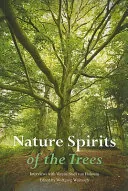

More Free Occult Philosophy Books
View all →