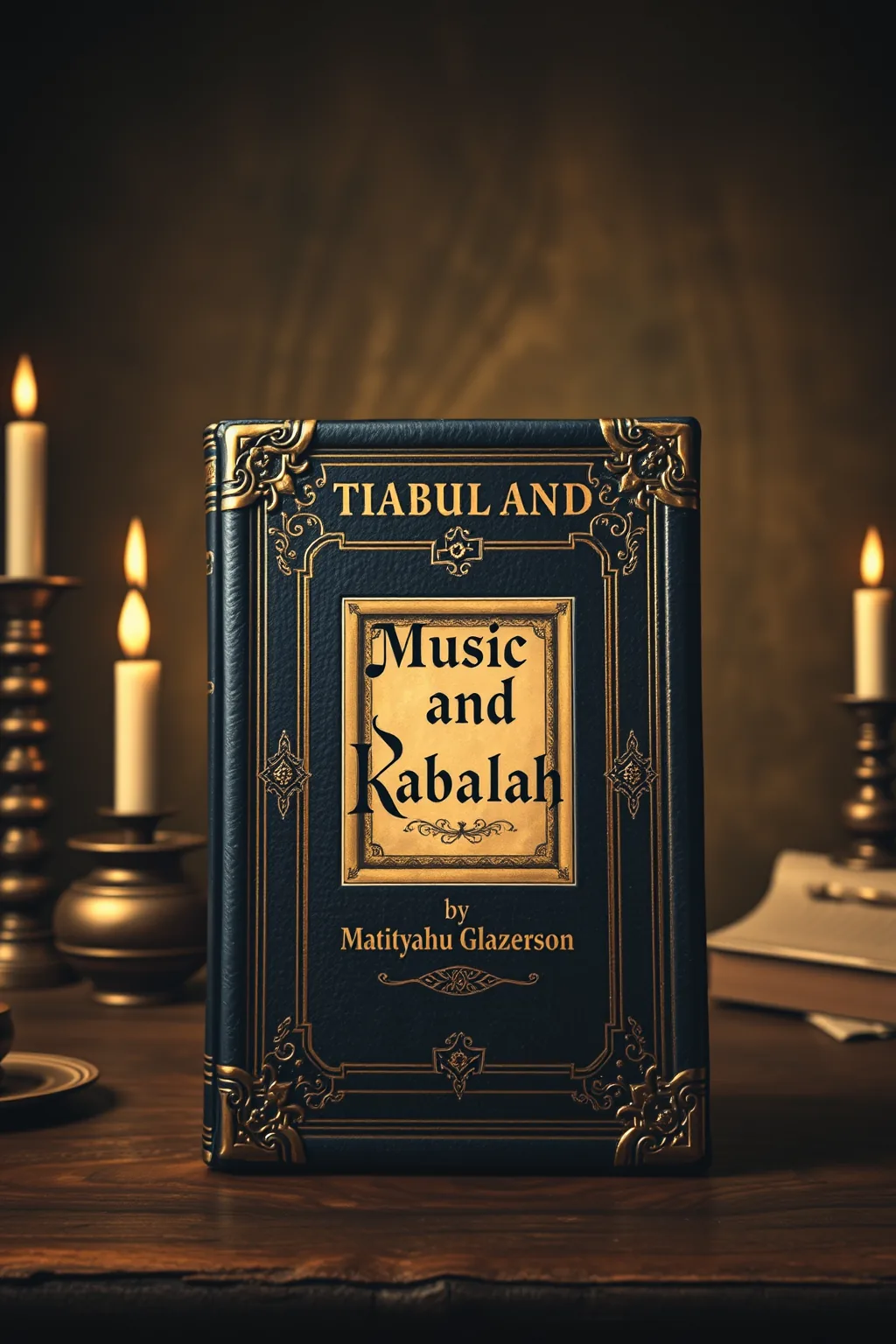
Music and Kabbalah
 61
61

Music and Kabbalah


Silas Hawthorne (Hermetic Studies Editor) — Matityahu Glazerson masterfully orchestrates a symphony of intellect and spirit in 'Music and Kabbalah.' This is not merely an academic study but a deeply esoteric exploration, revealing the profound resonance between the divine order and the art of music within the Kabbalistic framework. Glazerson’s meticulous research illuminates the hidden symmetries, demonstrating how sonic frequencies mirror the emanations of the Sefirot and the numerical values of Hebrew letters. This text is a treasure for serious students of Jewish mysticism and anyone seeking to understand the vibrational underpinnings of reality. A truly illuminating and essential work.
📝 Description
61
Matityahu Glazerson's 2004 book connects musical structures to Jewish mystical concepts.
Matityahu Glazerson examines the relationship between music and Kabbalah, the system of Jewish mysticism. He suggests that the structures found in music, such as melody and rhythm, are not arbitrary but reflect deeper spiritual patterns. The book discusses how ancient Hebrew letters, considered fundamental to creation in Kabbalistic thought, might resonate within musical scales and sacred chants.
Glazerson proposes that music acts as a form of universal language, where specific notes and compositions can unlock spiritual insights and reveal connections to the divine. He links musical elements to the Sephirot, the ten emanations described in Kabbalah, suggesting that musical arrangements can mirror this divine architecture. The work aims to show how music functions as a conduit for mystical experience and sacred knowledge, appealing to those interested in the spiritual dimensions of sound.
This book is situated within the esoteric tradition of Kabbalah, a school of Jewish mysticism that seeks to understand the divine nature and the creation of the universe. Glazerson specifically focuses on the concept of divine emanations, known as the Sephirot, and attempts to find parallels between their structure and the organization of music. His approach draws on the Kabbalistic idea that the Hebrew alphabet holds profound cosmic significance, suggesting these letters manifest not only in language but also in the vibrations and patterns of sound.
💡 Why Read This Book?
Uncover the sacred geometry within music, revealing how sound is a direct conduit to Kabbalistic wisdom. Explore the profound link between Hebrew letters, divine emanations, and musical composition. This book is ideal for seekers of hidden knowledge, students of Jewish mysticism, and musicians yearning for a deeper spiritual dimension in their art. It offers a unique perspective on the universe's sonic tapestry.
⭐ Reader Reviews
Honest opinions from readers who have explored this book.
❓ Frequently Asked Questions
What is the primary focus of 'Music and Kabbalah'?
The book explores the profound connections between the mystical principles of Kabbalah and the art and science of music, revealing how sound can be a pathway to understanding divine secrets and the structure of the universe.
Who is Matityahu Glazerson?
Matityahu Glazerson is a renowned scholar and author specializing in Kabbalah, Jewish mysticism, and the scientific interpretations of ancient Jewish texts. He has authored numerous influential books on these subjects.
Does this book require prior knowledge of Kabbalah?
While prior knowledge can enhance the experience, Glazerson's accessible yet profound approach makes the book valuable for both seasoned scholars and curious newcomers to Kabbalistic thought.
What kind of musical concepts are discussed?
The book delves into musical scales, harmonies, rhythms, and their symbolic relationships to the Sephirot, Hebrew letters, and the cosmic order as understood in Kabbalistic tradition.
Is this book suitable for musicians?
Absolutely. Musicians will find fascinating insights into the spiritual and mystical dimensions of their craft, offering new perspectives on composition, performance, and the profound impact of sound.
🔮 Key Themes & Symbolism
The Harmonic Architecture of Creation
This theme explores the Kabbalistic concept that the universe is built upon divine numerical and vibrational principles. Glazerson demonstrates how musical structures—scales, intervals, and harmonies—are not arbitrary but reflect the inherent order and divine emanations (Sephirot) described in Kabbalistic cosmology. The intricate relationships between notes and chords are shown to mirror the pathways of divine influence, suggesting that music is a sonic manifestation of the cosmic blueprint, a language that can unlock understanding of creation's underlying design and purpose.
Hebrew Letters as Sonic Keys
A central tenet of this theme is the esoteric understanding of the Hebrew alphabet not just as linguistic symbols but as potent vibratory forces. Glazerson reveals how each letter possesses a unique energetic signature and numerical value that directly correlates with specific musical pitches, modes, and even emotional states. The book elucidates how the sacred sounds of Hebrew letters, when woven into music or chant, can act as keys to unlock higher states of consciousness and facilitate a direct connection with the divine realms, transforming simple melody into profound spiritual technology.
Music as a Pathway to Divine Consciousness
This theme focuses on the transformative power of music within the Kabbalistic tradition. Glazerson illustrates how specific melodies, rhythms, and intentions imbued within music can serve as a potent tool for spiritual ascent and communion. By aligning human consciousness with the divine harmonies, practitioners can achieve altered states of awareness, experience prophetic visions, and deepen their understanding of God's presence in the world. Music is presented not merely as an art form but as a sacred practice, a direct means of attuning oneself to the celestial symphony of existence.
💬 Memorable Quotes
Direct passages from the work, attributed to the author.
“Each note holds a secret of the Sephirot.”
— Highlights the intricate correspondence between musical elements and the Kabbalistic Tree of Life, suggesting that musical intervals and pitches embody the divine attributes and emanations.
“The melody is the ladder to the celestial realms.”
— Emphasizes music's role as a spiritual technology, a means to ascend in consciousness and connect with higher spiritual dimensions through its vibrational and symbolic power.
“In the silence between notes, God's whisper is heard.”
— Points to the importance of contemplative listening and the subtle, often unseen, divine presence that can be perceived in the spaces and pauses within musical composition.
“The universe sings its own Kabbalah.”
— Suggests that the natural order and cosmic phenomena are intrinsically imbued with Kabbalistic principles, and music is a human attempt to harmonize with this grand, universal symphony.
💡 Key Ideas
Editorial paraphrase of the work's core concepts — not direct quotes.
Sound is the echo of the divine breath.
This quote expresses the mystical belief that music and sound originate from a divine source, acting as a direct manifestation of God's creative energy and presence in the universe.
🌙 Esoteric Significance
Tradition
This work is deeply rooted in the esoteric tradition of Kabbalah, the mystical interpretive tradition of Judaism. It specifically draws from the Lurianic Kabbalah and its emphasis on divine emanations (Sephirot), cosmic structures, and the profound significance of Hebrew letters and names. Glazerson's approach positions music not merely as an art form but as a sacred science, a vibrational language that mirrors the divine architecture of reality as understood within this ancient mystical framework.
Symbolism
The book unpacks layers of symbolism, particularly the correspondence between musical elements and Kabbalistic concepts. The Sephirot are seen as represented by specific musical intervals, scales, or modes. Hebrew letters are interpreted as sonic keys, each possessing unique vibrational frequencies that unlock spiritual states. The very structure of musical harmony and melody is presented as a symbolic map of the divine realms, offering a tangible, audible representation of abstract mystical principles.
Modern Relevance
In an age often perceived as lacking in deep spiritual connection, 'Music and Kabbalah' offers a profound and accessible pathway to rediscovering the sacredness inherent in the universe. It provides a framework for understanding sound and music not just as entertainment but as powerful tools for personal transformation, meditation, and spiritual growth. For musicians, it offers a deeper context for their art, and for seekers, it presents a tangible way to engage with ancient wisdom and experience the divine through the universal language of music.
👥 Who Should Read This Book
This useful text is a must-read for seekers of hidden wisdom and practitioners of esoteric arts. Students of Kabbalah and Jewish mysticism will find Glazerson's unique synthesis of musical theory and spiritual doctrine useful for deepening their understanding. Musicians seeking to infuse their craft with spiritual depth and cosmic resonance will discover a rich source of inspiration and insight. Even those new to Kabbalah, but open to exploring the profound connection between sound and the divine, will find 'Music and Kabbalah' an accessible yet deeply transformative read that bridges the worlds of art, science, and spirituality.
📜 Historical Context
Written in an era of burgeoning interest in esoteric traditions and the intersection of science and spirituality, Matityahu Glazerson's 'Music and Kabbalah' emerges from a rich lineage of Jewish mystical thought. Kabbalah itself, with its roots stretching back to ancient Israelite mysticism, underwent significant development and codification during the medieval period, particularly with the Zohar. The Renaissance and Enlightenment saw both renewed interest and sometimes controversial interpretations of Kabbalistic ideas in the West. Glazerson's work builds upon this historical foundation, drawing from centuries of commentary and esoteric practice, while also engaging with modern scientific understandings of sound and vibration. It speaks to a contemporary audience seeking deeper meaning and connection by bridging ancient wisdom with present-day inquiry, offering a unique perspective that speaks to both traditional scholars and those exploring alternative spiritual paths.
📔 Journal Prompts
Reflect on a piece of music that evokes a strong spiritual or emotional response. How might its structure or melody relate to the Kabbalistic concepts discussed in the book?
Consider the Hebrew letters you are familiar with. If you were to assign a musical note or scale to each, what would it sound like and why?
How does the concept of 'divine harmony' resonate with your personal understanding of the universe and your place within it?
Explore the idea of 'silence' in music and its potential esoteric significance as described in the book. What does silence reveal to you?
If music is a 'ladder to the celestial realms,' what 'rungs' or musical elements do you believe are most effective in facilitating spiritual ascent?
🗂️ Glossary
Kabbalah
An esoteric tradition within Judaism that seeks to understand the nature of God, creation, and the universe through mystical interpretation of scripture and symbolic systems, most notably the Tree of Life.
Sephirot
The ten divine emanations or attributes of God described in Kabbalah, forming the structure of the Tree of Life and representing stages of creation and divine influence.
Tree of Life
A central symbolic diagram in Kabbalah, depicting the ten Sephirot and the pathways connecting them, representing the path of creation and spiritual ascent.
Gematria
A system of Jewish numerology that assigns numerical values to Hebrew letters, used to find hidden meanings and connections between words and concepts.
Tzimtzum
A Kabbalistic concept describing God's 'contraction' or withdrawal to make space for creation, symbolizing divine humility and the creation of a void for existence.
This book appears in 1 collection
🔮 Readers Also Liked
Browse all →








More by Matityahu Glazerson
All books →

From the “Kabbalah” Collection
View all →









More Free Kabbalah & Jewish Mysticism Books
View all →