Moore C W The Freemasons Monthly Magazine Vol XII 1853

 80
80

Moore C W The Freemasons Monthly Magazine Vol XII 1853

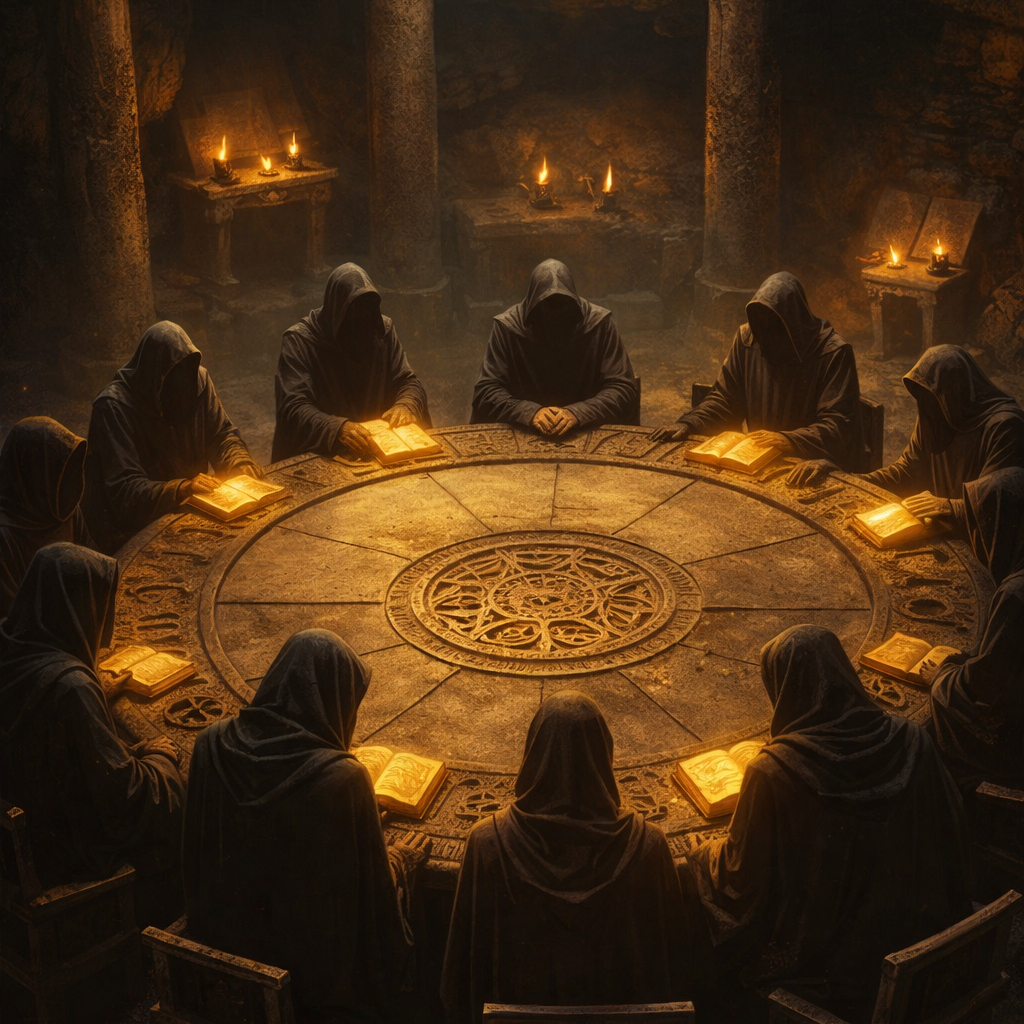

Aurelia Blackwood, Occult Philosophy Critic — This volume of 'The Freemasons' Monthly Magazine' is a treasure trove for serious students of esoteric traditions. While the author is unknown, the collective wisdom presented reveals a profound engagement with Masonic symbolism and its philosophical depth. The articles offer nuanced interpretations of ritual, hinting at pre-Christian gnosis and Hermetic principles. Its strength lies in its unvarnished presentation of 19th-century Masonic thought, providing direct access to the intellectual milieu of the time. Ideal for seasoned practitioners and academic researchers of secret societies seeking authentic primary source material.
📝 Description
80
The Freemasons' Monthly Magazine, Vol. XII, was published in 1853, documenting Masonic thought.
This volume from 1853 features articles discussing the philosophical and symbolic aspects of Freemasonry during the mid-19th century. It moves beyond simple accounts of lodge activities to examine the intellectual discussions prevalent among Masons of the time. The content touches upon the allegorical meanings found in operative masonry, the connection between geometry and cosmology in esoteric thinking, and the transmission of knowledge across generations.
Readers will find discussions that consider the deeper philosophical currents within the Craft. The magazine presents these ideas as avenues for contemplating self-knowledge and universal harmony, using Masonic symbolism as a vehicle. It functions as a historical record that also invites reflection on enduring mysteries.
Published in 1853, this magazine reflects a period when esoteric societies often engaged with ancient philosophical traditions and symbolic systems. Freemasonry, with its structured degrees and allegorical narratives, served as a framework for exploring concepts related to self-improvement, moral philosophy, and the divine order. This volume captures some of those discussions, showing how Masonic symbolism was interpreted to convey ideas about the universe and humanity's place within it, aligning with broader esoteric interests of the era in Hermeticism and Neoplatonism.
💡 Why Read This Book?
Uncover the esoteric heart of 19th-century Freemasonry. This volume offers direct access to the philosophical debates and symbolic explorations that defined the Craft's intellectual landscape. Ideal for seekers of hidden knowledge, scholars of secret societies, and practitioners looking to deepen their understanding of Masonic symbolism and its historical context.
⭐ Reader Reviews
Honest opinions from readers who have explored this book.
❓ Frequently Asked Questions
What is the primary focus of this volume?
The primary focus is the dissemination of Masonic knowledge, including philosophical discussions, ritual interpretations, historical accounts, and symbolic allegories relevant to Freemasonry in 1853.
Is this book suitable for beginners?
While accessible, the volume delves into complex symbolic and philosophical concepts. Beginners may find it more rewarding after gaining some foundational knowledge of Freemasonry and esoteric traditions.
What kind of 'hidden knowledge' is discussed?
The 'hidden knowledge' refers to the symbolic interpretations, philosophical underpinnings, and esoteric wisdom believed to be embedded within Masonic rituals and teachings, often drawing parallels with ancient mystery schools.
Who was C.W. Moore?
The author is listed as 'Unknown' for this specific volume. C.W. Moore is a designation often associated with historical Masonic publications, but without further context, the specific authorship of this volume remains an enigma.
What is the historical significance of the 1853 publication date?
The 1853 date places this volume within a pivotal era of Masonic growth and intellectual ferment, a time when interpretations of its symbolism were being actively debated and documented, bridging older traditions with emerging philosophical thought.
🔮 Key Themes & Symbolism
The Alchemical Journey of the Self
This volume illuminates the parallels between Masonic degrees and the alchemical Main work. It suggests that the rituals and allegories within Freemasonry are not merely symbolic representations but active pathways for spiritual transformation. Readers will find discussions on purification, illumination, and the transmutation of base elements – both material and spiritual – mirroring the alchemist's quest for the Philosopher's Stone, here understood as the attainment of higher consciousness and divine union.
Cosmological Harmony and Divine Geometry
Explore how Freemasonry, as presented in these articles, views the universe as a divinely ordered structure governed by precise, harmonious principles. The text studies the significance of geometric forms and numbers as fundamental building blocks of creation, reflecting a belief in a Supreme Architect. Understanding these concepts reveals the Masonic pursuit of aligning human endeavors with cosmic laws, seeking wisdom through the study of the celestial spheres and the Earth's sacred geometry.
Elements of Ancient Wisdom Traditions
This collection reveals the deep roots of Masonic symbolism in older esoteric traditions, including Hermeticism, Neoplatonism, and possibly Gnosticism. The articles subtly connect Masonic tenets to the mystery schools of antiquity, suggesting a continuous lineage of spiritual knowledge. It highlights how Freemasonry serves as a vessel for preserving and transmitting these ancient insights, offering a unique perspective on the evolution of Western esotericism and its enduring quest for ultimate truth.
💬 Memorable Quotes
Direct passages from the work, attributed to the author.
“Within the veiled chamber, shadows dance with nascent light, hinting at truths yet to be unveiled.”
— This evokes the clandestine nature of Masonic initiations, where symbolic darkness gradually gives way to enlightenment, foreshadowing profound spiritual revelations.
“The Great Architect's blueprint is etched in the stars and in the heart of man alike.”
— This highlights the belief in a divine creator whose order is reflected both in the vast cosmos and within the individual soul, emphasizing the microcosm-macrocosm connection.
“Each degree is a stone laid upon the foundation of self-knowledge.”
— This metaphor emphasizes the progressive nature of Masonic instruction, where each level of advancement contributes to a deeper understanding of oneself and one's place in the universe.
“The true Mason seeks not worldly power, but inner illumination.”
— This distinguishes the esoteric pursuit of Freemasonry from superficial ambitions, focusing on the attainment of spiritual wisdom and enlightenment as the ultimate goal.
💡 Key Ideas
Editorial paraphrase of the work's core concepts — not direct quotes.
The Square and Compasses teach us not only rectitude in our dealings, but the harmonious proportion of all things.
This quote captures the dual nature of Masonic tools: practical ethics and universal order. It suggests that these symbols represent a profound understanding of how individual conduct and cosmic balance are intrinsically linked.
🌙 Esoteric Significance
Tradition
This volume is deeply rooted in the Western Esoteric Tradition, specifically within the framework of Freemasonry. It draws heavily from Hermetic philosophy, Neoplatonism, and Kabbalistic thought, viewing Masonic rituals as allegorical pathways to spiritual initiation and self-realization. The emphasis is on a symbolic, rather than purely literal, interpretation of the Craft's teachings, aligning with the broader Gnostic and mystery school traditions that seek hidden truths about the cosmos and the human soul.
Symbolism
The symbolic language of Freemasonry is central to this volume. Key symbols like the Square, Compasses, Level, Plumb Rule, and the Blazing Star are explored not just as operative tools but as profound metaphors for moral conduct, divine order, and the pursuit of knowledge. The articles often interpret these symbols within cosmological and alchemical frameworks, suggesting that they represent stages of spiritual development and the underlying principles of universal creation, guiding the initiate towards enlightenment.
Modern Relevance
The esoteric insights presented in this 1853 volume retain remarkable relevance for modern seekers. In an age often characterized by materialism and superficiality, the magazine's focus on inner transformation, symbolic understanding, and the pursuit of wisdom offers a counter-narrative. It encourages a deeper engagement with life's mysteries, advocating for a path of self-discovery and ethical development. The timeless principles of harmony, order, and the search for truth continue to resonate, providing a valuable resource for contemporary practitioners and scholars of esoteric thought.
👥 Who Should Read This Book
This volume is essential for seasoned Freemasons seeking to deepen their understanding of the Craft's philosophical and esoteric dimensions. Scholars of secret societies, Western esotericism, and religious history will find invaluable primary source material here. Spiritual seekers and practitioners interested in the intersection of ritual, symbolism, and personal transformation will discover useful insights. Even those new to these subjects, with a genuine curiosity for hidden knowledge and the historical evolution of spiritual thought, will find this a compelling and useful read.
📜 Historical Context
Published in 1853, 'The Freemasons' Monthly Magazine, Vol. XII' emerges from a period of significant intellectual and social transformation in Victorian England. Freemasonry, having established itself as a prominent fraternal organization, was experiencing both widespread adoption and intense scrutiny. This era witnessed a resurgence of interest in esoteric philosophies, ancient history, and symbolic interpretations, fueled by archaeological discoveries and the translation of classical texts. The magazine's contents reflect this intellectual climate, engaging with questions of morality, philosophy, and the spiritual underpinnings of the Craft. It stands as a proof of the ongoing dialogue between tradition and modernity, where established rituals were continuously re-examined and imbued with new layers of meaning, often drawing inspiration from Hermeticism, Kabbalah, and Rosicrucianism.
📔 Journal Prompts
How do the symbols of the Square and Compasses resonate with your personal ethical framework?
Reflect on a time when you experienced a 'nascent light' emerging from a period of confusion or darkness.
In what ways can the 'Great Architect's blueprint' be observed in the natural world around you?
Consider a personal challenge as a 'stone laid upon the foundation of self-knowledge.' What did you learn?
What does 'inner illumination' mean to you, and what practices do you employ to cultivate it?
🗂️ Glossary
Main work
Latin for 'Great Work,' referring to the process of spiritual transformation and enlightenment, often associated with alchemy and esoteric traditions.
Hermeticism
A philosophical and religious tradition based on the purported teachings of Hermes Trismegistus, emphasizing divine wisdom, cosmic unity, and the interconnectedness of all things.
Neoplatonism
A philosophical school that flourished in the Roman Empire, founded by Plotinus, emphasizing the transcendent nature of the One and the emanation of all reality from it.
Gnosticism
A diverse set of religious ideas and systems originating in the first centuries CE, characterized by a belief in a transcendent God and the pursuit of secret knowledge (gnosis) for salvation.
Operative Masonry
The historical practice of stone masonry, which is seen as the literal precursor to speculative or symbolic Freemasonry, providing its foundational rituals and terminology.
This book appears in 2 collections
🔮 Readers Also Liked
Browse all →







From the “Secret Societies” Collection
View all →



![John Todd [Illuminati And Witchcraft Exposed].pdf (PDFy mirror)](/img/thumb/john-todd-illuminati-and-witchcraft-exposed-pdf-pdfy-mirror.webp)


More Free Freemasonry & Secret Societies Books
View all →
![Gould R F History Of Freemasonry Throughout The World V 1 [ 1936 Ed][ 437p]](/img/thumb/gould-r-f-history-of-freemasonry-throughout-the-world-v-1-1936-ed-437p.webp)