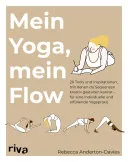
Mein Yoga, mein Flow
 78
78

Mein Yoga, mein Flow
Rebecca Anderton-Davies' "Mein Yoga, mein Flow" presents a refreshingly pragmatic approach to personal yoga practice. The book’s strength lies in its "20 Tools" framework, which genuinely demystifies the creation of custom sequences. Unlike many guides that offer prescriptive routines, Anderton-Davies provides modular elements that empower the reader. The concept of building flows around specific intentions—be it relaxation or strength—is particularly well-articulated. However, the work occasionally feels slightly underdeveloped in its exploration of the deeper energetic or philosophical underpinnings that often accompany a dedicated yoga path. While the focus on practical application is a deliberate choice, a brief nod to the subtler aspects of yogic philosophy might have enriched the offering. The advice for developing sequences for "Kraftaufbau" (strength building) is concrete and actionable. Ultimately, "Mein Yoga, mein Flow" succeeds in its mission to equip readers with the agency to design their own yoga sessions.
📝 Description
78
Rebecca Anderton-Davies' 2022 book, Mein Yoga, mein Flow, provides twenty adaptable tools for creating personal yoga sequences.
Mein Yoga, mein Flow is a practical guide for individuals who want to build their own yoga sequences. Published in 2022, it introduces twenty distinct "tools" that act as building blocks. These tools are flexible methods for structuring practice, useful for various intentions like relaxation, building strength, improving flexibility, or easing physical tension. The book emphasizes that practitioners, regardless of their experience level, can move beyond simply following set routines. It aims to give users control over their practice, allowing them to design sequences that suit their specific needs.
This resource is for a wide range of yoga practitioners. Beginners who have taken a few classes can use the structured tools to start creating their own routines. Experienced yogis looking to deepen their practice or change established patterns will also find value in the book's adaptable approach. It is especially helpful for those who prefer a personalized yoga practice, wanting to match their sessions to particular physical or mental goals, instead of using a standardized model.
Published in 2022, Mein Yoga, mein Flow reflects a contemporary trend towards personalized wellness and self-directed spiritual development. In the West, yoga has evolved from its early 20th-century introduction, moving beyond more fixed, traditional forms to encompass a wide array of modern styles. Anderton-Davies' work aligns with a cultural shift favoring mindfulness and individual self-optimization. People are increasingly seeking ways to integrate practices like yoga into their daily lives to meet unique needs and aspirations, a movement supported by digital access and a focus on mental health.
💡 Why Read This Book?
• Gain 20 distinct "Tools" for constructing personalized yoga flows, moving beyond generic sequences to meet your specific needs for relaxation or strength building, as outlined by Rebecca Anderton-Davies. • Achieve "maximale Flexibilität" in your practice by learning to adapt and combine yoga elements, ensuring your sessions directly support your personal yoga goals, a concept central to the book's 2022 publication. • Develop a more intuitive and responsive relationship with your yoga practice by understanding how to structure sessions for "Beweglichkeit" (mobility) or tension release, inspired by the practical methodologies presented.
⭐ Reader Reviews
Honest opinions from readers who have explored this book.
❓ Frequently Asked Questions
What is the main benefit of using the "20 Tools" in Mein Yoga, mein Flow?
The primary benefit is achieving "maximale Flexibilität" in designing your yoga practice. These tools act as building blocks, allowing you to create custom sequences tailored to specific goals like relaxation, strength, or mobility, rather than following pre-set routines.
Is Mein Yoga, mein Flow suitable for absolute beginners?
Yes, the book is designed for practitioners of all levels. Beginners who have attended only a few yoga classes will find the 20 tools provide a structured yet flexible way to start building their own sequences.
What does "mein Flow" refer to in the book's title?
"Mein Flow" translates to "My Flow," emphasizing the personalized nature of the yoga sequences the book helps you create. It signifies a practice that is uniquely yours, adapted to your individual needs and intentions.
How does the book help with physical tension or stiffness?
The book provides practical tools and approaches that can be specifically applied to alleviate "Verspannungen" (tension) or improve "Beweglichkeit" (mobility). By learning to structure sequences with intention, readers can design sessions targeting these areas.
When was Mein Yoga, mein Flow first published?
Mein Yoga, mein Flow was first published on March 20, 2022, making it a contemporary guide to personal yoga practice.
Does the book teach specific yoga poses?
The book focuses less on teaching individual poses and more on providing methods for sequencing them. The "20 Tools" are frameworks for connecting poses and structuring practice to achieve personal yoga goals.
🔮 Key Themes & Symbolism
Personalized Sequence Design
The central theme is empowering practitioners to move beyond prescribed routines and actively design their own yoga sequences. The "20 Tools" serve as adaptable components, enabling users to construct flows that align with specific intentions, whether for "Entspannung" (relaxation), "Kraftaufbau" (strength building), or enhancing "Beweglichkeit" (mobility). This emphasis on user agency fosters a deeper, more individualized connection with the practice, moving away from a one-size-fits-all approach prevalent in some yoga instruction.
Goal-Oriented Practice
This work champions the idea that yoga practice should be intentionally directed towards achieving personal objectives. The book guides readers in identifying their "persönlichen Yogaziel" (personal yoga goal) and then utilizing the provided tools to structure sequences that effectively support that aim. This includes addressing specific physical needs like releasing "Verspannungen" (tension) or achieving desired states of being, making the practice a more targeted and rewarding endeavor.
Flexibility and Adaptability
A core tenet is the concept of "maximale Flexibilität" (maximal flexibility) in yoga practice. Anderton-Davies presents tools that are not rigid rules but rather adaptable frameworks. This allows practitioners, regardless of their experience level, to modify, combine, and experiment with different elements to create sequences that feel authentic and effective for their current needs, promoting a dynamic and evolving relationship with yoga.
Holistic Well-being
While focusing on the physical structuring of yoga, the book implicitly addresses holistic well-being by enabling practices tailored for relaxation and tension release. By allowing individuals to craft sessions that specifically target their needs, it supports mental clarity and physical comfort. This self-directed approach empowers users to take an active role in their own wellness, integrating yoga as a responsive tool for maintaining balance.
💬 Memorable Quotes
Direct passages from the work, attributed to the author.
“20 Tools, um deine eigenen Yogaflows zu gestalten!”
— This direct statement from the blurb expresses the book's core offering: a practical, tool-based methodology for creating personalized yoga sequences, emphasizing creative construction over rote learning.
“Egal, ob du erst ein paar wenige Yogakurse besucht hast oder schon ein geübter Yogi bist...”
— This phrase highlights the book's accessibility, assuring readers that regardless of their experience level—from novice to advanced—they will find value and practical application in the provided methods for sequence design.
“...ermöglichen dir maximale Flexibilität, deine eigenen Yogasequenzen zu gestalten...”
— This emphasizes the book's central promise: to grant practitioners the freedom and means ('maximal flexibility') to design yoga sequences that are uniquely theirs, aligning perfectly with their individual needs and objectives.
“...dir zu deinem persönlichen Yogaziel zu verhelfen.”
— This points to the outcome-oriented nature of the book's approach, suggesting that the tools provided are specifically designed to guide practitioners towards achieving their unique, self-defined goals within their yoga practice.
“Mit Rebeccas Impulsen, Tipps un”
— This snippet suggests that the book offers more than just technical instructions; it provides 'impulses' and 'tips,' indicating a supportive and guiding presence from the author to aid the reader's journey in creating their yoga flows.
🌙 Esoteric Significance
Tradition
While not explicitly tied to a single esoteric lineage like Hermeticism or Kabbalah, "Mein Yoga, mein Flow" draws upon the broader modern esoteric current of self-transformation and personalized spiritual technology. It aligns with practices that view the body as a vehicle for consciousness and personal growth, a concept found across many esoteric traditions. Its focus on creating one's own practice can be seen as a modern manifestation of the Gnostic principle of self-knowledge and direct experience, enabling the practitioner to build their own path to inner balance and awareness.
Symbolism
The primary symbolic element is the "Flow" itself, representing not just physical movement but a state of being where mind, body, and intention are aligned. The number '20' (for the tools) can be seen as a significant quantity, perhaps alluding to the twenty-two letters of the Hebrew alphabet in Kabbalistic numerology, suggesting a complete set of building blocks for creation. The act of 'designing' or 'crafting' sequences symbolizes the practitioner's role as a conscious architect of their own inner and outer experience.
Modern Relevance
Contemporary thinkers and practitioners focused on embodied cognition, mindfulness-based stress reduction (MBSR), and personalized wellness regimes can find resonance in Anderton-Davies' approach. The emphasis on self-directed practice aligns with current trends in self-help and positive psychology. Furthermore, instructors seeking to empower their students beyond simply teaching poses, and those exploring somatic practices that prioritize individual experience and agency, draw on the principles inherent in this book.
👥 Who Should Read This Book
• Yoga practitioners seeking to move beyond rote memorization and develop a personal practice that addresses their unique physical and mental needs, particularly those interested in sequence construction. • Individuals new to yoga who feel intimidated by traditional classes and desire a structured yet flexible framework to begin building their own routines safely and effectively. • Experienced yogis looking to revitalize their practice, break through plateaus, or gain new perspectives on sequencing and intention-setting to deepen their connection with yoga.
📜 Historical Context
Published in 2022, "Mein Yoga, mein Flow" arrives at a time when the global yoga industry, which saw significant expansion in the West following figures like B.K.S. Iyengar’s influential visits in the mid-20th century, has become highly diversified. The work reflects a contemporary trend towards personalization and self-efficacy in wellness practices, moving beyond the more prescribed styles that dominated earlier decades. Unlike the rigid adherence to specific lineages or the guru-centric models that characterized some earlier yoga movements, Anderton-Davies' approach emphasizes autonomy. It aligns with a broader cultural shift towards self-optimization and mindfulness tools, facilitated by digital platforms. The book’s reception, within this context, likely appeals to individuals seeking practical, adaptable methods in a saturated market, differentiating itself from more philosophical or purely physical instructional texts.
📔 Journal Prompts
Reflect on how the "20 Tools" can be applied to address your specific "Verspannungen" (tension).
Consider the "persönlichen Yogaziel" you wish to achieve and which of the book's frameworks might best support it.
Explore the concept of "maximale Flexibilität" in your daily life, beyond the yoga mat.
Document a sequence you designed using the book's principles and note how it felt during practice.
Analyze how "Entspannung" (relaxation) or "Kraftaufbau" (strength building) could be prioritized in a custom yoga flow.
🗂️ Glossary
Yogaflows
Sequences of yoga postures and movements linked together, often coordinated with breath, designed to create a fluid and continuous practice.
Tools
In the context of this book, these are practical methods or frameworks provided by the author to help users design and structure their own unique yoga sequences.
Entspannung
German for 'relaxation,' referring to a state of reduced physical and mental tension, often a key goal of specific yoga practices.
Kraftaufbau
German for 'strength building,' indicating the goal of developing muscular strength and endurance through targeted yoga exercises and sequences.
Beweglichkeit
German for 'mobility' or 'flexibility,' referring to the range of motion in joints and the suppleness of muscles, a common focus in yoga practice.
Verspannungen
German for 'tension' or 'tightness,' specifically referring to physical stiffness or discomfort often caused by stress, overuse, or poor posture.
Persönliches Yogaziel
German for 'personal yoga goal,' emphasizing the book's focus on tailoring yoga practice to individual aspirations, whether physical, mental, or emotional.