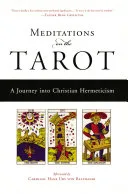
Meditations on the Tarot
 78
78

Meditations on the Tarot
The anonymous author of *Meditations on the Tarot* offers a dense, yet compelling, reinterpretation of the Tarot deck, viewing it as a visual catechism for the soul. The strength of this work lies in its sophisticated integration of esoteric symbolism with Christian Gnostic thought, particularly in its treatment of the Major Arcana as stages of spiritual realization. The inclusion of Cardinal Hans Urs von Balthasar's afterword in the 2005 edition is a significant endorsement, suggesting the book's intellectual weight. However, its esoteric language and dense theological arguments can present a steep learning curve for those unfamiliar with Gnosticism or advanced Christian mysticism. A passage detailing the symbolism of The Hermit (Card IX) exemplifies the book's method, linking the solitary figure to inner wisdom and divine light. Ultimately, *Meditations on the Tarot* is a challenging but rewarding study for dedicated seekers of esoteric wisdom.
📝 Description
78
Meditations on the Tarot, first published in 2005, views the 78-card deck as a map for spiritual growth, not fortune-telling.
This anonymous work interprets the 78 Tarot cards as symbolic language for spiritual development, rather than as instruments for divination. The author guides readers through both the Major and Minor Arcana, explaining their esoteric meanings through the lens of Christian mysticism and Gnosticism. The 2005 edition includes an index and an afterword by Cardinal Hans Urs von Balthasar, placing the book within a significant theological discussion.
The book is aimed at serious students of Western esotericism who are interested in the spiritual and philosophical foundations of the Tarot. It is for readers seeking a deeper grasp of Christian mysticism, Gnosticism, and the symbolic connections within the Tarot, moving beyond simple fortune-telling. Those involved in contemplative practices and philosophical investigation of spiritual traditions will find its depth valuable.
Published anonymously, *Meditations on the Tarot* draws from 19th and 20th century esoteric traditions. Its emergence in the early 21st century, amplified by Cardinal Hans Urs von Balthasar's afterword in the 2005 edition, created a dialogue between esoteric thought and established religious scholarship. This occurred during a time of continued interest in Jungian psychology and archetypal symbolism, which provided a receptive environment for works that re-examined traditional symbols.
⭐ Reader Reviews
Honest opinions from readers who have explored this book.
❓ Frequently Asked Questions
What is the primary focus of Meditations on the Tarot?
The book focuses on the 78-card Tarot deck as a symbolic language for spiritual development and esoteric Christianity, rather than a tool for fortune-telling. It interprets each card through a Gnostic and mystical Christian lens.
Who is the author of Meditations on the Tarot?
The author is anonymous, a deliberate choice made by the writer. The work was first published posthumously in 2005.
What is the significance of Cardinal Hans Urs von Balthasar's afterword?
Cardinal Hans Urs von Balthasar, a prominent Catholic theologian, wrote an afterword for the 2005 edition. Its inclusion signals a bridge between esoteric studies and mainstream theological discourse.
Is this book suitable for beginners in Tarot?
While comprehensive, the book's dense theological and Gnostic interpretations may be challenging for absolute beginners. It is better suited for those with some familiarity with esoteric concepts or a strong interest in spiritual philosophy.
What esoteric traditions influence Meditations on the Tarot?
The work is heavily influenced by Christian Gnosticism and Western esotericism, particularly in its symbolic interpretation of the Tarot arcana.
When was Meditations on the Tarot first published?
The first publication date for this edition, including the index and afterword, was August 25, 2005.
🔮 Key Themes & Symbolism
Tarot as Spiritual Map
The central thesis posits the 78 Tarot cards as a symbolic map of the spiritual journey, mirroring the soul's path from earthly existence to divine union. Each card, from the Fool to the World, is interpreted as a stage or an archetype encountered on this path, deeply rooted in Christian Gnostic principles. This framework moves beyond simple divination, presenting the Tarot as a pedagogical tool for self-knowledge and spiritual transformation.
Christian Gnosticism and the Arcana
The work meticulously reinterprets the Tarot arcana through the lens of Christian Gnosticism. It views the cards as keys to understanding esoteric Christian doctrines, the nature of the divine, and the concept of Sophia (Wisdom). The author emphasizes the inner, spiritual experience of Gnosis – direct knowledge of the divine – as the ultimate aim of the spiritual path depicted by the cards.
The Anonymous Author's Voice
The intentional anonymity of the author lends a unique gravitas to the work. It positions the book not as a personal treatise, but as a transmission of spiritual knowledge intended to foster a direct relationship between the reader and the wisdom presented. This approach encourages the reader to engage with the text as a spiritual guide, seeking the author's spirit rather than their personal identity.
Symbolic Interpretation of Nature
Beyond the human spiritual journey, the book also explores the symbolic resonance of natural elements and archetypal figures within the Tarot. These are not merely decorative but are seen as embodying divine principles and cosmic forces. This holistic view connects the inner spiritual landscape with the outer manifested world, suggesting a divine order reflected in all aspects of creation.
💬 Memorable Quotes
Direct passages from the work, attributed to the author.
“The Tarot is an instrument of knowledge, a spiritual science.”
— This statement highlights the author's view of the Tarot not as a game or a tool for prediction, but as a profound system of wisdom and a method for accessing higher spiritual understanding.
“Each card is a door to contemplation.”
— This suggests that engaging with any single Tarot card can open up avenues for deep spiritual reflection and philosophical inquiry, serving as a portal to inner wisdom.
“The esoteric meaning of the cards reveals divine truths.”
— This interpretation points to the author's belief that beneath the surface imagery of the Tarot lies a deeper, hidden layer of meaning connected to spiritual realities and universal laws.
“The author's wish is for the reader to find a relationship with the author in the spirit.”
— This expresses the anonymous author's intention for the book to serve as a spiritual conduit, fostering a connection through shared understanding and esoteric exploration rather than personal recognition.
💡 Key Ideas
Editorial paraphrase of the work's core concepts — not direct quotes.
The journey through the Tarot mirrors the soul's ascent.
This paraphrased concept emphasizes the book's core idea: the sequence of the Major Arcana represents a progressive path of spiritual evolution and self-discovery for the individual.
🌙 Esoteric Significance
Tradition
This work is firmly rooted in Western Esotericism, specifically Christian Gnosticism and Hermeticism. It interprets the Tarot not through Kabbalistic or Theosophical frameworks as some contemporaries did, but through a distinctly Christian mystical lens, emphasizing inner gnosis and spiritual realization as taught in early Gnostic sects. It seeks to reveal the 'hidden Christianity' within the Tarot's symbolism.
Symbolism
Key symbols include The Fool, representing the divine spark and potentiality at the start of the spiritual journey, and The High Priestess, embodying hidden wisdom and the mysteries of the divine feminine. The Hanged Man is interpreted as voluntary sacrifice and spiritual insight gained through surrender, all viewed through a Gnostic Christian paradigm of spiritual awakening.
Modern Relevance
Contemporary esoteric practitioners, particularly those in contemplative Christian traditions and students of Gnosticism, draw heavily on this work. Thinkers exploring the archetype of the spiritual journey and the philosophical underpinnings of Tarot symbolism often reference its unique perspective. It remains a foundational text for understanding the Tarot as a vehicle for theological reflection and personal gnosis.
👥 Who Should Read This Book
['• Students of Christian Gnosticism seeking a comprehensive symbolic system to explore esoteric doctrines.', '• Tarot enthusiasts interested in moving beyond divination to understand the cards as psychological and spiritual archetypes.', '• Scholars of Western Esotericism examining the intersection of religious thought and symbolic systems in the 20th century.']
📜 Historical Context
Published in 2005, *Meditations on the Tarot* emerged decades after the esoteric traditions it draws upon flourished in the late 19th and early 20th centuries. Its anonymous nature and posthumous release echo the practices of earlier esoteric authors seeking to transmit wisdom without personal ego. The inclusion of an afterword by Cardinal Hans Urs von Balthasar in this edition is particularly noteworthy, bridging the gap between traditional Catholic theology and esoteric Christian thought. This occurred during a period of renewed interest in Jungian archetypes and comparative religion, where works exploring the symbolic language of traditions like Gnosticism found an audience. While some occult circles might have viewed the book through the lens of Theosophy or Golden Dawn traditions, its sophisticated theological framing, especially its engagement with Gnosticism, set it apart from more common occult literature of the time.
📔 Journal Prompts
The symbolism of The Hermit (Card IX) as solitary wisdom.
The concept of Gnosis as presented through the Major Arcana.
The author's choice of anonymity and its effect on spiritual transmission.
The interpretation of the Minor Arcana as stages of earthly experience.
How the Tarot's imagery relates to Christian theological concepts.
🗂️ Glossary
Gnosticism
A diverse set of religious movements prominent in the early Christian era, emphasizing direct spiritual knowledge (gnosis) of the divine and often viewing the material world as flawed or created by a lesser deity.
Arcana
Refers to the cards of the Tarot deck. The Major Arcana (22 cards) represent significant life lessons and spiritual archetypes, while the Minor Arcana (56 cards) depict more everyday experiences and challenges.
Esotericism
Systems of thought and practice concerned with hidden knowledge or spiritual truths, often accessible only to initiates, focusing on inner transformation and divine connection.
Contemplation
A form of deep, reflective prayer or meditation focused on experiencing the presence of the divine, often involving quietude and focused attention on spiritual concepts or imagery.
Symbolic Language
A system of communication that uses symbols, images, or metaphors to convey deeper meanings, ideas, or spiritual concepts that may be difficult to express directly.
Spiritual Science
An approach that views spiritual realities and processes as subject to rigorous study and understanding, akin to natural sciences, but focused on the soul and the divine.
Theological Discourse
The formal discussion, debate, and interpretation of religious doctrines and beliefs, often within an academic or scholarly context.