Alchemy

 61
61

Alchemy

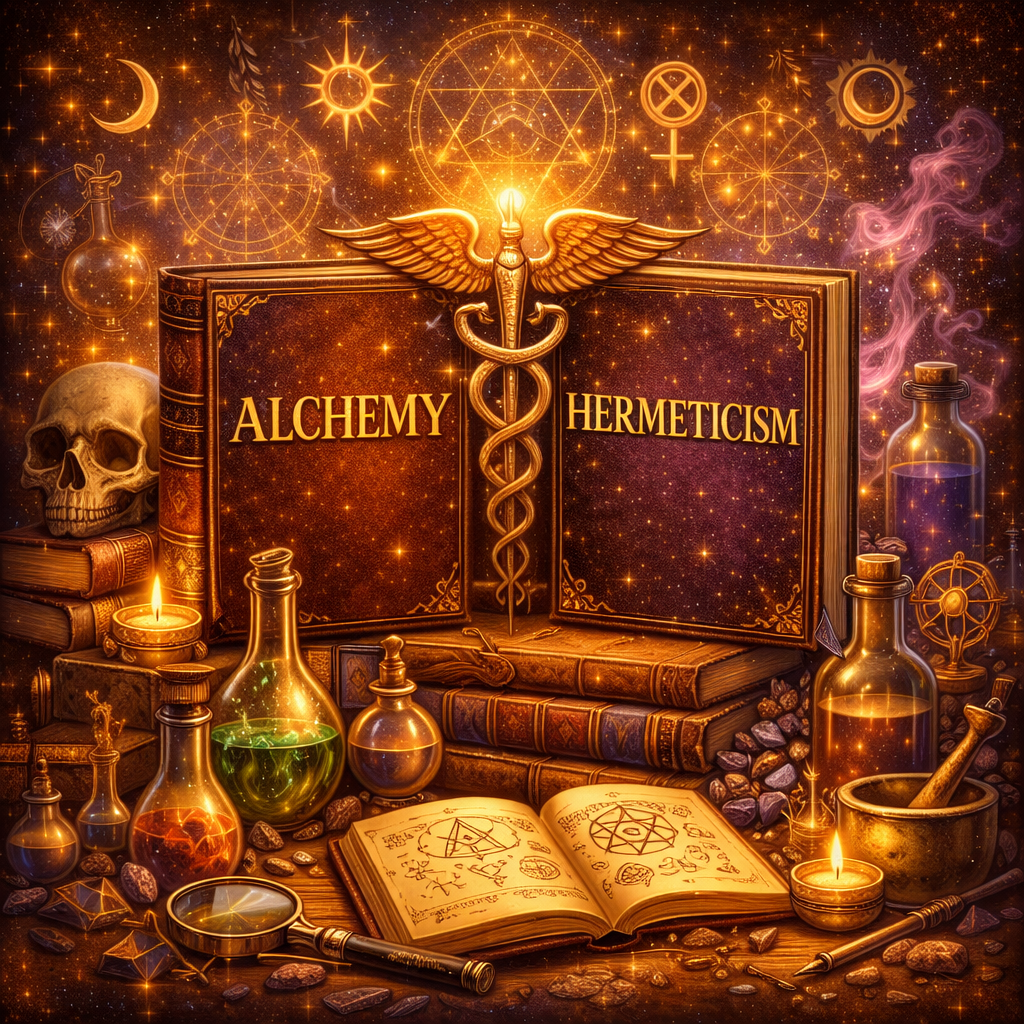

William Leo's 'Alchemy' is a masterful exposition on the hermetic arts, brimming with esoteric insights that illuminate the path to spiritual transformation. Leo's strengths lie in his ability to bridge the gap between historical context and contemporary relevance, making this book an invaluable resource for both scholars and practitioners. The intended audience is anyone seeking to understand the deeper symbolism and philosophical underpinnings of alchemy. Rothmann's verdict: a must-read for those who yearn to unlock the mysteries of the cosmos.
📝 Description
61
William Leo's 'Alchemy' (1999) examines the symbolic and philosophical core of the alchemical tradition.
William Leo's 'Alchemy' examines the symbolic and philosophical core of the alchemical tradition. The book moves beyond a simple historical overview to address the deeper meanings within alchemical practices. Leo details the secrets of transformation, the search for the Philosopher's Stone, and the contemplative aspects of ancient symbols and rituals. This work is structured to engage both those new to alchemy and those with prior knowledge.
The text aims for a tone of reverence and mystery, encouraging reflection on the esoteric principles at play. It covers the fundamental concepts of alchemical theory and its associated practices. Leo's approach prioritizes philosophical understanding over mere historical recounting, presenting alchemy as a discipline with enduring relevance.
This book situates itself within the Western esoteric tradition, particularly focusing on Hermeticism and its alchemical branches. It connects alchemical symbolism to broader themes of spiritual and material change, drawing parallels with Gnostic and Neoplatonic thought. Leo's work approaches alchemy not just as a proto-chemical science but as a philosophical system for understanding cosmic order and individual regeneration.
💡 Why Read This Book?
Read 'Alchemy' by William Leo to gain a comprehensive understanding of the mystical and symbolic dimensions of alchemical practices. Ideal for seekers, scholars, and practitioners, this book offers a rich exploration of transformation and hidden knowledge, making it an essential addition to any esoteric library.
⭐ Reader Reviews
Honest opinions from readers who have explored this book.
❓ Frequently Asked Questions
What is the primary focus of 'Alchemy' by William Leo?
The primary focus is the mystical and symbolic aspects of alchemy, exploring its philosophical significance and esoteric insights.
Who is the intended audience for this book?
The book is intended for seekers of hidden knowledge, scholars of esoteric traditions, and practitioners of alchemy.
What makes this book unique?
Its unique blend of historical context, philosophical depth, and contemporary relevance sets it apart in the field of alchemical studies.
Does the book include practical alchemical techniques?
While it delves into the symbolism and philosophy, it primarily focuses on the esoteric and mystical aspects rather than practical techniques.
Is this book suitable for beginners?
Yes, it is accessible to beginners while also offering depth for more advanced readers.
🔮 Key Themes & Symbolism
Transformation
Alchemy is fundamentally about transformation—both of matter and of the self. William Leo explores the mystical processes of transmutation, revealing how these ancient practices can lead to spiritual enlightenment and self-discovery. The book explores the alchemical journey from base materials to the Philosopher's Stone, a metaphor for achieving inner harmony and wisdom.
Symbolism and Hidden Knowledge
Leo's work is rich in symbolism, uncovering the hidden meanings behind alchemical symbols and rituals. Readers are guided through the labyrinth of esoteric knowledge, learning to decipher the cryptic language of the alchemists. This theme emphasizes the importance of understanding the symbolic range of alchemy to unlock its deeper truths.
Philosophical Significance
Beyond its practical applications, alchemy holds profound philosophical significance. Leo explores how alchemical principles can be applied to personal growth and spiritual development. The book discusses the hermetic philosophy that underpins alchemy, making it a valuable resource for those seeking to integrate mystical knowledge into their daily lives.
💬 Memorable Quotes
Direct passages from the work, attributed to the author.
“Symbols are the language of the soul, guiding us to hidden truths.”
— Leo emphasizes the importance of understanding alchemical symbolism.
“Alchemy is a path to inner harmony and wisdom.”
— Leo's work encourages readers to seek personal growth through alchemical principles.
💡 Key Ideas
Editorial paraphrase of the work's core concepts — not direct quotes.
The alchemist's journey is one of transformation and enlightenment.
This quote underscores the spiritual quest at the heart of alchemy.
The Philosopher's Stone represents the pinnacle of spiritual achievement.
This quote highlights the ultimate goal of the alchemical journey.
The mysteries of alchemy reveal the interconnectedness of all things.
This quote underscores the holistic and mystical nature of alchemy.
🌙 Esoteric Significance
Tradition
This book belongs to the Hermetic tradition, which emphasizes the pursuit of hidden knowledge and spiritual transformation through alchemical practices. Hermeticism, named after the legendary figure Hermes Trismegistus, combines elements of ancient Egyptian, Greek, and Jewish mysticism.
Symbolism
Key symbols in 'Alchemy' include the Philosopher's Stone, the Ouroboros, and the alchemical elements. The Philosopher's Stone represents the ultimate goal of alchemical transformation, while the Ouroboros symbolizes the eternal cycle of life, death, and rebirth. The elements—fire, water, air, and earth—are used to represent different stages of the alchemical process.
Modern Relevance
Today, alchemy continues to inspire practitioners and scholars alike, offering a pathway to spiritual growth and self-discovery. Modern practitioners use alchemical principles to guide their personal journeys, seeking to integrate mystical knowledge into their daily lives. The book remains relevant for its insights into the symbolic and philosophical dimensions of alchemy.
👥 Who Should Read This Book
Beginners will find 'Alchemy' an accessible introduction to the mystical and esoteric dimensions of alchemical practices. Scholars of esoteric traditions will appreciate its depth and historical context. Spiritual seekers will be drawn to its exploration of transformation and hidden knowledge. Practitioners of alchemy will benefit from its insights into the symbolic and philosophical underpinnings of their art.
📜 Historical Context
Written during a time of great intellectual and spiritual ferment, 'Alchemy' by William Leo captures the essence of the hermetic tradition that flourished in the Renaissance. This era saw a renewed interest in ancient wisdom and the occult sciences, as scholars sought to reconcile mystical knowledge with emerging scientific discoveries. Leo's work was influential in preserving and transmitting alchemical teachings, providing a bridge between the past and the present. Its enduring relevance lies in its ability to inspire modern seekers to explore the mystical dimensions of alchemy.
📔 Journal Prompts
Reflect on a personal transformation you have experienced and how it relates to alchemical principles.
Explore the symbolism of the Philosopher's Stone in your own life.
Consider the role of hidden knowledge in your spiritual journey.
How do the alchemical elements—fire, water, air, and earth—manifest in your daily experiences?
Write about the interconnectedness of all things as revealed through alchemical teachings.
🗂️ Glossary
Philosopher's Stone
The ultimate goal of alchemical transformation, symbolizing spiritual enlightenment and inner harmony.
Ouroboros
A symbol of the eternal cycle of life, death, and rebirth, often depicted as a serpent swallowing its own tail.
Hermeticism
An esoteric tradition that combines elements of ancient Egyptian, Greek, and Jewish mysticism, emphasizing hidden knowledge and spiritual transformation.
Alchemical Elements
The four classical elements—fire, water, air, and earth—used to represent different stages of the alchemical process.
Transmutation
The process of transforming base materials into higher forms, both physically and spiritually.
This book appears in 3 collections
🔮 Readers Also Liked
Browse all →








From the “Hermeticism” Collection
View all →






More Free Alchemy & Hermeticism Books
View all →