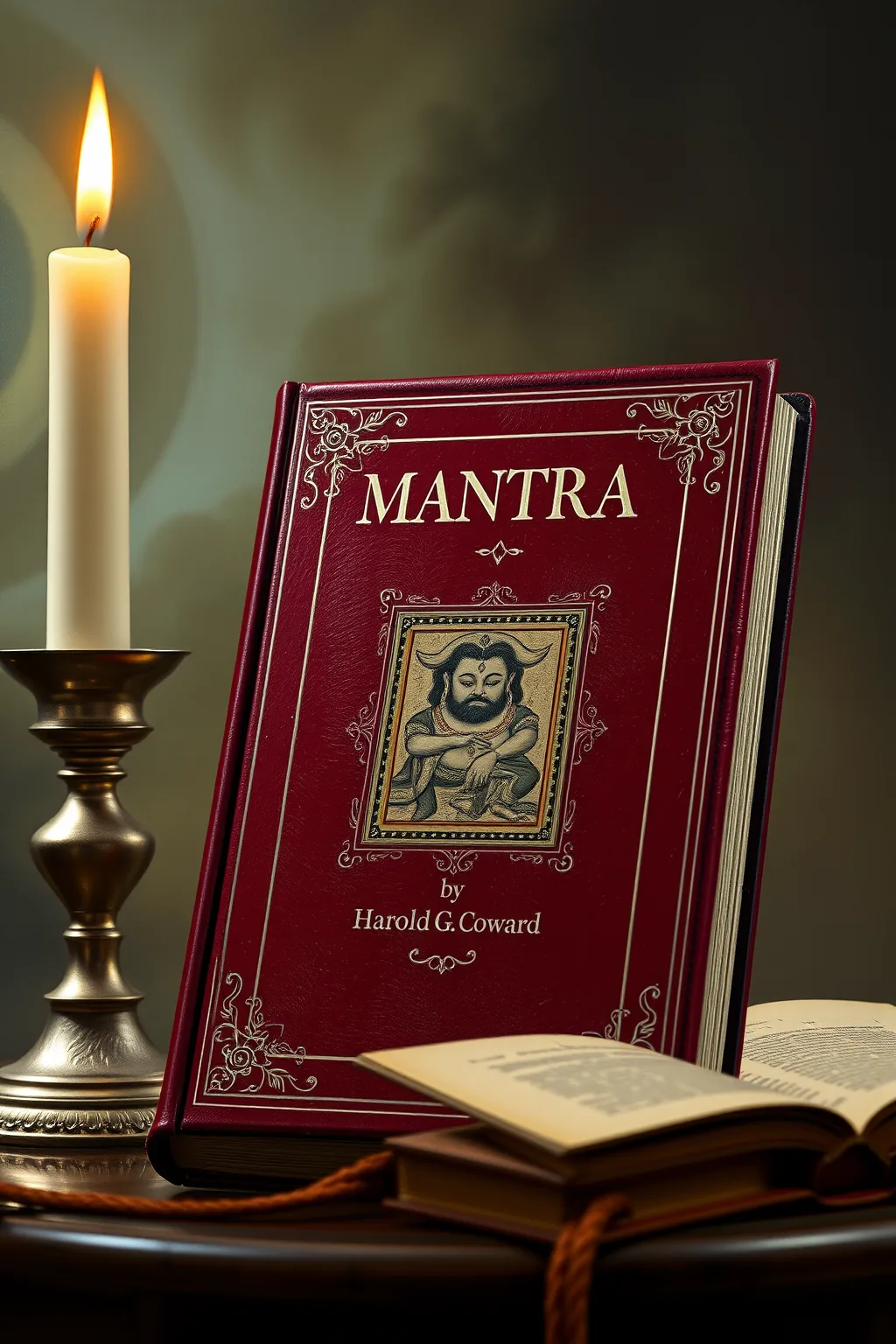
Mantra
 83
83

Mantra
Coward and Goa's "Mantra" provides a meticulously researched survey of sonic spiritual practices, moving beyond superficial glosses to analyze the underlying principles. The strength of the work lies in its comparative approach, drawing connections between disparate traditions, such as the use of *Om* in Hinduism and the significance of sacred utterances in Tibetan Buddhism. A notable limitation, however, is the occasional density of the prose, which, while academically rigorous, can sometimes obscure the experiential dimension it seeks to explain. The detailed examination of the phonetic structure of mantras, particularly in relation to the concept of *nada brahma* (sound is God), is a particularly compelling aspect. The book serves as a solid academic foundation for understanding the mechanics and philosophy of mantra.
📝 Description
83
Harold G. Coward and David J. Goa's 1996 book "Mantra" examines sonic and vibrational aspects of consciousness.
"Mantra," first published in 1996 by Harold G. Coward and David J. Goa, investigates the role of sonic and vibrational elements in spiritual practice and consciousness. The authors move past simple definitions to analyze the philosophical underpinnings and varied cultural uses of mantra across different traditions. They show how specific sounds and phonetic patterns function not just as vocalizations but as methods for mental focus, inducing altered states of awareness, and connecting with deeper realities.
This work is relevant for academics in comparative religion, especially those studying the phenomenology of ritual and devotional acts. It also speaks to yoga, meditation, and other contemplative practitioners who want a better theoretical grasp of why sonic repetition is effective. Students of linguistics and semiotics may find the analysis of sound as a vehicle for meaning and spiritual force useful. Anyone interested in the connections between language, mind, and the sacred will find "Mantra" an informative resource.
Published in 1996, "Mantra" arrived during a period of growing academic interest in non-Western spiritual systems. The book contributes to scholarship that examines experiential and ritualistic dimensions of religion, moving beyond purely theological or historical viewpoints. It acknowledges the importance of embodied practices, such as chanting, within the broader field of religious studies, which was beginning to integrate anthropological and psychological insights. The work situates mantra within a wider discussion of how sound and language interact with the human mind and spiritual experience.
💡 Why Read This Book?
• Gain a scholarly understanding of mantra as a psycho-acoustic tool, moving beyond mere repetition to grasp its function in altering consciousness, as explored through the concept of *nada brahma*. • Understand the historical and comparative dimensions of mantra across diverse traditions, with specific references to practices from Hinduism and Tibetan Buddhism, offering context unavailable in purely devotional texts. • Explore the significance of sacred utterances and their role in spiritual traditions, providing a framework for analyzing how sound functions as a conduit for spiritual power and intention.
⭐ Reader Reviews
Honest opinions from readers who have explored this book.
❓ Frequently Asked Questions
When was "Mantra" by Harold G. Coward and David J. Goa first published?
The book "Mantra" by Harold G. Coward and David J. Goa was first published in 1996, contributing to the academic discourse on religious studies during that era.
What does the concept of 'nada brahma' refer to in the context of mantras?
'Nada brahma' is a concept discussed in "Mantra," positing that sound is the fundamental reality or divine essence, suggesting mantras are not just sounds but expressions of the sacred itself.
Does the book discuss the practical application of mantras?
Yes, while deeply academic, "Mantra" explores how mantras are practically applied across various traditions for focusing the mind, achieving altered states, and spiritual connection.
Which spiritual traditions are covered in "Mantra"?
The book examines mantra use in several traditions, including Hinduism (e.g., the syllable *Om*) and Tibetan Buddhism, among others, showcasing a wide comparative scope.
Is "Mantra" suitable for beginners in spiritual studies?
While thorough, "Mantra" is primarily an academic text. Beginners might benefit from supplemental introductory materials, but its depth offers significant value for serious students of comparative religion or spiritual practices.
What is the main academic contribution of "Mantra"?
Its contribution lies in its rigorous academic analysis of mantra's psycho-acoustic properties and its comparative study across diverse global spiritual traditions, enriching the field of religious studies.
🔮 Key Themes & Symbolism
Psycho-Acoustic Efficacy
The work meticulously details how mantras function not merely as words but as specific vibrational frequencies designed to influence consciousness. It explores the scientific and philosophical underpinnings of this psycho-acoustic effect, referencing how certain sounds can induce altered states, enhance concentration, and facilitate meditative experiences. This theme examines the deliberate engineering of sound for spiritual and psychological transformation, moving beyond mere belief to explore the mechanism of sonic influence.
Comparative Sonic Spirituality
A core theme is the comparative analysis of mantra across disparate global traditions. Coward and Goa highlight universal principles in the use of sacred sound, drawing parallels between Vedic chanting, Buddhist *mantras*, and other sonic devotional practices. This theme emphasizes how, despite cultural variations, the fundamental human impulse to harness sound for spiritual connection manifests similarly across continents and eras.
Mantra as Creation and Invocation
The book studies the cosmological significance of mantra, exploring traditions that view sound as the primordial creative force (*nada brahma*). It examines how specific utterances are believed to embody divine energies or principles, serving as tools for invocation, purification, and the manifestation of sacred presence. This theme positions mantra as a potent force capable of shaping reality through focused sonic intention.
The Role of Lineage and Transmission
Central to the efficacy of mantra, as presented in the book, is the concept of proper transmission through authorized teachers and lineages. The work discusses the importance of correct pronunciation, intonation, and the accompanying mental state for a mantra to yield its intended spiritual results. This theme underscores that the power of mantra is often mediated by tradition and the guru-disciple relationship.
💬 Memorable Quotes
Direct passages from the work, attributed to the author.
“Sound is often considered the first creation.”
— This statement captures the cosmological view where sound, vibration, or a primordial utterance is seen as the genesis of existence in many spiritual cosmologies, positioning mantra as a fundamental force.
“The efficacy of a mantra depends on its correct pronunciation and intention.”
— This highlights the practical and devotional aspect of mantra practice, suggesting that the power of the sound is unlocked not just by the syllable itself, but by the practitioner's focused intent and faithful execution.
“Mantras can be tools for focusing the mind.”
— This interpretation points to the psychological function of mantras, serving as anchors for attention, helping to quiet mental chatter and facilitate deeper states of concentration and awareness.
“Different sounds carry different spiritual energies.”
— This concept suggests a form of sonic symbolism, where specific phonetic structures or syllables are believed to resonate with particular divine qualities or cosmic forces, thus acting as conduits.
“Mantra transmission often occurs within specific spiritual lineages.”
— This emphasizes the importance of tradition and authorized guidance in mantra practice, implying that the power and correct application of a mantra are often passed down through a teacher-student relationship.
🌙 Esoteric Significance
Tradition
While "Mantra" is an academic work, its subject matter deeply engages with traditions that have esoteric dimensions, particularly within Hinduism (Vedic and Tantric traditions) and Buddhism (Vajrayana). It explores practices that aim for direct experiential realization and altered states of consciousness, aligning with esoteric goals of spiritual transformation and union with the divine, rather than solely dogmatic adherence.
Symbolism
The primary symbol explored is the sacred syllable *Om* (or Aum), representing the primordial sound and the totality of existence in Hindu philosophy. Another motif is the concept of *nada brahma*, where sound itself is seen as the divine. The book also touches on the symbolic power of specific seed syllables (*bijas*) in Tantric traditions, which are believed to encapsulate the essence of deities or cosmic forces.
Modern Relevance
Contemporary practices in yoga, meditation, and sound healing frequently draw upon the principles discussed in "Mantra." Thinkers and practitioners exploring consciousness studies, somatic psychology, and therapeutic applications of sound often reference the foundational research on mantra. The book’s exploration of sonic intentionality and vibrational effects continues to inform modern approaches to well-being and spiritual development.
👥 Who Should Read This Book
• Students of comparative religion and phenomenology: Gain a rigorous academic framework for understanding ritualistic sound practices across diverse spiritual systems. • Yoga and meditation practitioners: Deepen your understanding of the theoretical underpinnings and historical context of chanting and mantra recitation in your practice. • Scholars of linguistics and semiotics: Explore the intricate relationship between sound, meaning, and spiritual transmission, particularly concerning the power attributed to specific phonetic utterances.
📜 Historical Context
Published in 1996, "Mantra" by Harold G. Coward and David J. Goa emerged during a period of heightened academic interest in the experiential and ritualistic dimensions of world religions. The late 20th century saw scholars moving beyond purely theological or historical analyses to embrace phenomenological and anthropological approaches to spirituality. This work contributed to a growing discourse that recognized the significance of embodied practices like chanting and meditation. It engaged with contemporary thinkers in religious studies who were exploring the non-discursive aspects of spiritual traditions. The book's comparative methodology offered a counterpoint to more localized or sectarian studies, positioning mantra as a transcultural phenomenon. It arrived at a time when interest in Eastern spiritual practices was widespread in the West, though academic treatments often lagged behind popular trends.
📔 Journal Prompts
The concept of *nada brahma* and its implications for understanding sonic creation.
How the transmission of mantras within specific lineages shapes their perceived power.
Personal experiences with the psycho-acoustic effects of chanting or repetitive sound.
Comparing the function of *Om* in Vedic traditions with other sacred utterances.
The role of intention in activating the spiritual energy of a mantra.
🗂️ Glossary
Mantra
A sacred utterance, sound, syllable, or phrase used in spiritual practices, often for meditation, invocation, or to achieve altered states of consciousness.
Nada Brahma
A Sanskrit concept meaning 'sound is God' or 'the world is sound,' positing sound and vibration as the fundamental creative principle of the universe.
Om (Aum)
A sacred syllable in Hinduism, Buddhism, Jainism, and Sikhism, representing the primordial sound, the totality of consciousness, and the ultimate reality.
Psycho-acoustic
Relating to the psychological effects of sound, particularly how auditory stimuli impact mental states, emotions, and perception.
Bija Mantra
A 'seed syllable' in Tantric traditions, a single-syllable mantra believed to encapsulate the essence of a deity or cosmic power.
Lineage
A succession of teachers and disciples in a spiritual tradition, through which knowledge, practices, and authority are transmitted.
Invocation
The act of calling upon a deity, spirit, or divine power, often through prayer, chant, or ritual, to be present or to grant assistance.
🔮 Readers Also Liked
Browse all →









More by Harold G. Coward, David J. Goa
All books →
More Free Occult Philosophy Books
View all →