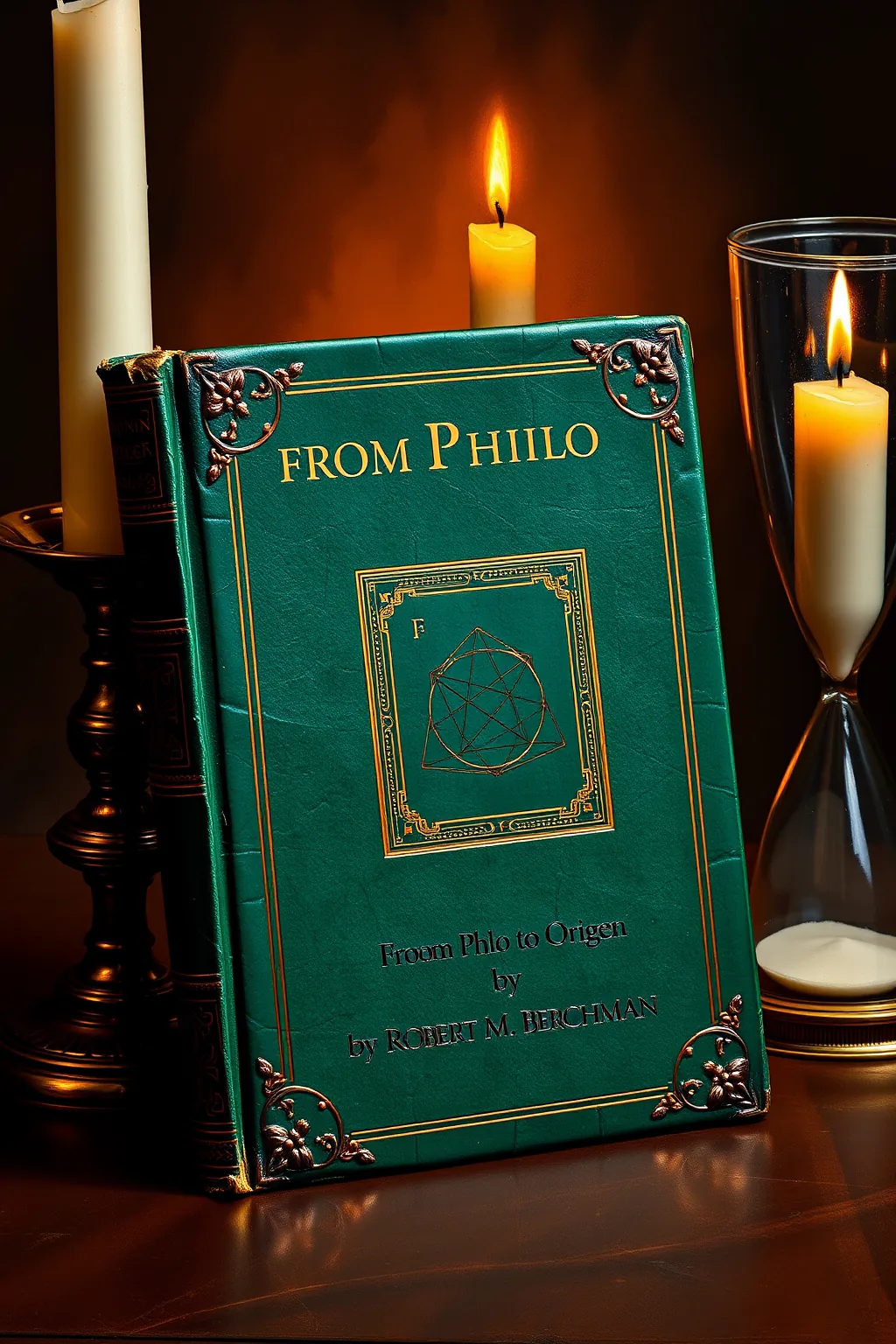
From Philo to Origen
 78
78

From Philo to Origen
Robert M. Berchman's *From Philo to Origen* offers a rigorous exploration of the philosophical scaffolding supporting early Christian theology. The book excels in its detailed exposition of Philo's thought and its demonstrable impact on subsequent Christian intellectual history. Berchman’s dissection of allegorical methods, particularly as applied to scripture by both Philo and early Christian authors like Origen, is precise and illuminating. A notable strength lies in the careful tracing of specific Platonic and Stoic concepts through these early exegetes. However, the density of the philosophical argumentation can, at times, obscure the broader historical narrative, demanding significant reader concentration. The discussion surrounding the Logos concept, for instance, while intellectually satisfying, requires careful attention to maintain the thread of its development from Hellenistic Judaism into Christian discourse. The work is an invaluable resource for specialists, though its academic rigor may present a barrier for those less familiar with the intricacies of ancient philosophy and textual criticism.
This study is a significant contribution to understanding the philosophical inheritance of early Christianity.
📝 Description
78
Published in 1984, Robert M. Berchman's work examines the philosophical roots of early Christian thought.
From Philo to Origen is a scholarly study of the intellectual currents that shaped early Christian doctrine, with a specific focus on Hellenistic philosophy. Robert M. Berchman's analysis details how thinkers like Philo of Alexandria and Origen of Caesarea synthesized ideas from various philosophical schools. The book traces the development of theological concepts, showing how elements of Platonism, Stoicism, and Jewish exegesis were incorporated into developing Christian beliefs.
This volume is for students of religious studies, philosophy of religion, and classical antiquity who have a background in ancient philosophy and early Christianity. It is especially useful for those studying the pre-Nicene period and the philosophical discussions that influenced later theological formulations. Berchman's research offers detailed textual analysis and historical context, making it a specialized work rather than an introduction.
This book engages with the scholarly examination of how diverse philosophical traditions, including Platonism and Stoicism, contributed to the formation of early Christian theology. It highlights the syncretic nature of religious discourse during that period, showing how specific thinkers actively integrated existing philosophical frameworks into their interpretations of Christian teachings. The work situates itself within scholarship that looks beyond simple origin stories to understand the complex intellectual exchanges that informed nascent Western religious thought.
💡 Why Read This Book?
• Gain specific insights into Philo of Alexandria's philosophical synthesis, understanding his method of harmonizing Jewish scripture with Hellenistic thought, a crucial precursor to Christian exegesis. • Grasp the foundational role of allegorical interpretation (*allegoria*) as a tool used by early thinkers to reconcile complex theological ideas, as demonstrated in Berchman's analysis of the period leading up to Origen. • Understand the early development of the Logos doctrine by examining its philosophical roots in figures like Philo and its subsequent adaptation within emerging Christian theology, a core element explored in the book's detailed analysis.
⭐ Reader Reviews
Honest opinions from readers who have explored this book.
❓ Frequently Asked Questions
What is the primary focus of 'From Philo to Origen'?
The book focuses on the Hellenistic philosophical influences, particularly Platonism and Stoicism, that shaped early Christian theology. It examines how figures like Philo of Alexandria and Origen of Caesarea integrated these traditions into their interpretations of scripture and doctrine.
When was 'From Philo to Origen' first published?
The original publication date for Robert M. Berchman's 'From Philo to Origen' is 1984.
What role does Philo of Alexandria play in the book?
Philo of Alexandria is presented as a pivotal figure who pioneered the philosophical harmonization of Jewish scripture with Greek philosophical concepts, establishing methods of interpretation that deeply influenced later Christian thinkers like Origen.
What is 'allegorical interpretation' as discussed in the book?
Allegorical interpretation (*allegoria*) is a method of reading texts, particularly religious scriptures, to uncover hidden, symbolic, or spiritual meanings beyond the literal sense. The book details its use by Philo and early Christian theologians.
Who would benefit most from reading this book?
Students and scholars of religious studies, philosophy of religion, classical antiquity, and early Christianity would benefit most. It's suited for those with a solid background in these fields seeking in-depth textual and philosophical analysis.
Does the book cover Origen's theological system in detail?
While Origen is a key figure discussed, the book's primary focus is on the philosophical currents that influenced him and his contemporaries. It examines his use of philosophical traditions and interpretive methods rather than a comprehensive exposition of his theology.
🔮 Key Themes & Symbolism
Hellenistic Philosophical Synthesis
The work meticulously details how early Christian thinkers absorbed and adapted the philosophical frameworks of Hellenistic traditions, particularly Platonism and Stoicism. Berchman illustrates the intellectual environment where Jewish exegesis met Greek philosophy, showing how this synthesis was not merely passive reception but an active reinterpretation to accommodate nascent Christian doctrines. The book examines specific philosophical concepts like the Logos and the nature of the soul, tracing their lineage and transformation within this syncretic milieu, highlighting a critical period of intellectual cross-pollination.
Allegorical Exegesis
A central theme is the sophisticated use of allegorical interpretation (*allegoria*) by figures such as Philo and Origen. Berchman demonstrates how this method allowed for the reconciliation of scriptural narratives with philosophical ideas, enabling early theologians to present Christianity within the intellectual discourse of the Greco-Roman world. The book analyzes the hermeneutical strategies employed, revealing how allegorical readings unlocked deeper spiritual and philosophical meanings, thereby shaping the theological language and conceptual structures of early Christianity.
The Logos Doctrine
The evolution and philosophical grounding of the Logos doctrine are critically examined. Berchman traces its development from Philo's concept of the divine intermediary, which served to bridge the gap between a transcendent God and the material world, to its appropriation and redefinition within early Christian theology. The book explores how this concept became a reference for understanding Christology, demonstrating its roots in Stoic and Platonic thought and its significance in articulating the divine nature and role of Jesus.
Philo's Influence on Christian Thought
The lasting impact of Philo of Alexandria on the intellectual trajectory of early Christianity is a recurring motif. Berchman meticulously argues that Philo's innovative approach to scripture, blending Jewish tradition with Greek philosophy, provided a vital conceptual toolkit for subsequent Christian thinkers. His exegetical methods and philosophical terminology, particularly concerning the Logos and the intermediary divine powers, laid crucial groundwork for the theological formulations of figures like Origen and the broader development of patristic thought.
💬 Memorable Quotes
Direct passages from the work, attributed to the author.
“The application of allegoria to scripture.”
— This refers to the method of interpreting texts for their symbolic or spiritual meaning beyond the literal. The book details how this technique was essential for early Christian theologians to reconcile biblical narratives with complex philosophical ideas, making their faith intellectually accessible to the Greco-Roman world.
“Origen's engagement with Platonic categories.”
— This points to Origen's intellectual practice of employing philosophical frameworks derived from Plato to understand and articulate Christian doctrine. It signifies the deep integration of philosophical systems into early Christian theology, as explored in the book's analysis of key figures.
“The Logos as a divine intermediary.”
— This concept, central to both Philo and early Christian thought, describes the Logos (Word) as a mediating principle or being between God and creation. The book examines its philosophical origins and its a central role in theological discussions about God's relationship with the world and the nature of Christ.
“The syncretic nature of early religious discourse.”
— This describes the environment where various religious and philosophical ideas mingled and influenced each other. The book emphasizes that early Christianity did not emerge in a vacuum but was deeply shaped by this dynamic exchange of concepts and traditions prevalent in the Hellenistic world.
💡 Key Ideas
Editorial paraphrase of the work's core concepts — not direct quotes.
Philo's attempt to harmonize Jewish law with Greek philosophy.
This paraphrased concept highlights Philo's foundational role in bridging two major intellectual traditions. It underscores his significance as a precursor to Christian thinkers who would similarly seek to integrate Hellenistic philosophical concepts with their religious beliefs, setting a precedent for later theological synthesis.
🌙 Esoteric Significance
Tradition
This work engages with the esoteric tradition of Hermeticism and Neoplatonism, not by directly discussing Hermetic texts, but by analyzing the philosophical and interpretive methods that underpin them. The careful dissection of allegorical techniques and the exploration of divine intermediaries (like the Logos) resonate with esoteric practices that seek hidden knowledge within scripture and cosmology. It illuminates the intellectual pathways that allowed for mystical or esoteric interpretations to flourish within broader religious frameworks.
Symbolism
The book implicitly touches upon symbolism through its exploration of the Logos, which functions as a potent symbol of divine reason and creative power bridging the divine and material realms. The emphasis on *allegoria* itself signifies a symbolic approach to understanding reality, where literal narratives or concepts point towards deeper, often spiritual or metaphysical truths, a hallmark of many esoteric traditions seeking hidden wisdom.
Modern Relevance
Contemporary esoteric scholars and practitioners interested in the historical roots of Western esotericism find value in Berchman's analysis. His work provides a crucial understanding of the philosophical and interpretive tools that enabled the development of Gnostic, Hermetic, and Kabbalistic traditions. Modern students of comparative religion and mysticism can draw upon this study to grasp how ancient philosophical concepts were transmuted and applied, influencing subsequent esoteric movements and mystical philosophies.
👥 Who Should Read This Book
• Students of comparative religion and philosophy of religion seeking to understand the intellectual synthesis that shaped early Christian theology, particularly the integration of Hellenistic thought. • Advanced scholars of late antiquity and early Christianity who require detailed textual and philosophical analysis of figures like Philo and Origen and their exegetical methods. • Individuals interested in the historical development of key theological concepts such as the Logos and the practice of allegorical interpretation, which have enduring significance in both mainstream and esoteric traditions.
📜 Historical Context
Published in 1984, Robert M. Berchman's *From Philo to Origen* emerged during a period of sustained scholarly focus on the Hellenistic foundations of Christianity. The late 20th century saw a robust engagement with the philosophical underpinnings of early Church Fathers, moving beyond purely historical or textual analyses to explore intellectual lineage. Berchman's work situates itself within this scholarly tradition, directly addressing the complex relationship between Jewish Hellenistic philosophy, as exemplified by Philo of Alexandria, and the formative theology of early Christian thinkers like Origen. This was a time when scholars were actively debating the extent of influence from schools such as Platonism and Stoicism, often contrasting these with the unique claims of Christianity. The book implicitly engages with scholars who emphasized the distinctiveness of Christian revelation while acknowledging the intellectual milieu, contributing to a nuanced understanding of how theological concepts were articulated and defended in the pre-Nicene era.
📔 Journal Prompts
Philo's harmonization of Jewish law and Greek philosophy: Identify a modern parallel.
The concept of the Logos: How does its role as intermediary inform your understanding of divine immanence?
Allegorical interpretation: Apply this method to a contemporary text or personal experience.
Origen's use of Platonic categories: Reflect on how philosophical frameworks shape religious expression.
The intellectual exchange between Judaism and Hellenistic thought: Consider its impact on your own worldview.
🗂️ Glossary
Logos
In Hellenistic philosophy and early Christian theology, the Logos (Greek for 'word' or 'reason') refers to a divine principle or intermediary through which God creates and governs the universe. Its interpretation varied from Stoic cosmic reason to Philo's concept of a divine agent and its central role in Christian Christology.
Allegoria
A method of interpretation, particularly of scripture, that seeks symbolic or spiritual meanings beyond the literal sense. It was widely used in Hellenistic philosophy and by early Christian theologians to reconcile religious texts with philosophical doctrines or to uncover hidden truths.
Platonism
A school of philosophy founded by Plato, emphasizing the existence of a area of perfect, eternal Forms or Ideas, and the material world as a lesser imitation. Key concepts include the theory of Forms, the immortality of the soul, and the pursuit of knowledge through reason.
Stoicism
A Hellenistic philosophy emphasizing virtue, reason, and living in accordance with nature. Stoics believed in a rational, ordered universe and the importance of self-control, resilience, and acceptance of fate.
Philo of Alexandria
A Hellenistic Jewish philosopher (c. 20 BCE – c. 50 CE) who sought to synthesize Jewish scripture and law with Greek philosophy, particularly Platonism and Stoicism. He is renowned for his allegorical interpretations and his concept of the Logos.
Origen of Caesarea
An early Christian scholar and theologian (c. 185 – c. 254 CE) known for his extensive writings, his development of Christian doctrine through philosophical engagement, and his sophisticated methods of biblical interpretation, including allegory. He was influenced by Platonic thought.
Hellenistic Period
The historical era following the conquests of Alexander the Great (roughly 323 BCE to 31 BCE), characterized by the spread of Greek culture, language, and ideas throughout the Mediterranean and Near East, leading to significant cultural and intellectual syncretism.
🔮 Readers Also Liked
Browse all →![Vodoo-Rituale [Voodoo-Rituale]](/img/thumb/vodoo-rituale-voodoo-rituale-heike-owusu-675339.webp)









More by Robert M. Berchman
All books →

More Free Occult Philosophy Books
View all →