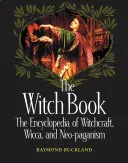
The Witch Book
 73
73

The Witch Book
Raymond Buckland's "The Witch Book" is a monumental undertaking, presenting a broad and accessible survey of witchcraft and Wicca. Its strength lies in its sheer scope; Buckland, a pivotal figure in American Wicca, draws on decades of experience and study to connect historical threads with contemporary practice. The alphabetical format makes it an excellent quick reference, covering everything from "Abracadabra" to "Zoroaster" with commendable detail for each entry. A notable limitation, however, is that its encyclopedic nature sometimes sacrifices depth for breadth. While the entry on Gardnerian Witchcraft is informative, it doesn't fully convey the initiatory nuances vital to understanding that specific tradition. Nonetheless, Buckland's work remains an invaluable resource for anyone seeking a foundational understanding of witchcraft's diverse landscape.
📝 Description
73
Raymond Buckland published 'The Witch Book' in 2001, documenting witchcraft's history and practices.
Raymond Buckland's 'The Witch Book' serves as a detailed encyclopedia of witchcraft and Wicca. It traces the historical roots of these practices and covers their practical applications, from ancient sorcery and folklore to the formation of modern Wiccan traditions. The work functions as a reference, defining terms and offering context for a wide array of subjects and figures related to witchcraft. Buckland aimed to clarify the subject for both those new to it and experienced practitioners alike.
This volume is primarily intended for students and adherents of Wicca and various witchcraft paths who want a broad overview and historical background. It also appeals to those interested in comparative religion, folklore, and the cultural history of witchcraft. Readers studying the evolution of modern Paganism, especially the impact of figures like Gerald Gardner, will find Buckland's extensive research and personal connections valuable. The book situates contemporary witchcraft within a historical continuum, referencing historical figures and movements, while also addressing its portrayal in popular culture.
Published in 2001, 'The Witch Book' arrived as Wicca and Neopaganism gained wider notice beyond subcultures. Buckland, a student of Gerald Gardner and a key figure in bringing Wicca to the United States, offers an insider's view of this growth. The book places modern witchcraft within a historical lineage, mentioning figures like Aleister Crowley and groups such as the Golden Dawn. It also discusses how witchcraft has been depicted in popular media, like the film 'Rosemary's Baby.' This historical framing was important for presenting witchcraft as a legitimate spiritual and historical subject, challenging older stereotypes and sensationalism.
💡 Why Read This Book?
• Gain clarity on the historical lineage of Wicca, understanding its roots from pre-Christian traditions to its modern form, as Buckland details the influence of figures like Gerald Gardner. • Demystify a wide range of witchcraft terminology and practices, from ancient sorcery to specific Wiccan rituals, by consulting the book's extensive alphabetical entries. • Appreciate the cultural impact of witchcraft, recognizing how figures and concepts like "Rosemary's Baby" reflect broader societal perceptions and the evolution of the Craft.
⭐ Reader Reviews
Honest opinions from readers who have explored this book.
❓ Frequently Asked Questions
What is the primary focus of Raymond Buckland's "The Witch Book"?
"The Witch Book" primarily serves as an encyclopedia of witchcraft and Wicca, covering historical aspects, practical applications, and cultural influences. It aims to provide a comprehensive overview of terms, figures, and traditions associated with the Craft.
Who is considered the author of "The Witch Book" and when was it first published?
The author is Raymond Buckland, a significant figure in introducing Wicca to the United States. The book was first published on November 1, 2001.
Does "The Witch Book" focus only on modern Wicca, or does it cover older forms of witchcraft?
The book offers a broad perspective, covering both historical witchcraft traditions, ancient sorcery, and the development of modern Wicca, including Gardnerian Witchcraft.
What kind of information can be found in the alphabetical entries of "The Witch Book"?
The alphabetical entries range from magical terms and concepts to historical figures, folklore elements, and cultural representations of witchcraft, providing definitions and contextual details.
Is "The Witch Book" suitable for complete beginners interested in witchcraft?
Yes, its encyclopedic format and broad coverage make it an excellent starting point for beginners seeking to understand the diverse landscape of witchcraft and Wicca.
What is the significance of Raymond Buckland's connection to Gerald Gardner in this book?
Buckland was a student of Gerald Gardner, a pioneer of modern Wicca. This connection provides unique historical insight into the development and transmission of Wiccan traditions discussed within the book.
🔮 Key Themes & Symbolism
Wicca and Witchcraft Spectrum
This work systematically maps the vast terrain of witchcraft, distinguishing between historical practices and the modern religion of Wicca. Buckland, a student of Gerald Gardner, clarifies the lineage and evolution of the Craft, providing context for various traditions. He explores the historical persecution of accused witches alongside the emergence of Wicca as a spiritual path, offering a balanced view that acknowledges both the folklore and the lived experience of practitioners. The book acts as a guide to understanding the diverse interpretations and applications of witchcraft in contemporary society.
Historical and Cultural Roots
Buckland traces the deep historical and cultural roots of witchcraft, extending from ancient sorcery and folklore to its manifestations in popular culture. The book examines figures like Aleister Crowley and concepts such as "Abracadabra," situating them within the broader narrative of magical and occult traditions. By referencing elements from "Rosemary's Baby" to Zoroaster, Buckland illustrates how witchcraft has been perceived and represented across different eras and societies. This historical perspective is crucial for understanding the development and resurgence of witchcraft and Wicca in the 20th and 21st centuries.
Practical and Theoretical Aspects
Beyond historical context, "The Witch Book" examines the practical and theoretical dimensions of witchcraft and Wicca. It covers essential elements of ritual, spellcraft, and magical tools, offering insights into the way practitioners engage with their beliefs. The work explains core tenets and ethical considerations within Wicca, providing a foundational understanding for those interested in its spiritual aspects. Buckland's approach aims to clarify these practices, presenting them as integral components of a living tradition rather than mere superstition.
Pioneers and Modern Practitioners
The book highlights key figures who have shaped the range of modern witchcraft and Wicca, most notably Gerald Gardner and his student, Raymond Buckland himself. Buckland's personal connection and extensive knowledge are evident as he discusses the transmission of Wiccan traditions, particularly Gardnerian Witchcraft, to the United States. By profiling these influential individuals and movements, the work provides a biographical and sociological perspective on the individuals who have dedicated themselves to the practice and preservation of the Craft.
💬 Memorable Quotes
Direct passages from the work, attributed to the author.
“From Abracadabra to Aleister Crowley to Gardnerian Witchcraft to Rosemary's Baby to sorcery and Zoroaster”
— This phrase captures the book's encyclopedic ambition, promising a wide-ranging exploration of witchcraft's historical, cultural, and practical dimensions, from ancient charms to modern Wicca and its pop culture representations.
“A student of the late Wicca pioneer Dr. Gerald Gardner”
— This highlights Buckland's direct lineage and authority within the Wiccan tradition, emphasizing his role as a transmitter of knowledge from one of modern Wicca's most foundational figures.
“Raymond Buckland has been widely credited with introducing Wicca to the United States”
— This statement underscores Buckland's significant historical contribution to the dissemination and establishment of Wicca within American spiritual and cultural landscapes.
“Unmatched in its coverage of witchcraft’s historical, practical, and cultural aspects.”
— This assertion emphasizes the book's comprehensive nature, positioning it as a definitive reference work that synthesizes diverse facets of witchcraft knowledge.
“The Witch Book by the late, great Raymond Buckland”
— This phrasing speaks to Buckland's esteemed status and the book's posthumous recognition as a significant contribution to the literature on witchcraft and Wicca.
🌙 Esoteric Significance
Tradition
While "The Witch Book" covers a broad spectrum of witchcraft, its core is deeply rooted in the Gardnerian tradition of Wicca, a lineage Buckland himself helped establish in the US. It functions as an introduction to this specific lineage while also contextualizing it within the wider history of witchcraft and occultism. The work departs from purely academic ethnographies by offering an insider's perspective, blending historical accounts with practical insights relevant to practitioners. It bridges the gap between scholarly interest and lived spiritual experience within the Western Esoteric Tradition.
Symbolism
The book frequently touches upon symbols central to Wicca and broader witchcraft lore. For instance, the crescent moon is often depicted as a symbol of the Goddess, representing feminine power, intuition, and the cycles of nature. The athame, a ritual dagger, symbolizes focused will and the element of fire or air, used for directing energy rather than for physical cutting. Other motifs explored include representations of the Horned God, embodying masculine energy, nature, and the hunt, and the pentacle, representing the five elements and protection.
Modern Relevance
Buckland's "The Witch Book" remains a foundational text for many contemporary Wiccans and witchcraft practitioners, particularly those interested in the historical development and Gardnerian roots of the Craft. Its encyclopedic format continues to serve as a valuable reference for students of comparative religion and occult studies. Modern thinkers and practitioners engaging with the history of Paganism, the evolution of spiritual movements in the West, and the cultural impact of witchcraft often cite Buckland's work as a key source for understanding these phenomena.
👥 Who Should Read This Book
• Aspiring Wiccans and witchcraft practitioners seeking a foundational understanding of the Craft's history, terminology, and diverse traditions. • Students of comparative religion and folklore interested in the cultural and historical evolution of witchcraft beliefs and practices across different societies. • Occult historians and researchers looking for a comprehensive reference work that bridges academic concepts with practitioner insights, particularly regarding the Gardnerian tradition.
📜 Historical Context
Published in 2001, "The Witch Book" arrived at a central moment for Neopaganism and Wicca, which were transitioning from fringe movements to more widely recognized spiritual paths. Raymond Buckland, a student of Gerald Gardner, played a central role in this transition, particularly in introducing Wicca to the United States starting in the 1960s. His work provided an accessible, encyclopedic reference that helped clarify witchcraft for a growing audience, countering decades of sensationalism and misinformation. The book situates modern Wicca within a historical continuum, referencing figures like Aleister Crowley and earlier occult revivals like the Golden Dawn, while also acknowledging popular culture's impact via entries on "Rosemary's Baby." This broad approach contrasted with more narrowly focused academic or practitioner texts, aiming for a comprehensive overview that validated witchcraft's historical and cultural significance.
📔 Journal Prompts
The concept of Gardnerian Witchcraft as presented by Buckland.
The historical trajectory from ancient sorcery to modern Wicca.
The cultural impact of representations like "Rosemary's Baby" on witchcraft perceptions.
Your personal understanding of the difference between historical witchcraft and Wicca.
The role of figures like Aleister Crowley in the broader occult landscape discussed.
🗂️ Glossary
Wicca
A modern Pagan religion that emphasizes reverence for nature, the divine feminine and masculine, and the practice of magic, often following a tradition established by Gerald Gardner.
Gardnerian Witchcraft
A specific tradition of Wicca founded by Gerald Gardner, known for its initiatory structure and distinct ritual practices, which Raymond Buckland helped introduce to the United States.
Sorcery
Refers to the practice of magic, often with connotations of malevolent intent or ancient, non-Wiccan magical traditions, as explored in historical witchcraft contexts.
Athame
A ritual dagger used in Wiccan and witchcraft ceremonies, primarily for directing magical energy and consecrating space, not for physical cutting.
Pentacle
A five-pointed star, often enclosed within a circle, symbolizing the five elements (earth, air, fire, water, spirit) and used as a symbol of protection and of the Craft.
The Goddess
In Wicca and many witchcraft traditions, a primary divine entity representing feminine creative power, the moon, nature, and intuition.
The Horned God
A divine masculine principle in Wicca, often associated with nature, fertility, the hunt, and the cycles of life and death, sometimes depicted with animal horns.







![ERIC ED481283: Salem Witch Trials. [Lesson Plan].](/img/thumb/eric-ed481283-salem-witch-trials-lesson-plan-eric.webp)