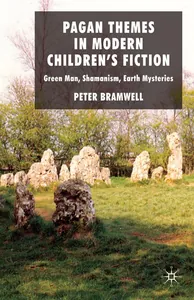
Magic, witchcraft, and religion

 79
79

Magic, witchcraft, and religion
Pamela Myers-Moro's Magic, Witchcraft, and Religion offers a rigorous academic dissection, notably in its careful examination of how historical narratives about witchcraft have been shaped by scholarly bias and societal anxieties. The work excels in its critical deconstruction of the 20th-century witch cult theories, demonstrating their weak evidential basis. A particular strength lies in its detailed analysis of the legal and social mechanisms behind historical witch trials, illustrating how accusations often served to consolidate power or eliminate perceived threats. However, the book's academic tone, while precise, can sometimes render its arguments dense for the general reader. The discussion of specific historical trials, while informative, occasionally feels less integrated into the broader theoretical arguments. Despite this, Myers-Moro provides a vital corrective to romanticized notions of witchcraft, grounding the discussion in historical realities. It is a valuable resource for those seeking a scholarly perspective on the evolution of magical and religious studies.
📝 Description
79
Pamela Myers-Moro's 2012 book surveys academic views on magic and witchcraft.
Magic, Witchcraft, and Religion offers an academic survey and critique of historical and anthropological views on magic and witchcraft. The book examines how these phenomena were understood, documented, and often pathologized across cultures and time periods. Myers-Moro engages with scholarly discourse, aiming for an understanding beyond sensationalism. It is best suited for students and scholars in religious studies, anthropology, and history who seek a critical, evidence-based approach to magical practices and witchcraft accusations. Readers interested in the history of science and its relation to belief systems will also find value. The study of magic and witchcraft has a long academic history, with significant work appearing from the late 19th and 20th centuries. Myers-Moro's book emerged during a time of critical re-evaluation of earlier theories, influenced by post-structuralist thought and a focus on ethnographic detail and socio-historical context. The book implicitly discusses the ongoing academic conversation about evidence and interpretation in the study of historical belief systems.
This book situates itself within the academic study of religion and culture, not within esoteric traditions themselves. It analyzes how magic and witchcraft have been perceived and documented by scholars, often from outside the practices. It engages with historical theories, such as Margaret Murray's work on witch cults, and critiques them based on later ethnographic and historical evidence. The focus is on the academic discourse surrounding these topics, rather than on the practices or beliefs of magic users or pagans.
💡 Why Read This Book?
• Gain a critical understanding of how scholarly interpretations of witchcraft have evolved since the mid-20th century, moving beyond outdated theories like Margaret Murray's witch cult hypothesis. • Learn to identify the social and political functions of witchcraft accusations throughout history, recognizing their role in enforcing norms and targeting specific groups. • Appreciate the complex academic debate surrounding the definition and categorization of magic, witchcraft, and religion, appreciating the methodologies scholars use to study these phenomena.
⭐ Reader Reviews
Honest opinions from readers who have explored this book.
❓ Frequently Asked Questions
What historical theories about witchcraft does Pamela Myers-Moro critique?
The book specifically challenges and deconstructs early 20th-century theories, most notably Margaret Murray's influential hypothesis of a widespread, organized European witch cult that predated Christianity.
How does the book differentiate between magic and religion?
Myers-Moro explores the often blurred lines and scholarly attempts to categorize magic and religion, examining how definitions have shifted and how power structures influence these distinctions.
What is the book's perspective on the historical witch trials?
It presents them not as evidence of actual demonic pacts, but as social phenomena driven by legal, political, and religious anxieties, often targeting marginalized individuals.
Is this book a practical guide to witchcraft?
No, Magic, Witchcraft, and Religion is an academic and historical study. It analyzes the concepts and history of witchcraft and magic from a scholarly, anthropological, and critical perspective.
When was Magic, Witchcraft, and Religion first published?
The original publication date for Pamela Myers-Moro's Magic, Witchcraft, and Religion was 2012.
What academic fields does this book contribute to?
The book is relevant to religious studies, anthropology, sociology, and history, offering critical insights into the study of belief systems and social control.
🔮 Key Themes & Symbolism
The Social Construction of Witchcraft
This theme examines how the concept of 'witchcraft' has been historically constructed and utilized within societies. Myers-Moro demonstrates that accusations of witchcraft were often less about actual magical practice and more about social control, scapegoating, and enforcing community norms. The book analyzes how legal systems and religious authorities defined and prosecuted supposed witches, revealing the underlying social anxieties and power dynamics at play during periods like the witch trials.
Critique of Early Witch Cult Theories
A significant focus is the critical re-evaluation of influential 20th-century theories, particularly Margaret Murray's hypothesis of an ancient, pan-European witch cult. Myers-Moro meticulously dissects the evidence presented by Murray and others, highlighting methodological flaws and a reliance on misinterpretations of historical documents. This theme underscores the importance of rigorous scholarship in challenging widely accepted, yet unsubstantiated, narratives within the study of witchcraft.
Defining Magic, Religion, and Science
The work probes the often-contentious boundaries between magic, religion, and science. It explores how these categories have been defined and redefined by scholars and society, often reflecting prevailing worldviews. Myers-Moro questions the utility of rigid distinctions, especially when applied to historical belief systems, suggesting that such classifications can obscure the lived realities of individuals and communities.
Anthropological and Historical Methodologies
This theme centers on the methods used to study magic and witchcraft. The book implicitly and explicitly critiques approaches that rely on conjecture or impose modern frameworks onto historical practices. It emphasizes the need for careful analysis of primary sources, consideration of cultural context, and an awareness of potential researcher bias when interpreting evidence related to belief and ritual.
💬 Memorable Quotes
Direct passages from the work, attributed to the author.
“The witch was a product of the trial, not the trial a product of the witch.”
— This interpretation highlights Myers-Moro's argument that the figure of the 'witch' as historically understood was largely defined by the legal and social processes that accused and condemned individuals, rather than reflecting an independent, pre-existing reality.
“The evidence for a widespread witch cult is exceedingly weak.”
— This statement reflects the book's central critique of early 20th-century scholarship, particularly Margaret Murray's theories. It asserts that the historical documentation does not support the existence of a unified, ancient pagan witch tradition as previously proposed.
“Definitions of magic and religion are culturally contingent.”
— This concept emphasizes that what constitutes 'magic' versus 'religion' is not a universal constant but depends heavily on the specific cultural and historical context in which these terms are applied.
“Scholarly interpretation can be as influential as the phenomena themselves.”
— This interpretation underscores the book's focus on the history of scholarship. It suggests that the way academics have studied and written about magic and witchcraft has significantly shaped public and academic understanding, sometimes creating narratives detached from historical evidence.
💡 Key Ideas
Editorial paraphrase of the work's core concepts — not direct quotes.
Accusations often served to reinforce social order.
This paraphrase points to the book's analysis of witchcraft accusations as tools for social control. It suggests that targeting individuals as 'witches' was frequently a means by which communities or authorities managed deviance and solidified existing power structures.
🌙 Esoteric Significance
Tradition
While not aligned with a specific esoteric lineage like Hermeticism or Gnosticism, this work is crucial for understanding the academic study of traditions often categorized as 'esoteric' or 'occult.' It provides a critical framework for examining the historical discourse surrounding practices and beliefs that fall outside mainstream religious and scientific paradigms. Its departure from esoteric traditions lies in its strict adherence to empirical evidence and anthropological theory, rather than mystical experience or initiation.
Symbolism
The book primarily focuses on conceptual symbolism rather than visual motifs. For instance, the 'witch' itself functions as a potent symbol, historically representing the 'other,' societal anxieties, and marginalized figures. The 'witch trial' becomes a symbol of institutional power, religious dogma, and social persecution. The concept of 'magic' itself, in its varied historical manifestations, symbolizes humanity's attempts to understand and influence the world through non-ordinary means, often distinct from or in tension with organized religion.
Modern Relevance
Contemporary scholars of religion, folklore, and cultural studies continue to draw on Myers-Moro's critical approach. Her work is relevant to modern discussions on conspiracy theories, the psychology of belief, and the social dynamics of persecution. It informs contemporary pagan and Wiccan scholars seeking to understand the historical roots and academic interpretations of their practices, providing a necessary counterpoint to purely celebratory or mythologized historical accounts.
👥 Who Should Read This Book
• Academic researchers in religious studies, anthropology, and history seeking a critical overview of witchcraft scholarship. • Students of folklore and cultural studies interested in the social construction of belief and persecution. • Skeptics and critical thinkers wanting to understand the historical and academic basis for debunking myths surrounding witchcraft and magic. • Individuals interested in the history of science and how it has intersected with, and often demonized, alternative belief systems.
📜 Historical Context
Pamela Myers-Moro's Magic, Witchcraft, and Religion emerged in 2012, a period marked by continued academic scrutiny of early 20th-century occult and anthropological studies. The preceding decades had seen extensive re-evaluations of foundational works, particularly Margaret Murray's Witchcraft at Common Law (1921) and The God of the Witches (1931), which posited a surviving pagan witch cult. Scholars like Jeffrey Burton Russell had already published extensively on the history of witchcraft. Myers-Moro's work enters this ongoing scholarly conversation, offering a critical lens on the methodologies and conclusions of earlier researchers. The book implicitly addresses the post-structuralist turn in academia, which encouraged skepticism towards grand narratives and emphasized the constructed nature of historical accounts. While not engaging directly with a specific contemporary rival school of thought in its text, its critical stance implicitly positions it against less rigorous or more romanticized interpretations of witchcraft history.
📔 Journal Prompts
Analyze the concept of the 'witch' as a social construct within your chosen historical period.
Compare the scholarly methods used by Margaret Murray to those employed by Myers-Moro.
Reflect on how societal anxieties manifest in accusations against marginalized groups throughout history.
Consider the challenges in defining 'magic' versus 'religion' across different cultures.
Examine how the legal and religious apparatus shaped the narrative of witchcraft accusations.
🗂️ Glossary
Witch Cult Hypothesis
A 20th-century theory, notably proposed by Margaret Murray, suggesting the survival of an ancient, organized pagan religion practiced by witches across Europe, which was suppressed by Christian authorities.
Social Construction
The idea that concepts, beliefs, and understandings of reality are created and maintained through social interaction and agreement, rather than being inherent or objective truths.
Historiography
The study of the writing of history, including the analysis of historical methods, the biases of historians, and the evolution of historical interpretations over time.
Folklore
The traditional beliefs, customs, and stories of a community, passed through the generations by word of mouth, including legends, myths, and fairy tales.
Anthropology
The scientific study of humanity, concerned with human behavior, human biology, cultures, societies, and linguistics, in both the present and past.
Marginalized Groups
Individuals or communities who are excluded or relegated to the fringes of society, often due to factors like class, gender, religion, ethnicity, or perceived deviance.
Scapegoating
The practice of singling out an individual or group to bear the blame for others' wrongdoings or misfortunes, often leading to persecution.
🔮 Readers Also Liked
Browse all →



![Tales of Mystery and Imagination [46 stories]](/img/thumb/tales-of-mystery-and-imagination-46-stories-edgar-allan-poe-013369.webp)


More Free Occult Philosophy Books
View all →