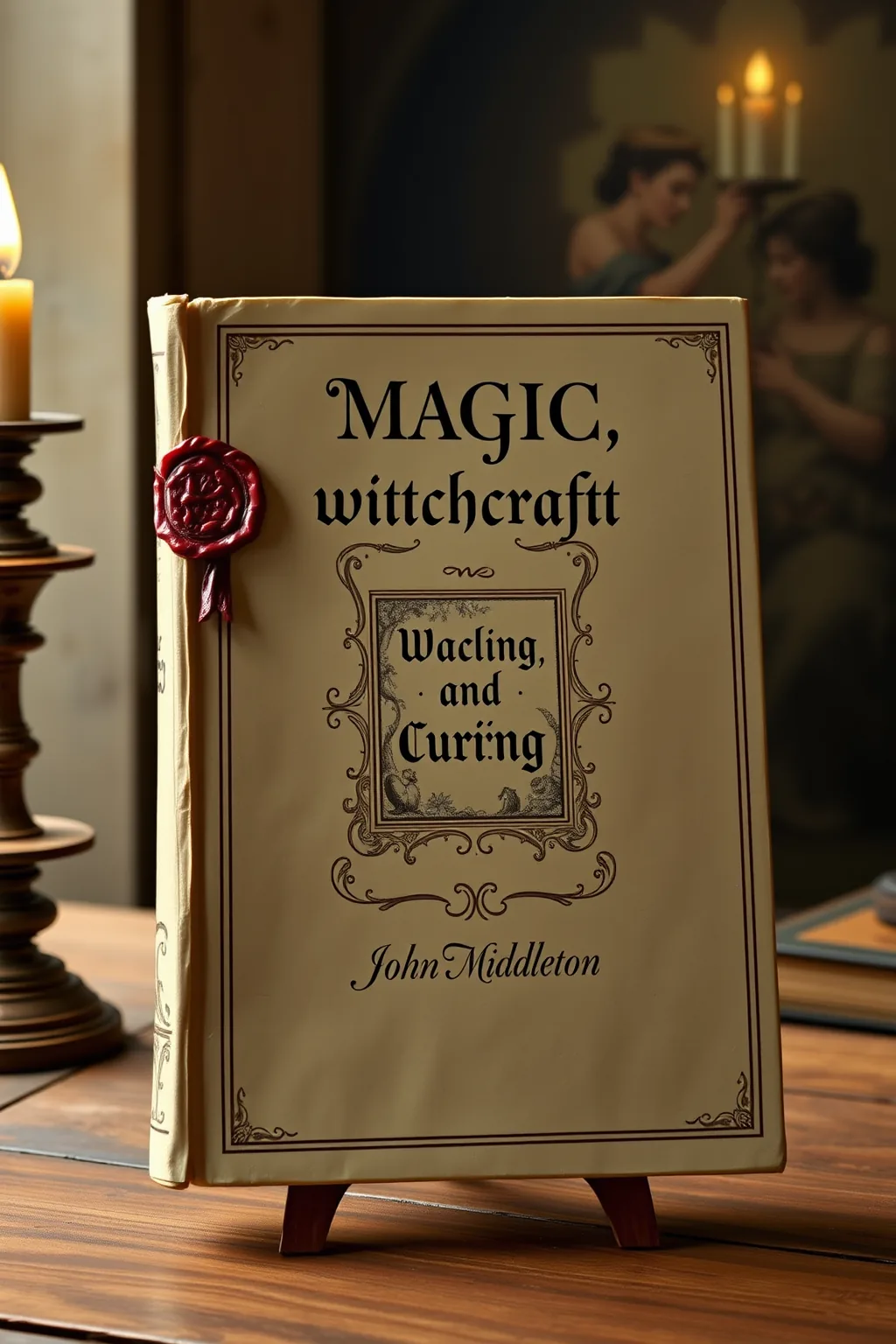
Magic, witchcraft, and curing
 79
79

Magic, witchcraft, and curing
Middleton's 1977 study, Magic, Witchcraft, and Curing, offers a sober, ethnographic lens on practices often relegated to folklore. Its strength lies in its systematic approach, treating magical acts and healing rituals not as anomalies but as functional components of social systems. The chapter detailing the diagnostic methods employed by certain West African healers, where perceived spiritual imbalances are meticulously charted, is particularly illuminating. However, the text occasionally suffers from a somewhat detached academic tone that can distance the reader from the lived experience of those whose practices are being described. A more direct engagement with the subjective impact of these rituals on participants, beyond their social function, might have added another layer of depth. Nevertheless, for its rigorous comparative analysis of belief and practice, the book remains a valuable contribution to the study of ritual efficacy.
📝 Description
79
John Middleton's 1977 book examines ritual practices and belief systems around healing and the supernatural.
Published in 1977, Magic, Witchcraft, and Curing by John Middleton offers an anthropological look at how different cultures approach healing and the supernatural through ritual. Middleton went beyond just listing practices; he wanted to understand the social and psychological reasons behind these traditions. The book came out at a time when academics were showing more interest in non-Western beliefs and folk practices. It connected with existing anthropological ideas but also pushed for a deeper grasp of how magical and curing rituals worked socially and what people believed about their effectiveness. Middleton's work looks at how belief, ritual, and social order connect. It argues that magic and witchcraft are important parts of social systems, helping to explain confusing events and maintain social control. The book analyzes 'curing' as a process that involves social and spiritual elements, not just medical ones.
This book is for students of anthropology, religious studies, and cultural history. It will also interest those who practice or study folk magic and traditional healing. It provides a basic text for understanding how societies have historically dealt with illness and misfortune using rituals.
Middleton's study engages with the anthropological understanding of witchcraft and folk healing, placing these practices within broader cultural contexts rather than viewing them as isolated superstitions. It acknowledges the social and psychological roles these traditions played in communities, particularly in explaining misfortune and managing illness. The work is situated within a lineage of scholarship that sought to understand the internal logic and societal importance of beliefs often dismissed by Western rationalism, contributing to a more respectful academic discourse on non-Western and folk spiritual systems.
💡 Why Read This Book?
• Gain an understanding of how magical beliefs and curing rituals function as integral social mechanisms, as detailed in the analysis of specific community practices from the 1970s. • Explore the anthropological perspective on witchcraft accusations and their role in social control, a concept thoroughly examined within the book's case studies. • Appreciate the complex relationship between belief, ritual, and perceived efficacy in traditional healing systems, drawing on ethnographic evidence presented throughout the text.
⭐ Reader Reviews
Honest opinions from readers who have explored this book.
❓ Frequently Asked Questions
What is the primary focus of John Middleton's Magic, Witchcraft, and Curing?
The book primarily focuses on an anthropological examination of magical beliefs, witchcraft, and traditional curing practices across various cultures, analyzing their social and psychological significance.
When was Magic, Witchcraft, and Curing first published?
Magic, Witchcraft, and Curing was first published in 1977, placing it within a period of significant development in anthropological studies of religion and ritual.
Does the book discuss specific geographical regions or cultures?
Yes, the work explores various cultures, often drawing on ethnographic research to detail their unique approaches to magic, witchcraft, and healing practices.
What academic disciplines would benefit from reading this book?
Students and scholars of anthropology, sociology, religious studies, cultural history, and those interested in the history of medicine and folk traditions would find this book beneficial.
How does Middleton approach the concept of 'curing' in the book?
Middleton approaches curing not just as a medical act but as a complex socio-spiritual process, investigating how belief systems and ritual contribute to healing outcomes.
Is the book written for a general audience or academics?
While accessible, the book is primarily written for an academic audience, employing anthropological frameworks and detailed case studies.
🔮 Key Themes & Symbolism
Social Function of Magic
Middleton investigates how magical beliefs and practices serve critical social functions within communities. This includes their role in explaining misfortune, reinforcing social norms, and managing anxieties related to the unknown. The work details how witchcraft accusations, for instance, can act as mechanisms for social control, identifying and ostracizing deviants within a group. The book emphasizes that these are not simply 'superstitions' but are often deeply embedded in the fabric of social organization and individual psychology.
Ritual Efficacy in Curing
A central theme is the analysis of curing rituals and the belief in their efficacy. Middleton examines how the performance of specific rites, the use of symbolic objects, and the invocation of spiritual powers are understood by practitioners and patients to bring about healing. The book examines how the social context and the belief system itself contribute to the perceived success of these cures, moving beyond a purely biomedical understanding of health and wellness.
Witchcraft as Social Phenomenon
The book offers a nuanced perspective on witchcraft, viewing it not necessarily as an objective reality but as a social construct and a category of explanation. Middleton explores how different societies define and perceive witchcraft, often associating it with malevolent forces and unexplained calamities. The study examines the social dynamics surrounding accusations of witchcraft, including the processes of identification, accusation, and the subsequent social consequences for individuals and the community.
Belief Systems and Worldview
Magic, Witchcraft, and Curing fundamentally explores how belief systems shape a culture's worldview. It demonstrates how shared understandings of the supernatural, the cosmos, and the forces that influence human life are articulated through magical practices and healing traditions. The work highlights the coherence of these systems within their own cultural logic, providing frameworks for understanding and interacting with the world.
💬 Memorable Quotes
Direct passages from the work, attributed to the author.
“The efficacy of a cure is often tied to the social system that validates it.”
— This interpretation highlights Middleton's view that healing is not solely a biological event but is deeply influenced by the community's acceptance and belief in the methods used, underscoring the social construction of health.
“Rituals provide a structured response to existential uncertainties.”
— This interpretation emphasizes that the performance of magical or religious rituals offers individuals and communities a sense of control and understanding when faced with unpredictable events like illness or disaster.
“Understanding magical practices requires acknowledging their internal logic.”
— This suggests that one should not judge magical beliefs by external, scientific standards but rather seek to comprehend the coherent system of thought and cosmology from which they arise.
“Curing is as much a social process as a medical one.”
— This interpretation points to Middleton's argument that the social context, including the healer-patient relationship and community support, plays a vital role in the healing process, alongside any physical interventions.
💡 Key Ideas
Editorial paraphrase of the work's core concepts — not direct quotes.
Witchcraft accusations serve to define the boundaries of acceptable behavior.
This paraphrased concept suggests that identifying someone as a 'witch' can be a social mechanism to enforce conformity and punish transgressions against group norms, thereby maintaining social order.
🌙 Esoteric Significance
Tradition
While not strictly an esoteric text itself, Middleton's work engages with the anthropological study of traditions that often overlap with esoteric interests. It examines belief systems that inform magical practices, which are a component of many esoteric lineages. Its contribution lies in providing a critical, academic framework for understanding the cultural context and social mechanisms underlying what practitioners might consider sacred or potent forces, bridging folk belief and academic analysis.
Symbolism
The book implicitly analyzes the symbolism embedded in curing rituals and witchcraft lore. For instance, the symbolic use of herbs in healing ceremonies, or the symbolic representation of malevolent forces in witchcraft narratives, are explored not just as decorative elements but as carriers of meaning and power within specific cultural cosmologies. These symbols function to map the perceived spiritual landscape and guide ritual action.
Modern Relevance
Contemporary scholars of religion, ritual studies, and medical anthropology continue to draw on Middleton's analytical approach. His emphasis on the social construction of illness and healing, and the functional role of belief systems, remains relevant for understanding modern alternative healing movements, the sociology of pseudoscience, and cross-cultural medical practices. The work provides a historical baseline for analyzing how societies engage with the non-rational.
👥 Who Should Read This Book
• Students of anthropology and sociology seeking foundational texts on belief systems and ritual practices across cultures. • Researchers in religious studies interested in the comparative analysis of magic, witchcraft, and healing traditions. • Individuals curious about the historical academic understanding of folk magic and its social integration, offering context beyond modern occult literature.
📜 Historical Context
Magic, Witchcraft, and Curing, published in 1977, emerged from a rich tradition of anthropological inquiry into 'primitive' religions and belief systems, building upon the foundational work of scholars like E.E. Evans-Pritchard and his studies on Azande witchcraft. The late 1970s saw a shift in anthropology towards more nuanced understandings of ritual and belief, moving away from purely functionalist or evolutionary explanations. Middleton's work contributed to this by examining the social dynamics and psychological aspects of these practices. It navigated a landscape where earlier scholarship had sometimes dismissed such beliefs as irrational, aiming instead for an emic perspective. Contemporaries like Mary Douglas, with her work on pollution and taboo, were also exploring the symbolic orders of societies, though with a different theoretical emphasis. The book's reception likely fell within academic circles, contributing to ongoing debates about the nature of magic and its place in human societies.
📔 Journal Prompts
The social construction of witchcraft accusations as detailed in the text.
Ritual efficacy: examining a specific curing practice described by Middleton.
The relationship between belief systems and societal anxieties.
Middleton's analysis of magic as a functional social mechanism.
Interpreting the symbolic language of a described healing ritual.
🗂️ Glossary
Efficacy
In the context of the book, efficacy refers to the perceived or actual effectiveness of a ritual or magical practice in achieving its intended outcome, such as healing or protection.
Cosmology
A society's or culture's understanding of the fundamental nature of the universe, including its origin, structure, and the forces that govern it.
Ritual
A set of actions, performed in a prescribed order, often symbolic, intended to achieve a specific purpose, particularly in religious or magical contexts.
Witchcraft
In anthropological terms, often refers to a belief system wherein individuals are thought to possess malevolent supernatural power, used to cause harm or misfortune.
Folk Magic
Magical beliefs and practices transmitted informally within a community, often distinct from formal religious institutions or codified magical systems.
Ethnography
The systematic study of people and cultures, involving the observation and recording of their customs, behaviors, and beliefs, often through fieldwork.
Social Control
The means by which a society regulates the behavior of its members to ensure conformity and maintain order.
🔮 Readers Also Liked
Browse all →








More by Middleton, John
All books →
More Free Occult Philosophy Books
View all →