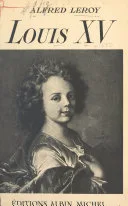
Louis XV
 71
71

Louis XV
Alfred Leroy's "Louis XV" is not a book that pulls punches; it's a dense, fact-driven account of a monarch whose reign is often overshadowed by his predecessor and successor. Leroy's strength lies in his unwavering focus on the mechanics of power, particularly the intricate web of court politics and diplomatic maneuvering that defined Louis XV's era. He meticulously details the machinations surrounding the Seven Years' War, for instance, highlighting the king's role in its initiation and the subsequent territorial losses. A limitation, however, is the book's somewhat dry prose, which, while precise, can make sustained engagement challenging for the casual reader. The detailed descriptions of ministerial appointments and shifting alliances, while historically crucial, occasionally feel like an exhaustive ledger rather than a narrative. Yet, the chapter dissecting the growing discontent among the populace, even before the revolutionary fervor, offers a chillingly prescient look at the cracks forming in the Ancien Régime. "Louis XV" is a valuable, if demanding, study for those committed to understanding the twilight of French absolutism.
📝 Description
71
Alfred Leroy's 1938 study of Louis XV analyzes the French court beyond mere biography.
Alfred Leroy's "Louis XV" examines the French monarch not simply as an individual, but as a figure shaped by the political and social forces of his time. Published in 1938, this work offers a detailed account of the period, focusing on the king's personal impact and the wider dynamics of French court life. The book is intended for readers interested in the French monarchy, especially the 18th century, and those who value thorough historical analysis. It will interest students of European history and political science, as well as anyone wanting to understand the conditions in France before the Revolution. Both academic historians and amateur enthusiasts will find its broad coverage useful.
Leroy's study draws on a tradition of French historical writing while also incorporating insights from the nascent social sciences of the early 20th century. Its 1938 publication, during a time of European political instability, implicitly considers the nature of power and the erosion of absolute monarchies. The book engages with earlier thinkers like Alexis de Tocqueville, who explored the social factors leading to the French Revolution, presenting an alternative to purely biographical narratives.
While not explicitly esoteric in the occult sense, Leroy's work engages with the deeper structures of power and societal decline, themes often explored in esoteric thought. Its publication in 1938, against a backdrop of major political shifts, invites reflection on historical cycles and the fate of established orders, resonating with traditions that examine hidden currents beneath surface events. The focus on courtly intrigue and the king's personal influence within a crumbling system offers a case study in the dynamics of symbolic power and its eventual dissolution.
💡 Why Read This Book?
• Gain a granular understanding of 18th-century French statecraft, including the specific diplomatic challenges faced by Louis XV during the Seven Years' War (1756-1763). • Appreciate the nuanced portrayal of courtly influence, particularly the documented impact of figures like Madame de Pompadour on political decisions. • Grasp the socio-political climate that set the stage for the French Revolution by examining Leroy's analysis of pre-revolutionary French society.
⭐ Reader Reviews
Honest opinions from readers who have explored this book.
❓ Frequently Asked Questions
What is the primary focus of Alfred Leroy's "Louis XV"?
The book provides a detailed historical analysis of Louis XV's reign, focusing on the political, social, and courtly dynamics that characterized 18th-century France and influenced the monarch's actions.
When was "Louis XV" by Alfred Leroy first published?
Alfred Leroy's "Louis XV" was first published in 1938, making this digital edition a republication of an earlier work.
Does the book discuss the Enlightenment's impact on Louis XV's reign?
Yes, the work explores the burgeoning Enlightenment ideas of the period and how they began to challenge the established monarchical order, even during Louis XV's time.
Who were some key figures discussed in relation to Louis XV's court?
The book likely discusses influential figures such as Madame de Pompadour, royal mistresses who held significant sway, and various ministers and courtiers involved in the political landscape.
Is this book suitable for a general audience or academic readers?
While accessible to dedicated general readers interested in history, its detailed analysis and scholarly approach make it particularly valuable for academic study of the French monarchy.
What historical period does Alfred Leroy's "Louis XV" cover?
The book covers the reign of Louis XV of France, a period that spans from 1715 to 1774, focusing on the political and social developments within that era.
🔮 Key Themes & Symbolism
The Mechanics of Absolutism
Leroy dissects the intricate workings of absolute monarchy under Louis XV, moving beyond mere personal biography to expose the systemic machinery of statecraft. The book details how royal authority was exercised, the influence of ministers and advisors, and the constant negotiation of power within the Versailles court. It examines the king's personal role in decision-making, particularly during crises like the Seven Years' War, illustrating the practical application and limitations of monarchical power in the mid-18th century.
Court Life and Influence
Beyond political strategy, the work illuminates the crucial role of courtly life in shaping policy and reputation. The influence of royal mistresses, such as the well-documented presence and impact of Madame de Pompadour, is explored not just as personal dalliances but as significant political forces. Leroy shows how social standing, alliances, and personal relationships at court directly affected ministerial appointments and diplomatic orientations, creating a complex social ecosystem that underpinned the monarchy.
Precursors to Revolution
Leroy's study, published in 1938, implicitly analyzes the societal fissures that would eventually erupt in the French Revolution. While focused on Louis XV's era, the book details the growing public discontent, the financial strains on the state, and the intellectual shifts brought about by the Enlightenment. It provides historical context for understanding the decline of the Ancien Régime, showing how the policies and the very nature of Louis XV's rule contributed to the instability that his successors would inherit.
Diplomacy and Warfare
The book offers a thorough examination of French foreign policy during Louis XV's reign, notably the costly Seven Years' War (1756-1763). Leroy analyzes the strategic decisions, the diplomatic alliances formed and broken, and the ultimate consequences for France's standing in Europe. This section highlights the king's engagement with international affairs and the significant territorial and economic impact of his military engagements, demonstrating the pressures of European power politics.
💬 Memorable Quotes
Direct passages from the work, attributed to the author.
“Madame de Pompadour's influence extended beyond personal favor to shape ministerial appointments and foreign policy.”
— This interpretation underscores the book's depiction of royal mistresses not merely as consorts but as significant political actors whose access to the king translated into tangible influence over state affairs.
“The shifting alliances in Europe demanded constant vigilance and strategic adaptation from the French crown.”
— This interpretation reflects the book's focus on the complex geopolitical range of the 18th century, emphasizing the challenges Louis XV faced in reading through the power struggles between European states.
💡 Key Ideas
Editorial paraphrase of the work's core concepts — not direct quotes.
The king's authority was increasingly subject to the currents of courtly intrigue and the demands of international conflict.
This paraphrased concept highlights the central tension in Louis XV's reign: the theoretical absolute power of the monarch was constantly challenged by the practical realities of court politics and the pressures of European diplomacy and war.
The financial burdens accumulated during the period laid groundwork for future unrest.
This paraphrased idea points to Leroy's analysis of the economic conditions under Louis XV, suggesting that fiscal mismanagement and costly wars contributed to the societal discontent that would later fuel the French Revolution.
Enlightenment discourse began to subtly erode the foundations of traditional monarchical legitimacy.
This paraphrased concept addresses the intellectual climate of the era, indicating how new philosophical ideas, even if not directly confronting the king, were gradually undermining the perceived divine right and unquestioned authority of rulers.
🌙 Esoteric Significance
Tradition
While not overtly esoteric, Leroy's work on Louis XV can be viewed through the lens of esoteric interpretations of power and history. The study of monarchy, particularly the decline of an absolute system, touches upon themes of divine right, the spiritual authority of rulers, and the karmic or cyclical nature of historical epochs. In esoteric traditions that analyze societal structures and leadership, the reign of a monarch like Louis XV might be examined for its alignment or misalignment with higher cosmic principles or its role in a larger unfolding of human consciousness.
Symbolism
The figure of Louis XV himself can be seen as a symbol of the waning solar authority, representing a king who, despite inheriting immense power, presided over a period of decline and growing societal disconnect. Versailles, the opulent court, symbolizes the material manifestation of power, but also its potential for decadence and isolation from the populace. The encroaching Enlightenment can be interpreted esoterically as the rising light of reason challenging the established, older forms of spiritual or monarchical authority, signaling a necessary but potentially chaotic transition.
Modern Relevance
Contemporary esoteric thinkers and practitioners interested in political philosophy, the nature of leadership, and historical cycles might draw parallels between the challenges faced by Louis XV and modern governance. Studies of power dynamics, societal decay, and the transition from established orders to new paradigms remain relevant. Esoteric analyses of historical figures and periods often seek lessons in leadership, spiritual responsibility, and the underlying forces driving societal change, making Leroy's detailed account of a central reign a valuable resource for such investigations.
👥 Who Should Read This Book
• Students of European history and political science seeking detailed analysis of 18th-century monarchies. • Readers interested in the social and cultural dynamics of pre-revolutionary France and the court of Versailles. • Historians and scholars examining the mechanisms of absolute power and its eventual decline in Western Europe.
📜 Historical Context
Alfred Leroy's "Louis XV," published in 1938, emerged during a period of intense European geopolitical tension, a stark contrast to the perceived stability of the Ancien Régime it describes. The intellectual currents of the time, marked by a growing interest in social history and the influence of thinkers like Marc Bloch and Lucien Febvre of the Annales School, likely informed Leroy's focus on the broader socio-political structures rather than solely biographical accounts. While the book engages with the tradition of French monarchical studies, it implicitly contrasts with more celebratory or purely biographical works. The 1930s also saw burgeoning interest in the causes of the French Revolution, with scholars examining the preceding decades. Leroy's work contributes to this discourse by meticulously detailing the reign of Louis XV, a period often seen as a slow decline that set the stage for 1789. The reception of such works in the interwar period often reflected contemporary anxieties about the fragility of established powers and the rise of new ideologies.
📔 Journal Prompts
The king's struggle with maintaining authority during the Seven Years' War.
The documented influence of Madame de Pompadour on ministerial decisions.
The financial strains on the state during Louis XV's reign.
The perceived disconnect between the court at Versailles and the populace.
The impact of Enlightenment discourse on the legitimacy of absolute monarchy.
🗂️ Glossary
Ancien Régime
The political and social system of France prior to the French Revolution of 1789, characterized by absolute monarchy and a rigid social hierarchy.
Absolutism
A political doctrine and practice where a monarchical ruler holds supreme, autocratic authority, not being restricted by written laws, legislature, or customs.
Enlightenment
An 18th-century intellectual and philosophical movement that emphasized reason, individualism, and skepticism towards traditional authority, profoundly influencing political thought.
Seven Years' War
A global conflict from 1756 to 1763 involving most of the great powers of the time, which resulted in significant territorial changes, particularly for France and Great Britain.
Ministerial Appointments
The formal process by which individuals are selected and appointed to hold positions within the government or council of a monarch or state.
Courtly Intrigue
The complex system of secret plots, alliances, and rivalries that characterized the social and political life within a royal court.
Royal Mistress
A woman who is the acknowledged or favored lover of a monarch, often wielding considerable informal influence over political affairs.