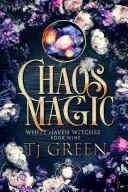
Chaos Magic
 83
83

Chaos Magic
TJ Green’s *Chaos Magic* presents a compelling argument for magic as a malleable, results-oriented discipline. The work excels in its clear exposition of core principles, particularly the concept of belief as a fluid, actionable component of magical practice. Green effectively deconstructs the perceived necessity of ancient rites, foregrounding the individual practitioner’s agency. A notable strength is the book’s accessible breakdown of sigil creation and charging, making a complex technique feel approachable. However, the narrative, while informative, occasionally feels like a primer rather than a deep exploration. The early sections, detailing the fallout among the White Haven witches, while engaging, sometimes detract from the core magical exposition, momentarily pulling focus from the esoteric mechanics. Despite this, the book provides a solid foundation for understanding modern magical theory. It’s a competent introduction to a dynamic field.
📝 Description
83
TJ Green's Chaos Magic appeared in the late 20th century, a time of counter-culture thought.
Chaos Magic is not a single text but a modern current in Western esotericism that focuses on practical results. Its core idea is that belief itself is a tool, adaptable rather than fixed. Practitioners often combine ideas from many different sources to create personal magical systems designed to achieve specific goals. This emphasis on effectiveness and flexibility sets it apart from traditions that demand strict adherence.
This work is for those tired of rigid magical structures or looking for a more adaptable approach. It appeals to people who question established ideas and want to experiment with consciousness and reality. Anyone seeking practical methods for personal change or problem-solving, regardless of prior magical experience, will find this useful. The movement emerged in the late 20th century, influenced by figures like Peter J. Carroll and Austin Osman Spare, moving away from older, structured orders with a DIY attitude.
This book situates Chaos Magic within the Western esoteric tradition, distinguishing it from earlier, more dogmatic systems. It arose from the post-modern and counter-cultural shifts of the late 20th century, valuing individual experimentation and pragmatic outcomes. Unlike older magical disciplines with fixed pantheons or rituals, Chaos Magic encourages practitioners to adopt and discard belief systems as needed, drawing from any source that yields results.
💡 Why Read This Book?
• Gain practical techniques for sigil creation and charging, directly applicable to personal goal manifestation, as detailed in the book's foundational chapters on symbolic magic. • Understand the concept of belief as a tool, allowing you to experiment with adopting and discarding belief systems for specific magical outcomes, a core tenet explored by TJ Green. • Explore a modern esoteric approach that prioritizes personal efficacy and adaptability over rigid dogma, offering a fresh perspective compared to traditional magical systems.
⭐ Reader Reviews
Honest opinions from readers who have explored this book.
❓ Frequently Asked Questions
What is the primary philosophical basis of Chaos Magic as presented by TJ Green?
The primary philosophical basis is pragmatism and epistemological skepticism. Chaos Magic posits that belief is a tool, and the effectiveness of a magical system is paramount, not its inherent truth or origin.
How does Chaos Magic differ from traditional witchcraft or Hermeticism?
Unlike traditional paths that often rely on established lineages and dogmas, Chaos Magic is highly individualistic, encouraging practitioners to create their own systems by borrowing techniques from any source and prioritizing results over adherence to tradition.
What is a sigil in the context of Chaos Magic?
A sigil is a symbol created to represent a specific magical intention. In Chaos Magic, sigils are typically charged by bringing them to a state of intense emotional or energetic arousal, then often forgotten to allow the subconscious to work.
Does Chaos Magic require belief in supernatural entities?
Not necessarily. While some practitioners may incorporate deities or spirits, the core principle is that belief itself, regardless of the object of belief, is the engine of magic. Entities can be treated as psychological archetypes or foci for belief.
When was Chaos Magic first significantly theorized and published?
Key theoretical groundwork for Chaos Magic was laid in the late 1960s and 1970s, with influential texts like Peter J. Carroll's 'Liber Null' appearing in the early 1980s, establishing many of its core concepts.
What role does altered state of consciousness play in Chaos Magic?
Altered states are crucial for bypassing the conscious mind's critical factor, allowing the magical intention embedded in sigils or spells to be impressed upon the subconscious and, by extension, reality. Techniques vary widely.
🔮 Key Themes & Symbolism
The Power of Belief
This work underscores that belief is not a passive state but an active, malleable force. Practitioners are encouraged to adopt belief systems instrumentally, using them as catalysts for magical change without necessarily subscribing to their ultimate truth. This contrasts sharply with traditions that demand unwavering faith in specific doctrines or cosmologies. The book illustrates how shifting one's belief state can unlock new potentials and alter perceived reality, framing belief as a highly practical, programmable element of magic.
Sigil Craft and Subconscious Imprinting
Sigil magic forms a central to Chaos Magic practice. The book details methods for constructing potent symbols that encapsulate desires, charging them through intense emotional or psychic states, and then 'forgetting' them to facilitate subconscious integration. This process bypasses conscious resistance, allowing the sigil's intent to manifest indirectly. The emphasis is on personal meaning and the efficacy of the technique, regardless of traditional symbolic associations.
Eclecticism and Personal Gnosis
Chaos Magic champions an eclectic approach, encouraging practitioners to draw techniques and symbols from any source—mythology, science fiction, pop culture, or established esoteric traditions. The goal is personal gnosis, or direct experience of the divine/ultimate reality, achieved through whatever methods prove effective for the individual. This radical freedom allows for the creation of highly personalized magical systems, moving beyond the confines of historical or cultural dogma.
The Gnostic Underpinnings
While not strictly Gnostic, Chaos Magic shares a certain affinity with Gnostic thought, particularly in its emphasis on subjective experience and gnosis as the path to liberation or understanding. The rejection of rigid, external dogma and the focus on the individual's direct experience of reality and consciousness echo Gnostic themes of hidden knowledge and spiritual autonomy.
💬 Memorable Quotes
Direct passages from the work, attributed to the author.
“The rules have changed. The rules have changed.”
— This repeated phrase signifies a rethinking within the narrative, indicating that previous assumptions and trust structures are no longer valid, forcing characters to adapt and rely on new methods or alliances.
“The search for those who betrayed them tests their resources and their abilities.”
— This highlights the central conflict: an investigation into betrayal that pushes the characters to their absolute limits, demanding both practical skills and latent magical capabilities to uncover the truth.
“But it’s not easy. The path they follow is dark and twisted and leads them in directions they can’t predict.”
— This conveys the perilous and unpredictable nature of the quest. It suggests that uncovering the truth involves confronting difficult realities and venturing into unknown territories, both external and internal.
“Knowing who to trust is the only thing that may save them.”
— This distilled statement emphasizes the critical importance of discernment and interpersonal judgment in the face of deception. Trust becomes the ultimate currency and survival mechanism.
“Reeling from the events that revealed other witches were behind the attack on Reuben and Caspian...”
— This sets the immediate post-crisis context, establishing that the protagonists have recently suffered an attack and discovered the perpetrators were within their own perceived circle, shattering their sense of security.
🌙 Esoteric Significance
Tradition
Chaos Magic positions itself as a meta-tradition, or an anti-tradition, within Western esotericism. It departs from established lineages like Hermeticism or Kabbalah by rejecting the necessity of adhering to their specific cosmologies and rituals. Instead, it draws inspiration from them, alongside diverse sources, prioritizing the practitioner's subjective experience and the efficacy of their chosen methods. It is characterized by its post-modern, pragmatic, and often Gnostic-adjacent emphasis on gnosis achieved through personal exploration.
Symbolism
Key symbols in Chaos Magic are often ad hoc and personally created, such as sigils designed by the practitioner. However, motifs like the 'chaos star' (a symbol representing the void or potentiality) and the use of 'gnostic' states (altered consciousness) are prevalent. The concept of the 'daemon' or personal genius, often linked to Austin Osman Spare's work, serves as a focus for individual magical will and development, representing the practitioner's unique potential.
Modern Relevance
Chaos Magic continues to be highly relevant in the digital age. Its emphasis on individual experimentation, meme-like propagation of ideas, and adaptable systems makes it well-suited for online communities and contemporary practitioners seeking practical, non-dogmatic magical approaches. Thinkers and practitioners exploring digital consciousness, post-theism, and innovative forms of ritual often engage with Chaos Magic principles. Its influence can be seen in various forms of modern occultism and self-directed spiritual development.
👥 Who Should Read This Book
• Aspiring practitioners seeking a flexible, results-oriented magical system, unburdened by historical dogma or complex initiation rites. • Skeptics of traditional occultism interested in exploring the psychological and practical applications of belief and consciousness manipulation. • Advanced practitioners looking to deconstruct and revitalize their existing magical frameworks by incorporating principles of chaos and personal gnosis.
📜 Historical Context
Chaos Magic emerged in the late 20th century, a period marked by a surge in interest in occultism and a growing dissatisfaction with the perceived rigidity of older magical traditions. Influenced by the work of figures like Austin Osman Spare and Peter J. Carroll, it offered a radically pragmatic and individualistic approach. Unlike the structured ceremonial magic of the Golden Dawn or the ritualistic practices of modern witchcraft, Chaos Magic prioritizes results and personal belief above all else. Its development coincided with the rise of postmodernism and cyberculture, fostering an ethos of DIY experimentation and a blending of diverse symbolic systems. While not always receiving formal academic attention upon its inception, its concepts have permeated contemporary magical discourse, influencing online communities and independent practitioners worldwide. It represents a significant departure from the more dogmatic esotericism that preceded it.
📔 Journal Prompts
Reflect on the concept of 'belief shifting' as presented in the text.
Consider the effectiveness of sigil magic for a personal goal.
Analyze the narrative's depiction of betrayal and trust.
Explore the idea of magic as a pragmatic tool.
How does the text challenge traditional esoteric structures?
🗂️ Glossary
Sigil
A symbol, often abstract, created to represent a specific magical intention. In Chaos Magic, sigils are charged and then 'forgotten' to allow the subconscious to work towards their manifestation.
Belief Shifting
The practice of adopting and discarding belief systems as needed to fuel magical operations. It views belief as a tool rather than an immutable truth.
Gnosis
Direct, intuitive knowledge or experience of the divine or ultimate reality. Chaos Magic often seeks gnosis through altered states of consciousness.
Pragmatism
An approach that emphasizes practical results and effectiveness over theoretical considerations or adherence to dogma. Central to Chaos Magic's philosophy.
Magical Attack
An aggressive act undertaken using magical means, often involving deception or betrayal within a magical community, as depicted in the narrative.
White Haven Witches
A specific group or coven within the fictional narrative of TJ Green's work, whose internal dynamics and conflicts drive the plot.
Altered State of Consciousness
Any mental state significantly different from the normal waking state, often induced through techniques like meditation, sensory deprivation, or intense emotion, used to bypass the conscious mind.