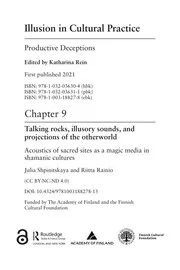
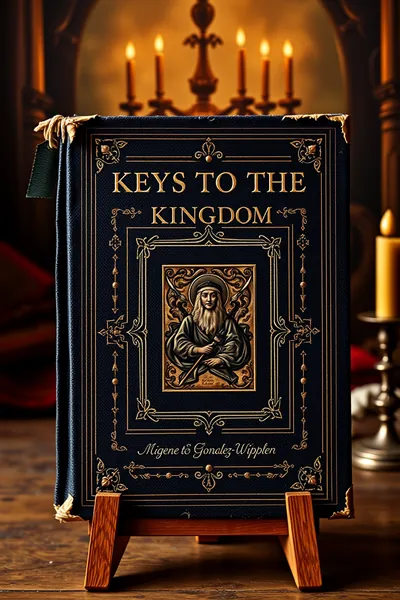
Leyendas de la Santeri a

 80
80

Leyendas de la Santeri a
Migene González-Wippler’s ‘Leyendas de la Santería’ approaches its subject matter with a commendable directness, aiming to catalogue the foundational narratives of this vibrant religion. The strength of the work lies in its systematic presentation of Orisha lore, providing a clear framework for understanding their individual stories and interrelations. A particular passage detailing the exploits of Ogun, the Orisha of iron and war, effectively illustrates the archetypal power the book seeks to convey. However, the book sometimes feels more like a compendium than an analysis, occasionally lacking deeper interpretive threads that might connect these legends to broader philosophical or psychological themes. The prose, while clear, can be somewhat dry, which may limit its appeal to readers seeking a more narrative or evocative experience. Nevertheless, for those needing a structured overview of Santería's mythical architecture, it proves a useful, if not entirely exhilarating, resource.
📝 Description
80
Migene González-Wippler's 2009 book details the myths and legends of Santería.
Leyendas de la Santería, published in 2009, examines the myths, legends, and spiritual narratives central to the Santería religion. The book details the pantheon of Orishas, which are divine manifestations of Olodumare, and discusses their origins, attributes, and their connections to humanity and the cosmos. It serves as a guide to the foundational lore that shapes Santería practice, organizing its rich oral traditions for a clearer understanding.
This text is for students of Afro-Caribbean religions, scholars of comparative mythology, and practitioners who want to comprehend Santería's spiritual elements more deeply. It is useful for those approaching the subject with academic rigor or a genuine interest in the origin stories of deities and rituals. Readers interested in the syncretic development of religious practices in the Americas will find it particularly valuable. The book's creation occurred during a time of increased academic and popular focus on African diasporic religions in the late 20th and early 21st centuries. As more people sought to document and understand traditions like Santería, works that collected oral histories became important. Its 2009 publication date reflects a shift toward making such texts more widely available.
This work sits within the study of Afro-Caribbean religions, a field that documents and analyzes spiritual traditions born from the African diaspora. It specifically addresses Santería, a syncretic religion that blends Yoruba beliefs with Catholicism. The book's focus on the myths and narratives surrounding the Orishas positions it as a resource for understanding a complex system of belief and practice that has been shaped by history, culture, and spirituality.
💡 Why Read This Book?
• Gain insight into the specific narratives surrounding the Orishas, such as the tales of Eleggua and Obatala, providing a foundational understanding of their roles and attributes not found in generalized mythology texts. • Comprehend the function of *patakies* as sacred stories that transmit ethical teachings and cosmological views, offering a unique perspective on the didactic nature of religious lore. • Understand the historical context of Santería's codification, particularly the significance of its first publication in 2009, revealing how oral traditions are preserved and transmitted in the modern era.
⭐ Reader Reviews
Honest opinions from readers who have explored this book.
❓ Frequently Asked Questions
What is the primary focus of 'Leyendas de la Santería'?
The book primarily focuses on detailing the myths, legends, and sacred stories of the Orishas within the Santería religion, exploring their origins, characteristics, and relationships.
Who is Migene González-Wippler, the author?
Migene González-Wippler is an author known for her extensive work on Santería, Caribbean folklore, and occult traditions. Her writings often aim to demystify these subjects for a wider audience.
When was 'Leyendas de la Santería' first published?
The book 'Leyendas de la Santería' was first published in 2009, reflecting a period of increased interest in documenting Afro-Caribbean religious traditions.
What are Orishas in the context of Santería?
Orishas are divine manifestations or spirits, often associated with natural forces and human archetypes, central to the Santería belief system. They are seen as intermediaries between humanity and the Supreme Being, Olodumare.
Does the book explain Santería rituals?
While the book focuses on the legends and myths, understanding these narratives is foundational to comprehending the symbolism and purpose behind many Santería rituals.
Is 'Leyendas de la Santería' suitable for beginners?
Yes, the book provides a structured introduction to the core mythology of Santería, making it suitable for beginners interested in understanding its foundational stories.
🔮 Key Themes & Symbolism
The Orisha Pantheon
This theme centers on the diverse array of Orishas, the divine entities central to Santería. The work details figures like Eleggua, the opener of ways; Obatala, the father of creation; and Ogun, the Orisha of iron and war. Each Orisha is presented with their specific domains, personalities, and mythic genealogies, illustrating how they embody natural forces and aspects of the human condition. The interconnectedness and relationships between these deities form a crucial part of understanding the Santería cosmology as presented in the book.
Patakies: Sacred Narratives
Central to the transmission of knowledge in Santería are the *patakies*, the sacred stories that recount the deeds, challenges, and wisdom of the Orishas. This theme examines how these narratives function not merely as folklore but as didactic tools, imparting moral lessons, explaining natural phenomena, and guiding practitioners. The book presents selected *patakies*, highlighting their allegorical significance and their role in shaping the worldview and practices of adherents, demonstrating their importance in preserving cultural and spiritual heritage.
Cosmological Framework
The book explores the overarching structure of the Santería universe, beginning with the supreme creator, Olodumare. It explains the hierarchical relationships between Olodumare, the Orishas, and humanity, emphasizing the role of the Orishas as intermediaries. This theme addresses the symbolic representation of the cosmos and the cyclical nature of existence as understood within the tradition. The interplay between the spiritual and material realms is a key aspect, showing how the legends reflect a holistic view of reality.
Syncretism and Adaptation
While not the primary focus, the book implicitly touches upon the syncretic nature of Santería, a tradition that historically blended West African Yoruba beliefs with elements of Catholicism. The legends often contain parallels or adaptations that reflect this historical fusion. Understanding these narratives provides context for how the religion evolved and adapted in the diaspora, particularly in the Americas, demonstrating resilience and cultural synthesis in the face of historical pressures.
💬 Memorable Quotes
Direct passages from the work, attributed to the author.
“Eleggua, the child Orisha, holds the keys to destiny and opens the paths for all others.”
— This highlights Eleggua's key role as the first Orisha invoked, symbolizing new beginnings and the necessity of divine permission to access other spiritual forces.
“Ogun's domain includes the forge, the battlefield, and the tools of progress, reflecting his fierce and transformative nature.”
— This statement captures Ogun's complex character as both a deity of destruction (war) and creation (tools, progress), embodying the duality inherent in powerful forces.
“The *patakies* are not mere stories; they are living lessons passed down through generations.”
— This emphasizes the didactic and vital function of the sacred narratives in Santería, presenting them as essential guides for spiritual and ethical living.
“Obatala, the great Orisha, is often depicted as the creator of humanity, shaping beings from clay.”
— This points to Obatala's foundational role in creation myths, representing purity, wisdom, and the very essence of human form within the Santería cosmology.
“Understanding the relationships between the Orishas is key to comprehending the balance of the universe.”
— This underscores the interconnectedness of the divine forces within Santería, suggesting that harmony in the spiritual realm mirrors the desired balance in the world.
🌙 Esoteric Significance
Tradition
This work belongs within the study of Afro-Caribbean religious traditions, specifically Santería, which has deep roots in the Yoruba religion of West Africa. While distinct, it shares common ground with broader Hermetic principles through its exploration of archetypal forces, divine intermediaries, and cosmology. The structured presentation of deities and myths aligns with a lineage of cataloging spiritual systems, echoing efforts found in Theosophy and other esoteric movements to map the divine and its relationship to the human.
Symbolism
Key symbols include the *pataki*, which represents the narrative transmission of divine wisdom and ethical codes. The Orishas themselves are potent symbols: Ogun symbolizes the transformative power of iron and technology, representing both destruction and creation; Eleggua, often depicted as a child or trickster, symbolizes thresholds, opportunity, and the beginning of all paths, embodying cosmic initiation.
Modern Relevance
Contemporary practitioners of Santería, as well as scholars of religion and mythology, continue to draw upon works like this for foundational knowledge. Its accessibility makes it relevant for comparative mythology studies and for individuals exploring indigenous spiritual traditions in the Americas. Thinkers interested in cultural syncretism and the resilience of African spiritual systems in the diaspora find its detailed accounts of Orisha lore invaluable.
👥 Who Should Read This Book
• Students of comparative mythology and religious studies seeking to understand the specific mythologies of Afro-Caribbean traditions. • Practitioners of Santería or individuals exploring spiritual paths rooted in the Yoruba diaspora, who require a clear exposition of core legends. • Cultural historians and anthropologists interested in the preservation and transmission of oral traditions in the Americas.
📜 Historical Context
Published in 2009, 'Leyendas de la Santería' emerged during a period of significant scholarly and popular engagement with Afro-diasporic religions. Following decades of academic work by figures like Maya Deren and Pierre Verger, who documented Yoruba traditions and their Caribbean manifestations, González-Wippler's book contributed to the growing body of literature making these complex mythologies more accessible. The late 20th and early 21st centuries saw a rise in comparative religion studies and a greater appreciation for oral traditions, yet Santería often contended with sensationalism and misrepresentation in mainstream discourse. This work aimed to provide a more structured and respectful account, contrasting with more esoteric or sensationalist interpretations that sometimes circulated. While not directly engaging in polemics, its factual approach implicitly countered less rigorous accounts, offering a sober presentation of the religion's foundational lore.
📔 Journal Prompts
The role of Eleggua as the opener of paths and its symbolic representation.
Reflect on the archetypal qualities embodied by Ogun, the Orisha of iron.
The significance of *patakies* as vehicles for ethical instruction.
How Obatala's creation myth informs concepts of purity and responsibility.
The function of Orisha relationships in maintaining cosmic balance.
🗂️ Glossary
Orisha
Divine manifestations or spirits in Santería, representing natural forces and human archetypes. They act as intermediaries between humans and the Supreme Being.
Olodumare
The Supreme Being in Yoruba cosmology and Santería. Olodumare is considered the ultimate creator, remote and unknowable, with Orishas serving as their manifestations.
Pataki (plural: Patakies)
Sacred narratives or myths within Santería that recount the deeds, origins, and lessons of the Orishas. They serve didactic and cosmological purposes.
Eleggua
The Orisha of crossroads, communication, and beginnings. Often depicted as a child or trickster, Eleggua must be appeased first in rituals and ceremonies.
Obatala
The father Orisha, associated with creation, purity, wisdom, and justice. He is credited with the creation of humanity and is often depicted as an elder.
Ogun
The Orisha of iron, war, labor, and technology. Ogun is associated with strength, determination, and the transformative power of metalwork.
Santería
An Afro-Caribbean religion that developed in Cuba, blending Yoruba religious traditions with elements of Roman Catholicism. Also known as Regla de Ocha.
🔮 Readers Also Liked
Browse all →







More by Migene González-Wippler
All books →



More Free Occult Philosophy Books
View all →