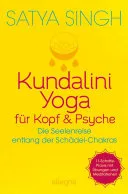
Kundalini Yoga für Kopf und Psyche
 74
74

Kundalini Yoga für Kopf und Psyche
Satya Singh’s "Kundalini Yoga für Kopf und Psyche" attempts a novel structuring of Kundalini practice, dividing it into eleven 40-day stages. This methodical approach, moving from the crown chakra downwards and outwards, offers a clear, if somewhat rigid, framework. The book’s strength lies in its detailed roadmap, which can provide much-needed direction for practitioners feeling adrift in the vast ocean of esoteric literature. However, the strict 40-day per stage structure, while practical for some, might feel overly prescriptive for others, potentially limiting the organic unfolding of personal practice. The concept of Kundalini as a bridge between the 'observer in the head' and the 'living nature in the lower abdomen' is a compelling reinterpretation, offering a fresh perspective on the mind-body connection inherent in yogic traditions. Yet, the text could benefit from more direct engagement with the energetic nuances of each chakra beyond a mere sequential progression. Singh's work is a solid guide for those who thrive on structure, offering a disciplined path for those seeking to harness Kundalini energy.
📝 Description
74
Published in 2025, Satya Singh's book maps Kundalini Yoga onto eleven forty-day stages.
Satya Singh's "Kundalini Yoga für Kopf und Psyche" presents a structured program for cultivating Kundalini energy. The book divides this practice into eleven distinct forty-day stages, framing it as a systematic process for spiritual and psychological growth. Singh posits Kundalini energy as the connection between consciousness and creative power, moving from mental observation to embodied force. The guide details this progression from the crown chakra downwards, aiming for holistic development. It is written for individuals seeking a methodical approach to esoteric practices, particularly those interested in the integration of mind, psyche, and higher awareness. The work offers a clear, step-by-step framework for those who prefer a disciplined roadmap over anecdotal experiences. Both experienced yoga practitioners and newcomers to Kundalini can find guidance within its structured progression.
This 2025 publication builds on centuries of yogic and Tantric philosophy concerning Kundalini, a concept detailed in texts like the "Sat-Cakra-Nirupana." The modern practice of Kundalini Yoga saw significant development in the 20th century through figures like Yogi Bhajan. Singh's work participates in the contemporary integration of esoteric disciplines into self-development, acknowledging this lineage while structuring the practice for modern understanding.
💡 Why Read This Book?
• Gain a practical, 11-stage roadmap for Kundalini practice, with each 40-day phase offering focused exercises, as detailed in the book's structured progression, to systematically cultivate energetic awareness. • Understand Kundalini not just as a force, but as a bridge between intellect and primal energy, as conceptualized by Satya Singh, offering a unique framework for integrating mind and body. • Benefit from a structured approach to spiritual development, moving beyond the crown chakra through specific stages outlined in the book, facilitating a holistic journey of consciousness.
⭐ Reader Reviews
Honest opinions from readers who have explored this book.
❓ Frequently Asked Questions
What is the core concept of Kundalini Yoga für Kopf und Psyche?
The book's core concept is a structured, 11-stage, 40-day journey through Kundalini Yoga, designed to bridge consciousness and creative power, moving from mental observation to embodied energy, enhancing mental clarity and psychological balance.
How does Satya Singh define Kundalini energy in this book?
Satya Singh defines Kundalini as the vital connection between consciousness and creative force, acting as a bridge that moves from the detached observer in the mind to the dynamic energy located in the lower abdomen.
What is the significance of the 40-day stages mentioned in the book?
The 40-day duration for each of the 11 stages is presented as a deliberate period for focused practice and integration, allowing practitioners to deeply absorb and embody the teachings and energetic shifts associated with each phase.
Is this book suitable for beginners in Kundalini Yoga?
Yes, "Kundalini Yoga für Kopf und Psyche" is designed to be a practical roadmap, making it suitable for beginners who desire a clear, structured approach to learning and practicing Kundalini Yoga, guiding them through distinct phases.
What distinguishes this book from other Kundalini Yoga guides?
This book distinguishes itself through its systematic 11-stage, 40-day structure, offering a precise, progressive journey that moves beyond the crown chakra, providing a practical roadmap for integrating Kundalini energy into the psyche.
What kind of practices can one expect in Kundalini Yoga für Kopf und Psyche?
Readers can expect targeted Kundalini Yoga practices, including asanas, pranayama, and meditation, specifically designed for each of the 11 stages, aiming to cultivate mental clarity, psychological balance, and energetic awareness.
🔮 Key Themes & Symbolism
The Kundalini Bridge
The book posits Kundalini energy as the crucial link between the passive observer within the intellect ('Kopf') and the vibrant, transformative force residing in the physical body ('Unterleib'). This duality is explored as the foundation for spiritual and psychological integration, suggesting that activating this bridge allows for a more holistic state of being, moving from mere awareness to active creation and manifestation.
Progressive Soul Journey
Singh outlines a deliberate 'Seelenreise' (soul journey) structured into eleven distinct phases, each requiring a 40-day commitment. This progressive model is designed to guide the reader systematically through deeper states of consciousness, moving from the highest cerebral centers outward and downward. Each stage is intended to build upon the last, fostering incremental growth and profound shifts in perception and being.
Mind-Psyche Integration
A central theme is the practical application of Kundalini Yoga to harmonize the 'Kopf' (head/intellect) and 'Psyche' (psyche/emotions). The work emphasizes how specific yogic techniques can recalibrate mental patterns and emotional responses, leading to greater psychological stability and a more integrated sense of self. This focus aims to transform not just energetic states but also cognitive and emotional landscapes.
Chakra System Exploration
While not always explicitly named in every section, the book's structure implicitly follows a progression through the energetic centers of the body, extending beyond the typical focus on the upper chakras. The journey from the crown chakra outward signifies an expansion of consciousness that encompasses the entirety of the energetic and physical being, grounding esoteric principles in practical, embodied experience.
💬 Memorable Quotes
Direct passages from the work, attributed to the author.
“Kundalini ist die Brücke zwischen Bewusstsein und Schöpfungskraft: vom stillen Beobachter im Kopf bis zur lebendigen, sich wandelnden Natur im Unterleib.”
— This core statement defines Kundalini not as mere energy, but as a dynamic conduit that connects our detached mental awareness to our fundamental, creative life force located in the physical body, suggesting a path to wholeness.
“Die Seelenreise durch Kopf, Psyche und höheres Bewusstsein – in 11 Etappen à 40 Tagen.”
— This captures the book's structure: a meticulously planned 'soul journey' divided into eleven 40-day segments, designed to systematically guide the reader through mental, emotional, and spiritual evolution.
“In seinem neuen Buch führt Satya Singh die Seelenreise fort – vom höchsten Rückenwirbel über das Kronen‐Chakra hinaus.”
— This highlights the book's scope, indicating that the exploration extends beyond the commonly discussed upper energy centers, suggesting a comprehensive approach to the entire energetic system from the base of the spine upwards and outwards.
“Der Weg wird in eine praxiserprobte Roadmap übersetzt.”
— This emphasizes the practical, actionable nature of the book, positioning it not as theoretical discourse but as a usable guide or 'roadmap' grounded in tested methods for spiritual practice.
“Jede Etappe wird von gezielten Kundalini‐Yoga-Übungen begleitet.”
— This points to the pedagogical method employed, where each distinct phase of the journey is supported by specific, tailored Kundalini Yoga exercises, ensuring a hands-on and progressive learning experience for the practitioner.
🌙 Esoteric Significance
Tradition
This work operates within the broad umbrella of Tantric Yoga and modern Kundalini Yoga lineages. It departs from purely devotional or monastic interpretations by framing Kundalini as a tool for psychological integration and cognitive enhancement, aligning with contemporary trends in applying esoteric knowledge to secular self-improvement and mental well-being.
Symbolism
The book's structure itself is symbolic: the eleven 40-day stages represent a cyclical, disciplined approach to spiritual progression, mirroring cosmic rhythms. The Kundalini serpent, a traditional symbol of coiled, dormant power, is here presented as the 'bridge' between mind and body, signifying the potential for unified consciousness and creative awakening.
Modern Relevance
Contemporary thinkers and practitioners in fields like transpersonal psychology, somatic experiencing, and integrated wellness often draw upon concepts of embodied energy and consciousness shifts. Singh's structured approach to Kundalini speaks to modern desires for verifiable, step-by-step methods for personal transformation, offering a practical framework for those exploring embodied spirituality.
👥 Who Should Read This Book
• Dedicated practitioners of yoga seeking a structured, progressive system for deepening their understanding and experience of Kundalini energy beyond introductory levels. • Individuals interested in the intersection of esoteric practices and psychological well-being, looking for a methodical approach to integrating mind and spirit. • Students of comparative spirituality who appreciate contemporary interpretations and practical applications of ancient yogic concepts within a modern context.
📜 Historical Context
Published in 2025, Satya Singh's "Kundalini Yoga für Kopf und Psyche" enters a contemporary landscape where ancient yogic practices are widely accessible, often blended with modern psychology and wellness trends. Its structured, multi-stage approach to Kundalini Yoga builds upon the legacy of 20th-century figures who popularized these teachings in the West, such as Swami Sivananda and Yogi Bhajan. While Singh's work is new, the exploration of Kundalini energy itself has roots stretching back centuries in Tantric and yogic traditions, as documented in foundational texts like the *Hatha Yoga Pradipika*. The book emerges in an era distinct from the early 20th century's more direct engagement with Theosophy and Eastern mysticism; today, esoteric practices are often viewed through a lens of personal development and cognitive science, a shift that influences how works like Singh's are received and integrated.
📔 Journal Prompts
The Kundalini bridge between the 'Kopf' and the 'Unterleib': How does this duality manifest in daily life?
Reflect on the concept of the 'Seelenreise' and its 11 stages.
Consider the 40-day cycle's potential for habit formation and energetic shift.
Identify one 'living, changing nature' in your 'Unterleib' that you wish to understand better.
Analyze the role of the 'stiller Beobachter' (still observer) in your own consciousness.
🗂️ Glossary
Kundalini
A primal, dormant spiritual energy believed to reside at the base of the spine, capable of awakening and leading to expanded consciousness and spiritual realization when activated.
Kopf
Refers to the head, intellect, and the analytical, observational aspect of consciousness, often seen as separate from the embodied experience.
Psyche
Encompasses the mind, emotions, and the deeper psychological landscape, representing the seat of feelings, memories, and subconscious processes.
Schöpfungskraft
Creative power or the force of creation; the inherent ability to manifest and bring forth new forms and realities.
Seelenreise
A soul journey; a path of spiritual and personal evolution undertaken to achieve deeper self-understanding and transformation.
Etappen
Stages or phases; in this context, distinct periods within the larger Kundalini journey, each with specific focuses and practices.
Unterleib
The lower abdomen or pelvic region, often associated in yogic traditions with primal energy, instinct, and the root of physical manifestation.