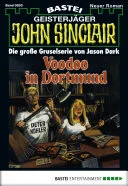
John Sinclair 693
 80
80

John Sinclair 693
The resurgence of John Sinclair 693 as an e-book offers a stark reminder of the series' enduring appeal in pulp horror. Jason Dark crafts a narrative that, while steeped in the sensationalism of its era, doesn't shy away from visceral descriptions of Voodoo's darker manifestations. The depiction of Lavalle as a Bocor, allied with "the absolutely evil," is a potent example of the series' commitment to over-the-top antagonists. However, the narrative's reliance on graphic violence, while characteristic, occasionally overshadows subtler thematic explorations of spiritual corruption. The potential for exploring the nuances of Voodoo beliefs is, at times, sacrificed for shock value. Nevertheless, the sheer pulp energy and the concrete threat posed by Lavalle make it a compelling, if unsubtle, piece of supernatural fiction. It delivers precisely what its long-time audience expects: pure, unadulterated occult terror.
📝 Description
80
John Sinclair 693 depicts a Voodoo practitioner making infernal pacts for power.
Published between 1980 and 1989, John Sinclair 693 follows Lavalle, a powerful Bocor. He has made agreements with dark forces, which grant him terrifying abilities. The story details the grim results of his actions, showing how he turns his victims into 'a mass of dead, stinking flesh.' This installment in the long running John Sinclair series depicts extreme violence and spiritual decay as Lavalle uses his forbidden knowledge.
The narrative is built around Lavalle's corrupting pacts and the brutal consequences they bring. Readers witness the physical and spiritual degradation associated with wielding such dark magic. The book continues the ongoing saga of supernatural conflict that defined the John Sinclair series, focusing on the grim outcomes of dabbling in infernal powers. It presents a dark fantasy driven by ritual and demonic bargains.
This volume emerges from the pulp fiction tradition that often sensationalized occult practices. The depiction of Voodoo, specifically through the figure of the Bocor, taps into a popular fascination with darker, forbidden magic. Such narratives, common in dime store novels, explore themes of demonic influence and the price of power, often blending sensational violence with elements of the supernatural. The series taps into a broader cultural interest in the occult that was prevalent in the late 20th century, presenting these themes through a lens of action and horror.
💡 Why Read This Book?
• Gain insight into the pulp horror depiction of Voodoo, focusing on the powerful "Bocor" figure and their pacts with infernal forces, as seen in the narrative's portrayal of Lavalle. • Experience the visceral horror of forbidden knowledge and its consequences, exemplified by the gruesome fate of victims described as "a mass of dead, stinking flesh." • Understand the cultural impact of serialized horror fiction from the 1980s by engaging with a specific entry from the renowned John Sinclair series, originally published in that decade.
⭐ Reader Reviews
Honest opinions from readers who have explored this book.
❓ Frequently Asked Questions
What is a Bocor in the context of John Sinclair 693?
A Bocor, as depicted in John Sinclair 693, is a powerful Voodoo priest who has allied himself with "absolutely evil" forces. This figure, Lavalle, uses his dark magic to inflict horrific fates upon his victims, transforming them into "a mass of dead, stinking flesh."
When was the John Sinclair series first published?
The original John Sinclair series, of which John Sinclair 693 is a part, was first published between 1980 and 1989. This particular volume was made available as an e-book in 2015.
What specific location is featured in John Sinclair 693?
The narrative of John Sinclair 693 features a significant appearance by the Bocor, Lavalle, at the "Roman- und Comicbörse in Dortmund" (Novel and Comic Exchange in Dortmund), highlighting his menacing presence at a public event.
What kind of horror does John Sinclair 693 represent?
John Sinclair 693 represents occult horror with a strong Voodoo theme. It focuses on demonic pacts, dark sorcery, and graphic descriptions of violence, fitting within the pulp fiction tradition of supernatural thrillers.
Is John Sinclair 693 a standalone story?
No, John Sinclair 693 is part of a long-running series, originally published between 1980 and 1989. While it can be read as a distinct episode, it belongs to a larger narrative arc featuring recurring characters and themes.
What does the term 'Bocor' imply in the book?
The term 'Bocor' implies a Voodoo priest of immense and malevolent power, particularly one who engages in dark magic and pacts with evil entities. In John Sinclair 693, Lavalle embodies this role, demonstrating terrifying capabilities.
🔮 Key Themes & Symbolism
The Corrupting Power of Dark Pacts
This volume intensely explores the consequences of allying with malevolent entities, a central theme in occult literature. Lavalle, a Bocor, embodies this through his pacts, which grant him terrifying power but also evidently corrupt his soul and actions. The narrative details how this alliance leads to gruesome acts, such as transforming victims into "a mass of dead, stinking flesh," illustrating the tangible and horrific price of such forbidden bargains. The "special book" mentioned hints at the esoteric knowledge required to forge these dangerous connections.
Voodoo as Esoteric Horror
John Sinclair 693 utilizes Voodoo lore, particularly the figure of the Bocor, to create an atmosphere of potent esoteric horror. It moves beyond mere superstition to present Voodoo as a system of power with tangible, terrifying manifestations. The narrative focuses on the destructive potential of this magic, showing Lavalle's ability to inflict physical and spiritual torment. The story taps into primal fears associated with ritualistic magic and the perceived malevolence of certain spiritual practices, framing them within a sensationalized pulp fiction context.
The Nature of Evil and Its Manifestations
The book presents a stark view of absolute evil, personified by Lavalle and his "alliances." It posits that evil is not merely an abstract concept but a force that can be actively invoked and wielded, leading to tangible destruction. The gruesome descriptions of victim fates serve as a visual representation of this evil's impact. The narrative suggests that such power, once unleashed, is difficult to contain and inevitably leads to widespread suffering, particularly as Lavalle makes a public appearance at the Dortmund "Roman- und Comicbörse."
The Allure of Forbidden Knowledge
A significant undercurrent in John Sinclair 693 is the dangerous allure of forbidden knowledge. The existence of a "special book" that details how to form alliances with "the absolutely evil" suggests a thirst for understanding and controlling powers that are beyond ordinary human comprehension. This pursuit of esoteric secrets, while potentially leading to great power as seen with Lavalle, is depicted as inherently perilous, promising a path that leads to destruction rather than enlightenment.
💬 Memorable Quotes
Direct passages from the work, attributed to the author.
“And he tears his victims apart, makes them into a mass of dead, stinking flesh.”
— This graphic description illustrates the horrific consequences of Lavalle's powers. It emphasizes the visceral, physical destruction he inflicts, showcasing the extreme violence that defines the book's horror.
“And they will all come, those who...”
— This incomplete phrase suggests anticipation and a gathering of forces or victims, hinting at a larger event or consequence unfolding due to the Bocor's presence and actions.
💡 Key Ideas
Editorial paraphrase of the work's core concepts — not direct quotes.
Lavalle is a Bocor, a mighty Voodoo priest, nobody can stop him so quickly.
This line establishes Lavalle's formidable nature and his specific Voodoo role. It highlights his power and the immediate threat he poses, setting the stage for the supernatural conflict central to the narrative.
He has allied himself with the absolutely evil, as one can read in a special book.
This quote directly links Lavalle's power to a pact with ultimate evil, referencing a hidden or forbidden text. It underscores the theme of dangerous knowledge and the explicit source of his terrifying capabilities.
A great appearance by the Bocor at the Novel and Comic Exchange in Dortmund.
This quote places the antagonist, Lavalle, in a specific public setting, the "Roman- und Comicbörse in Dortmund." It suggests a dramatic confrontation or display of power in a mundane environment, amplifying the shock value.
🌙 Esoteric Significance
Tradition
While not strictly adhering to a singular esoteric tradition, John Sinclair 693 draws heavily from popular interpretations of Voodoo and demonology. It aligns with the broader occult fiction genre that often borrows and reinterprets symbols and practices from various traditions, including Hermeticism and Gnosticism, for narrative effect. The concept of a "Bocor" and pacts with "absolutely evil" echoes themes found in grimoires and demonological texts, presented here in a pulp fiction format that prioritizes sensationalism over academic rigor.
Symbolism
The primary symbol is the "Bocor," representing a Voodoo priest wielding dark, malevolent power. This figure is associated with the "absolutely evil," suggesting a direct conduit to infernal forces. The "special book" serves as a symbol of forbidden knowledge, the dangerous acquisition of esoteric secrets that empower but also corrupt. The gruesome transformation of victims into "dead, stinking flesh" symbolizes the ultimate physical manifestation of spiritual decay and the destructive impact of dark magic.
Modern Relevance
Contemporary occult practitioners and dark fantasy writers continue to engage with the archetypes popularized by series like John Sinclair. The depiction of powerful sorcerers, demonic pacts, and the visceral consequences of black magic speaks to modern interest in darker aspects of esotericism and horror. While academic circles might view it as pulp, its influence on popular imagination regarding Voodoo and demonology persists, inspiring new works that explore similar themes of forbidden power and its corrupting influence.
👥 Who Should Read This Book
• Readers of occult horror fiction seeking visceral thrills and supernatural conflict, particularly those interested in pulp-style narratives. • Fans of the original John Sinclair series who want to revisit or experience specific installments from the 1980-1989 publication period. • Enthusiasts of Voodoo lore as depicted in popular media, looking for a sensationalized yet direct portrayal of dark Voodoo practices and their consequences.
📜 Historical Context
The John Sinclair series, and by extension John Sinclair 693, emerged from the vibrant German pulp fiction scene of the late 20th century. Originally serialized from 1980, it tapped into a popular fascination with occultism, horror, and the supernatural that characterized the era. While contemporaries like Stephen King were achieving mainstream literary success with supernatural thrillers, the John Sinclair novels occupied a more direct, action-oriented niche, often published in weekly installments or as affordable paperbacks. The series' immense popularity, particularly in Germany, made it a cultural phenomenon, influencing a generation's exposure to Voodoo lore and demonic themes through a sensationalized lens. Reception was largely driven by its dedicated readership, who consumed the serialized tales voraciously, making specific critical reviews or academic engagement less common than massive sales figures.
📔 Journal Prompts
Lavalle's pact with "the absolutely evil": How does this influence his actions and the fate of his victims?
The "special book" as a source of forbidden knowledge: What are the potential dangers of seeking such texts?
Reflect on the portrayal of the Bocor: How does this character embody the intersection of spiritual power and malevolence?
The concept of "dead, stinking flesh": What does this gruesome imagery communicate about the nature of the evil presented?
Consider the setting of the "Roman- und Comicbörse in Dortmund": How does a public event amplify the horror of the Bocor's presence?
🗂️ Glossary
Bocor
A Voodoo priest, often depicted as a sorcerer who practices dark magic, engages in pacts with malevolent spirits, and is capable of inflicting curses and harm upon others.
Voodoo
A religion originating in Haiti, blending West African spiritual traditions with Roman Catholicism. In popular fiction, it is often sensationalized to focus on darker magical practices and spirit possession.
Pacts with the Evil
A common trope in occult and horror literature, referring to an agreement where an individual gains supernatural power or knowledge in exchange for their soul or by serving malevolent entities.
Absolutely Evil
Refers to a concept of ultimate, unadulterated malevolence, often personified by demonic figures or infernal forces that characters like Lavalle might ally themselves with.
Roman- und Comicbörse
German for "Novel and Comic Exchange." In the context of the book, it refers to a specific public event held in Dortmund where the antagonist makes an appearance.
Dead, stinking flesh
A graphic description used in the book to denote the gruesome and horrific state of Lavalle's victims, emphasizing the physical decay and desecration caused by his dark magic.
Special book
A narrative device referring to a hidden or forbidden text that contains esoteric knowledge, in this case, detailing how to form alliances with evil forces.