Isaac Newton
 76
76

Isaac Newton
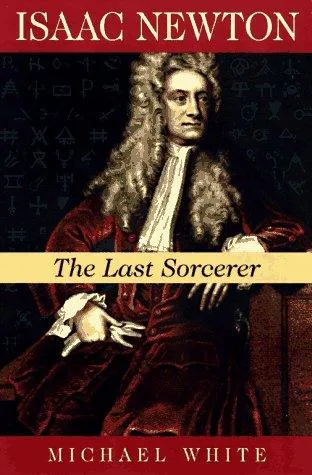
White's biography presents Isaac Newton not merely as the architect of classical physics but as a complex individual deeply enmeshed in the alchemical and theological currents of his time. A notable strength is the author's careful reconstruction of Newton's extensive, often clandestine, alchemical research, revealing its intellectual coherence rather than dismissing it as mere superstition. For instance, the detailed examination of Newton's correspondence regarding the Philosopher's Stone offers a compelling counterpoint to his public scientific persona. However, the narrative occasionally feels dense, particularly in its lengthy exegeses of Newton's theological writings, which might deter readers solely interested in his scientific breakthroughs. A passage detailing Newton's meticulous analysis of biblical prophecies, seeking a divine timeline for history, underscores the profound tension between his empirical method and his eschatological beliefs. While not always a swift read, White's work provides an indispensable, nuanced understanding of Newton's entire intellectual universe.
📝 Description
76
Michael White's 1991 biography examines Isaac Newton's life beyond physics and mathematics.
Published in 1991, Michael White's biography of Isaac Newton moves past the common perception of Newton as solely a physicist and mathematician. White presents a thorough look at Newton's entire intellectual life. The book is suited for readers interested in the historical background of scientific discovery. It will appeal to those who want to grasp the complex intellectual world of the 17th century. Readers who appreciate biographies that cover the less discussed parts of a historical figure's life, including their philosophical and theological interests, will find this work valuable.
White's biography appeared during a time when scholarly interest in the history of science and early modern intellectual life was growing. Newton's own period, the late 17th and early 18th centuries, was a crucial time for scientific change, with figures like Robert Hooke and Christiaan Huygens active. White places Newton within this lively and often competitive scientific environment, where new ideas were debated and reputations were built and challenged.
This biography places Newton's alchemical and theological pursuits within the context of Hermetic philosophy and early modern religious thought. It acknowledges that Newton, a figure often seen as the father of modern physics, also dedicated significant effort to understanding ancient traditions and interpreting scripture. White shows how these seemingly disparate interests were part of a cohesive, albeit complex, intellectual framework for Newton, driven by a desire to reconcile empirical observation with spiritual doctrine.
💡 Why Read This Book?
• Gain an understanding of Isaac Newton's alchemical pursuits, detailing his systematic approach to experiments with substances like mercury and antimony, a facet often overlooked in popular accounts. • Explore Newton's complex relationship with Hermetic philosophy and his attempts to align biblical prophecy with scientific observation, revealing his intellectual framework beyond calculus. • Understand the intellectual climate of the late 17th century, including the scientific disputes he engaged in with contemporaries like Robert Hooke, and how this shaped his public and private research.
⭐ Reader Reviews
Honest opinions from readers who have explored this book.
❓ Frequently Asked Questions
Did Isaac Newton write about alchemy extensively?
Yes, Michael White's biography details Newton's substantial body of alchemical writings, which far exceed his published scientific works. These texts reveal a dedicated, systematic investigation into the nature of matter and transmutation.
What was Newton's stance on religion and science?
The biography highlights Newton's deep religiosity and his efforts to reconcile his scientific discoveries with his interpretation of scripture, particularly biblical chronology and prophecies. He saw his scientific work as revealing God's order.
When was Isaac Newton's biography by Michael White first published?
Michael White's biography of Isaac Newton was first published in 1991, offering a modern scholarly perspective on the scientist's multifaceted life and work.
Did Newton have significant scientific rivals?
Absolutely. White's work touches upon Newton's intellectual clashes, notably with Robert Hooke over optics and gravity, and with Gottfried Wilhelm Leibniz concerning the invention of calculus.
What is the significance of Newton's work on biblical chronology?
Newton spent considerable time analyzing biblical texts to establish a timeline for history, believing that understanding God's plan for time was as important as understanding the laws of nature.
How does this book portray Newton's alchemical studies?
It portrays them not as mystical dabbling but as a serious, methodical inquiry into the fundamental properties of matter, driven by a desire to understand the underlying principles of creation.
🔮 Key Themes & Symbolism
The Alchemical Quest
White's work meticulously details Newton's extensive alchemical research, presenting it not as fringe activity but as a systematic investigation into the nature of matter and the principles of transformation. The book explores Newton's laboratory practices, his search for the Philosopher's Stone, and his belief that alchemy held keys to understanding God's creation, linking it to Hermetic traditions and a desire for hidden knowledge.
Theological Framework
Beyond his scientific and alchemical pursuits, Newton dedicated significant energy to theological studies, particularly biblical chronology and the nature of the Trinity. This biography highlights his conviction that understanding scripture was essential to comprehending divine order, often seeking to harmonize religious texts with scientific findings and historical events.
Scientific Revolution Context
The book situates Newton within the intellectual ferment of the 17th century, a period of dramatic scientific advancement and intense debate. It examines his groundbreaking work in physics and mathematics, such as the laws of motion and calculus, while also exploring the rivalries and collaborations that shaped his career and the scientific field of his era.
Mind and Method
A central theme is the unified nature of Newton's intellect, demonstrating how his rigorous empirical methods, applied to physics, were also employed in his alchemical and theological investigations. The work explores his intellectual drive to uncover underlying universal laws, whether in the cosmos, in matter, or in divine revelation.
💬 Memorable Quotes
Direct passages from the work, attributed to the author.
“The laws of nature are the laws of God.”
— This interpretation reflects Newton's conviction that his scientific discoveries were not separate from his religious beliefs but were, in fact, revelations of divine order and intelligent design embedded within the universe.
“His quest for the Philosopher's Stone was a parallel pursuit to understanding gravity.”
— This interpretation suggests that Newton's alchemical goals, like his scientific ones, were driven by a desire for fundamental knowledge about the underlying forces and structures of the universe, seeking universal principles.
“The controversy over calculus invention was intense.”
— This concept points to the significant intellectual dispute Newton had with Gottfried Wilhelm Leibniz over the independent development of calculus, a dispute that had lasting implications for scientific communication and priority.
💡 Key Ideas
Editorial paraphrase of the work's core concepts — not direct quotes.
Newton's alchemical manuscripts reveal a mind attempting to decode the very secrets of creation.
This paraphrased concept underscores that Newton viewed his alchemical experiments not as mere speculation but as a serious, methodical endeavor to understand the fundamental principles governing matter and its potential for transformation.
Newton saw biblical prophecy as a divine timeline for history.
This paraphrase highlights Newton's extensive work on eschatology, where he applied his analytical skills to scriptural texts, seeking to establish a divinely ordained chronological framework for past, present, and future events.
🌙 Esoteric Significance
Tradition
Newton's work fits within the broader Hermetic and Neoplatonic traditions that sought to understand the universe through correspondences and divine principles. While operating within the scientific revolution, his alchemical and theological studies reveal a mind that saw no strict division between the natural and the divine, a characteristic shared with earlier Renaissance thinkers who sought hidden knowledge through the study of nature and ancient texts.
Symbolism
Key symbols in Newton's esoteric pursuits include the 'prima materia' (first matter), representing the fundamental substance from which all things are made, and the 'Philosopher's Stone,' a mythical agent of transmutation. His alchemical writings often employ allegorical language, using symbols like the serpent (representing cyclical transformation or Mercury) and metallic transformations to describe processes of purification and perfection.
Modern Relevance
Contemporary thinkers in fields such as the history of science, early modern intellectual history, and even some esoteric studies continue to draw on White's work. It informs discussions on the relationship between science and religion, the intellectual coherence of alchemy, and the complex psychological makeup of historical geniuses who straddled empirical inquiry and mystical contemplation.
👥 Who Should Read This Book
• Students of the Scientific Revolution seeking a nuanced understanding of its key figures beyond standard textbook narratives. • Readers interested in the history of alchemy and its intellectual underpinnings, who want to see it treated as a serious field of inquiry. • Biographers and historians of ideas looking for a comprehensive account of Newton's diverse intellectual interests, including his theological and chronological studies.
📜 Historical Context
Michael White's 1991 biography of Isaac Newton emerged during a period of significant academic re-evaluation of early modern science. The late 17th century, Newton's active period, was a crucible of intellectual change, marked by the Royal Society's establishment in 1660 and the burgeoning of experimental philosophy. Newton engaged in fierce intellectual disputes, most notably with Robert Hooke over optics and gravity, and later with Gottfried Wilhelm Leibniz over the calculus. While Newton's scientific achievements were widely recognized, his extensive alchemical and theological work remained largely in the shadows, often dismissed by scholars. White's biography aimed to integrate these lesser-known aspects into a cohesive portrait, challenging the conventional view of Newton as solely a rationalist scientist and highlighting his deep engagement with Hermetic traditions and biblical interpretation, which were still influential currents.
📔 Journal Prompts
Newton's alchemical laboratory practices.
The reconciliation of biblical chronology with scientific laws.
Newton's intellectual disputes with Robert Hooke.
The concept of prima materia in Newton's alchemical writings.
The tension between Newton's empirical method and his theological convictions.
🗂️ Glossary
Prima Materia
In alchemy, the primordial, undifferentiated substance from which all matter is believed to originate. Newton's research into this concept reflects a search for the fundamental building blocks of the universe.
Philosopher's Stone
A legendary alchemical substance said to be capable of transmuting base metals into gold or silver, and sometimes associated with the elixir of life. Newton's pursuit of it was a significant part of his alchemical research.
Biblical Chronology
The study of historical timelines derived from interpretations of biblical texts. Newton dedicated considerable effort to establishing such a chronology, believing it essential for understanding divine providence.
Hermeticism
A philosophical and religious tradition based on writings attributed to Hermes Trismegistus. It often involves a belief in correspondences between the macrocosm and microcosm, and the pursuit of hidden knowledge.
Transmutation
In alchemy, the process of changing one element or substance into another, particularly the transformation of common metals into noble metals like gold. This was a central goal of alchemical experimentation.
Royal Society
A learned society, founded in London in 1660, dedicated to promoting natural knowledge. Newton was a prominent member and later president, and it served as a key institution for scientific discourse.
Calculus
A branch of mathematics concerned with rates of change and accumulation. Newton developed his own version, fluxions, independently of Gottfried Wilhelm Leibniz's development of differential and integral calculus.
🔮 Readers Also Liked
Browse all →









More by Michael White
All books →


More Free Alchemy & Hermeticism Books
View all →