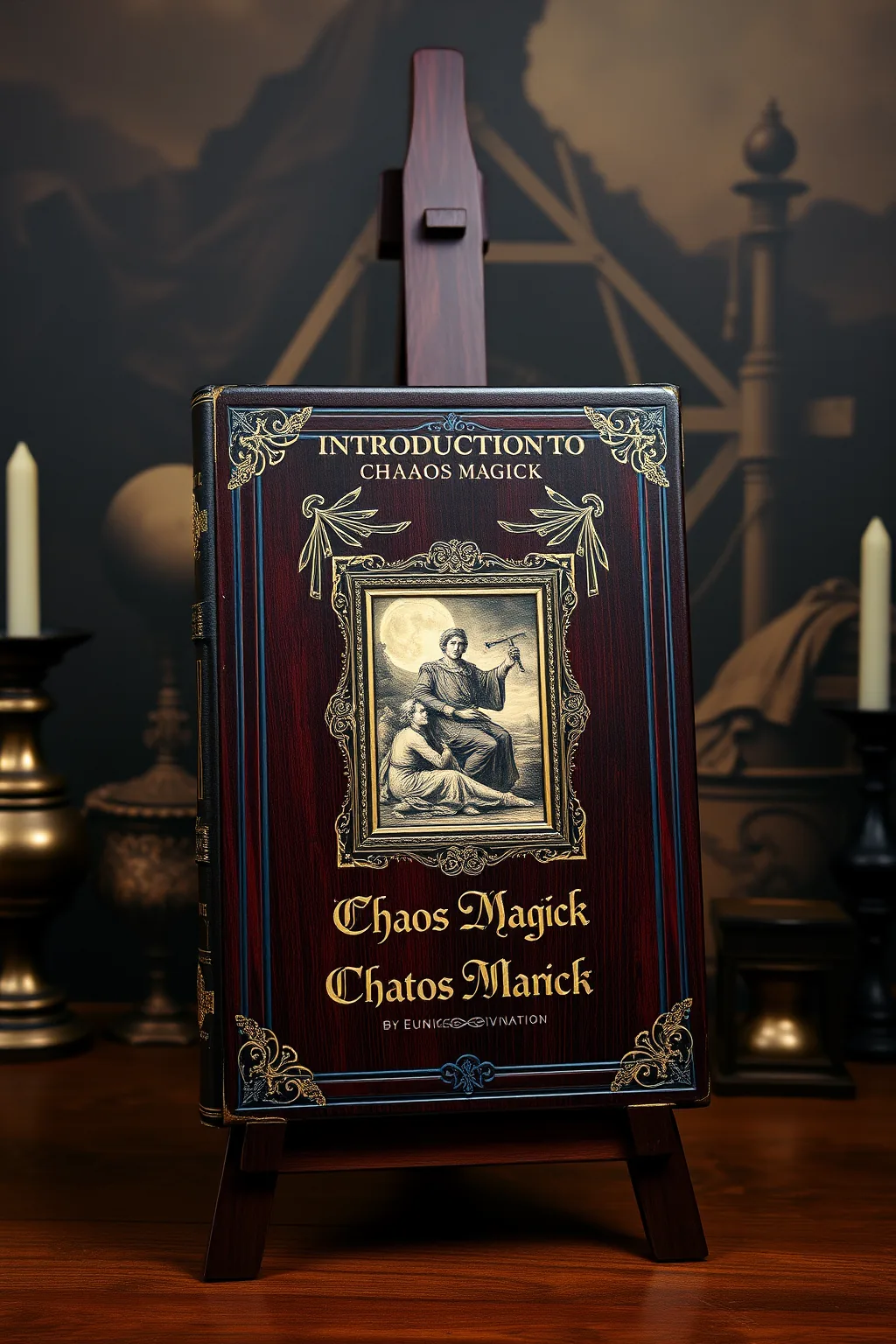
Introduction to Chaos Magick
 62
62

Introduction to Chaos Magick



Isolde Whitaker, Sacred Texts Editor, offers a profound endorsement: 'Eunique Divination's 'Introduction to Chaos Magick' is a beacon in the contemporary occult landscape. It masterfully deciphers the often-intimidating core tenets of Chaos Magick, presenting them with clarity and an undeniable esoteric flair. The author’s unique approach to divination as a dynamic force for manifestation is particularly illuminating. This book doesn't just explain; it empowers. It’s an essential text for anyone seeking to move beyond theoretical occultism and engage in practical, transformative magical work. Highly recommended for its depth, accessibility, and its potent call to personalized spiritual evolution.
📝 Description
62
Eunique Divination's 'Introduction to Chaos Magick' (2019) presents belief as a tool for reality manipulation.
Eunique Divination's 'Introduction to Chaos Magick' explains modern occultism for personal change and shaping reality. The book argues that belief is a flexible instrument, and the practitioner controls their own will. Divination here means more than prediction; it is a way to focus intent and influence energetic forces. The text encourages questioning established beliefs and embracing direct experience. It covers sigil creation, altered states of consciousness, and breaking down fixed ideas. This book is for anyone interested in self-directed magical practice, whether new to the subject or experienced.
This work details a system where the magician actively constructs their own magical reality. It moves away from traditional dogma, emphasizing results over adherence to specific doctrines. The approach centers on the practitioner's ability to influence their environment through focused will and belief, which the book frames as a malleable resource. It offers practical techniques alongside philosophical considerations, aiming to empower the individual in their magical pursuits.
Chaos Magick emerged in the late 20th century, building on earlier occult traditions like ceremonial magic and witchcraft but with a distinct emphasis on pragmatism and eclecticism. Unlike systems that rely on fixed pantheons or elaborate cosmologies, Chaos Magick encourages practitioners to adopt and discard beliefs as needed, focusing on what yields results. This book aligns with that tradition by advocating for a personal, experimental approach to magic, encouraging the reader to become their own authority rather than relying on external dogma. It represents a modern evolution in esoteric thought, prioritizing individual experience and the plasticity of belief.
💡 Why Read This Book?
Unravel the mysteries of a potent, modern magical system. 'Introduction to Chaos Magick' offers practical techniques for manifesting desires and reshaping your reality. It's ideal for seekers who crave autonomy, practitioners looking to break through energetic blocks, and scholars eager to understand the philosophical underpinnings of belief-driven magic. Discover your innate power and learn to wield it with focused intent.
⭐ Reader Reviews
Honest opinions from readers who have explored this book.
❓ Frequently Asked Questions
What is the core philosophy of Chaos Magick?
The core philosophy is that belief is a tool. Chaos Magick emphasizes experimentation, pragmatism, and the idea that the practitioner's will and belief are the primary drivers of magical results, rather than adherence to rigid dogma or tradition.
How does this book approach divination?
This book views divination not just as prediction, but as a method of focusing intent, gaining insight into energetic currents, and actively shaping desired outcomes through symbolic communication with the subconscious and the cosmos.
Is this book suitable for absolute beginners?
Yes, 'Introduction to Chaos Magick' is designed to be accessible to beginners, providing a clear and comprehensive foundation while also offering depth for those with prior magical experience.
What kind of practical exercises can I expect?
The book delves into techniques such as sigil creation, gnosis induction, belief shifting, and the practical application of ritual and altered states for achieving specific magical goals.
Does Chaos Magick require specific deities or spirits?
Chaos Magick is highly individualistic. While some practitioners may choose to work with deities or spirits, it's not a requirement. The focus is on the practitioner's own power and ability to imbue concepts or archetypes with significance.
🔮 Key Themes & Symbolism
The Malleability of Belief
This foundational concept posits that belief itself is not an immutable truth but a psychological and energetic construct that can be consciously manipulated. The book explores how to adopt and discard belief systems as needed for specific magical operations, highlighting the power of temporary belief (gnosis) in driving change. It encourages practitioners to question established paradigms and embrace personal gnosis, moving beyond the limitations of inherited doctrines to forge a unique magical path, emphasizing that the effectiveness of a spell often lies not in its inherent structure but in the conviction with which it is enacted.
Sigil Craft and Symbolic Language
Sigils are central to Chaos Magick, serving as condensed visualizations of intent. The book meticulously details the art of sigil creation, from the initial formulation of a desire into a statement of intent, to its transformation into a potent symbolic glyph. It studies the psychology behind sigil effectiveness, explaining how these symbols bypass the conscious mind to imprint desires directly onto the subconscious and the fabric of reality. Understanding and utilizing this ancient yet adaptable form of symbolic language is presented as a key to unlocking potent magical forces.
Gnosis and Altered States of Consciousness
Achieving gnosis, or a state of heightened awareness and focused intent, is crucial for effective Chaos Magick. This theme explores various methods for inducing these altered states, including meditation, ecstatic dance, sensory deprivation, and even intense emotional states. The book elucidates how these states allow the practitioner to temporarily suspend critical faculties, bypass the conscious censor, and directly communicate with the subconscious, thus imprinting magical intentions with profound power. Mastering gnosis is presented as the key to unlocking the full potential of magical practice.
💬 Memorable Quotes
Direct passages from the work, attributed to the author.
“Manifestation begins with a whispered intent.”
— This emphasizes the power of focused intention in the magical process. It suggests that even the smallest, most subtle expression of desire can be the catalyst for significant change when properly directed and amplified.
“Dissolve the dogma, embrace the dust of stars.”
— A call to shed limiting beliefs and societal conditioning, encouraging the practitioner to reconnect with their primal, cosmic essence. It advocates for a return to fundamental energetic truths rather than adherence to imposed structures.
“Your will is the compass; your imagination, the sail.”
— This powerful metaphor illustrates the dual forces driving magical practice: the focused direction of one's will and the expansive creative power of the imagination working in tandem to navigate and shape reality.
💡 Key Ideas
Editorial paraphrase of the work's core concepts — not direct quotes.
Belief is not a cage, but a key.
This quote captures the core tenet of Chaos Magick: that belief systems are tools to be employed, not rigid doctrines to be followed blindly. It suggests that by understanding and manipulating our beliefs, we can unlock new potentials and achieve desired outcomes.
The map is not the territory, but it can guide you there.
Highlighting the pragmatic nature of Chaos Magick, this quote suggests that while theoretical frameworks and systems are useful guides, the ultimate experience and reality are forged through direct action and personal interaction with the magical landscape.
🌙 Esoteric Significance
Tradition
Chaos Magick represents a radical departure from traditional, lineage-based magical systems. It is a meta-tradition, drawing inspiration from and synthesizing elements of diverse esoteric practices, including Western ceremonial magic, shamanism, Eastern mysticism, and even pop culture. Its significance lies in its emphasis on individual gnosis and the rejection of fixed dogma, empowering practitioners to create their own unique magical systems tailored to their personal needs and beliefs, fostering a highly adaptable and personal path to spiritual and magical development.
Symbolism
While Chaos Magick eschews rigid symbolism, it embraces the power of personal and ephemeral signs. Sigils, the core symbolic language, are unique to the practitioner's intent, bypassing conscious interpretation for direct subconscious influence. Other symbols can be adopted and imbued with power temporarily – from archetypes and deities to logos and pop culture icons. The significance lies not in the inherent meaning of a symbol but in the belief and intent the practitioner invests in it, making symbolism a fluid and dynamic tool for shaping reality.
Modern Relevance
In an age of information overload and rapid societal change, Chaos Magick's emphasis on adaptability, pragmatism, and personal empowerment is highly relevant. Its focus on belief as a malleable tool speaks to modern psychological insights into self-efficacy and cognitive reframing. The ability to create personalized spiritual practices, to question established norms, and to develop potent mental disciplines offers a profound framework for reading through the complexities of contemporary life, fostering resilience, creativity, and a sense of agency in a world that often feels overwhelming and chaotic.
👥 Who Should Read This Book
This foundational text is essential for the modern mystic seeking to move beyond theoretical occultism and engage in practical, transformative magic. Beginners will find a clear, accessible introduction to a powerful system, guiding them through core concepts like belief manipulation and sigil craft. Seasoned practitioners, often feeling constrained by traditional dogma, will discover the liberating potential of Chaos Magick's flexible framework. Scholars of esotericism will gain invaluable insight into a significant contemporary magical movement, while seekers of personal empowerment and reality shaping will find the tools and philosophy to forge their own unique path to manifested desires.
📜 Historical Context
Chaos Magick emerged in the late 20th century, a vibrant reaction against the perceived rigidity and dogmatism of older magical traditions. Influenced by the counterculture, postmodern philosophy, and earlier pioneers like Austin Osman Spare and Aleister Crowley, its founders sought a more adaptable and individualistic approach to magick. This era, marked by rapid technological advancement and a questioning of established societal norms, provided fertile ground for a system that emphasized personal experience, experimentation, and the rejection of fixed paradigms. The development of the internet and increased access to information further fueled its growth, allowing practitioners worldwide to share techniques and ideas, solidifying its position as a dynamic and evolving force in contemporary occultism.
📔 Journal Prompts
What belief systems do I currently hold that might be limiting my magical practice? How can I temporarily adopt a new belief to achieve a specific outcome?
Design a sigil for a desire you currently hold. Describe the process and your feelings as you create it. Where will you store or charge it?
Explore a recent 'coincidence' or synchronicity in your life. How might this be interpreted through the lens of your own focused intent or subconscious desires?
What is a concept or archetype that you find particularly compelling? How could you imbue this concept with magical power for your personal use?
Consider a personal goal. If you were to abandon all previous notions of 'how' it should happen, what is the most direct and audacious way you could imagine achieving it?
🗂️ Glossary
Gnosis
A state of heightened consciousness, often characterized by intense focus, altered perception, and the temporary suspension of the critical faculty. It is crucial for imprinting magical intent directly onto the subconscious and the energetic fabric of reality.
Sigil
A symbolic representation of a magical intent, typically created by condensing a desire into a glyph. Sigils are designed to bypass the conscious mind and communicate directly with the subconscious, acting as potent focal points for manifestation.
Belief as a Tool
The core principle of Chaos Magick, suggesting that belief is not an absolute truth but a mental construct that can be adopted, discarded, or manipulated for specific magical purposes, allowing for greater flexibility and effectiveness in practice.
Magical Tetrahedron
A model representing the four key elements of magical practice: belief, intent, visualization, and execution. Each corner is essential for a successful magical operation.
Servitor
An independently operating magical construct or entity created by a magician to perform specific tasks or achieve particular goals. Servitors are often animated by sigils and charged with intent.
This book appears in 3 collections
🔮 Readers Also Liked
Browse all →









More by Eunique Divination
All books →
From the “Tarot” Collection
View all →







More Free Divination & Tarot Books
View all →