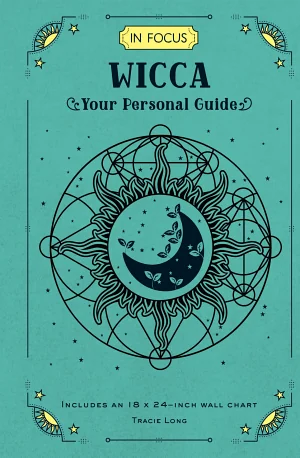
In Focus Wicca
 83
83

In Focus Wicca
Tracie Long's In Focus Wicca provides a much-needed, straightforward introduction to a religion often shrouded in mystery. The strength of this work lies in its clear, structured presentation of Wiccan beliefs and practices, devoid of unnecessary jargon. The section on the Wiccan Rede, for instance, is particularly well-articulated, offering a concise explanation of its ethical framework. However, the book occasionally errs on the side of caution, sometimes presenting information with a detached academic tone that might not fully capture the immanent spiritual experience central to many Wiccans. A more vibrant exploration of the deity concepts, beyond their basic definition, would have been beneficial. Despite this limitation, the book serves as an excellent primer for the uninitiated.
📝 Description
83
Tracie Long's In Focus Wicca (2020) examines the core beliefs and practices of the Wiccan religion.
This volume by Tracie Long offers a straightforward account of Wicca, intended as a reference for understanding its essential principles and rituals. It details the spiritual structure, ethical guidelines, and ceremonial aspects that characterize the religion. The book covers Wicca's historical roots and its development into modern forms. Its organization aims to clarify difficult subjects, making them accessible to beginners while still offering substance for those with prior knowledge.
In Focus Wicca is written for a broad readership. It will interest those curious about Wicca, whether they are exploring new spiritual paths, studying religions comparatively, or seeking factual information. Students of esoteric traditions, mythology, and anthropology may find it a useful resource for understanding a prominent contemporary spiritual movement. The book is especially suited for readers who prefer direct explanations over anecdotal accounts.
In Focus Wicca situates the religion within the mid-20th century emergence of Western esotericism, acknowledging figures like Gerald Gardner. It traces Wicca's lineage and its divergence from earlier pagan revivals and magical traditions. The book contextualizes its growth alongside other post-war spiritual movements, providing a historical framework for its contemporary expressions.
💡 Why Read This Book?
• Gain a foundational understanding of Wiccan cosmology, including the dualistic divine of God and Goddess, and how this shapes ritual practice. • Learn about the historical emergence of Wicca, particularly its mid-20th-century roots, distinguishing it from ancient paganism. • Comprehend the core ethical guidelines of Wicca, specifically the principles embedded within the Wiccan Rede and its implications for practitioners.
⭐ Reader Reviews
Honest opinions from readers who have explored this book.
❓ Frequently Asked Questions
What is the primary purpose of the "Wiccan Rede" as explained in In Focus Wicca?
The Wiccan Rede, as detailed in the book, serves as the primary ethical code for Wiccans. It emphasizes principles like 'An it harm none, do what ye will,' guiding practitioners to act responsibly and consider the consequences of their actions on themselves and others.
Does In Focus Wicca discuss the historical figures associated with modern Wicca?
Yes, the book addresses the historical development of modern Wicca, often referencing key figures such as Gerald Gardner, who is widely credited with founding the first Wiccan coven in the early 1950s. This context helps readers understand Wicca's origins.
How does the book explain the Wiccan concept of the 'God and Goddess'?
In Focus Wicca explains the divine as a polarity, encompassing both masculine (God) and feminine (Goddess) aspects. This dualistic understanding is central to Wiccan theology and informs their ritualistic celebrations, particularly those tied to natural cycles.
Is Wicca presented as an ancient religion or a modern one in this book?
The book clarifies that while Wicca draws inspiration from pre-Christian pagan traditions, modern Wicca as a distinct religion largely emerged in the mid-20th century. It distinguishes between ancient pagan practices and contemporary Wiccan faith.
What are the main components of the 'Wheel of the Year' in Wicca, according to the book?
In Focus Wicca describes the Wheel of the Year as the cycle of eight seasonal festivals observed by Wiccans. These Sabbats, such as Samhain and Beltane, mark significant points in the agricultural and solar year, reflecting nature's rhythms.
Does the book cover Wiccan rituals and covens?
Yes, the work provides an overview of common Wiccan rituals, including initiation rites and seasonal celebrations. It also discusses the structure and role of covens as organized groups within the Wiccan tradition.
🔮 Key Themes & Symbolism
The Divine Duality
The book elaborates on the Wiccan understanding of the divine, which is typically expressed as a dualistic polarity of God and Goddess. This is not merely symbolic but represents fundamental cosmic forces. The interplay between these divine aspects is central to Wiccan theology and ritual, reflecting the balance found in nature, such as the sun and moon, or the active and receptive principles. This concept shapes how Wiccans approach worship and their relationship with the sacred, emphasizing immanence rather than transcendence.
The Wiccan Rede and Ethics
A core part of Wiccan practice, the Wiccan Rede, particularly the directive 'An it harm none, do what ye will,' is thoroughly examined. The work clarifies that this is not a simple hedonistic license but a profound ethical guideline requiring careful consideration of consequences and personal responsibility. It explores how this principle informs decision-making, magical practice, and interpersonal relationships within the Wiccan community and beyond, promoting a balanced and non-injurious approach to life.
The Cycle of Nature
Central to Wiccan spirituality is the profound reverence for the natural world and its cyclical rhythms. The book details the Wheel of the Year, the eight major festivals that mark the solstices, equinoxes, and cross-quarter days. These celebrations, such as Yule, Beltane, and Samhain, are not just commemorations but active engagements with the earth's energetic shifts, symbolizing life, death, and rebirth, and reinforcing the connection between the human experience and the natural environment.
Ritual and Practice
In Focus Wicca provides insights into the practical application of Wiccan beliefs through ritual. It describes common elements such as circle casting, invoking deities, spellcraft, and meditation. The role of covens as organized groups for training and practice is also discussed, alongside the significance of initiation. The book aims to clarify these practices, presenting them as structured methods for spiritual growth and connection, rather than mere superstition.
💬 Memorable Quotes
Direct passages from the work, attributed to the author.
“Wicca recognizes the divine in both masculine and feminine aspects.”
— This highlights the immanent and dualistic nature of God and Goddess in Wiccan belief. It signifies a holistic view of divinity that embraces complementary forces, mirroring the natural world and the human psyche.
“The Wheel of the Year marks the sacred cycle of nature's turning.”
— This statement emphasizes the cyclical understanding of time and seasons in Wicca. The eight festivals are presented as central moments for spiritual connection with the earth's rhythms and the ongoing processes of life, death, and renewal.
“Covens serve as structured environments for learning and shared practice.”
— This points to the communal aspect of Wicca. It suggests that covens provide a framework for transmission of knowledge, mutual support, and collective ritual work, fostering spiritual development within a group setting.
“Initiation marks a formal commitment to the Wiccan path.”
— This highlights the significance of formal entry into Wicca. It signifies a personal pledge and a transition point, often involving ritual and acknowledgment by a coven or mentor, marking a deepened engagement with the tradition.
💡 Key Ideas
Editorial paraphrase of the work's core concepts — not direct quotes.
The Wiccan Rede's central tenet is 'An it harm none, do what ye will.'
This quote captures the core ethical framework of Wicca. It suggests a broad freedom of action, but crucially conditioned by the imperative to avoid causing harm, implying a deep sense of responsibility for one's choices and their impact.
🌙 Esoteric Significance
Tradition
Wicca fits within the broader Western Esoteric Tradition, particularly drawing from Neopaganism and earlier magical revivals. It departs from strictly Hermetic or Kabbalistic lineages by centering nature worship and the immanent divine, though it shares a focus on ritual efficacy and personal transformation. Its structure, particularly the coven system and initiation rites, echoes some fraternal esoteric orders, but its theological emphasis on the God and Goddess and the Wiccan Rede sets it apart.
Symbolism
The pentacle, representing the five elements (Spirit, Earth, Air, Fire, Water) and protection, is a central symbol. The Horned God, often depicted with antlers, symbolizes virility, the wild, and the cycles of nature. The Triple Goddess, representing maiden, mother, and crone, embodies lunar cycles, intuition, and feminine power. Together, they form the core divine polarity central to Wiccan cosmology and ritual practice.
Modern Relevance
Contemporary Neo-Pagan movements, ecofeminist spirituality, and nature-based spiritual practices frequently draw upon Wiccan concepts and symbolism. Thinkers and practitioners in these fields often engage with Wicca's emphasis on ecological awareness, the divine feminine, and ethical living. Its influence can be seen in modern witchcraft, earth-centered spirituality groups, and even in therapeutic approaches that utilize nature-based metaphors and rituals.
👥 Who Should Read This Book
• Aspiring Wiccans seeking a clear, non-dogmatic introduction to the religion's core beliefs, practices, and ethical guidelines. • Students of comparative religion and Western Esotericism interested in understanding the development and tenets of a significant modern spiritual movement. • Individuals curious about paganism and nature-based spirituality who wish to differentiate Wicca from other related traditions and explore its unique worldview.
📜 Historical Context
The mid-20th century witnessed a resurgence of interest in esoteric traditions, partly fueled by post-war disillusionment and a search for alternative spiritualities. Within this milieu, Gerald Gardner's re-emergence of Wicca in the early 1950s presented a distinct, organized form of witchcraft. This period also saw figures like Aleister Crowley and Dion Fortune influencing magical thought, though Gardner's Wicca offered a more nature-centric and explicitly pagan framework, differentiating it from the ceremonial magic prevalent in some circles. While not subject to widespread censorship like some earlier occult movements, Wicca faced significant public suspicion and misunderstanding due to lingering witch-hunt era prejudices. Its reception was largely confined to esoteric and counter-cultural communities, with limited mainstream academic engagement until later decades.
📔 Journal Prompts
The Wiccan Rede's principle of 'An it harm none,' and its practical application.
Reflecting on the dualistic divine of God and Goddess in relation to natural cycles.
The significance of the Wheel of the Year festivals for personal spiritual practice.
Exploring personal connections to the elements (Earth, Air, Fire, Water, Spirit) as presented in Wiccan symbolism.
Considering the role of covens and community in spiritual growth.
🗂️ Glossary
Wiccan Rede
The ethical code central to Wicca, famously including the line 'An it harm none, do what ye will.' It guides practitioners toward responsible action and consideration of consequences.
Wheel of the Year
The cycle of eight seasonal festivals observed in Wicca, marking the solstices, equinoxes, and cross-quarter days, celebrating the natural rhythms of the earth and seasons.
Coven
A group of Wiccans, typically numbering around thirteen members, who meet for rituals, training, and mutual support in their spiritual practice.
God and Goddess
The primary divine deities in Wicca, understood as a polarity of masculine and feminine energies that represent fundamental cosmic forces and the balance of nature.
Sabbats
The eight major festivals of the Wheel of the Year, including Yule, Imbolc, Beltane, Litha, Lughnasadh, Mabon, Samhain, and Ostara.
Pentacle
A five-pointed star, often enclosed within a circle, symbolizing the five elements (Earth, Air, Fire, Water, Spirit) and serving as a protective symbol in Wiccan practice.
Initiation
A formal ritual ceremony marking a person's acceptance into a Wiccan tradition or coven, signifying commitment and often involving the bestowal of new knowledge or status.
This book appears in 1 collection
🔮 Readers Also Liked
Browse all →









From the “Wicca” Collection
View all →





More Free Occult Philosophy Books
View all →