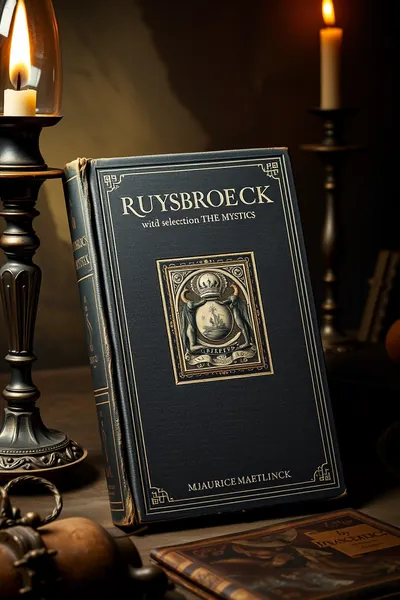
"In der Wolke des Lichtes"

 84
84

"In der Wolke des Lichtes"
Blum’s "In der Wolke des Lichtes" is a dense but rewarding text for the persistent seeker. The author demonstrates a keen ability to synthesize disparate philosophical ideas, particularly evident in his treatment of the concept of the "Cloud of Unknowing" as a conduit for divine revelation. While the book offers a profound perspective on the limitations of intellect in spiritual apprehension, its densely academic prose can, at times, become a significant barrier. A particularly striking passage details the alchemical process not as a physical transformation, but as a psychological purification, a concept that encapsulates the book's core thesis. Despite its challenging nature, the work provides a unique lens through which to view spiritual attainment. It is a valuable, albeit demanding, addition to the esoteric library for those willing to invest the effort.
📝 Description
84
Georg Günter Blum's "In der Wolke des Lichtes" was published in 2001.
"In der Wolke des Lichts" by Georg Günter Blum approaches esoteric philosophy with a rigorous, analytical perspective. The book moves past surface-level interpretations to engage with metaphysical principles in a structured manner. It is not designed for casual readers but for those committed to a deeper study of spiritual ideas. Blum's work requires close attention from the reader, rewarding sustained engagement with its complex arguments.
The text examines the nature of consciousness and its connection to the divine. It analyzes the symbolic language found across various spiritual traditions, asserting their internal coherence and effectiveness. Core ideas include personal transformation, the inward spiritual path, and transcending dualistic thought patterns. The book also considers the interplay of light and darkness as foundational forces within the spiritual universe.
Published in 2001, Blum's "In der Wolke des Lichts" emerged within a renewed interest in Hermeticism and esoteric thought, a trend influenced by figures such as Carl Jung. The early 21st century saw a growing scholarly and public engagement with ancient spiritual traditions. Blum's work contributes to this by offering an introspective and academic viewpoint, contrasting with more sensationalized portrayals of occultism that had characterized earlier periods.
💡 Why Read This Book?
• Gain a structured understanding of the "Cloud of Unknowing" concept as presented by Blum, offering a unique perspective on divine apprehension beyond rational intellect. • Explore the symbolic language of spiritual traditions through Blum's analytical lens, learning how to interpret esoteric imagery with greater depth. • Grasp the psychological interpretation of alchemical processes, as discussed in the book, to understand spiritual transformation as an internal, rather than external, phenomenon.
⭐ Reader Reviews
Honest opinions from readers who have explored this book.
❓ Frequently Asked Questions
When was "In der Wolke des Lichtes" originally published?
The book "In der Wolke des Lichtes" by Georg Günter Blum was first published in 2001, marking its entry into the esoteric literature landscape of the early 21st century.
What is the central theme of "In der Wolke des Lichtes"?
The central theme revolves around the apprehension of the divine or absolute through means that transcend rational intellect, often referred to as the "Cloud of Light" or "Cloud of Unknowing."
Is "In der Wolke des Lichtes" suitable for beginners in esotericism?
No, the book is generally considered advanced. Its dense, academic style and complex conceptual framework are better suited for readers with a foundational understanding of esoteric or philosophical traditions.
What philosophical traditions does Georg Günter Blum draw upon?
Blum's work engages with traditions such as Hermeticism, Gnosticism, and potentially elements of Christian mysticism, particularly the concept of the Cloud of Unknowing.
How does Blum interpret alchemical processes?
Blum often interprets alchemical processes not merely as physical metallurgy, but as symbolic representations of psychological and spiritual purification and transformation within the individual.
What does "Cloud of Light" symbolize in the book?
The "Cloud of Light" symbolizes a state of divine presence or ultimate reality that is beyond the grasp of ordinary human understanding and intellectual analysis.
🔮 Key Themes & Symbolism
Transcendence of Intellect
A core theme is the inadequacy of the rational mind for direct spiritual experience. Blum posits that true understanding of the divine, or the "Cloud of Light," can only be achieved by moving beyond logical constructs and intellectual analysis. This involves embracing a form of 'unknowing' or 'not-thinking,' allowing for a more direct, intuitive reception of spiritual truths. The book explores how traditions have historically grappled with this limitation, suggesting methods for quietening the discursive mind.
Symbolic Language of Spirit
The work emphasizes the profound significance of symbolic language within esoteric traditions. Blum argues that symbols are not mere decorations but essential vehicles for conveying spiritual realities that elude literal description. He examines how various symbols across different mystical paths function to bridge the gap between the manifest and unmanifest worlds, providing a framework for understanding spiritual concepts through metaphor and analogy.
Inner Alchemical Transformation
Blum reinterprets alchemical symbolism, shifting the focus from material transmutation to internal, psychological, and spiritual change. The stages of the alchemical process are presented as metaphors for the purification of the soul and the refinement of consciousness. This perspective aligns the practice of alchemy with broader esoteric goals of spiritual perfection and the attainment of higher states of being.
The Divine Within and Without
The book explores the relationship between the individual consciousness and the universal divine principle. It suggests that the 'Cloud of Light' is not an external entity to be reached, but a dimension of reality that can be realized within oneself. This concept challenges dualistic thinking, proposing an integrated view where the microcosm reflects the macrocosm, and spiritual realization is an internal awakening.
💬 Memorable Quotes
Direct passages from the work, attributed to the author.
“The intellect grasps only what it can define; the divine is beyond definition.”
— This expresses Blum's central argument that rational thought, while useful in the mundane world, is insufficient for comprehending ultimate spiritual reality, which lies in a realm beyond conceptualization.
“Light is not merely seen; it is experienced as presence.”
— This highlights the qualitative difference between intellectual understanding and direct spiritual experience. 'Presence' suggests an immersive, embodied realization rather than a detached observation.
“The 'Cloud of Light' is the veil and the revelation simultaneously.”
— This paradoxical statement suggests that the very mystery or incomprehensibility of the divine is what simultaneously hides it and offers the potential for ultimate insight.
“Symbolism is the bridge from the known to the unknowable.”
— This interpretation underscores the crucial role of metaphorical and symbolic language in esoteric traditions, acting as a vital tool for navigating spiritual concepts that defy literal expression.
💡 Key Ideas
Editorial paraphrase of the work's core concepts — not direct quotes.
Transformation is the dissolution of the false self.
This paraphrased concept points to the alchemical and mystical idea that spiritual growth involves shedding egoic limitations and illusion to reveal a more authentic, higher self.
🌙 Esoteric Significance
Tradition
The work is deeply rooted in the Western Esoteric Tradition, particularly drawing from Hermeticism and Christian Mysticism, specifically referencing the concept of the 'Cloud of Unknowing.' Blum engages with the perennial philosophy, seeking common threads in diverse spiritual and philosophical systems. His approach emphasizes introspection and the direct experience of the divine, aligning with mystical paths that prioritize inner realization over dogmatic adherence.
Symbolism
Key symbols include the "Cloud of Light" itself, representing the ineffable divine presence that transcends rational comprehension. Light functions not just as illumination but as an active, divine essence. The book also explores alchemical symbolism, reinterpreting processes like calcination and dissolution as metaphors for psychological purification and the breakdown of the egoic self, essential steps toward spiritual realization.
Modern Relevance
Contemporary practitioners of contemplative spirituality, depth psychology, and comparative mysticism find value in Blum's work. His emphasis on transcending intellectual limitations speaks to modern mindfulness and meditation movements seeking direct experience. Thinkers exploring the intersection of consciousness studies and ancient wisdom traditions may find Blum's systematic approach a valuable reference for understanding the symbolic language of spiritual paths.
👥 Who Should Read This Book
• Advanced students of Hermeticism and Gnosticism seeking a deeper philosophical analysis of core concepts like divine apprehension beyond intellect. • Researchers in comparative religion and mysticism interested in scholarly treatments of the 'Cloud of Unknowing' and symbolic spiritual language. • Contemplative practitioners looking for intellectual frameworks to support their inner work and understanding of spiritual transformation.
📜 Historical Context
Georg Günter Blum's "In der Wolke des Lichtes," published in 2001, emerged during a period of renewed interest in Western esotericism, influenced by scholars like Frances Yates and the popularization of Jungian psychology. The early 2000s saw a proliferation of texts exploring Hermeticism, Kabbalah, and Gnosticism, often moving beyond the more Theosophical or New Age interpretations prevalent in the late 20th century. Blum’s work can be seen as contributing to a more philosophically rigorous engagement with these traditions. It followed in the wake of, and sometimes competed with, the more accessible writings on mysticism and consciousness that were gaining traction. While not directly engaging in polemics with specific contemporaries, the book implicitly addressed a need for deeper, more systematic exploration of spiritual concepts, contrasting with more superficial treatments of occultism.
📔 Journal Prompts
The nature of the 'Cloud of Light' as both veiled mystery and direct experience.
Interpreting the symbolic bridge between the known and the unknowable.
The limitations of intellect in spiritual apprehension, as explored in the text.
Reflecting on personal experiences of 'presence' beyond rational definition.
The role of inner alchemical transformation in shedding the false self.
🗂️ Glossary
Cloud of Light
A term representing the ineffable, divine reality or presence that is beyond the grasp of ordinary human intellect and conceptualization, often associated with the 'Cloud of Unknowing'.
Intellectual Grasp
Refers to the process of understanding through logic, reason, and definition. The book argues for its limitations in apprehending spiritual truths.
Symbolic Language
The use of metaphors, allegories, and archetypal imagery within spiritual traditions to convey truths that are difficult or impossible to express through literal or rational discourse.
Alchemical Transformation
In this context, refers to the symbolic and psychological process of purifying consciousness and refining the self, rather than literal chemical alteration.
Presence
A state of direct, experiential awareness of the divine or ultimate reality, characterized by an immersive feeling of being rather than detached observation.
False Self
The egoic or conditioned personality, characterized by illusions and limitations, which must be 'dissolved' or transcended during spiritual development.
In Lúce Nubila
Latin phrase, likely a variant or reference related to the 'Cloud of Light' or 'Cloud of Unknowing,' emphasizing the luminous, divine aspect of this mystery.
🔮 Readers Also Liked
Browse all →




More by Georg Günter Blum
All books →

More Free Mysticism & Contemplation Books
View all →