Kabbalah
 63
63

Kabbalah



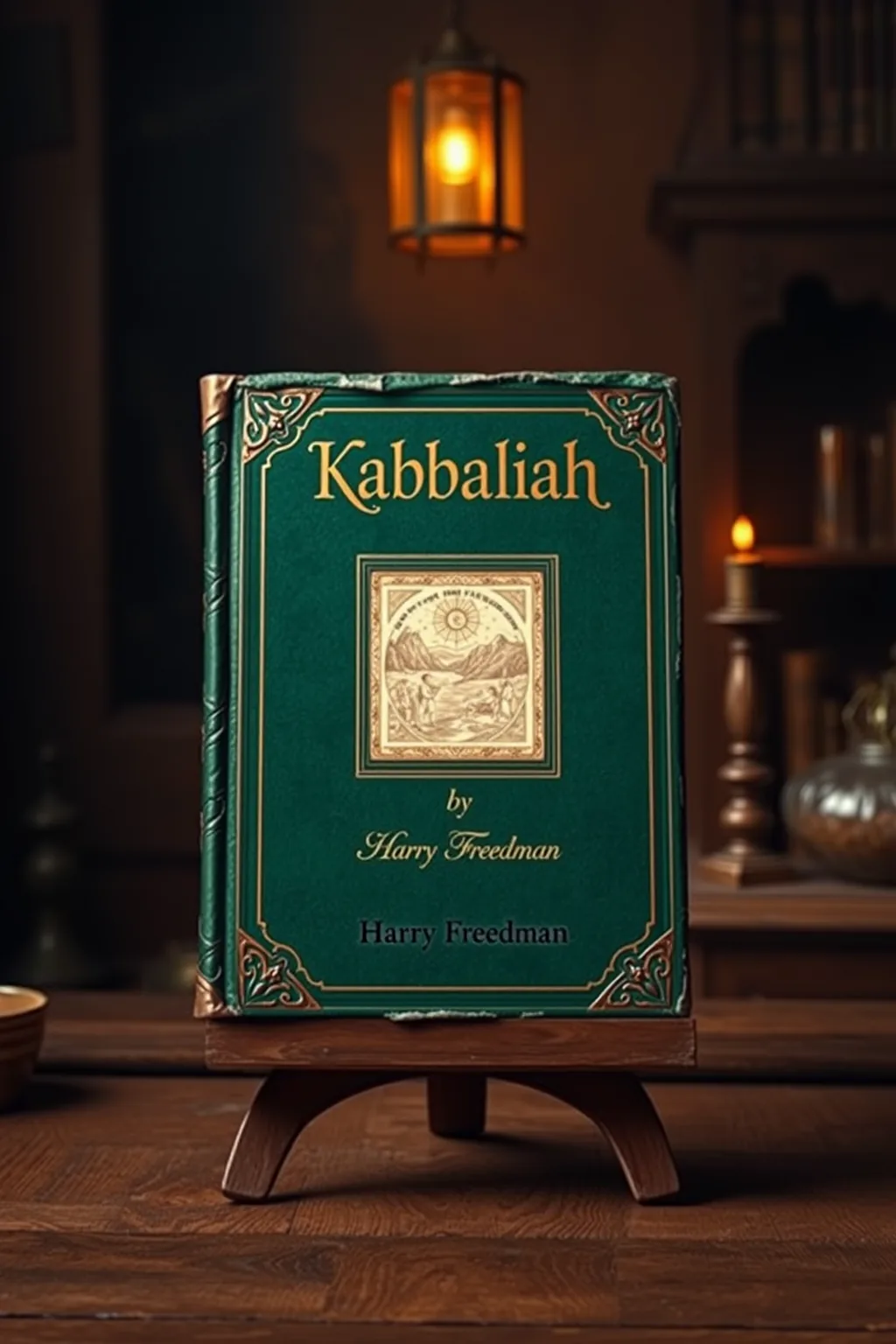
Harry Freedman's 'Kabbalah' stands as a cornerstone for understanding the profound depths of Jewish esoteric thought. Alaric Kestrel commends Freedman's rigorous yet accessible approach, illuminating the historical evolution and conceptual framework of this ancient mystical system. The book excels in demystifying complex concepts like the Sefirot and the Zohar, making them comprehensible without sacrificing their inherent mystery. It serves as an indispensable guide for students of comparative mysticism, theology, and anyone seeking a rigorous introduction to the spiritual heritage of the Kabbalah. Freedman's narrative is both scholarly and deeply reverent, a rare combination that truly captures the essence of this sacred tradition.
📝 Description
63
Harry Freedman's 'Kabbalah' (1975) explains Jewish mysticism's core concepts.
Harry Freedman's 'Kabbalah' details the tradition of Jewish mysticism, tracing its development from early origins to modern expressions. The book carefully examines the symbolic language, cosmic theories, and philosophical ideas central to Kabbalah that have long attracted those interested in esoteric knowledge. Freedman clarifies key elements such as the Tree of Life, the divine emanations called Sefirot, and the pursuit of spiritual unity.
This volume serves as a guide for individuals interested in understanding the universe's mysteries, consciousness, and deeper spiritual forces. It is suitable for newcomers and experienced practitioners seeking to grasp the structure of the cosmos and the divine processes of creation. The work illuminates a reality imbued with sacred significance and latent possibilities.
Kabbalah represents a school of Jewish mysticism that emerged in the medieval period, though its roots are often traced to earlier esoteric traditions. It centers on interpreting the Torah and understanding God's relationship with creation through symbolic language and speculative theology. Central concepts include the ten Sefirot, divine emanations that form a blueprint for existence, and the Tree of Life, a diagram representing these emanations and the path to spiritual ascent. Kabbalistic practice often involves meditation and contemplation aimed at achieving a direct experience of the divine.
💡 Why Read This Book?
Delve into the origins and evolution of one of the world's most profound mystical traditions. This book offers a clear, comprehensive pathway into the esoteric symbolism and philosophical depth of Kabbalah, making it ideal for spiritual seekers, academic scholars, and practitioners yearning to connect with ancient wisdom. Uncover the secrets of creation and the divine blueprint for existence.
⭐ Reader Reviews
Honest opinions from readers who have explored this book.
❓ Frequently Asked Questions
What is Kabbalah?
Kabbalah is a mystical tradition within Judaism that seeks to understand the nature of God, the universe, and the human soul through esoteric interpretation of religious texts and symbolic practices.
Who was Harry Freedman?
Harry Freedman was a scholar and author dedicated to making the complex ideas of Jewish mysticism accessible to a wider audience.
What are the Sefirot?
The Sefirot are the ten divine emanations or attributes through which God reveals Himself and interacts with creation, forming the central structure of the Kabbalistic Tree of Life.
Is Kabbalah only for Jewish people?
While originating within Judaism, the study and practice of Kabbalah have attracted interest from people of all backgrounds seeking spiritual wisdom and understanding of universal principles.
What is the Tree of Life in Kabbalah?
The Kabbalistic Tree of Life is a symbolic diagram representing the interconnectedness of all existence, illustrating the divine emanations (Sefirot) and the path of spiritual ascent.
🔮 Key Themes & Symbolism
The Divine Emanations (Sefirot)
This theme explores the core concept of the Sefirot, the ten divine attributes that emanate from the Godhead and form the structure of the Kabbalistic Tree of Life. Understanding the Sefirot is crucial for comprehending the Kabbalistic worldview, as they represent the stages of divine revelation, the blueprint of creation, and the energetic pathways through which the universe is sustained. Freedman elucidates their symbolic meanings and their role in spiritual development, offering insights into how these divine forces can be accessed and integrated within the human psyche.
The Tree of Life as Cosmic Map
The Tree of Life is presented as more than just a diagram; it is a dynamic map of the cosmos and the human soul. This theme explores its intricate pathways, the connections between the Sefirot, and the various 'worlds' or levels of existence it represents. Freedman guides the reader through the journey of spiritual ascent, illustrating how the Tree of Life serves as a tool for self-discovery, spiritual growth, and the attainment of higher consciousness. It is a visual representation of the divine order and the interconnectedness of all things.
Esoteric Interpretation and Hidden Meanings
Central to Kabbalah is the practice of uncovering hidden meanings within sacred texts, particularly the Torah. This theme focuses on the allegorical and symbolic methods of interpretation employed by Kabbalists, revealing layers of divine wisdom concealed beneath the literal word. Freedman demonstrates how these methods unlock clear insights into the nature of reality, the divine will, and the purpose of human existence, making the seemingly simple into the profoundly complex and the mundane into the sacred.
💬 Memorable Quotes
Direct passages from the work, attributed to the author.
“The universe is a garment worn by God.”
— This profound metaphor suggests that all of creation is an outward expression of the divine, interwoven with God's essence and purpose.
“To know the divine is to know oneself.”
— This highlights the Kabbalistic principle of the microcosm reflecting the macrocosm, emphasizing self-awareness as a path to spiritual understanding.
“Light streams forth from the hidden.”
— This speaks to the concept of divine revelation emerging from the unknowable depths of the Godhead, useful the path of spiritual seeking.
“The letters are the building blocks of creation.”
— This refers to the Kabbalistic belief in the sacred power of Hebrew letters and their role in shaping reality, a core part of Gematria and mystical contemplation.
“Every soul has a spark of the divine.”
— This underscores the inherent divinity within each individual, suggesting potential for spiritual realization and connection to the Infinite.
🌙 Esoteric Significance
Tradition
Kabbalah is the quintessential esoteric tradition within Judaism, focusing on inner, spiritual, and mystical dimensions of God, creation, and human existence. It offers a symbolic language and a framework for understanding divine mysteries, the structure of the cosmos, and the path to spiritual perfection. Its practices often involve contemplative meditation, scriptural exegesis, and the exploration of divine names and angelic hierarchies, aiming for a direct, experiential knowledge of the divine.
Symbolism
The symbolism of Kabbalah is rich and complex, with the Tree of Life and its ten Sefirot being paramount. Other key symbols include the divine names, the Hebrew alphabet (seen as fundamental building blocks of reality), the concepts of Ein Sof (the Infinite, unknowable God), and the various realms or 'worlds' of creation. These symbols are not mere allegories but are understood as potent conduits of divine energy and wisdom, offering pathways for spiritual ascent and deeper comprehension of the universe.
Modern Relevance
In contemporary times, Kabbalah continues to resonate deeply, offering clear insights into consciousness, the interconnectedness of all things, and the search for meaning in a secular world. Its emphasis on inner transformation, ethical living, and the potential for spiritual growth appeals to a diverse audience. Modern interpretations often bridge the gap between ancient wisdom and contemporary psychological and philosophical thought, providing a framework for personal development and a deeper understanding of the human condition.
👥 Who Should Read This Book
This book is an essential read for the dedicated spiritual seeker yearning to understand the profound depths of Jewish mysticism. Scholars of comparative religion and philosophy will find it an invaluable resource for its scholarly rigor and comprehensive scope. Practitioners of esoteric arts seeking to deepen their understanding of cosmic principles and divine architecture will benefit immensely. Beginners curious about the origins and core concepts of Kabbalah will find Freedman's accessible yet profound explanations a perfect entry point into this complex and useful tradition.
📜 Historical Context
Harry Freedman's 'Kabbalah' emerges from a rich historical lineage, tracing the development of Jewish mysticism from its nascent stages in ancient Israel, through the formative influences of the Talmudic period, to the explosion of Kabbalistic thought in medieval Spain with the Zohar. The period of the Spanish Kabbalah (12th-15th centuries) witnessed a systematic formulation of its core doctrines, influencing thinkers across the Jewish world and beyond. Later, Lurianic Kabbalah in Safed (16th century) introduced complex cosmic dramas of Tikkun (rectification), profoundly shaping subsequent mystical thought. The Enlightenment and subsequent modern eras saw Kabbalah's ideas filtered through various philosophical and spiritual lenses, leading to its diverse contemporary interpretations. Freedman situates this evolution within its socio-religious context, highlighting how historical events and intellectual currents shaped the expression and dissemination of these esoteric teachings.
📔 Journal Prompts
Reflect on a time you felt a profound sense of interconnectedness with the universe. How might the concept of the Sefirot help explain that feeling?
Explore the symbolism of light in your own life. Where do you perceive divine illumination emerging from the 'hidden'?
Consider the idea of the universe as a 'garment' of God. What does this metaphor reveal about your relationship with creation?
Journal about a personal challenge. How might applying Kabbalistic principles of rectification (Tikkun) offer a new perspective on overcoming it?
Meditate on the concept of 'knowing oneself' as a path to knowing the divine. What aspects of your inner self are you seeking to understand more deeply?
🗂️ Glossary
Ein Sof
The Kabbalistic term for the Infinite, the unmanifest, unknowable aspect of God beyond all comprehension or description.
Sefirot
The ten divine emanations or attributes through which God interacts with creation, forming the structure of the Kabbalistic Tree of Life.
Tree of Life (Etz Chaim)
A central symbolic diagram in Kabbalah representing the structure of the cosmos and the divine pathways connecting God to creation.
Zohar
The primary foundational work of Kabbalah, a mystical commentary on the Torah, attributed to Rabbi Shimon bar Yochai.
Tikkun
The Kabbalistic concept of 'rectification' or 'restoration,' referring to the cosmic process of repairing the world and restoring divine harmony.
This book appears in 1 collection
🔮 Readers Also Liked
Browse all →









From the “Kabbalah” Collection
View all →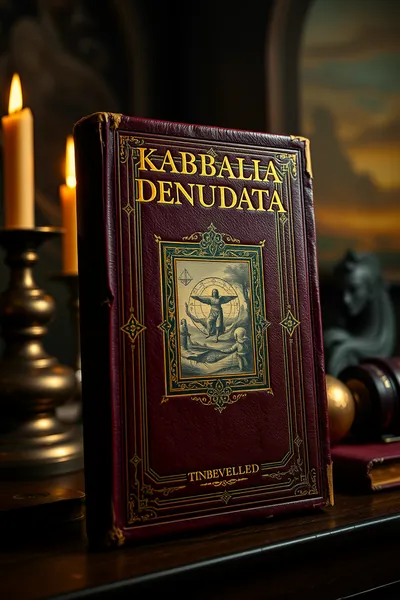







More Free Kabbalah & Jewish Mysticism Books
View all →