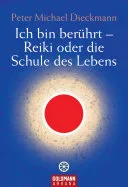
Ich bin berührt - Reiki oder die Schule des Lebens
 80
80

Ich bin berührt - Reiki oder die Schule des Lebens
Peter Michael Dieckmann’s "Ich bin berührt" offers a compelling reframing of Reiki, moving it from a simple healing technique to a comprehensive life philosophy. The author's insistence on "healing by light" over physical touch is a crucial distinction, emphasizing the energetic transmission that underpins the practice. This focus elevates Reiki beyond a mere physical intervention, positioning it as a profound energetic dialogue. The work's strength lies in its philosophical depth, encouraging practitioners to see Reiki as a continuous process of self-discovery and spiritual education. However, the book occasionally leans towards abstract conceptualization, which might leave practitioners seeking more concrete, step-by-step guidance wanting. A particularly illuminating section discusses the "energetic field" as the primary recipient of Reiki, underscoring the subtle nature of its influence. Dieckmann's exploration of Reiki as a "school of life" is its most significant contribution, urging a holistic integration of practice and personal evolution. It's a valuable read for those looking to deepen their understanding beyond the mechanics of hands-on healing.
📝 Description
80
Peter Michael Dieckmann's 2009 book, 'Ich bin berührt,' presents Reiki as a life philosophy, not just a healing technique.
Dieckmann's 'Ich bin berührt - Reiki oder die Schule des Lebens' examines Reiki beyond its common perception as a hands-on healing method. He describes it as a form of 'light healing,' where the transfer of energy, or 'light,' between practitioner and recipient is central. The book clarifies that this process focuses on the energetic field around a person, distinguishing it from simple physical contact. This approach encourages practitioners to view Reiki as an internal discipline that cultivates self-awareness while also being applied to others. The work is for those interested in the philosophical aspects of energy work, especially those who want to connect spiritual growth with practical application. It also speaks to Reiki practitioners aiming for a deeper grasp of energetic interactions and their effects on the human aura. Furthermore, the book appeals to individuals who see life as a continuous learning experience, where practices like Reiki are vital for personal progress and self-discovery.
Published in 2009, 'Ich bin berührt' fits into the modern Western interest in Eastern spiritual practices. While Reiki originated with Mikao Usui in Japan in the early 20th century, its spread globally accelerated in the late 1900s. Dieckmann's writing is part of a larger body of esoteric literature that frames these techniques within personal development and spiritual evolution, moving beyond just physical ailments. It touches on concepts of subtle energy fields, ideas that have appeared in various forms through figures like Wilhelm Reich and later integrated into New Age thought.
💡 Why Read This Book?
• Learn to perceive Reiki not just as a healing method, but as a 'school of life' that fosters personal growth and self-awareness, directly engaging with Dieckmann's core philosophy. • Understand the critical distinction between 'healing by light' and 'healing by touch,' as articulated in the book, to refine your energetic practice and focus on aura transmission. • Explore the concept of the 'energetic field' as the primary recipient of Reiki, gaining insights into how subtle energy work influences well-being beyond the physical body, as detailed by Dieckmann.
⭐ Reader Reviews
Honest opinions from readers who have explored this book.
❓ Frequently Asked Questions
What is the core difference between Reiki as presented in 'Ich bin berührt' and other healing methods?
Peter Michael Dieckmann's book emphasizes that Reiki works primarily through "healing by light" transmitted via the practitioner's energetic field, rather than direct physical contact, positioning it as a subtler, more profound energetic exchange.
When was Peter Michael Dieckmann's book 'Ich bin berührt' first published?
The book 'Ich bin berührt - Reiki oder die Schule des Lebens' by Peter Michael Dieckmann was first published on October 2, 2009.
Does the book focus solely on using Reiki for others, or does it cover self-healing?
Dieckmann presents Reiki as a versatile practice usable for both treating others and as a meditation technique for oneself, highlighting its dual role in personal development and external application.
What does 'Reiki oder die Schule des Lebens' mean in the context of the book?
This subtitle translates to 'Reiki or the School of Life,' indicating that the book views Reiki practice as an integral part of a continuous learning process and spiritual evolution throughout one's existence.
How does the book explain the mechanism of Reiki healing?
The book explains that Reiki's healing effect originates from the 'light' or energy radiating from the practitioner, acting upon the recipient's 'energetic field,' thus influencing the whole person.
Is 'Ich bin berührt' suitable for beginners in Reiki?
Yes, the book offers a philosophical and conceptual foundation for Reiki, making it suitable for beginners seeking a deeper understanding of its principles beyond the basic techniques.
🔮 Key Themes & Symbolism
Reiki as Life Education
Dieckmann frames Reiki not just as a healing modality but as a profound "school of life." This perspective suggests that engaging with Reiki practice offers continuous lessons in self-awareness, energetic understanding, and spiritual growth. The book implies that the principles and experiences derived from Reiki can be applied to navigate daily challenges, fostering a holistic approach to personal development. It moves beyond the transactional aspect of healing to highlight the transformative journey inherent in the practice itself, viewing each session as an opportunity for deeper learning and self-realization.
The Energetic Field and Light Healing
A central tenet explored is the concept of the "energetic field" (aura) as the primary recipient of Reiki's influence. The work distinguishes "healing by light" from mere physical touch, asserting that the radiant energy transmitted by the practitioner is the active healing agent. This shifts the focus from the practitioner's hands to the emanation of subtle energy, suggesting that the true healing occurs within the recipient's energetic system. This understanding is crucial for practitioners seeking to refine their practice and deepen their connection to the subtle dimensions of healing.
Self-Encounter Through Reiki
The book posits Reiki as a potent catalyst for "an encounter with oneself." By engaging in the practice, whether as a giver or receiver, individuals are prompted towards introspection and self-discovery. The energetic exchange facilitates a deeper connection with one's inner state, bringing awareness to subtle imbalances or blockages. This introspective aspect is presented as fundamental to the healing process, suggesting that true well-being involves understanding and integrating one's inner landscape. Reiki, therefore, becomes a tool for profound self-awareness and personal integration.
Beyond Physical Touch in Healing
Dieckmann critically examines the role of physical touch in healing modalities, arguing that in Reiki, the energetic transmission – the 'light' – is more significant than the corporeal contact. This perspective challenges conventional understandings of therapeutic touch and highlights the subtle, non-physical dimensions of energetic healing. The book encourages practitioners and recipients to focus on the energetic flow and the energetic field, thereby expanding the perception of how healing can manifest. It underscores that the practitioner's presence and intention are key drivers of the energetic exchange.
💬 Memorable Quotes
Direct passages from the work, attributed to the author.
“Reiki is a form of light healing...”
— This statement expresses the book's core thesis, distinguishing Reiki from physical therapies by emphasizing the role of energetic 'light' as the primary healing force.
“...one can use it both as a meditation technique for oneself and for treating others.”
— This highlights the dual utility of Reiki presented in the work, positioning it not only as a therapeutic tool for external application but also as a practice for internal spiritual development and self-care.
“Reiki does not primarily act on the body, but unfolds its effect via the energetic field that surrounds the person.”
— This points to the book's emphasis on subtle energy and the aura as the main interface for Reiki's therapeutic action, suggesting a holistic approach that transcends purely physical interventions.
“Healing is not primarily the physical touch, but rather the light that radiates from the giver's presence onto the recipient.”
— This directly contrasts the book's view with conventional understandings of touch-based healing, underscoring the energetic and luminous quality of the transmission as the crucial element.
“Above all, Reiki is an encounter with oneself.”
— This profound statement positions Reiki practice as a journey of introspection and self-discovery, suggesting that its deepest value lies in fostering self-awareness and personal transformation.
🌙 Esoteric Significance
Tradition
While not explicitly tied to a single Western esoteric lineage like Hermeticism or Kabbalah, Dieckmann's work aligns with broader contemporary esoteric currents that emphasize subtle energy, consciousness, and holistic healing. It draws parallels with Gnostic ideas of inner illumination and self-knowledge, as well as more modern spiritual movements focused on personal transformation. The book's focus on energy fields and light transmission speaks to various esoteric traditions that posit unseen forces influencing physical reality, positioning Reiki as a practical application of these principles for spiritual and physical well-being.
Symbolism
The central symbolism revolves around 'light' as the active healing agent, representing spiritual energy, consciousness, and purity – concepts found across numerous esoteric traditions. The 'energetic field' or aura functions as a symbolic representation of the individual's total being, encompassing physical, emotional, mental, and spiritual aspects; its energetic integrity is key to health. The notion of 'touch' (or its absence) symbolizes the connection and transmission between beings, with the book reinterpreting this connection as primarily energetic rather than physical.
Modern Relevance
Dieckmann's exploration of Reiki as a practice for self-encounter and as a "school of life" finds relevance in contemporary wellness culture, mindfulness movements, and personal development coaching. Thinkers and practitioners focusing on somatic experiencing, energy psychology, and integrated healing modalities often draw upon similar concepts of subtle energy and holistic well-being. The emphasis on the energetic field and non-physical transmission aligns with current explorations in biofield research and quantum healing concepts, making the book's perspective pertinent to modern dialogues on consciousness and healing.
👥 Who Should Read This Book
• Reiki practitioners seeking to deepen their philosophical understanding beyond the technical aspects of hand placements and explore the spiritual dimensions of their practice. • Individuals interested in energy healing modalities who want to understand the conceptual framework of Reiki as a holistic system for personal growth and self-discovery. • Seekers exploring life philosophies that integrate spiritual development with practical daily application, viewing practices like Reiki as integral to navigating life's journey.
📜 Historical Context
Peter Michael Dieckmann's "Ich bin berührt - Reiki oder die Schule des Lebens," published in 2009, entered the discourse on alternative and complementary healing practices during a period of significant Western interest in Eastern spiritual traditions. While Reiki, originating with Mikao Usui in Japan in the early 20th century, had been popularized in the West since the mid-1900s, books like Dieckmann's sought to provide a deeper philosophical and spiritual context. This era saw a proliferation of literature exploring subtle energies, consciousness, and holistic well-being, often influenced by movements like Theosophy and later New Age thought. Dieckmann's work distinguishes itself by framing Reiki as a comprehensive "school of life," moving beyond purely therapeutic applications to encompass personal and spiritual evolution. It engaged with contemporary discussions on energy fields, a concept explored by figures such as Wilhelm Reich decades earlier, and contributed to the ongoing effort to integrate these practices into a Western spiritual framework. The reception of such works generally aligned with the growing interest in mind-body-spirit connections, though often positioned outside mainstream academic or medical discourse.
📔 Journal Prompts
The 'energetic field' as the primary locus of Reiki's effect.
Reiki as an 'encounter with oneself' during practice.
The concept of 'healing by light' versus physical touch.
Personal reflections on Reiki as a 'school of life'.
Integrating the 'light healing' aspect into daily awareness.
🗂️ Glossary
Reiki
A Japanese form of energy healing, often translated as 'universal life force energy,' used for relaxation and to promote healing.
Light Healing
A concept presented in the book where healing is understood to occur through the transmission of energetic light from the practitioner, distinct from physical touch.
Energetic Field
The subtle energy body or aura surrounding a person, believed to be the primary recipient and medium for Reiki's healing effects according to the book.
School of Life
A metaphor used to describe Reiki practice as a continuous process of learning, personal growth, and spiritual development throughout one's life.
Self-Encounter
The process of introspection and self-discovery facilitated by engaging with Reiki practice, leading to a deeper understanding of oneself.
Aura
The field of subtle energy or spiritual energy that is believed to surround any living thing, often used interchangeably with 'energetic field' in the text.
Meditation Technique
A method of focused attention or contemplation used for spiritual development or relaxation, which the book suggests can be achieved through Reiki practice.