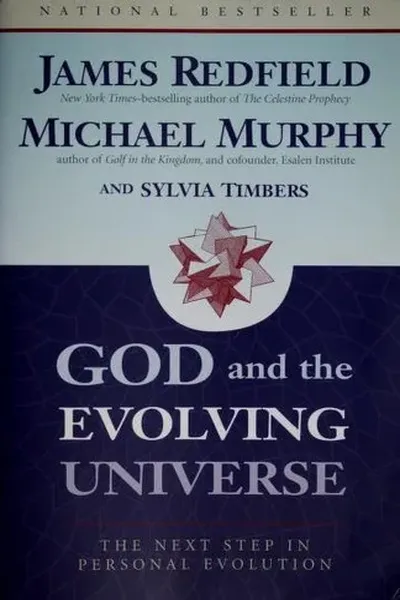
I, Tituba, Black Witch of Salem

 80
80

I, Tituba, Black Witch of Salem
Maryse Condé’s "I, Tituba, Black Witch of Salem" doesn't just recount the known facts of Tituba's life; it breathes spectral life into them. Condé masterfully transports the reader from the sun-drenched, violent shores of Barbados to the chilling, austere landscape of colonial Massachusetts. The novel excels in its portrayal of Tituba not as a passive victim but as a complex individual shaped by immense suffering and possessed of a profound, often feared, spiritual awareness. The depiction of her connection to the island's indigenous magic, juxtaposed with the rigid Puritanical worldview, forms the book's most potent conflict. A minor reservation lies in the pacing during the Salem trial sections, which, while historically crucial, occasionally feel less dynamic than Tituba's earlier life. However, the passage describing Tituba's initial encounters with the supernatural, where she learns from Mother Horned, vividly illustrates the novel's power to conjure an alternative reality. Condé’s work is a vital act of historical redress, giving voice and agency to an unjustly silenced figure.
📝 Description
80
Maryse Condé wrote 'I, Tituba, Black Witch of Salem' in 1986, centering a figure erased from history.
Maryse Condé's 1986 novel reconstructs the life of Tituba, a woman central to the 1692 Salem witch trials but often relegated to historical footnotes. The book begins with Tituba's birth in Barbados, tracing her enslavement and her eventual entanglement with the accusations in colonial Massachusetts. Condé employs a blend of historical research and imaginative narrative to bring Tituba's voice to the forefront. The story examines her identity, the systemic oppression she faced, and her connection to supernatural beliefs. This work gives substance to a marginalized figure, exploring how race, gender, and societal fear intersect to create scapegoats. It is a powerful reclamation of a silenced past, situating Tituba's experiences within the brutal realities of the 17th-century slave trade and the rigid Puritan society.
This novel engages with esoteric traditions through its portrayal of indigenous spiritual practices and Tituba's connection to a worldview outside of dominant European religious structures. It highlights the weaponization of fear and religious dogma against individuals perceived as 'other,' a common theme in discussions of historical witchcraft and folk magic. The narrative suggests a form of spiritual resilience and resistance rooted in inherited knowledge and a connection to the natural world, contrasting with the rigid, fear based Puritanical beliefs.
💡 Why Read This Book?
• Understand the lived experience of a Black woman accused during the 1692 Salem witch trials, gaining insight into the intersection of race, gender, and colonial justice. • Explore the syncretic spiritual practices that Tituba draws upon, moving beyond simplistic notions of witchcraft to appreciate a complex cosmology. • Witness how Maryse Condé reconstructs a historical narrative, challenging dominant historical accounts and centering the perspective of the enslaved and marginalized.
⭐ Reader Reviews
Honest opinions from readers who have explored this book.
❓ Frequently Asked Questions
What is the historical basis for Maryse Condé's novel 'I, Tituba, Black Witch of Salem'?
The novel is inspired by Tituba, an enslaved woman of South American or Indigenous Caribbean heritage who was one of the first accused in the 1692 Salem witch trials. Historical records indicate she was of Barbados and confessed under duress.
How does the book portray Tituba's spiritual beliefs?
Condé depicts Tituba as drawing from a blend of indigenous Caribbean spiritual traditions and African Vodou, which she later confronts with the imposed Christianity of Puritan New England.
What is the significance of Barbados in the novel?
Barbados serves as Tituba's birthplace and the setting for her early life, where she learns ancient spiritual practices from Mother Horned, establishing her connection to a pre-colonial, indigenous worldview.
Who was Mother Horned?
Mother Horned is a fictional character created by Maryse Condé, serving as Tituba's spiritual mentor in Barbados. She represents the ancestral wisdom and pre-Christian spiritual knowledge Tituba carries with her.
What is the role of Angela Davis in relation to this book?
Angela Davis wrote the foreword for the English translation of 'I, Tituba, Black Witch of Salem,' connecting Tituba's story to themes of resistance, slavery, and the ongoing struggle against oppression.
What themes does Maryse Condé explore through Tituba's story?
Condé explores themes of identity, race, gender, power, the impact of slavery and colonialism, the persecution of marginalized individuals, and the resilience of the human spirit.
🔮 Key Themes & Symbolism
Reclaiming Ancestral Spiritualties
The novel emphasizes Tituba's deep connection to the spiritual practices of her Barbadian upbringing, particularly the teachings of Mother Horned. This pre-Christian, indigenous knowledge system is presented as a source of power and identity, standing in stark contrast to the rigid, fear-based Christianity of the Puritans. Condé uses this to illustrate how dominant religious and colonial powers often seek to erase or demonize alternative spiritual traditions, highlighting the esoteric importance of preserving and reclaiming these forms of wisdom.
The Scapegoating of Marginalized Women
Tituba's narrative is a potent exploration of how individuals outside societal norms, particularly women of color, are targeted and demonized. Her status as an enslaved Black woman in Puritanical New England makes her an immediate outsider, susceptible to accusations born of fear and superstition. The novel reveals how concepts of witchcraft were weaponized by colonial authorities to maintain social control and silence dissent, positioning Tituba as an archetype of those persecuted for their perceived 'otherness'.
Trauma and Resilience of the Enslaved
Condé unflinchingly portrays the brutal realities of the slave trade and its lasting psychological impact on Tituba. From her experiences in Barbados to her enslavement and eventual trial, the narrative details the physical and emotional trauma inflicted upon her. Despite this, the novel highlights Tituba's enduring spirit and her ability to find solace and strength in her spiritual heritage, demonstrating a profound resilience forged in the crucible of extreme oppression.
Narrative Revision and Historical Justice
Fundamentally, the book is an act of historical revisionism, giving voice and agency to a figure largely silenced or misrepresented in colonial records. By blending historical fact with imaginative storytelling, Condé challenges the official narratives of the Salem witch trials and offers a more complex, empathetic portrayal of Tituba. This process of narrative reclamation serves as a form of esoteric justice, restoring dignity and a rich inner life to an individual historically stripped of both.
💬 Memorable Quotes
Direct passages from the work, attributed to the author.
“I was born of the sea, and the sea is my mother.”
— This statement, attributed to Tituba, symbolizes her deep, almost elemental connection to nature and her origins, suggesting a spiritual lineage predating and superseding human constructs like slavery and colonial law.
“They needed a scapegoat, and I was there.”
— This reflects Tituba's understanding of her role in the Salem witch trials, highlighting how societal anxieties and the desire for a tangible enemy led to the persecution of vulnerable individuals.
“The spirits of the island whispered to me.”
— This phrase captures the essence of Tituba's connection to indigenous Caribbean spiritual traditions, emphasizing the presence of unseen forces and ancestral knowledge that informed her worldview and actions.
“My body was enslaved, but my spirit remained free.”
— This concept speaks to Tituba's internal resilience and her ability to maintain a sense of self and spiritual autonomy despite the physical and psychological bondage imposed by slavery.
“They feared what they did not understand.”
— This interpretation points to the root of the witch hunt hysteria, suggesting that the accusations against Tituba stemmed from the Puritans' ignorance and fear of her different cultural and spiritual background.
🌙 Esoteric Significance
Tradition
Condé's work draws implicitly from traditions of African Diasporic religions (like Vodou) and indigenous Caribbean spiritual practices, which often emphasize interconnectedness with nature, ancestral veneration, and the presence of spirits. It departs from Western Hermeticism or Kabbalah by focusing on oral traditions and earth-based cosmologies often suppressed by colonial powers. The novel positions these suppressed traditions as potent sources of knowledge and resistance against oppressive systems.
Symbolism
The sea serves as a powerful symbol of origin, the unconscious, and the vastness of spiritual power from which Tituba draws her identity and resilience. Mother Horned represents ancestral wisdom, the feminine divine, and the continuity of pre-colonial spiritual knowledge. The spectral presence of spirits and the natural world in Barbados symbolizes an alternative, immanent form of divinity that contrasts sharply with the transcendent, judgmental God of the Puritans.
Modern Relevance
Contemporary practitioners of Afro-Caribbean spirituality and scholars of Black feminist theory frequently engage with Condé's portrayal of Tituba. The novel's exploration of syncretic beliefs and resistance against cultural erasure continues to inform modern understandings of spiritual resilience in the face of oppression. It provides a literary touchstone for discussions on decolonizing knowledge and reclaiming suppressed narratives within esoteric and academic circles.
👥 Who Should Read This Book
• Students of comparative religion and African Diaspora studies seeking to understand the syncretic nature of spiritual practices formed under duress. • Readers of historical fiction interested in narratives that give voice to marginalized figures and challenge established historical accounts. • Individuals exploring themes of witchcraft, folklore, and the psychological impact of colonialism and slavery on identity.
📜 Historical Context
Maryse Condé's "I, Tituba, Black Witch of Salem" emerged in 1994, a period marked by growing interest in postcolonial literature and the recovery of marginalized histories. The novel directly confronts the legacy of the 1692 Salem witch trials, an event fueled by religious extremism and societal paranoia in colonial Massachusetts. At the time of the trials, the dominant intellectual currents were steeped in Puritan theology, which viewed the world through a lens of stark good versus evil, often interpreting misfortune as divine punishment or demonic influence. Condé's work stands in contrast to earlier, often simplistic, historical accounts of the trials. The novel gained significant attention and critical acclaim, including France's Grand Prix Literaire de la Femme, signaling a shift in literary and historical discourse towards acknowledging the perspectives of those historically silenced, such as enslaved women like Tituba. Her narrative challenges the prevailing Eurocentric historical perspective by centering an Afro-Caribbean woman's experience.
📔 Journal Prompts
Tituba's connection to the sea as a maternal force.
The contrast between Mother Horned's teachings and Puritanical doctrine.
Reflections on the concept of spiritual freedom despite physical enslavement.
The symbolic meaning of Tituba's role as a scapegoat.
How the slave trade shaped Tituba's worldview.
🗂️ Glossary
Puritanical New England
A historical region in North America (roughly present-day Massachusetts, Connecticut, and New Hampshire) settled by English Protestants in the 17th century, known for their strict religious beliefs and social codes.
Slave trade
The business of transporting African people across the Atlantic Ocean to be sold as slaves, primarily in the Americas, during the 16th to 19th centuries.
Witch trials
Legal proceedings, often characterized by mass hysteria and flawed justice, where individuals were accused of practicing witchcraft and typically faced severe punishment, including execution.
Barbados
An island nation in the Lesser Antilles of the West Indies, a former British colony that became a major center for sugar production fueled by enslaved African labor.
Indigenous spiritual practices
Belief systems and rituals originating from the native inhabitants of a particular region, often involving reverence for nature, ancestors, and animistic spirits.
Vodou
A syncretic religion originating in Haiti, blending West African Vodun traditions with elements of Roman Catholicism, practiced by descendants of enslaved Africans.
Scapegoat
An individual or group who is unfairly blamed for the wrongdoings or faults of others.
This book appears in 1 collection
🔮 Readers Also Liked
Browse all →







From the “Witchcraft” Collection
View all →





More Free Occult Philosophy Books
View all →