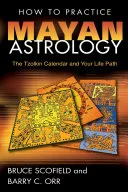
How to Practice Mayan Astrology
 77
77

How to Practice Mayan Astrology
Scofield and Orr's "How to Practice Mayan Astrology" is a commendable effort to demystify a complex system. Its strength lies in its systematic breakdown of the 20 day-signs and the various cycles, like the trecena and the Night Lords' progression, presenting them in a way that is digestible for newcomers. The inclusion of extensive tables is a practical boon for readers eager to cast their own horoscopes. However, the book sometimes leans towards a functional explanation without fully capturing the deeper, embedded worldview of the Maya, which is inherently tied to their agricultural cycles and cosmology. The passage detailing the interrelation of the day-signs and the numbers within the Tzolk'in, while accurate, could benefit from more evocative language to convey the symbolic weight of these combinations. Overall, it serves as a solid, if somewhat dry, manual for learning the mechanics of Mayan astrology.
📝 Description
77
Published in 2006, How to Practice Mayan Astrology offers a practical guide to a sophisticated calendrical system.
This book by Bruce Scofield and Barry C. Orr presents a modern method for understanding Mayan astrology. It explains the complex cycles and symbols of this divinatory system. The authors focus on practical techniques for individuals to cast and interpret their own Mayan horoscopes, moving beyond theory to actionable advice.
It is written for those interested in non-Western astrological systems, students of ancient Mesoamerican cultures, or anyone seeking new ways to understand themselves and the cosmos. Some prior knowledge of esoteric studies or a strong curiosity about complex calendars is helpful for readers. The book acts as an accessible introduction to a system less common in Western esoteric circles than Vedic or Western astrology.
Mayan astrology is rooted in a sophisticated calendrical and cosmological tradition from Mesoamerica. Its cyclical nature, particularly the 260-day Tzolk'in, was used for divination and understanding human destiny. This system contrasts with linear Western timekeeping and solar-focused astrology. Its rediscovery and adaptation in contemporary esoteric thought connect it to broader interests in indigenous cosmologies and alternative spiritual frameworks.
💡 Why Read This Book?
• Learn to cast and interpret your own Mayan horoscope using the 20 day-signs and 13-day trecena cycles, providing a unique lens for self-discovery beyond Western astrological frameworks. • Understand the cyclical logic of the 260-day Tzolk'in, a core component of Mayan calendrics, and its relationship to the 9-day cycle of the Night Lords, as detailed in the book's explanations. • Gain practical skills in applying Mayan astrological techniques, allowing for personal divination and a deeper connection to ancient Mesoamerican wisdom, as facilitated by the extensive tables provided.
⭐ Reader Reviews
Honest opinions from readers who have explored this book.
❓ Frequently Asked Questions
What is the Tzolk'in calendar in Mayan astrology?
The Tzolk'in is the sacred 260-day calendar central to Mayan astrology. It is formed by combining 20 day-signs with 13 numbers, creating a unique 260-day cycle that influences destiny and divination.
How do the 20 day-signs differ from Western zodiac signs?
Unlike the solar-based Western zodiac, Mayan day-signs represent specific energies and archetypes derived from Mayan cosmology and nature. Each sign has unique characteristics and influences, combined with numerical energies.
What is a trecena in Mayan astrology?
A trecena is a 13-day period in the Tzolk'in calendar. Each trecena is governed by a specific number (1 through 13) and a day-sign, influencing the overall energy of those 13 days.
Can I calculate my Mayan birth chart using this book?
Yes, the book provides extensive tables and explanations designed to help readers calculate their own Mayan horoscopes based on their birth date.
What are the Night Lords in Mayan astrology?
The Night Lords are a set of nine deities associated with the nine levels of the underworld. Their 9-day cycle is layered onto the Tzolk'in, adding another dimension of interpretation to astrological readings.
Is prior knowledge of astrology required to read this book?
While some familiarity with astrological concepts can be helpful, the book is structured to guide beginners through the specific techniques and meanings of Mayan astrology.
🔮 Key Themes & Symbolism
The Tzolk'in Cycle
The 260-day Tzolk'in calendar is the heart of Mayan astrology, representing a sacred count that integrates cosmic and terrestrial rhythms. This book explores its construction from the 20 named day-signs and 13 numerical coefficients, detailing how their unique combinations generate 260 distinct energies. Understanding this cycle is paramount, as it forms the basis for personal horoscopes and daily divination, reflecting a worldview where time itself is imbued with profound meaning and cyclical power.
Day-Sign Archetypes
Central to Mayan astrology are the 20 distinct day-signs, each embodying a unique archetypal energy and symbolic meaning derived from Mayan cosmology and natural phenomena. This work meticulously explains each sign, from Imix (Dragon), representing beginnings and nourishment, to Ahau (Sun), signifying enlightenment and completion. These signs are not mere labels but potent forces that shape personality, destiny, and the flow of time when combined with the numerical cycles.
Interlocking Cycles
Mayan astrology operates through a sophisticated interplay of multiple cycles beyond the primary Tzolk'in. The book elucidates the significance of the 13-day trecena, a fundamental unit of time, and the 9-day cycle of the Night Lords, which governs the underworld's influence. These layered cycles create a dynamic astrological system where energies shift and interact, offering a nuanced understanding of temporal influences and personal destiny that goes beyond simple planetary alignments.
Practical Application
Beyond theoretical exploration, "How to Practice Mayan Astrology" emphasizes practical application. It provides the necessary tools, including extensive tables, for readers to calculate their own Mayan birth charts and those of others. This focus empowers individuals to actively engage with Mayan astrological principles for self-reflection, understanding life patterns, and making informed decisions, bridging the gap between ancient wisdom and contemporary personal development.
💬 Memorable Quotes
Direct passages from the work, attributed to the author.
“The 20 day-signs of the Mayan calendar are the fundamental units of the Tzolk'in.”
— This highlights the foundational nature of the day-signs, emphasizing their role as the primary building blocks within the intricate Mayan 260-day sacred calendar system.
“The 13-day trecena is a significant cycle for understanding astrological influences.”
— This points to the importance of the trecena, a period of 13 days, as a key component in Mayan astrological interpretation, influencing the unfolding of energies within the Tzolk'in.
“The 9-day cycle of the Night Lords adds another layer to Mayan divination.”
— This explains that the progression of the nine Night Lords introduces a distinct energetic influence, adding complexity and depth to the practice of Mayan astrological readings.
“Extensive tables allow readers to cast their own Mayan horoscopes.”
— This emphasizes the practical utility of the book, noting that it equips readers with the necessary reference material to perform their own astrological calculations and chart interpretations.
“Mayan astrology offers a sophisticated system for understanding time and destiny.”
— This conveys the core value proposition of Mayan astrology as presented in the book: a complex yet accessible method for gaining insight into personal destiny and the nature of time itself.
🌙 Esoteric Significance
Tradition
This work engages with the Mesoamerican esoteric tradition, specifically the sophisticated calendrical and divinatory systems developed by the ancient Maya. While not directly aligning with Western Hermetic or Kabbalistic lineages, it offers a parallel system of understanding cosmic influence and human destiny through time cycles and symbolic archetypes. It represents an alternative cosmological framework that emphasizes cyclicality and the interconnectedness of natural and spiritual realms, diverging from linear Western temporal concepts.
Symbolism
The primary symbols are the 20 day-signs, each representing potent natural forces and archetypes: Imix (Dragon) for creation, Ik' (Wind) for communication, and Ahau (Sun) for enlightenment. The numerical symbolism of the 13, representing cosmic cycles and levels of consciousness, and the 9, associated with the Night Lords and the underworld, are also crucial. These symbols are not mere representations but active energies that are believed to shape existence and consciousness.
Modern Relevance
Contemporary practitioners of various esoteric disciplines, particularly those interested in comparative cosmology and non-Western divination, draw upon the principles outlined in this book. Thinkers exploring cyclical time, ecological spirituality, and indigenous wisdom traditions find value in the Mayan system's emphasis on natural rhythms. It informs modern approaches to personal growth and self-understanding that seek alternatives to purely Western psychological or astrological models.
👥 Who Should Read This Book
• Aspiring astrologers seeking to expand their knowledge beyond Western systems will find a practical introduction to the unique logic and application of Mayan calendrics. • Students of comparative mythology and ancient cultures can utilize this guide to understand the practical, divinatory aspects of Mayan cosmology and timekeeping. • Individuals interested in alternative frameworks for self-discovery and understanding personal life cycles will benefit from the detailed explanations of day-signs and trecena energies.
📜 Historical Context
Bruce Scofield and Barry C. Orr's "How to Practice Mayan Astrology," first published in 2006, arrived at a time when Western esoteric interests were broadening beyond traditional European systems. The early 21st century saw a surge in popular engagement with indigenous cosmologies and non-Western spiritual practices, partly fueled by New Age movements and increased global connectivity. The book offered a structured, practical entry into Mayan calendrics, a system often perceived as arcane. While academic scholars like Michael D. Coe had long studied Mayan civilization, accessible guides for practical astrological application were less common. This work filled a niche, presenting the complex Tzolk'in calendar and its associated day-signs and cycles in a format suitable for contemporary practitioners, distinguishing itself from more culturally focused ethnographies or purely theoretical astrological texts.
📔 Journal Prompts
The energy of your birth day-sign (e.g., Imix, Ik') and its numerical companion.
How the 13-day trecena cycle might influence your current personal projects.
The symbolic meaning of the 9 Night Lords in relation to challenges.
Applying the concept of cyclical time to a personal goal.
Interpreting the interplay between a day-sign and its associated number.
🗂️ Glossary
Tzolk'in
The sacred 260-day Mayan calendar, formed by the combination of 20 day-signs and 13 numbers. It is central to Mayan divination and astrological interpretation.
Day-Sign
One of the 20 fundamental symbols in the Tzolk'in calendar, each representing a specific energy, archetype, or natural force within Mayan cosmology.
Trecena
A 13-day period within the Tzolk'in calendar, determined by one of the 13 numbers, which influences the energies and themes of those days.
Night Lords
A set of nine deities associated with the underworld in Mayan cosmology, whose 9-day cycle influences the Tzolk'in calendar, adding layers of meaning.
Hunab Ku
A concept often interpreted as the supreme deity or central creative force in Mayan cosmology, though its historical accuracy is debated; it represents unity and essence.
Ahau
One of the 20 Mayan day-signs, often translated as 'Lord' or 'Sun,' symbolizing enlightenment, leadership, and the completion of cycles.
Imix
The first of the 20 Mayan day-signs, frequently depicted as a dragon or serpent, representing beginnings, nourishment, creation, and the primal mother.