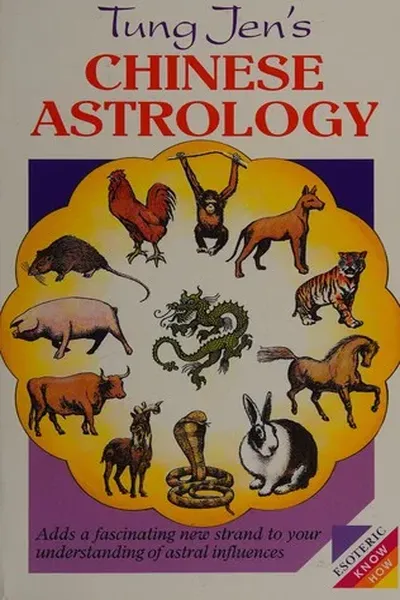
The complete book of Chinese horoscopes

 73
73

The complete book of Chinese horoscopes
Lori Reid's "The Complete Book of Chinese Horoscopes" presents a thorough, if somewhat conventional, guide to the intricacies of the Chinese zodiac. Its strength lies in its clear organization, making the twelve animal signs and their elemental interactions digestible for a general audience. The book effectively breaks down complex concepts like the destructive and productive cycles of the Five Elements, a feature often glossed over in simpler almanacs. A particularly useful section details the nuances of each sign's compatibility, offering practical advice for relationships. However, the work occasionally feels dated, relying on interpretations prevalent in the late 1990s without extensive engagement with more recent scholarship or alternative interpretations within Chinese metaphysics. The prose, while clear, lacks a certain spark, rendering some descriptions of the animal archetypes somewhat generic. Despite this, it remains a solid, informative resource for those beginning their exploration of this ancient system. It serves its purpose as a comprehensive primer, offering a reliable foundation for understanding the Chinese zodiac.
📝 Description
73
Lori Reid's 1997 book details the twelve Chinese zodiac animals and their elemental influences.
"The Complete Book of Chinese Horoscopes," published in 1997, provides a thorough introduction to the Chinese zodiac. Reid outlines the characteristics, strengths, weaknesses, and compatibilities of the twelve animal signs: Rat, Ox, Tiger, Rabbit, Dragon, Snake, Horse, Goat, Monkey, Rooster, Dog, and Pig. The book goes beyond basic sign descriptions to incorporate the impact of the five elements—Wood, Fire, Earth, Metal, and Water—and the principles of Yin and Yang. This integration offers a deeper perspective on personality types and life trajectories within the Chinese astrological framework.
This guide is suitable for anyone interested in East Asian astrology. It explains complex ideas clearly, making it accessible for those new to the subject. Readers familiar with Western astrology may find it useful for comparing systems or incorporating Chinese zodiac insights. The book helps readers understand themselves, their relationships, and the yearly cycles as understood through Chinese calendrical traditions.
This book emerged in the late 20th century, a period marked by growing Western interest in Eastern philosophies and cosmology. Following decades of cultural exchange and the rise of New Age thought, works like Reid's served to popularize ancient systems. The 1990s saw a significant increase in public engagement with astrology, spirituality, and personal development. Reid's comprehensive guide fit within this trend, making complex astrological concepts from Chinese traditions more accessible to a broad audience.
💡 Why Read This Book?
• Learn the specific characteristics and elemental influences of your Chinese zodiac animal, understanding how your birth year and element shape your personality, a concept central to the Chinese zodiac as detailed in the book. • Gain practical insights into interpersonal dynamics by exploring the compatibility charts between the twelve animal signs, a key feature that helps interpret relationship potentials. • Discover the cyclical nature of the Chinese calendar and the impact of the Five Elements (Wood, Fire, Earth, Metal, Water) on yearly fortunes, providing a framework for understanding seasonal influences beyond Western astrology.
⭐ Reader Reviews
Honest opinions from readers who have explored this book.
❓ Frequently Asked Questions
When was "The Complete Book of Chinese Horoscopes" first published?
"The Complete Book of Chinese Horoscopes" by Lori Reid was first published in 1997, making it a product of late 20th-century interest in comparative esoteric systems.
What are the twelve animals in the Chinese zodiac?
The twelve animals are the Rat, Ox, Tiger, Rabbit, Dragon, Snake, Horse, Goat, Monkey, Rooster, Dog, and Pig, each representing a year in a 12-year cycle.
How do the Five Elements affect Chinese horoscopes?
The Five Elements (Wood, Fire, Earth, Metal, Water) interact with each animal sign and influence personality traits, compatibility, and yearly fortunes, adding a complex layer to the zodiac system.
Is Lori Reid's book suitable for beginners?
Yes, the book is designed for accessibility, clearly explaining the core principles of the Chinese zodiac and its elemental influences for those new to the subject.
Does the book discuss compatibility between signs?
Yes, "The Complete Book of Chinese Horoscopes" includes detailed sections on compatibility, exploring how different animal signs interact in relationships based on their inherent characteristics.
What distinguishes Chinese horoscopes from Western astrology?
Chinese horoscopes are based on a 12-year cycle of animals and elemental interactions tied to birth years, whereas Western astrology typically uses a 12-month solar cycle based on planetary positions.
🔮 Key Themes & Symbolism
Animal Archetypes
The twelve animal signs – Rat, Ox, Tiger, Rabbit, Dragon, Snake, Horse, Goat, Monkey, Rooster, Dog, and Pig – form the foundational layer of Chinese astrology. Each animal is associated with a unique set of personality traits, behavioral patterns, and inherent strengths and weaknesses. The book elaborates on how these archetypes manifest in individuals, providing detailed profiles for each sign. Understanding one's animal sign is presented as the first step in deciphering one's astrological blueprint according to the Chinese system.
Elemental Interactions
Beyond the animals, the Five Elements – Wood, Fire, Earth, Metal, and Water – play an important role in shaping the nuances of each sign. The book explains the cyclical relationships between these elements, including productive and destructive cycles, and how they modify the basic characteristics of an animal sign. For instance, a 'Metal Dragon' will possess different qualities than a 'Water Dragon'. This elemental layer adds depth and complexity, illustrating how energies interact and evolve throughout life and within the yearly cycles.
Compatibility and Relationships
A significant focus of the book is on understanding interpersonal dynamics through the lens of Chinese horoscopes. It explores the inherent compatibility or friction between different animal signs, often correlating these relationships with the elemental interactions or symbolic pairings within the zodiac. This allows readers to gain insights into potential harmony or challenges in friendships, romantic partnerships, and professional relationships, providing a framework for navigating social connections.
Cycles and Destiny
The Chinese zodiac is intrinsically linked to cyclical time, particularly the 12-year animal cycle and the 60-year cycle combining animals and elements. The book touches upon how these cycles influence not only individual lives but also broader societal trends and the fortunes of specific years. Understanding these cycles offers a perspective on destiny and the ebb and flow of life, suggesting that awareness can lead to better alignment with cosmic energies.
💬 Memorable Quotes
Direct passages from the work, attributed to the author.
“The year of the Rat is characterized by intelligence, adaptability, and resourcefulness.”
— This statement highlights the core attributes associated with the Rat sign, emphasizing its sharp intellect and ability to thrive in diverse circumstances, a recurring theme in descriptions of this zodiac animal.
“The Dragon is often seen as a symbol of power, good fortune, and imperial authority.”
— This highlights the symbolic power and auspicious connotations traditionally linked to the Dragon sign within Chinese culture and its astrological representation.
“Compatibility between signs often depends on harmonious elemental relationships.”
— This captures a fundamental principle of Chinese astrological compatibility, suggesting that relationships are influenced by how the Five Elements associated with each sign interact.
“The Ox sign embodies diligence, reliability, and steadfastness.”
— This interpretation focuses on the key virtues attributed to the Ox, portraying it as a symbol of hard work, dependability, and unwavering resolve in the Chinese zodiac.
💡 Key Ideas
Editorial paraphrase of the work's core concepts — not direct quotes.
Wood signs encourage growth and expansion, while Metal signs represent structure and refinement.
This paraphrased concept illustrates the distinct energies of two of the Five Elements, showing how their inherent qualities influence the characteristics they impart to individuals or the energies of a particular year.
🌙 Esoteric Significance
Tradition
The book operates within the broad tradition of East Asian metaphysics, specifically Chinese astrology (Zi Wei Dou Shu or, more popularly, Sheng Xiao). While not strictly a 'Western esoteric' lineage like Hermeticism or Kabbalah, it draws from a sophisticated cosmological system deeply intertwined with Taoist philosophy, Yin/Yang theory, and the Five Elements (Wu Xing). It represents a practical application of these ancient Chinese philosophical concepts for understanding human nature and temporal cycles, fitting into a global esoteric interest that often bridges Eastern and Western thought.
Symbolism
Central symbols include the twelve animals of the zodiac, each representing distinct archetypal energies and behaviors, and the Five Elements (Wood, Fire, Earth, Metal, Water). The animal symbols are not merely decorative but embody specific qualities believed to influence personality and destiny. The Five Elements represent fundamental forces whose interactions – in productive and destructive cycles – dictate the ebb and flow of energy, influencing compatibility and the character of specific years or individuals.
Modern Relevance
This work remains relevant for contemporary practitioners and enthusiasts of comparative astrology and Eastern spirituality. The principles of the Chinese zodiac and Wu Xing continue to inform modern Feng Shui practices, personal development coaching, and comparative astrological studies. Thinkers and practitioners interested in integrating cyclical time, elemental balance, and animal archetypes into their understanding of self and environment find such foundational texts useful for contemporary applications, from wellness to relationship counseling.
👥 Who Should Read This Book
['• Individuals new to Eastern astrology seeking a clear, structured introduction to the Chinese zodiac, its twelve animals, and the foundational concept of elemental influence.', '• Those interested in comparative esoteric systems who wish to understand how Chinese astrological principles differ from or complement Western astrological frameworks.', '• Readers looking for practical insights into personal relationships and compatibility, using the animal sign dynamics as a guide for understanding interpersonal connections.']
📜 Historical Context
Published in 1997, "The Complete Book of Chinese Horoscopes" arrived during a global surge of interest in Eastern philosophies and esoteric practices, particularly within Western New Age circles. The preceding decades had witnessed a significant cultural exchange, with movements like Theosophy and various meditation techniques making Eastern thought more accessible. Lori Reid’s work tapped into this trend, offering a structured and comprehensive introduction to a system that, while ancient, was still relatively niche in popular Western understanding compared to its Vedic or Western astrological counterparts. This period saw numerous publications attempting to bridge cultural divides in spirituality. While not engaging directly with academic sinology or philosophical debates of the time, the book's popularity indicated a broad public appetite for self-understanding tools derived from non-Western traditions. It competed in a market with more generalized astrology books and specialized texts on Feng Shui or I Ching, positioning itself as a primary resource for Chinese zodiac interpretation.
📔 Journal Prompts
The Rat's adaptability and resourcefulness: how have these qualities manifested in your life?
Reflect on the interactions of the Five Elements (Wood, Fire, Earth, Metal, Water) in a recent challenge.
Consider the symbolic representation of your birth animal sign and its resonance with your core traits.
Analyze a relationship using the compatibility principles discussed for your animal sign.
The Ox's diligence: how can this principle be applied to an ongoing project?
🗂️ Glossary
Sheng Xiao
The Chinese term for the zodiac system based on a twelve-year cycle of animals, commonly known in the West as the Chinese Horoscope.
Wu Xing
The philosophical concept of the Five Elements (Wood, Fire, Earth, Metal, Water) that are fundamental to Chinese cosmology, medicine, and astrology, influencing interactions and cycles.
Yin and Yang
The ancient Chinese concept of complementary opposites whose balance and interaction are crucial for understanding the universe, nature, and human behavior.
Earthly Branches
The twelve cyclical symbols (traditionally animals like the Rat, Ox, etc.) that form the basis of the 12-year zodiac cycle in Chinese astrology.
Heavenly Stems
A set of ten cyclical symbols used in Chinese astrology and cosmology, often paired with the Earthly Branches to create the 60-year cycle.
Compatibility
In Chinese horoscopes, the degree of harmony or conflict between different animal signs, often determined by their inherent characteristics and elemental associations.
Destructive Cycle
One of the fundamental interactions within the Wu Xing (Five Elements) theory, describing how certain elements weaken or destroy others (e.g., Water extinguishes Fire).
🔮 Readers Also Liked
Browse all →

![[Elements. English. Selections] Elements of geometry; containing the first six books of Euclid, with two books on the geometry of solids. To which are added, elements of plane and sperical trigonometry. By John Playfair. 1795](/img/thumb/elements-english-selections-elements-of-geometry-containing-the-first-six-books-of-euclid-with-two-books-on-the-geometry-of-solids-to-which-are-added-elements-of-plane-and-sperical-trigonometry-by-joh.webp)





More by Lori Reid
All books →





More Free Astrology & Cosmology Books
View all →