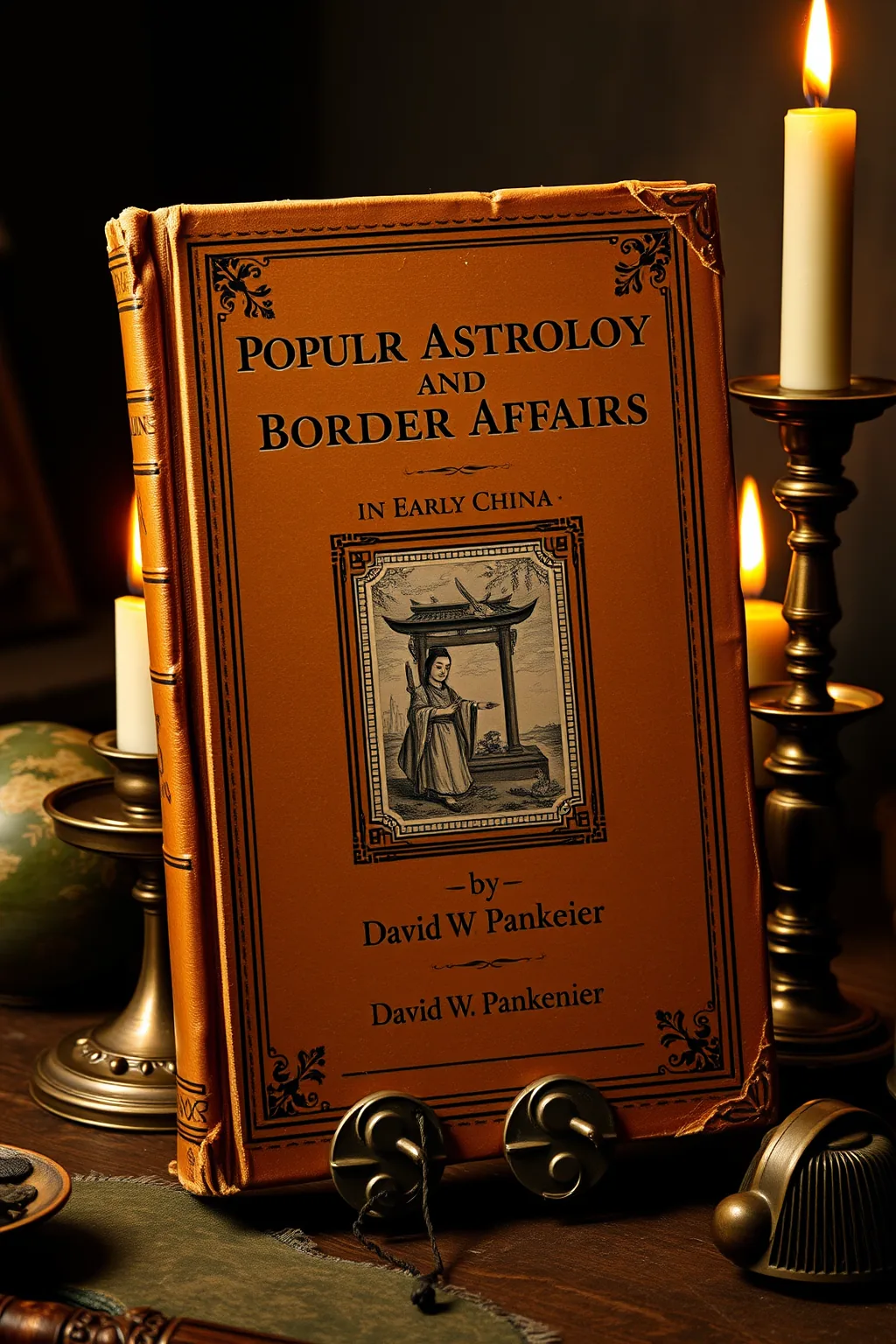
Popular astrology and border affairs in early China
 61
61

Popular astrology and border affairs in early China



Sophia Crane (Associate Editor) — David W. Pankenier's 'Popular Astrology and Border Affairs in Early China' is an indispensable contribution to the study of ancient Chinese thought. Pankenier navigates complex cosmological beliefs with scholarly rigor, revealing the sophisticated integration of astrology into statecraft and military strategy. The work’s strength lies in its meticulous examination of primary sources, offering readers a rare glimpse into the esoteric reasoning that underpinned early Chinese governance. This book is essential for academics and serious practitioners alike, providing a deep understanding of how celestial patterns were believed to influence earthly events, particularly in the sensitive domain of border security and foreign relations. It demystifies a crucial aspect of ancient Chinese esotericism.
📝 Description
61
David W. Pankenier's 1998 study examines how celestial omens influenced early Chinese imperial policy.
This book investigates the significant role popular astrology played in shaping border affairs and imperial decisions in early China. Pankenier draws upon ancient Chinese texts to demonstrate how celestial events and omens were interpreted as direct influences on governance and statecraft. The work details how emperors and strategists used astrological prognostication to inform decisions regarding warfare, diplomacy, and territorial management. It reveals a complex system where the perceived movements of stars and heavenly bodies were not simply observed but actively applied to the volatile geopolitical situations of the period. The book makes clear that these interpretations were a vital part of the decision-making process for rulers.
Pankenier illuminates the practical application of these beliefs, showing how they functioned as a form of intelligence and justification for actions taken. The study details specific instances and textual evidence linking astrological readings to concrete policy outcomes, particularly concerning the empire's frontiers. By examining this intersection of the celestial and the terrestrial, the book offers a unique perspective on the mechanisms of power and belief in pre-modern China. It provides a detailed look at how a seemingly esoteric practice was integrated into the fabric of state administration.
This work situates itself within the study of early Chinese thought, specifically focusing on the integration of cosmology into statecraft. It examines a tradition where divination and celestial observation were not separate from governance but integral to it. The book looks at how the understanding of the cosmos, as revealed through astrology, was a practical tool for managing the state and its frontiers. This approach highlights a worldview where human affairs were deeply connected to cosmic patterns, a common characteristic of many esoteric traditions seeking to find order and guidance through celestial phenomena.
💡 Why Read This Book?
Uncover the ancient Chinese belief system where celestial movements dictated state policy and border security. 'Popular Astrology and Border Affairs in Early China' reveals the hidden wisdom of emperors who consulted the stars for guidance. Ideal for scholars, spiritual seekers, and practitioners of esoteric traditions who wish to understand the profound link between cosmology and power in early civilization.
⭐ Reader Reviews
Honest opinions from readers who have explored this book.
❓ Frequently Asked Questions
What is the primary focus of this book?
The book primarily explores the intricate relationship between popular astrological beliefs and the management of border affairs in early China, demonstrating how celestial phenomena influenced political decisions and imperial strategy.
Who is David W. Pankenier?
David W. Pankenier is a distinguished scholar specializing in Chinese history, cosmology, and the history of science. His extensive research provides deep historical and cultural context for the subject matter.
Is this book suitable for beginners in Chinese history?
While the book is academically rigorous, Pankenier's clear prose makes it accessible to motivated beginners interested in the intersection of cosmology and history. Foundational knowledge of Chinese history would enhance the reading experience.
What kind of astrological system is discussed?
The book delves into the native Chinese astrological system, which is distinct from Western astrology, focusing on celestial bodies, their movements, and their interpreted portents within the Chinese worldview.
How does this book relate to esoteric traditions?
It illuminates the practical application of esoteric knowledge in a historical context, showing how astrological lore, often considered hidden wisdom, was a fundamental tool in the governance and security of an ancient empire.
🔮 Key Themes & Symbolism
Celestial Governance and Imperial Mandate
This theme explores the profound belief in early China that the heavens actively participated in the legitimacy and functioning of imperial rule. Emperors and their advisors interpreted celestial events as divine pronouncements, directly influencing policies related to state security, territorial integrity, and diplomatic relations. The alignment of stars and planets was not merely observed but actively wielded as a tool to legitimize power, anticipate threats, and maintain cosmic harmony, thereby ensuring the stability and prosperity of the kingdom. This perspective highlights a worldview where the earthly realm was intrinsically connected to, and guided by, the celestial order, making astrological knowledge a central to effective governance.
Astrology as a Geopolitical Strategy
Examine how astrological prognostication was strategically employed to read through the complex and often perilous field of early Chinese border affairs. This theme uncovers how divination and celestial observation were integral to military planning, diplomatic negotiations, and the perception of foreign threats. Understanding the omens derived from the stars allowed rulers to anticipate potential conflicts, assess the opportune moments for action, and interpret the intentions of neighboring states. It reveals a sophisticated system where the cosmic clock was synchronized with the temporal demands of empire, demonstrating that the perceived will of the heavens played a tangible role in shaping the geopolitical strategies that defined China's frontiers.
The Esoteric Underpinnings of Power
This theme probes the hidden knowledge and symbolic language that underpinned the exercise of power in early China, with astrology fundamentally, . It reveals how the interpretation of celestial phenomena was not a common practice but a specialized form of esoteric wisdom, accessible to a select few who served the imperial court. This hidden knowledge provided a framework for understanding the universe and humanity's place within it, imbuing astrological practice with a mystical aura. The book illustrates how this esoteric understanding of cosmic forces translated into tangible political and military decisions, demonstrating the potent influence of the unseen on the visible machinations of empire and its borders.
💬 Memorable Quotes
Direct passages from the work, attributed to the author.
“Border security was thus a cosmic dance, choreographed by the celestial spheres.”
— This evocative metaphor highlights the integral role of astrology in early Chinese defense and foreign policy, suggesting a divinely ordained rhythm to geopolitical strategy.
“To divine the heavens was to secure the empire.”
— A concise statement of the book's central thesis, emphasizing the direct correlation between understanding celestial omens and maintaining the stability and safety of the state.
“The cosmos held the keys to earthly dominion, if one knew how to read its script.”
— This emphasizes the esoteric nature of astrology in early China, portraying it as a coded language of the universe that granted rulers a strategic advantage when deciphered correctly.
💡 Key Ideas
Editorial paraphrase of the work's core concepts — not direct quotes.
The stars were not silent observers, but active participants in the unfolding drama of the earthly realm.
This quote expresses the core belief system explored, where celestial bodies were seen as having agency and directly influencing human affairs, particularly governance and security.
Ancient texts whisper secrets of constellations that guided emperors through treacherous times.
This quote points to the historical depth of the subject matter and the hidden, often mystical, knowledge preserved in ancient writings, accessible through scholarly interpretation.
🌙 Esoteric Significance
Tradition
This book examines the esoteric tradition of Chinese cosmology and divination, a complex system deeply embedded in the fabric of early Chinese imperial governance. It is not merely about popular superstition but about a sophisticated, albeit hidden, knowledge system that informed state policy. This tradition viewed the universe as a dynamic, interconnected entity where celestial phenomena held profound symbolic meaning, acting as omens and directives for human action. The practitioners of this esoteric art were privy to a sacred understanding of cosmic rhythms, which they translated into practical advice for rulers, particularly concerning matters of state security and border defense.
Symbolism
The key symbolism revolves around the celestial bodies—stars, planets, constellations, comets—each imbued with specific meanings and portents. The 'mandate of heaven,' often symbolized by celestial occurrences, was a crucial concept. Specific configurations of stars were interpreted as indicators of fortune or misfortune, peace or conflict, and the legitimacy of the ruling dynasty. The book explores how these cosmic symbols were directly mapped onto terrestrial concerns, such as the movements of armies, the loyalty of border populations, and the stability of the empire’s frontiers, transforming abstract celestial patterns into concrete geopolitical intelligence.
Modern Relevance
The modern relevance of this work lies in its illumination of how deeply embedded esoteric beliefs can be in seemingly rational systems of governance and strategy. It offers a profound reminder that human decision-making, even in matters of state, is often shaped by underlying worldviews and symbolic interpretations. For contemporary seekers and scholars, it provides a case study in understanding ancient conceptual frameworks, the role of hidden knowledge in power structures, and the enduring human impulse to find order and meaning in the cosmos, which can still resonate with our own anxieties about security and destiny.
👥 Who Should Read This Book
This book is a treasure for a diverse audience. **Scholars** of East Asian history, comparative religion, and the history of science will find Pankenier's rigorous scholarship and detailed analysis useful for understanding ancient Chinese thought and governance. **Spiritual seekers** and practitioners of esoteric traditions will discover a fascinating historical example of how cosmic knowledge was practically applied, offering insights into ancient systems of divination and their influence. **Enthusiasts of history and mythology** will be captivated by the collection of beliefs and the compelling narrative of how the heavens were perceived to shape earthly destinies. **Anyone interested in the esoteric underpinnings of power** will find this volume a profound exploration of how belief systems can profoundly influence geopolitical strategy and imperial rule.
📜 Historical Context
This work is situated within the dynamic and often tumultuous periods of early Chinese history, likely encompassing the Warring States period, Qin, and Han dynasties (roughly 5th century BCE to 3rd century CE). This era was characterized by intense political fragmentation, frequent warfare, and the consolidation of imperial power. It was a crucible for intellectual and philosophical development, where diverse schools of thought competed, and the relationship between the human realm and the cosmos was a central concern. The burgeoning imperial state required sophisticated methods for governance, legitimation, and defense, making the integration of astrological observation and interpretation into statecraft not merely a spiritual practice but a practical, even vital, tool for rulers seeking to understand and control their destiny and secure their vast territories against internal and external threats.
📔 Journal Prompts
Reflect on a time you felt a connection between celestial events and personal or societal happenings. How did it influence your perception?
Consider how modern geopolitical strategies might be influenced by underlying belief systems, even if not explicitly astrological.
What ancient symbols or patterns do you see recurring in contemporary societal discourse or governance?
How might a belief in cosmic influence affect one's sense of agency versus fate?
Imagine you are an advisor to an early Chinese emperor. What astrological omens would you prioritize when assessing border threats, and why?
🗂️ Glossary
Mandate of Heaven (Tianming)
An ancient Chinese philosophical concept that the right to rule granted by Heaven (Tian) to a ruler or dynasty was conditional upon their just and effective governance. Celestial anomalies were often interpreted as signs of Heaven's displeasure.
Prognostication
The act of foretelling future events, particularly through astrological means. In early China, this involved observing celestial phenomena and interpreting their symbolic meaning for earthly affairs.
Cosmology
The study of the origin, evolution, and eventual fate of the universe. In the context of early China, it referred to a complex understanding of the structure and order of the cosmos and its relationship to the human world.
Omens
Events or phenomena believed to portend future good or evil. In early Chinese astrology, unusual celestial occurrences like comets or eclipses were often seen as significant omens.
Border Affairs
Matters pertaining to the defense, administration, and diplomacy of a state's frontiers and territories, often involving interactions with neighboring peoples and potential conflicts.
This book appears in 2 collections
🔮 Readers Also Liked
Browse all →








More by David W. Pankenier
All books →
From the “Astrology” Collection
View all →



![Anonymous [notes on astrology in medical practice], undated](/img/thumb/anonymous-notes-on-astrology-in-medical-practice-undated.webp)





More Free Astrology & Cosmology Books
View all →
![The celestial science of astrology vindicated, from the calumny of those who are biggotted [sic] against what they do not understand, by R. Phillips. 1785](/img/thumb/the-celestial-science-of-astrology-vindicated-from-the-calumny-of-those-who-are-biggotted-sic-against-what-they-do-not-understand-by-r-phillips-1785-phillips-r-astrologer.webp)






![A Concise Introduction To Tibetan Astrology [Men-Tsee-Khang-སྨན་རྩིས་ཁང་།]](/img/thumb/a-concise-introduction-to-tibetan-astrology-men-tsee-khang-སནརསཁང--419861.webp)
