Horoscopes of Africa
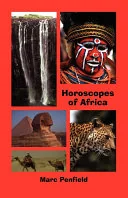
 82
82

Horoscopes of Africa
Marc Penfield's 'Horoscopes of Africa' offers a dense, scholarly approach to mundane astrology, focusing on a continent often overlooked in Western esoteric literature. The strength lies in its meticulous charting of numerous nations, providing a comparative astrological landscape. Penfield’s dedication to exploring the astrological implications of independence dates, particularly for countries like those formerly under British or French influence, is commendable. However, the work's ambition sometimes leads to a breadth that sacrifices depth; the analysis of the Great Pyramid, while intriguing, feels somewhat tangential to the primary focus on African nations and could benefit from more direct integration. A particularly compelling section discusses the astrological implications for Ethiopia, a nation with a unique historical record, offering a specific, grounded example of the book’s methodology. This is a valuable, albeit demanding, resource for serious students of astrological geopolitics.
📝 Description
82
Marc Penfield's 2009 book analyzes African nations through mundane astrology.
Horoscopes of Africa provides an astrological survey of African nations, applying mundane astrology to chart national potential. Marc Penfield's final work in this series extends his analysis from the Mediterranean to the Cape of Good Hope. The book examines astrological charts for many countries, particularly those gaining independence in the mid-20th century from colonial powers like Britain, France, Portugal, and Belgium. Liberia and Ethiopia receive special attention due to their historical paths, having largely avoided direct colonization.
This volume is for students of mundane astrology, comparative historical astrology, and those curious about astrological influences on national destinies. It will interest readers seeking astrological correlations to geopolitical events and national identities. Individuals studying the impact of astrological principles on societal structures and historical movements will find case studies here. The book also considers the Great Pyramid, linking to a Hermetic interest in ancient structures.
Published in 2009, Horoscopes of Africa appeared during a resurgence of interest in applying astrology to global affairs. Penfield's work continues the tradition of mundane astrology, which interprets national horoscopes and significant events to understand collective trends. The mid-20th century, a period of decolonization for many African nations, serves as a backdrop for hypothesizing national birth charts based on these pivotal moments. The book's attention to the Great Pyramid connects to a long Hermetic fascination with ancient structures and their symbolic meanings.
💡 Why Read This Book?
• Understand the astrological basis for national identities in over 20 African nations, exploring how independence dates from the mid-20th century form their celestial signatures. • Gain insight into the esoteric significance of the Great Pyramid of Giza, examining its symbolic connections to mathematics, astronomy, and ancient metaphysical thought. • Discover a comparative astrological perspective on nations with diverse colonial histories (e.g., British, French, Portuguese) and those that avoided colonization, like Ethiopia, through Penfield's unique analysis.
⭐ Reader Reviews
Honest opinions from readers who have explored this book.
❓ Frequently Asked Questions
What astrological tradition does 'Horoscopes of Africa' primarily draw from?
The book primarily utilizes the principles of mundane astrology, which focuses on the horoscopes of nations, cities, and significant world events rather than individuals. It interprets national birth charts based on historical dates like independence.
Which specific African countries are analyzed in the book?
The book covers a wide range of countries from the Mediterranean to the Cape of Good Hope, including many that gained independence from colonial powers such as Britain, France, Portugal, and Belgium. Notable examples include Ethiopia and Liberia.
What is the significance of the Great Pyramid in 'Horoscopes of Africa'?
Penfield dedicates space to the Great Pyramid, exploring its mathematical, scientific, geographical, and astronomical references. It is presented as a symbol with potential metaphysical connections, offering insights into ancient wisdom.
When was 'Horoscopes of Africa' first published?
The book was first published in May 2009. It is noted as Marc Penfield's sixth and final contribution to his series on mundane astrology.
Is 'Horoscopes of Africa' suitable for beginners in astrology?
While accessible to those with a foundational understanding of astrology, its focus on mundane and geopolitical applications makes it particularly suited for intermediate to advanced students interested in comparative and historical astrological studies.
What makes the astrological analysis of Ethiopia unique in this book?
Ethiopia is highlighted because it largely escaped being a colony, unlike most other African nations discussed. This unique historical position allows for a distinct astrological interpretation compared to countries with clear colonial birth dates.
🔮 Key Themes & Symbolism
Mundane Astrology of Nations
This theme centers on the application of astrological principles to entire countries, interpreting their destinies through national horoscopes. Penfield examines how dates of independence, often granted by colonial powers like Britain or France in the mid-20th century, form the basis for these charts. The work contrasts the astrological profiles of nations with varied colonial experiences, including Ethiopia and Liberia, which maintained sovereignty. It posits that celestial configurations at important national moments influence a country's trajectory, offering a framework for understanding geopolitical patterns and national character through an esoteric lens.
Symbolism of Ancient Structures
The book incorporates an analysis of the Great Pyramid of Giza, viewing it as a profound symbol laden with meaning beyond its physical construction. Penfield explores its mathematical precision, geographical placement, and astronomical alignments, suggesting these are not mere coincidences but deliberate expressions of ancient cosmological understanding. This perspective aligns with Hermetic traditions that seek universal truths encoded in sacred geometry and architecture, implying that such structures hold metaphysical significance that can inform our understanding of earthly and celestial influences.
Colonial Legacies and Independence
A significant thread is the astrological interpretation of African nations shaped by European colonialism. Penfield considers how the specific colonial power (e.g., Portugal, Belgium) and the subsequent date of independence influenced the astrological chart of a nation. This theme highlights the esoteric perspective on historical power dynamics, suggesting that the astrological birth of a nation is intrinsically linked to its formation and subsequent development, including the residual effects of colonial rule and the astrological implications of achieving self-determination.
Comparative National Astrology
The work facilitates a comparative study of national horoscopes across the African continent. By analyzing countries with diverse historical paths—some newly independent, others with longer autonomous histories like Ethiopia—Penfield allows readers to observe variations in astrological patterns. This comparative approach underscores the idea that celestial influences manifest differently based on a nation's unique historical context and formation, offering a nuanced view of astrological determinism and free will on a grand scale.
💬 Memorable Quotes
Direct passages from the work, attributed to the author.
“Most African countries were granted independence from Britain, France, Portugal or Belgium.”
— This statement grounds the astrological analysis in specific historical events, highlighting the colonial context that shaped the formation of many national horoscopes explored in the book.
“Only Liberia and Ethiopia escaped being colonies.”
— This highlights a crucial distinction for astrological interpretation, suggesting that nations with different paths to sovereignty may possess fundamentally distinct national charts and destinies.
“The Great Pyramid... has numerous mathematical, scientific, geographical, astronomical and possibly metaphysical references symbolized in stone.”
— This points to the book's exploration of ancient wisdom, framing the Pyramid not just as architecture but as a coded repository of universal principles relevant to esoteric study.
“Marc has also devoted space to the Great Pyramid”
— This indicates the inclusion of a significant ancient monument within a work focused on modern national horoscopes, suggesting a connection between ancient cosmologies and contemporary geopolitical astrology.
“This is Marc Penfield's sixth and final book in his mundane astrology series on the countries of the world.”
— This contextualizes the book within Penfield's larger body of work, emphasizing its role as a concluding volume in a comprehensive study of national astrological profiles.
🌙 Esoteric Significance
Tradition
This work operates firmly within the tradition of mundane astrology, a branch of Western esotericism concerned with the horoscopes of nations, rulers, and collective events. It draws implicitly from Hermetic principles that suggest a correspondence between the macrocosm (celestial bodies) and the microcosm (earthly affairs). Penfield's approach departs from purely political analysis by seeking underlying astrological patterns that may shape national character and historical trajectories, offering a framework for understanding destiny beyond human agency.
Symbolism
The book engages with the symbolism of national borders and independence dates as astrological markers. Furthermore, the Great Pyramid is presented as a potent symbol of ancient knowledge, its geometric and astronomical features interpreted as encoded wisdom. These elements function symbolically to suggest that both terrestrial political formations and monumental ancient structures are imbued with celestial significance, reflecting cosmic order and influencing human affairs.
Modern Relevance
Contemporary practitioners of mundane astrology and researchers in comparative esoteric history may find 'Horoscopes of Africa' a valuable resource. Its detailed charting of specific nations offers case studies for those exploring astrological influences on geopolitics. Thinkers interested in the intersection of ancient symbolism (like the Great Pyramid) and modern astrological thought might also draw inspiration, particularly within circles that explore Hermeticism and sacred geometry.
👥 Who Should Read This Book
['• Students of mundane astrology seeking concrete examples of national horoscope analysis applied to the African continent and its diverse post-colonial landscape.', '• Researchers in comparative esoteric history interested in how astrological frameworks have been applied to understand national identities and historical developments.', '• Individuals fascinated by the esoteric significance of ancient monuments, specifically the Great Pyramid, and its potential connections to broader cosmological systems.']
📜 Historical Context
Published in 2009, Marc Penfield's 'Horoscopes of Africa' arrived during a period of academic and esoteric resurgence in the study of mundane astrology. This field, which analyzes celestial influences on nations and world events, had seen ebb and flow in popularity since its early proponents like William Lilly in the 17th century. Penfield's work builds on the tradition of mapping national destinies based on key historical dates, particularly independence moments for many African nations in the mid-20th century. This era saw a global interest in astrological interpretations of geopolitics, though often overshadowed by more individualistic psychological astrology. Penfield’s focus on a continent largely underrepresented in Western esoteric texts, and his inclusion of the Great Pyramid, aligns with a broader Hermetic and Gnostic interest in ancient wisdom and its potential relevance to modern understanding. While specific reception details for this particular volume are scarce, Penfield’s series contributed to a niche but dedicated audience interested in comparative astrological history.
📔 Journal Prompts
The astrological implications of Ethiopian independence versus other African nations' independence dates.
Symbolic connections between the Great Pyramid's measurements and celestial phenomena.
How might the colonial histories of specific African nations (e.g., French West Africa) be reflected in their astrological charts?
Reflect on the concept of a 'national horoscope' and its potential influence on collective consciousness.
The role of geographical placement in the Great Pyramid's symbolic significance.
🗂️ Glossary
Mundane Astrology
A branch of astrology focused on predicting and analyzing events related to nations, governments, and collective human affairs, rather than individual horoscopes. It uses charts cast for significant national events like independence or the ruler's inauguration.
National Horoscope
An astrological chart cast for a specific nation, typically based on its date of independence or founding. It is used to interpret the country's character, potential challenges, and future trends.
Great Pyramid of Giza
The largest of the three pyramids in the Giza Necropolis, Egypt. In esoteric contexts, it is often studied for its precise mathematical, astronomical, and geographical alignments, believed by some to hold symbolic or metaphysical meaning.
Hermeticism
A philosophical and religious tradition based on writings attributed to Hermes Trismegistus. It emphasizes the unity of all things, the correspondence between the macrocosm and microcosm, and the pursuit of divine knowledge through reason and intuition.
Esoteric
Relating to or accessible only by a select group of initiated people or a particular branch of knowledge. In this context, it refers to mystical, occult, or spiritual teachings often hidden from mainstream understanding.
Colonialism
The policy or practice of acquiring full or partial political control over another country, occupying it with settlers, and exploiting it economically. This historical context is crucial for determining national horoscopes in the book.
Geopolitics
The study of the influence of geography (human and physical) on the conduct of politics and international relations. Mundane astrology often intersects with geopolitical analysis.
This book appears in 1 collection
🔮 Readers Also Liked
Browse all →









From the “Mundane Astrology” Collection
View all →








More Free Astrology & Cosmology Books
View all →