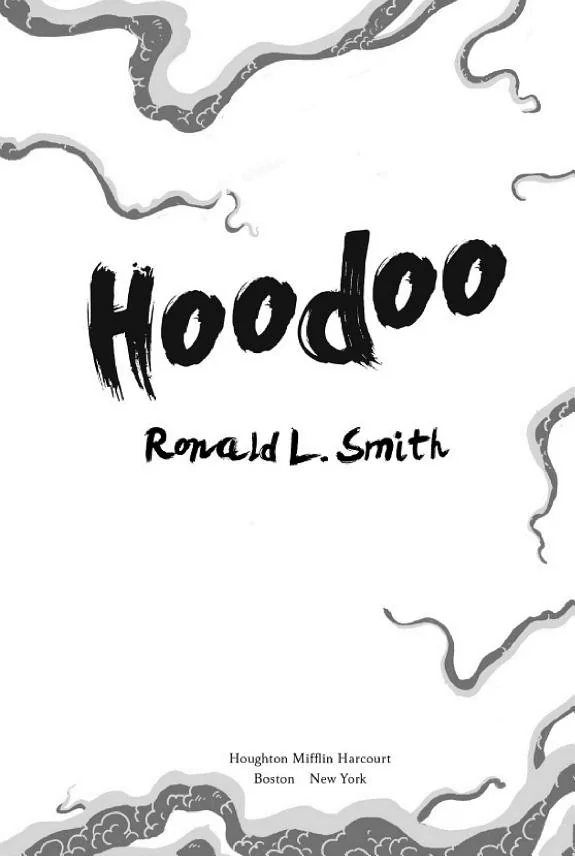
Hoodoo
 79
79

Hoodoo
Ronald L. Smith’s *Hoodoo* introduces a compelling young protagonist, Hoodoo Hatcher, who grapples with a magical heritage he can’t seem to access. The novel offers a fresh perspective on folk magic, moving beyond stereotypical portrayals. Smith effectively captures the atmosphere of a small town where ancient practices simmer beneath the surface, making the folklore feel immediate and tangible. The introduction of the enigmatic Stranger acts as a potent catalyst, propelling Hoodoo’s journey of self-discovery. A notable strength is the depiction of Hoodoo’s internal conflict and his yearning to connect with his family’s magical traditions, a relatable struggle for any young person finding their place. However, the pacing occasionally falters, particularly in the middle sections, where the plot feels less urgent. The concept of Hoodoo's dreams, while intriguing, could have been further explored to deepen the mystical underpinnings. Ultimately, *Hoodoo* is a solid, engaging entry into young adult fiction with a unique magical system.
📝 Description
79
In Ronald L. Smith's 2011 novel, a young boy named Hoodoo Hatcher discovers a latent talent for folk magic.
Hoodoo Hatcher, a twelve-year-old boy, finds himself at the center of a family legacy steeped in folk magic. He struggles to perform even the simplest spells, despite his name. The story unfolds as Hoodoo encounters a mysterious figure known only as the Stranger. This figure's arrival appears to unlock dormant abilities and forgotten lore within the boy. The narrative plunges into a world where ancestral practices are a living force, often misunderstood and feared by outsiders.
This book will appeal to young readers fascinated by magic, mystery, and the exploration of hidden family histories. It suits those who enjoy stories featuring protagonists who must overcome personal challenges to embrace their unique heritage. Readers interested in folklore, the dynamics of small-town secrets, and self-discovery through magical means will find this novel engaging.
The practice of Hoodoo, or folk magic, has deep roots in African spiritual traditions brought to the Americas. It evolved as a syncretic system, blending African beliefs with elements of Christianity, Native American spiritualism, and European folk magic. This tradition, often marginalized, forms the backdrop for the story, highlighting its persistence and adaptation through generations. The narrative explores this tradition through the lens of inherited magical ability and the awakening to a deeper, more intuitive form of magic tied to myth and the natural world.
💡 Why Read This Book?
• Gain insight into the foundational elements of Hoodoo folk magic as a living tradition, distinct from common portrayals, by following Hoodoo Hatcher’s struggle to master his inherited abilities. • Experience the transformative power of ancestral connection through the narrative’s exploration of Hoodoo’s dreams and his encounters with the Stranger, revealing how lineage influences magical potential. • Understand the cultural significance of folk magic in American history, seeing how practices evolved from African spiritual roots and adapted within specific communities, as depicted in the story's setting.
⭐ Reader Reviews
Honest opinions from readers who have explored this book.
❓ Frequently Asked Questions
What is the origin of the name Hoodoo Hatcher?
Hoodoo Hatcher's name directly reflects his family's deep-seated tradition of practicing Hoodoo, a form of folk magic. His name signifies his birthright and the magical legacy he is expected to inherit, even as he struggles to perform spells.
Who is the Stranger in Ronald L. Smith's Hoodoo?
The Stranger is a mysterious character who arrives in town and significantly impacts Hoodoo Hatcher's life. His presence seems to awaken Hoodoo's dormant magical abilities and plays a crucial role in the unfolding narrative of self-discovery.
Is Hoodoo Hatcher able to cast spells?
Initially, Hoodoo Hatcher has difficulty casting even simple spells, despite his name and family background. His journey in the book involves him learning to connect with his magical heritage and unlocking his potential.
What is the main theme of the book Hoodoo?
The main themes revolve around self-discovery, embracing one's heritage, the nature of inherited magical ability, and the importance of ancestral knowledge. It explores the challenges of living up to a legacy.
When was Ronald L. Smith's book Hoodoo first published?
Ronald L. Smith's novel *Hoodoo* was first published on September 1, 2015. This places it within contemporary young adult literature, offering a modern take on traditional folk magic themes.
What kind of magic is practiced in the book Hoodoo?
The book focuses on Hoodoo, a form of African American folk magic. This tradition is presented as an inherited practice, deeply connected to family history, intuition, and the natural world.
🔮 Key Themes & Symbolism
Inherited Magic
The narrative centers on Hoodoo Hatcher's struggle with his family's legacy of Hoodoo magic. Despite his name, he cannot perform spells, creating an internal conflict between expectation and ability. This theme explores whether magic is an inherent gift or something that must be cultivated. The book suggests that true magical connection might lie not just in learned spells but in understanding one's ancestral roots and spiritual lineage.
Self-Discovery and Identity
Hoodoo's journey is fundamentally one of self-discovery. He must learn to understand himself and his place within his magical family tradition. The arrival of the Stranger acts as a catalyst, pushing him to confront his perceived shortcomings and unlock his latent potential. His dreams become a crucial avenue for this exploration, hinting at a deeper, intuitive connection to the magical world beyond simple spellcasting.
The Power of Folkways
The book highlights Hoodoo as a powerful, living tradition rooted in African American folkways. It presents this magic not as a superficial phenomenon but as a profound connection to history, community, and the spiritual realm. The narrative implicitly contrasts the authentic practice of Hoodoo with potential external misunderstandings or fears, emphasizing its enduring significance through generations.
Ancestral Connection
A significant theme is the importance of ancestral connection in unlocking magical abilities. Hoodoo’s lineage is presented as a source of power, but one that requires understanding and integration. His dreams are depicted as a bridge to this ancestral knowledge, suggesting that the past holds keys to present capabilities. The story emphasizes that true magic often stems from a deep communion with those who came before.
💬 Memorable Quotes
Direct passages from the work, attributed to the author.
“Twelve-year-old Hoodoo Hatcher was born into a family with a rich tradition of practicing folk magic: hoodoo, as most people call it.”
— This sets the stage for the central conflict: a protagonist named after the very magic he struggles to wield. It immediately establishes the book's focus on inherited magical practices and the personal challenge of living up to one's name and lineage.
“Then a mysterious man called the Stranger comes to town, and Hoodoo starts dreaming of the de...”
— This marks the turning point in the narrative. The arrival of an enigmatic figure and the subsequent onset of vivid dreams signal a shift, suggesting that Hoodoo's dormant abilities are beginning to awaken through external influence and subconscious exploration.
“Hoodoo is pure folk magic.”
— This concise statement, attributed to Keith Donohue, defines the essence of the practice explored in the novel. It positions the book as an authentic portrayal of Hoodoo, emphasizing its origins in traditional, grassroots spiritual practices rather than commercialized or sensationalized versions.
“It is filled with myth and legend, danger and bravery.”
— This description captures the adventurous and mystical tone of the book. It promises readers an engaging story that blends ancient lore with thrilling elements, suggesting a narrative rich in both imaginative world-building and compelling heroic action.
💡 Key Ideas
Editorial paraphrase of the work's core concepts — not direct quotes.
But even though his name is Hoodoo, he can't seem to cast a simple spell.
This line succinctly captures the core irony and internal struggle of the protagonist. It highlights the theme of unfulfilled potential and the pressure of family legacy, making Hoodoo's journey relatable to anyone who has felt disconnected from their roots.
🌙 Esoteric Significance
Tradition
The work engages with the African American folk magic tradition, commonly known as Hoodoo or Conjure. This lineage draws from West African spiritual practices, particularly Yoruba and Kongo traditions, interwoven with Christian beliefs, Native American shamanism, and European occultism. It departs from purely Western Hermetic or Kabbalistic systems by its unique cultural synthesis and emphasis on practical, community-based magic rooted in everyday life and ancestral veneration.
Symbolism
Key symbols include the protagonist's name, 'Hoodoo,' which represents an inherited spiritual legacy and the challenge of embodying it. Dreams function as a powerful motif, serving as a conduit for ancestral communication and subconscious magical awakening, a common element in many shamanic traditions. The 'Stranger' figure can be interpreted as a psychopomp or a spiritual guide, initiating Hoodoo into deeper mysteries, akin to archetypal figures in initiation narratives across esoteric traditions.
Modern Relevance
Contemporary practitioners and scholars of African diasporic religions continue to explore and revitalize Hoodoo. In modern occult circles, there's a growing appreciation for the efficacy and depth of these traditions, often seen as a potent counterpoint to more intellectualized Western esoteric paths. Thinkers and practitioners focused on ancestral healing, folk magic, and decolonizing spiritual practices find resonance in narratives like Smith's, which highlight the living, adaptable nature of these ancient systems.
👥 Who Should Read This Book
• Young readers aged 10-14 interested in fantasy and magic systems, who will appreciate Hoodoo Hatcher's relatable struggle to master his innate abilities and discover his family's unique heritage. • Students of comparative mythology and folklore, seeking a fictional exploration of African American Hoodoo traditions and their integration into a compelling narrative structure. • Parents and educators looking for engaging literature that introduces themes of self-discovery, ancestral connection, and cultural identity in an accessible, age-appropriate manner.
📜 Historical Context
Ronald L. Smith's *Hoodoo*, first published in 2015, emerges in an era of renewed interest in folk magic and a growing awareness of African American spiritual traditions often overlooked by mainstream culture. The practice of Hoodoo itself, a syncretic system blending West African spiritual beliefs with elements of Christianity and European folk magic, has a history stretching back centuries, evolving significantly in the American South. While practitioners faced historical persecution and misrepresentation, works like this contribute to a broader cultural reclamation. Unlike the more academic or historical examinations of Hoodoo, Smith's novel integrates these practices into a young adult narrative, making them accessible to a new generation. Its publication follows a period where authors like Toni Morrison had already begun to explore the spiritual and cultural depths of African American life, though often with different literary aims. The book arrived at a time when diverse mythologies and magical systems were gaining traction in popular fiction, offering a specific, historically grounded form of magic.
📔 Journal Prompts
Hoodoo Hatcher's name and his initial inability to cast spells.
The significance of Hoodoo's dreams in his magical awakening.
The role of the Stranger as a catalyst for change.
Reflecting on the connection between Hoodoo and ancestral knowledge.
The blend of danger and bravery in Hoodoo's world.
🗂️ Glossary
Hoodoo
A system of folk magic, religious belief, and spiritual practice that originated from African diasporic traditions. It is often characterized by the use of charms, spells, and divination, deeply intertwined with family history and community.
Folk Magic
Traditional practices and beliefs related to magic, often passed down orally or through informal instruction within a community. It typically focuses on practical applications for healing, protection, or influencing events.
The Stranger
A mysterious character who arrives in town and plays an important role in Hoodoo Hatcher's development. He acts as a catalyst, influencing Hoodoo's dreams and awakening his latent magical abilities.
Ancestral Magic
Magical abilities or knowledge that are believed to be passed down through family lines or inherited from one's ancestors. This concept is central to Hoodoo's legacy and Hoodoo Hatcher's personal journey.
Myth and Legend
Traditional stories, often ancient, that convey cultural beliefs, historical events, or explanations of natural phenomena. In the book, these elements are intertwined with the practice of Hoodoo and Hoodoo's developing magical understanding.
Bravery
The quality of mind or spirit that enables a person to face difficulty, danger, pain, etc., without fear; courage. This is a key character trait explored in Hoodoo Hatcher's journey as he confronts challenges related to his magical abilities.
Hoodoo Hatcher
The twelve-year-old protagonist of the novel, who struggles to perform magic despite his family's deep tradition of Hoodoo practice. His journey is one of self-discovery and embracing his heritage.
This book appears in 1 collection
🔮 Readers Also Liked
Browse all →









From the “Hoodoo” Collection
View all →








More Free Occult Philosophy Books
View all →