Honey from the Rock
 74
74

Honey from the Rock
Kushner’s approach in "Honey from the Rock" is commendably direct, stripping away much of the arcane language that often encumbers introductions to Kabbalah. He succeeds in presenting the ten sefirot as relatable dimensions of divine energy and human experience, rather than solely as a theological system. The strength lies in his consistent effort to ground these concepts in the tangible realities of daily life, making the esoteric feel accessible. However, a limitation might be that for those already familiar with Kabbalistic literature, the simplification, while useful, might feel somewhat cursory. The passage discussing Malkhut (Kingdom) as the divine presence within the mundane world, for instance, effectively illustrates this accessibility, showing how even ordinary existence can be a site of spiritual encounter. The work serves as a gentle, inviting gateway, though perhaps not a deep dive for seasoned practitioners. It’s a clear and welcoming primer on Jewish mystical thought.
📝 Description
74
Rabbi Lawrence Kushner's 2011 book offers a clear entry into Judaism's esoteric dimensions.
Rabbi Lawrence Kushner's "Honey from the Rock," published in 2011, introduces readers to the esoteric aspects of Judaism. The book focuses on the ten sefirot, central concepts in Kabbalistic thought that represent divine emanations. Kushner presents these sefirot not as abstract ideas but as pathways for personal spiritual growth, aiming to make complex Kabbalistic principles accessible to contemporary readers. The work is designed for those interested in Jewish mysticism who may find its traditional texts daunting. It serves as a good starting point for newcomers to Kabbalah and for any spiritual seeker interested in a Jewish perspective on the divine and human connection. Readers seeking practical ways to integrate mystical ideas into their daily lives will find value here.
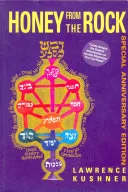
The book addresses the ten sefirot, often depicted as a Tree of Life, which symbolize the stages or attributes of God's emanation into the world. Specific sefirot discussed include Keter (Crown), Chochmah (Wisdom), Binah (Understanding), Chesed (Loving-kindness), Gevurah (Strength/Judgment), Tiferet (Beauty/Harmony), Netzach (Eternity/Endurance), Hod (Splendor/Glory), Yesod (Foundation), and Malkhut (Kingdom/Presence). Kushner explains how engaging with these sefirot can foster deeper spiritual understanding and connection.
This book enters the tradition of Kabbalah, a form of Jewish mysticism that originated in the 12th century. Kabbalah explores the hidden nature of God and the universe, often through symbolic interpretations of the Torah. Key figures like Isaac Luria in the 16th century significantly shaped its development. The concept of the sefirot, divine attributes or emanations, is fundamental to Kabbalistic cosmology, representing the bridge between the infinite God and the finite world. Kushner's work aims to make these complex ideas understandable for a modern audience, connecting them to personal spiritual practice.
💡 Why Read This Book?
• Gain an accessible understanding of the ten sefirot, the foundational emanations in Kabbalah, as presented in Rabbi Lawrence Kushner's unique interpretive style. • Discover practical ways to connect the abstract concepts of Jewish mysticism, such as Chesed (Loving-kindness) and Gevurah (Strength), to your own daily experiences and challenges. • Explore a foundational Jewish spiritual framework that offers a different perspective on divine presence and human potential, as detailed in this 2011 publication.
⭐ Reader Reviews
Honest opinions from readers who have explored this book.
❓ Frequently Asked Questions
What are the ten sefirot mentioned in "Honey from the Rock"?
The ten sefirot are divine emanations central to Kabbalah, representing attributes and stages of God's interaction with the world. "Honey from the Rock" explains each, including Keter (Crown), Chochmah (Wisdom), Binah (Understanding), Chesed (Loving-kindness), Gevurah (Strength), Tiferet (Beauty), Netzach (Eternity), Hod (Splendor), Yesod (Foundation), and Malkhut (Kingdom).
Is "Honey from the Rock" suitable for beginners in Jewish mysticism?
Yes, the book is specifically designed as an easy introduction. Rabbi Lawrence Kushner avoids overly complex jargon, making the core concepts of Jewish mysticism, like the sefirot, understandable for those new to the subject.
When was "Honey from the Rock" first published?
The book "Honey from the Rock" by Rabbi Lawrence Kushner was first published on June 28, 2011. This edition aims to make complex Kabbalistic ideas accessible to a broad audience.
How does "Honey from the Rock" relate Kabbalah to daily life?
The book illustrates how each of the ten sefirot can be understood and experienced within everyday life. For example, it might explore how concepts like Loving-kindness (Chesed) or Judgment (Gevurah) manifest in personal relationships and decisions.
What is the primary goal of Rabbi Lawrence Kushner's "Honey from the Rock"?
The primary goal is to provide an accessible and insightful introduction to Jewish mysticism, particularly the concept of the ten sefirot, and demonstrate their relevance and application to contemporary, daily living.
Who is Rabbi Lawrence Kushner?
Rabbi Lawrence Kushner is an acclaimed author and rabbi known for making Jewish mysticism, particularly Kabbalah, accessible. He has written several influential books, including "The Book of Letters" and "God Was in the Details."
🔮 Key Themes & Symbolism
The Ten Sefirot
The core of "Honey from the Rock" revolves around the ten sefirot, the divine emanations central to Kabbalistic cosmology. Kushner presents these, such as Keter (Crown) and Malkhut (Kingdom), as dynamic forces that structure both the universe and individual consciousness. The book clarifies their intricate relationships, offering readers a framework to understand divine attributes and their manifestation in the created world, moving beyond mere theological abstraction to personal spiritual insight.
Mysticism in Daily Life
A key theme is the integration of mystical understanding into the fabric of everyday existence. Kushner argues that the profound concepts of Jewish mysticism are not confined to ancient texts or cloistered scholars. He demonstrates how engaging with the sefirot can illuminate ordinary moments, relationships, and challenges, transforming the mundane into a space for spiritual encounter and divine presence, making the esoteric practical.
Accessible Spirituality
Kushner's writing style is a theme in itself, prioritizing clarity and approachability. "Honey from the Rock" is crafted to be an easy introduction, consciously avoiding the dense, often intimidating language typical of esoteric texts. This focus on accessibility allows readers from diverse backgrounds to engage with the rich tradition of Jewish mysticism without requiring prior specialized knowledge, fostering a welcoming entry point.
The Nature of God's Presence
The book explores how God's presence (Shekhinah) is understood through the lens of Kabbalah. The sefirot, particularly Malkhut (Kingdom), are discussed as conduits through which the divine interacts with and immanes the physical world. This theme encourages contemplation on finding the sacred within creation, suggesting that the divine is not distant but intimately involved in all aspects of reality.
💬 Memorable Quotes
Direct passages from the work, attributed to the author.
“There is a place that is as far from here as breathing out is from breathing in.”
— This evocative phrase suggests a spiritual dimension that is simultaneously distant and intimately close, highlighting the paradoxical nature of accessing higher consciousness or divine realms.
“The word is very near to you.”
— Paraphrasing a biblical concept, this implies that spiritual truth or divine revelation is not remote but readily available, often overlooked in the immediate experience of life.
“Where life forever holds gentle sway over death.”
— This ideal state points to a realm or consciousness where existence is characterized by enduring vitality and peace, transcending the limitations and fears associated with mortality.
“Where people are human with the same grace that a willow is a willow.”
— This describes a state of authentic being, where individuals live in harmony with their true nature, embodying a natural, unforced grace akin to the inherent form of a tree.
“Where the struggle and the yearning between male and female is at last resolved.”
— This suggests a utopian vision of spiritual and psychological integration, where dualistic tensions, particularly those related to gender, are harmonized into a state of unity and balance.
🌙 Esoteric Significance
Tradition
This work firmly sits within the Kabbalistic tradition, a major school of Jewish mysticism. It draws directly from the Lurianic Kabbalah's concept of the ten sefirot as the structure of divine emanation and the Tree of Life. Kushner adapts this complex system for a modern, often less religiously affiliated audience, focusing on its psychological and spiritual applications rather than purely theological or cosmological exegesis.
Symbolism
The primary symbolism revolves around the Sefirot, visualized as the "Tree of Life." Each sefirah (e.g., Chesed for loving-kindness, Gevurah for strength) acts as a symbolic attribute of God and a stage in emanation. Another key motif is light (often associated with divine wisdom and creation) and the idea of "honey from the rock" itself, symbolizing the extraction of sweetness and spiritual nourishment from seemingly barren or difficult circumstances.
Modern Relevance
Contemporary thinkers and practitioners in the fields of spiritual psychology, comparative mysticism, and Jewish renewal movements often draw from Kushner's accessible explanations. His work is relevant to those seeking practical tools for self-understanding and spiritual growth, particularly those interested in a Jewish framework that speaks to universal themes of connection, purpose, and divine immanence in the modern world.
👥 Who Should Read This Book
• Beginners exploring Jewish mysticism seeking a clear and non-intimidating entry point into Kabbalistic concepts like the ten sefirot. • Spiritual seekers from any background interested in understanding how ancient mystical frameworks can be applied to contemporary daily life and personal growth. • Readers familiar with Rabbi Lawrence Kushner's previous works who wish to engage further with his accessible approach to Jewish esoteric traditions.
📜 Historical Context
Rabbi Lawrence Kushner's "Honey from the Rock" (2011) emerged during a period of sustained popular interest in spirituality and contemplative practices. While Kabbalah has a deep history, tracing roots back to ancient Jewish texts and significantly developed by figures like Isaac Luria in the 16th century, Kushner's work aimed to make its core concepts accessible to a contemporary audience. He navigated a landscape where various spiritual traditions, from Eastern meditation to Western esotericism, were being explored. Unlike more academic or strictly traditional interpretations, Kushner’s approach prioritizes experiential understanding. His work finds a place alongside contemporary authors who seek to bridge ancient wisdom with modern psychological and spiritual needs, offering a distinctively Jewish path that complements, rather than competes with, broader New Age or self-help spiritual movements.
📔 Journal Prompts
The concept of Malkhut as divine presence in the mundane.
Applying the attribute of Chesed (Loving-kindness) to a recent interaction.
Reflecting on the balance between Gevurah (Strength/Judgment) and Chesed in decision-making.
The idea of finding spiritual nourishment, like honey from the rock.
How does the concept of the ten sefirot map onto your own inner landscape?
🗂️ Glossary
Sefirot
The ten divine emanations or attributes through which God is understood to interact with and create the universe, central to Kabbalistic thought. Examples include Keter (Crown), Chochmah (Wisdom), and Malkhut (Kingdom).
Kabbalah
The esoteric tradition of Jewish mysticism concerned with the nature of God, creation, and the relationship between the divine and the human, often involving symbolic interpretation of religious texts.
Keter
The first Sefirah, often translated as 'Crown.' It represents the highest, most transcendent aspect of God, the divine will or source beyond comprehension.
Malkhut
The tenth and final Sefirah, often translated as 'Kingdom' or 'Presence.' It represents the manifestation of the divine in the created world and the connection point for human experience.
Chesed
The fourth Sefirah, typically translated as 'Loving-kindness' or 'Grace.' It symbolizes boundless love, generosity, and compassion in the divine and human realms.
Gevurah
The fifth Sefirah, often translated as 'Strength,' 'Judgment,' or 'Discipline.' It represents limitation, power, and the principle of divine justice and discernment.
Shekhinah
The feminine aspect of the Divine Presence, often associated with Malkhut. It represents God's immanence and dwelling within creation.