High Magic's Aid
 62
62

High Magic's Aid

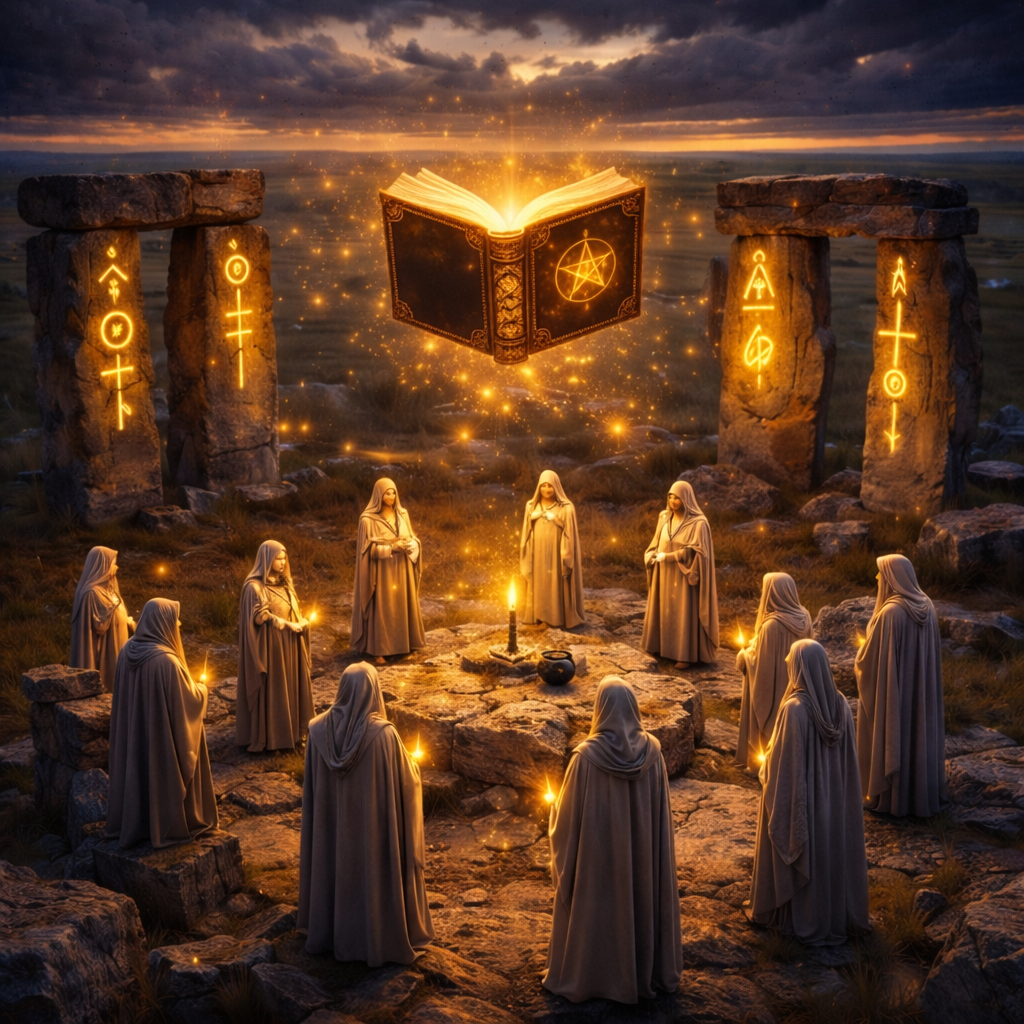

Silas Hawthorne (Hermetic Studies Editor) — 'High Magic's Aid' stands as a cornerstone in the study of modern ceremonial magic, offering an unvarnished glimpse into the practices that shaped Gardnerian Wicca. Gardner's direct prose illuminates complex rituals, demystifying elements often shrouded in obscurity. The book excels in presenting a coherent system of magical action, emphasizing the practitioner's will and connection to natural forces. While perhaps best suited for those with some prior exposure to occult theory, its clarity and depth will reward diligent study. This is essential reading for anyone seeking to understand the roots of contemporary witchcraft and its enduring magical philosophies.
📝 Description
62
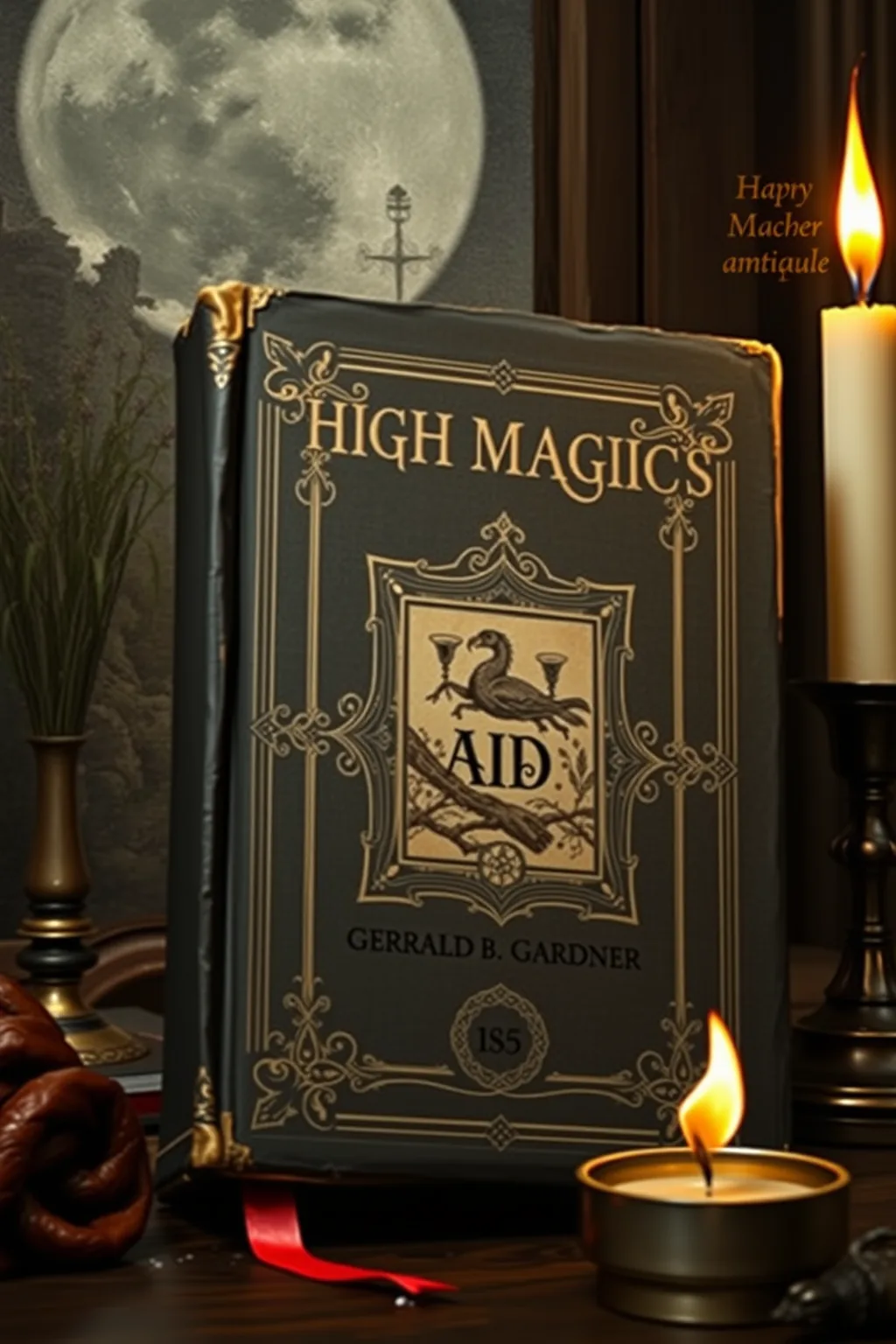
Gerald B. Gardner published 'High Magic's Aid' in 1949, detailing his understanding of witchcraft.
'High Magic's Aid' was written by Gerald B. Gardner, a central figure in the development of modern Wicca. The book discusses witchcraft rituals and the philosophies he associated with them. Gardner outlines practices for invoking elemental forces and connecting with spiritual aspects he believed were fundamental to the Craft. He also touches upon the symbolism found in nature, lunar cycles, and existence itself.
The text presents these ideas as a guide for those interested in occult studies. It aims to explain a spiritual path connected to primal energies. The book encourages readers to engage with what Gardner considered fundamental magical principles and to awaken personal capabilities. It is a look into the practices and beliefs that shaped a significant branch of modern esoteric traditions.
Published in 1949, 'High Magic's Aid' emerged during a period of renewed interest in Western esoteric traditions following World War II. Gerald Gardner's work contributed to the formation of modern Wicca, a nature-based religion drawing from various historical and folkloric sources. This book is a key text for understanding his personal interpretation of witchcraft, incorporating elements he believed were ancient but which were synthesized with contemporary occult ideas. It stands as an early articulation of the beliefs and practices that would later be widely recognized as Gardnerian Wicca.
💡 Why Read This Book?
Uncover the foundational principles of modern witchcraft directly from one of its most influential architects. 'High Magic's Aid' offers direct access to potent rituals and the philosophical underpinnings of the Craft. Ideal for serious students, practitioners seeking to deepen their understanding, and scholars of esoteric traditions looking for primary source material.
⭐ Reader Reviews
Honest opinions from readers who have explored this book.
❓ Frequently Asked Questions
Is 'High Magic's Aid' suitable for complete beginners?
While accessible, the book's depth and subject matter are best appreciated by those with a foundational interest in magic and occult philosophy. Beginners might benefit from supplementary introductory texts alongside this work.
What makes Gerald B. Gardner significant to modern witchcraft?
Gardner is widely credited with reviving and popularizing Wicca in the mid-20th century, codifying many of its rituals and beliefs, and bringing them into the public sphere.
Are the spells in this book dangerous?
Like any form of magic, responsible practice and ethical intent are paramount. The book guides practitioners in harnessing energies safely, but understanding and respect for magical forces are crucial.
Does this book contain the full Gardnerian Book of Shadows?
While 'High Magic's Aid' draws heavily from Gardnerian traditions and includes elements of his teachings, it is not presented as the complete, unaltered Book of Shadows itself.
What kind of magic is discussed in this book?
The book focuses on ceremonial magic and ritualistic practices within the context of witchcraft, emphasizing invocation, spellcasting, and communion with natural and spiritual forces.
🔮 Key Themes & Symbolism
The Art of Invocation and Evocation
This theme explores the core practice of calling forth spiritual energies and entities, a central tenet of High Magic. Gardner details the precise methods, symbolic gestures, and mental disciplines required to establish a connection with the divine or elemental forces. It emphasizes the practitioner's role as a conduit and collaborator, highlighting the responsibility that accompanies such potent interactions. The goal is not mere summoning, but a profound communion that fosters transformation and spiritual growth. This section explores the psychological and energetic shifts that occur during these sacred workings.
Symbolism and the Sacred Landscape
Gardner elucidates the rich symbolic language interwoven throughout magical practice and the natural world. This theme examines how elements, celestial bodies, and earthly phenomena are imbued with deeper meaning and magical potential. It discusses the use of sacred tools, sigils, and talismans as focal points for intent and connection. The understanding of symbolism is presented as crucial for unlocking the hidden currents of power that flow through the cosmos. This exploration encourages a re-enchantment of everyday life, revealing the magic latent in the mundane.
The Ethics and Philosophy of the Craft
Beyond mere spellcasting, 'High Magic's Aid' explores the ethical framework and philosophical underpinnings of witchcraft. Gardner addresses the importance of intent, personal responsibility, and the concept of 'harm none.' This theme explores the practitioner's relationship with the divine, the community, and the broader universe. It offers insights into the spiritual purpose of magic, framing it as a path to self-knowledge, empowerment, and alignment with natural law. The philosophy presented encourages a holistic approach to magic as a way of life.
💬 Memorable Quotes
Direct passages from the work, attributed to the author.
“Magic is the art of causing change in conformity with Will.”
— A fundamental definition of magic, emphasizing the crucial role of focused intent and directed Will in manifesting desired outcomes through magical practice.
“The Gods are within, and also without.”
— Highlights the dual nature of the divine, present both as an inner spark within the practitioner and as an external force manifesting in the universe.
“We must be careful what we ask for, for we may get it.”
— A cautionary reminder about the power of manifestation and the importance of precise intent and clear understanding of consequences in magical workings.
“The Circle is the doorway.”
— Symbolizes the consecrated space of the magic circle as a liminal gateway, separating the mundane from the sacred and facilitating focused magical work.
💡 Key Ideas
Editorial paraphrase of the work's core concepts — not direct quotes.
The witch is the witch, and the witch does what she will.
This quote embodies the principle of personal autonomy and empowered will within witchcraft, asserting the witch's agency and freedom to act according to their inner truth.
🌙 Esoteric Significance
Tradition
This work is intrinsically linked to the Gardnerian tradition of Wicca, a modern pagan witchcraft religion. It provides foundational teachings and ritual structures that have influenced numerous subsequent Wiccan traditions and covens. Gardner's approach synthesizes elements of ancient paganism, ceremonial magic, and his own unique interpretations, creating a distinct system aimed at spiritual evolution and connection with the divine.
Symbolism
The book is rich in symbolism drawn from nature, astrology, and ancient mythology. Key symbols include the elements (Earth, Air, Fire, Water), the Moon and Sun, the Goddess and God, the sacred tools (athame, wand, chalice), and the geometric patterns of the magic circle. These symbols are not merely decorative but serve as potent focal points for energy, intent, and spiritual understanding, acting as keys to unlock deeper mystical comprehension.
Modern Relevance
Despite its historical context, 'High Magic's Aid' remains profoundly relevant for contemporary practitioners and scholars of esotericism. It offers timeless principles of energy work, ritual construction, and the philosophical ethics of magic. The emphasis on personal empowerment, connection to nature, and the exploration of inner divinity continues to inspire individuals seeking spiritual depth and practical magical application in the modern world.
👥 Who Should Read This Book
This vital text is essential for anyone serious about understanding the roots of modern witchcraft. Aspiring Wiccans and witches will find foundational ritual structures and philosophical guidance. Scholars of religion and esoteric studies will gain invaluable primary source material. Experienced practitioners seeking to broaden their theoretical understanding and explore historical perspectives will also find 'High Magic's Aid' a profound and enriching read. It caters to those ready to engage with the deeper, more systematic aspects of magical practice.
📜 Historical Context
Written in the mid-20th century, 'High Magic's Aid' emerged during a period of burgeoning interest in occultism and esoteric traditions in the West. Following the decline of Victorian spiritualism and the disruptions of two World Wars, many sought alternative spiritual paths and a deeper connection to ancient wisdom. Gerald B. Gardner, a key figure in this intellectual landscape, drew upon his extensive research into folklore, anthropology, and surviving occult texts to codify and present the principles of modern witchcraft. His work, including this text, played an important role in shaping the nascent Wiccan movement, offering a structured yet adaptable system of magic that resonated with a generation seeking meaning and spiritual liberation outside mainstream religion.
📔 Journal Prompts
Reflect on a time you experienced a powerful connection with nature. How did it feel, and what 'magic' did you perceive?
Consider the concept of 'Will' in magic. How can you cultivate stronger, more focused Will in your daily life?
What does the symbol of the Moon represent to you, and how might you incorporate its energies into your practice?
If the 'Gods are within, and also without,' how does this dual presence inform your understanding of divinity and yourself?
Explore the ethical implications of 'causing change in conformity with Will.' What responsibilities accompany the power to effect change?
🗂️ Glossary
Athame
A ritual dagger, typically double-edged, used for directing magical energy and invoking spirits. It is not typically used for physical cutting but as a symbolic tool of power and intent.
Invocation
The act of calling upon or inviting a divine being, spirit, or energy to be present within oneself or within a sacred space.
Evocation
The act of calling forth a spirit or entity from a distance, often into a specific vessel or area, for communication or to perform a task.
Sigil
A symbol created to represent a specific intent or magical desire. Sigils are often charged with energy and used as focal points in spellcasting.
Consecration
The act of dedicating an object, space, or person to a sacred purpose, often through ritual and prayer, rendering it holy or set apart.
This book appears in 2 collections
🔮 Readers Also Liked
Browse all →







More by Gerald B. Gardner
All books →
From the “Ceremonial Magic” Collection
View all →


More Free Magic & Ritual Books
View all →