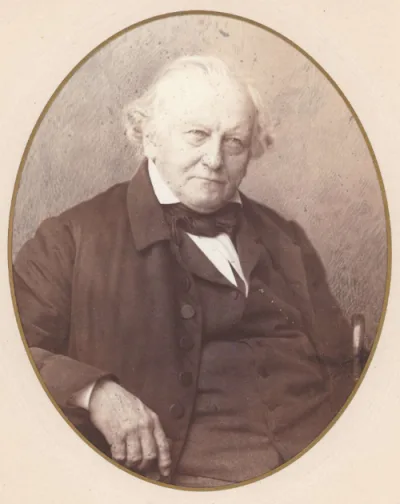
✍️ Author Biography
Gerald B. Gardner
📅 1844 – 1935
🌍 American
📚 3 free books
⭐ Known for: A Goddess Arrives (novel)
Gerald Gardner was a key figure in popularizing Wicca, founding Gardnerian Wicca and writing foundational texts.
Gerald Brosseau Gardner (1884–1964), also known by the craft name Scire, was an English author and amateur anthropologist who played a significant role in bringing Wicca to public awareness. Born into a prosperous family, Gardner spent much of his early life abroad in places like Madeira, Ceylon, and Malaya, where he developed an interest in local cultures and practices.
After retiring from civil service in Malaya, Gardner returned to England and became involved with occult groups. He was initiated into a coven in 1939, which he later described as a continuation of historical witch traditions, though this theory is now largely discredited. Gardner combined elements from this coven's rituals with influences from Freemasonry, ceremonial magic, and the writings of Aleister Crowley to establish the Gardnerian tradition of Wicca. He actively promoted this religion through his writings and by founding covens, initiating numerous High Priestesses who helped spread Gardnerian Wicca across Britain and internationally.
Early Life and Influences Abroad
Born in 1884 to an affluent family, Gerald Gardner's childhood was marked by extensive travel due to his nursemaid's efforts to mitigate his asthma. These journeys took him to locations such as France, the Canary Islands, and Madeira, where he developed an early fascination with weaponry and foreign cultures. His formal education was limited, as he was largely self-taught through reading. A pivotal early influence was Florence Marryat's "There Is No Death," which solidified his belief in an afterlife. In 1900, he moved to Ceylon to learn the tea trade, later managing a rubber plantation. During his time in Ceylon and subsequent move to British North Borneo, Gardner engaged with local populations, studied their customs, and developed an interest in weaponry, even joining the Ceylon Planters Rifle Corps. He was also briefly initiated into Freemasonry in Colombo.
Development of Gardnerian Wicca
Upon retiring and returning to England, Gardner joined the Rosicrucian Order Crotona Fellowship. Through this organization, he encountered and was initiated into the New Forest coven in 1939. Gardner posited that this coven represented a survival of ancient witch traditions, a concept influenced by Margaret Murray's now-discredited "witch-cult" theory. He significantly adapted and expanded the coven's rituals by incorporating elements from Freemasonry, ceremonial magic, and the works of Aleister Crowley. This synthesis formed the basis of what became known as Gardnerian Wicca.
Propagation and Legacy
In 1945, Gardner moved to London with the explicit goal of promoting his newly formed Wiccan tradition. He gained media attention and authored several influential books, including "High Magic's Aid" (1949), "Witchcraft Today" (1954), and "The Meaning of Witchcraft" (1959). He established the Bricket Wood coven and trained a generation of High Priestesses, such as Doreen Valiente and Patricia Crowther, who were instrumental in disseminating Gardnerian Wicca throughout the United Kingdom and later to Australia and the United States. Gardner also directed the Museum of Magic and Witchcraft on the Isle of Man until his death in 1964. His lasting impact is recognized by his epitaph, which calls him "The Father of Wicca."
Key Ideas
- Founding of Gardnerian Wicca, a specific tradition within modern Wicca.
- Belief in the continuity of ancient witch traditions (influenced by Margaret Murray's theory).
- Integration of elements from Freemasonry, ceremonial magic, and Aleister Crowley's writings into Wiccan practice.