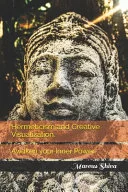
Hermeticism and Creative Visualization.
 83
83

Hermeticism and Creative Visualization.
Marcus Shiva's "Hermeticism and Creative Visualization" offers a rigorous examination of Hermetic thought, grounding its esoteric principles in practical application. The author's strength lies in his ability to articulate complex ideas, such as the Principle of Vibration, with clarity and historical awareness. A notable passage details how the concept of "as above, so below" directly informs the intentionality behind visualization, linking microcosm and macrocosm. However, the book occasionally feels dense, particularly in its initial chapters detailing the historical nuances of Hermetic secrecy, which might deter readers seeking immediate visualization techniques. Despite this, the work provides a robust philosophical framework for anyone serious about understanding the 'why' behind manifestation practices. It serves as a valuable, if demanding, resource for the dedicated student.
📝 Description
83
Marcus Shiva's 2020 volume connects Hermetic philosophy to creative visualization.
Published in 2020, Marcus Shiva's Hermeticism and Creative Visualization examines the core tenets of Hermetic thought and their practical application to mental imagery techniques. The author moves past surface-level explanations, detailing the historical background and philosophical foundations that have informed practitioners for generations. Shiva's goal is to clarify complex esoteric ideas, presenting them as actionable methods for personal development and insight.
The book is designed for dedicated students of Western esoteric traditions, those involved in magical practices, and individuals curious about the philosophical origins of awareness and manifestation. It will appeal to readers seeking a deeper grasp of Hermetic philosophy beyond common interpretations, providing a structured method for incorporating its wisdom into their own work. The text situates Hermeticism historically, tracing its lineage from ancient Egypt and Greece through the Renaissance and into contemporary occultism. Shiva notes the historical secrecy surrounding certain Hermetic ideas and how the tradition's separation from formal religion allowed its principles broad applicability. This historical viewpoint is important for grasping the development of these concepts.
This work is situated within the Western esoteric tradition, specifically the Hermetic stream. Hermeticism, originating from the attributed teachings of Hermes Trismegistus, has historically blended Neoplatonic philosophy, Kabbalah, and Gnosticism, alongside early Greek and Egyptian thought. Its influence on alchemy, astrology, and magic throughout the medieval and Renaissance periods is well documented. Shiva's book connects these historical currents to the modern practice of creative visualization, a technique that draws on the Hermetic understanding of mind's role in shaping reality.
💡 Why Read This Book?
• Gain a concrete understanding of the Seven Hermetic Principles, as detailed in the initial chapters, enabling a deeper grasp of cause and effect in reality shaping. • Learn how the concept of Mentalism, a core Hermetic tenet, directly informs the power of focused intention in creative visualization techniques discussed throughout. • Appreciate the historical lineage of these practices, understanding how ideas from ancient Egypt and Greece, as presented in the historical context section, continue to inform modern esoteric thought.
⭐ Reader Reviews
Honest opinions from readers who have explored this book.
❓ Frequently Asked Questions
What are the primary Hermetic Principles discussed in Marcus Shiva's book?
The book elaborates on the Seven Hermetic Principles: Mentalism, Correspondence, Vibration, Polarity, Rhythm, Cause and Effect, and Gender. These form the philosophical basis for understanding consciousness and manifestation.
How does Hermeticism relate to creative visualization according to the book?
The work explains that Hermetic principles, particularly Mentalism and Correspondence, provide the framework for how creative visualization functions, positing that thoughts (mentalism) can influence external reality (correspondence).
Is "Hermeticism and Creative Visualization" suitable for beginners?
While comprehensive, the book's depth might be more suited for those with some prior interest in esoteric philosophy. Beginners can approach it by focusing on the sections explaining the Seven Principles and their visualization applications.
When was "Hermeticism and Creative Visualization" first published?
The book was first published on September 26, 2020, making it a contemporary exploration of these ancient philosophies.
What is the author's perspective on the secrecy in Hermeticism?
Marcus Shiva discusses how the term 'Hermetic' implies secrecy but emphasizes that ancient teachers intended transmission, not concealment, of principles, which were kept free from any specific creed.
Does the book offer practical exercises for visualization?
Yes, the book bridges Hermetic principles with creative visualization, implying practical application by demonstrating how understanding these laws can shape one's reality and internal state.
🔮 Key Themes & Symbolism
The Seven Hermetic Principles
This volume meticulously details the foundational Seven Hermetic Principles, including Mentalism, Correspondence, and Vibration. It moves beyond simple definitions to explore their practical implications, especially in the context of creative visualization. The work emphasizes how understanding these universal laws, believed to govern all existence, empowers individuals to consciously influence their personal reality and internal states, bridging ancient esoteric wisdom with modern psychological understanding.
Hermetic Secrecy and Transmission
The book addresses the historical notion of Hermetic secrecy, clarifying that this did not imply absolute concealment but rather a careful, structured transmission of knowledge. Author Marcus Shiva highlights how the disciples of Hermes adhered to principles of discretion while ensuring teachings were passed down. This approach allowed the precepts to remain universally applicable, independent of any single religious creed, fostering a tradition accessible to all earnest seekers.
Consciousness and Manifestation
A central theme is the profound connection between consciousness and the manifestation of reality, as understood through Hermetic philosophy. The work posits that by mastering the mind (Mentalism) and understanding the interconnectedness of all things (Correspondence), individuals can actively participate in shaping their experiences. Creative visualization is presented not as mere wishful thinking, but as a disciplined application of these inherent cosmic laws.
Historical Roots of Esotericism
The book situates Hermeticism within its rich historical context, tracing its lineage from ancient Egyptian and Greek traditions through the Renaissance and beyond. It underscores how these philosophies, predating many modern spiritual movements, offer enduring insights into the nature of the universe and human potential. Understanding this historical trajectory provides a deeper appreciation for the enduring relevance of Hermetic thought.
💬 Memorable Quotes
Direct passages from the work, attributed to the author.
“In our days the term "Hermetic" means secret, closed in such a way that nothing escapes...”
— This highlights the modern perception of Hermeticism as exclusive or arcane. The author uses this to pivot towards the original intent: principles meant for understanding and application, not mere hoarding of knowledge.
“The ancient teachers asked for this secret, but never wished that the teachings should not be transmitted.”
— This clarifies the nature of Hermetic 'secrecy.' It wasn't about hiding wisdom, but about ensuring it was passed on with proper context and understanding, suggesting a pedagogical rather than exclusionary motive.
“They did not institute a religion, so that these principles could be used by all, but they did not belong to any creed.”
— This emphasizes the universal and non-sectarian nature of Hermetic philosophy. Its principles are presented as fundamental laws of existence, available for anyone to study and apply, irrespective of their religious affiliation.
“The Principles of Hermeticism.”
— This phrase signifies the core subject matter, indicating that the book's primary focus is an exposition and exploration of the fundamental laws that govern the Hermetic worldview and its practical applications.
“Creative Visualization.”
— This term points to the practical application explored in the book. It suggests that the abstract principles of Hermeticism are being directly linked to a technique for manifesting desired outcomes through mental imagery and focus.
🌙 Esoteric Significance
Tradition
This work is deeply rooted in the Western Hermetic tradition, tracing its lineage back to the Corpus Hermeticum and the Emerald Tablet. It aligns with the philosophical underpinnings of Hermeticism, which seeks to understand the fundamental laws of the cosmos. Unlike some interpretations that lean heavily into ceremonial magic or alchemy as ends in themselves, Shiva's approach emphasizes the practical application of these principles for consciousness development and manifestation, fitting within a lineage of Hermeticism focused on inner transformation.
Symbolism
Key symbols explored implicitly include the concept of 'as above, so below,' representing the correspondence between the macrocosm (universe) and the microcosm (individual), a fundamental Hermetic axiom. The act of visualization itself becomes symbolic, representing the mind's power to shape reality, mirroring the Hermetic principle of Mentalism. The 'closed' nature of Hermetic precepts, mentioned in the blurb, can also symbolize the inner, subjective nature of esoteric knowledge that requires initiation and understanding to be fully grasped.
Modern Relevance
Contemporary thinkers and practitioners in fields like consciousness studies, positive psychology, and manifestation coaching often draw upon concepts that echo Hermetic principles, even if they don't explicitly cite Hermes Trismegistus. Schools of thought focusing on the mind-body connection, the power of intention, and the science of manifestation can find a philosophical precursor and a detailed explanation of underlying mechanisms within the Hermetic framework presented here. The emphasis on universal laws makes it relevant to diverse spiritual but non-religious seekers.
👥 Who Should Read This Book
• Students of Western Esotericism seeking to understand the philosophical underpinnings of manifestation practices, benefiting from the historical context and detailed explanation of the Seven Principles. • Practitioners of visualization and affirmation techniques looking to deepen their understanding of *why* these methods work, gaining insight into the cosmic laws that govern their effectiveness. • Individuals interested in comparative philosophy and religion who wish to explore the enduring influence of ancient Egyptian and Greek thought on modern spiritual and psychological concepts.
📜 Historical Context
Published in 2020, "Hermeticism and Creative Visualization" emerges at a time of renewed interest in esoteric traditions, often diverging from the more mystical interpretations popularized by figures like Aleister Crowley in the early 20th century. Marcus Shiva's work places Hermeticism firmly within its historical trajectory, acknowledging its roots in Hellenistic Egypt and its significant revival during the Renaissance, notably influencing thinkers like Giordano Bruno. The text directly addresses the historical perception of Hermetic secrecy, contrasting it with the tradition's emphasis on transmission. Unlike contemporary New Age approaches that might isolate visualization techniques, Shiva anchors them within a robust philosophical framework, referencing the foundational texts attributed to Hermes Trismegistus. This contextualization situates the book as a bridge between ancient wisdom and modern practice, distinct from the more eclectic occultism of contemporaries who might draw from diverse global traditions without such a specific historical lineage.
📔 Journal Prompts
The Principle of Mentalism and its role in shaping your daily perceptions.
Reflecting on the concept of Correspondence ('as above, so below') in your personal life.
How the Principle of Vibration might be consciously applied to alter emotional states.
Identifying instances of the Principle of Polarity in your experiences.
The application of the Principle of Cause and Effect to your intentions and visualizations.
🗂️ Glossary
Hermeticism
A philosophical and religious tradition based on writings attributed to Hermes Trismegistus, emphasizing esoteric knowledge of the divine and the natural world, often summarized in the Seven Principles.
Creative Visualization
A mental technique involving the use of imagination to create desired outcomes or experiences by vividly picturing them in the mind, often guided by philosophical principles.
Principle of Mentalism
The first Hermetic Principle, stating that 'The All is Mind; the Universe is Mental.' It posits that reality is fundamentally mental or spiritual in nature.
Principle of Correspondence
The second Hermetic Principle, articulated as 'As above, so below; as below, so above.' It signifies the parallel relationship between different planes of existence.
Principle of Vibration
The third Hermetic Principle, asserting that 'Nothing rests; Everything moves; Everything vibrates.' It explains the nature of reality as constant energetic motion.
Corpus Hermeticum
A collection of ancient Greek philosophical and religious writings attributed to Hermes Trismegistus, forming a foundational text for Hermeticism.
Emerald Tablet
A short, cryptic text attributed to Hermes Trismegistus, considered a fundamental document of Hermetic philosophy, alchemy, and a source of the Principle of Correspondence.


![The ancient fragments; containing what remains of the writings of Sanchoniatho, Berossus, Abydenus, Megasthenes, and Manetho. Also the Hermetic Creed, the Old Chronicle, the Laterculus of Eratosthenes, the Tyrian Annals, the Oracles of Zoroaster […]](/img/thumb/the-ancient-fragments-containing-what-remains-of-the-writings-of-sanchoniatho-berossus-abydenus-megasthenes-and-manetho-also-the-hermetic-creed-the-old-chronicle-the-laterculus-of-eratosthenes-the-tyr.webp)




![Archetypal principles and hierarcheis [sic]](/img/thumb/archetypal-principles-and-hierarcheis-sic-john-peter-anton.webp)