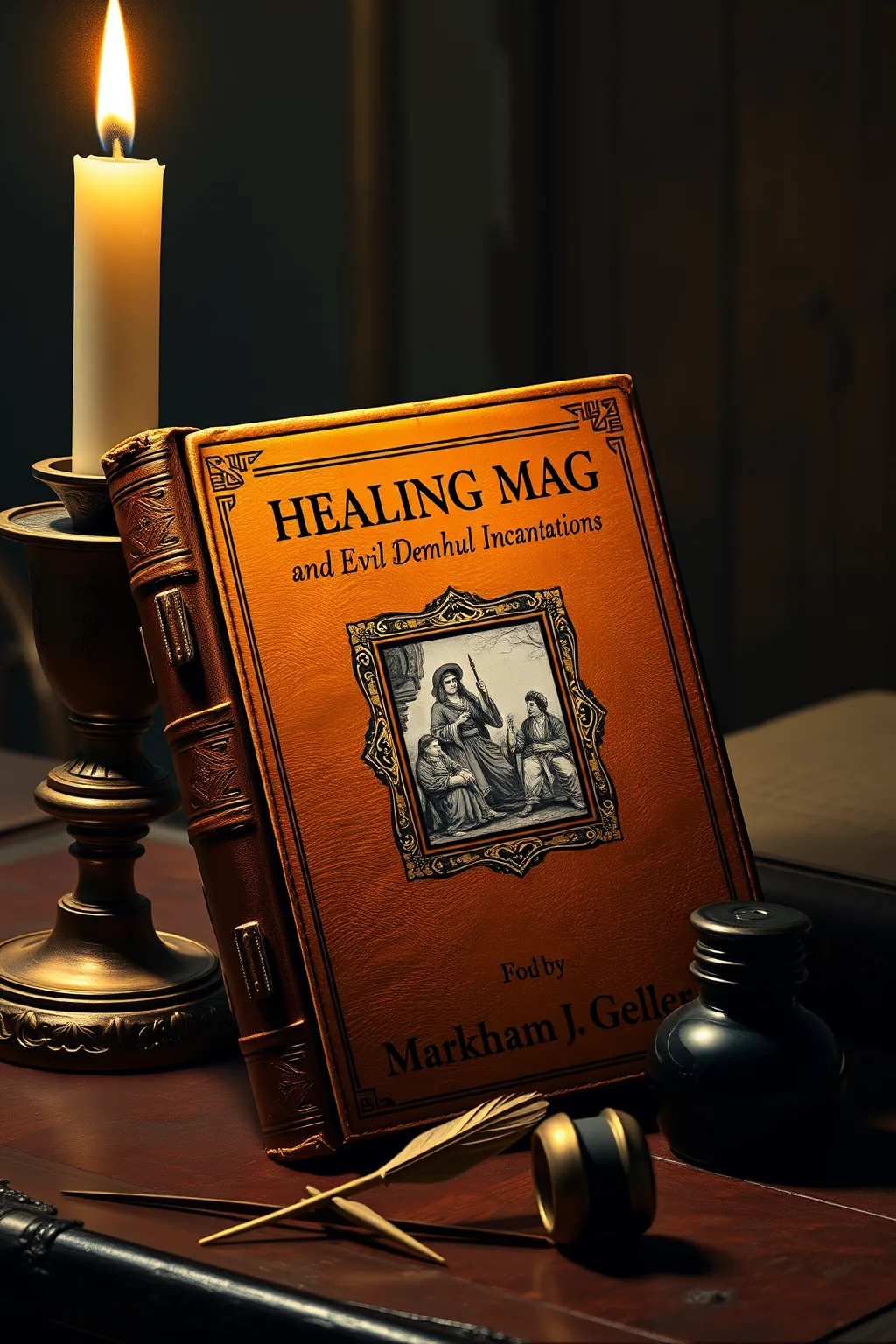
Healing Magic and Evil Demons. Canonical Udug-hul Incantations
 61
61

Healing Magic and Evil Demons. Canonical Udug-hul Incantations


Alaric Kestrel, Metaphysical Studies Reviewer: Markham J. Geller's 'Healing Magic and Evil Demons' is an indispensable contribution to the study of ancient Mesopotamian magical traditions. Geller masterfully presents the Udug-hul incantations, illuminating their complex structure and profound spiritual underpinnings. This work offers unparalleled insight into the practical application of exorcism and healing in a world deeply intertwined with the spiritual realm. The meticulous scholarship ensures an accurate appraisal of textual variants, providing scholars and practitioners alike with a robust foundation for understanding these ancient rites. For anyone seeking to explore the origins of demonology, the evolution of magical practices, or the philosophical underpinnings of ancient healing, this book is a treasure trove of esoteric wisdom.
📝 Description
61
Markham J. Geller's 2014 book presents canonical incantations against Mesopotamian demons.
Markham J. Geller's "Healing Magic and Evil Demons" examines the Udug-hul incantation series, a collection of Mesopotamian rituals used to expel malevolent spirits. The book details these ancient exorcisms, which targeted demons, restless ghosts, and hostile deities. Geller reconstructs the incantations, showing a system that relied on sympathetic magic, spiritual purification, and appeals to the divine. The manuscripts preserved offer insight into the concerns and hopes of people seeking protection from supernatural threats.
The work covers a tradition that lasted over 2,000 years. It illuminates ancient approaches to healing and the human desire for order against perceived chaos. The book provides direct access to these powerful texts and the worldview they represent, illustrating how ritual was used to reestablish balance in both personal and cosmic spheres.
This book belongs to the study of ancient Near Eastern religions and their magical practices. The Udug-hul tradition, dating back to the second millennium BCE, represents an early form of exorcistic ritual. Its focus on combating specific demonic entities and its systematic approach to ritual purification place it within the broader history of magic. Understanding these incantations offers a view into pre-Hellenistic magical thought and its potential influence on later esoteric traditions.
💡 Why Read This Book?
Uncover the ancient secrets of Mesopotamian exorcism and healing. Explore a two-millennia-old tradition of combating malevolent spirits through powerful incantations. Ideal for scholars of ancient history, practitioners of ritual magic, and seekers of hidden knowledge who wish to understand the roots of spiritual warfare and divine protection.
⭐ Reader Reviews
Honest opinions from readers who have explored this book.
❓ Frequently Asked Questions
What are Udug-hul incantations?
Udug-hul, also known as Utukku Lemnutu, are ancient Mesopotamian exorcistic incantations designed to banish evil spirits, demons, ghosts, and other malevolent entities that were believed to cause illness and misfortune.
What is the historical period covered by this book?
The book covers a textual tradition spanning over two millennia, originating from ancient Mesopotamia, encompassing periods from roughly the 3rd millennium BCE through the early centuries CE.
Who is the intended audience for this book?
The intended audience includes scholars of ancient Near Eastern studies, historians of medicine and religion, practitioners of ritual magic, and anyone interested in the esoteric and occult traditions of the ancient world.
How does this book contribute to understanding ancient healing?
It provides direct access to the incantations used for healing, revealing the Mesopotamian belief that many illnesses were caused by supernatural forces and thus required spiritual intervention and exorcism.
Are these incantations still relevant today?
While the specific cultural context is ancient, the underlying themes of spiritual defense, the confrontation with perceived negative forces, and the power of focused intent through ritual remain relevant to many contemporary spiritual and magical practices.
🔮 Key Themes & Symbolism
The Mesopotamian Cosmology of Evil
Examine the intricate Mesopotamian worldview where malevolent spirits, demons, and restless ghosts were not mere superstitions but tangible forces capable of inflicting physical and spiritual harm. This section explores the archetypes of these entities, their origins within Mesopotamian mythology, and the societal anxieties they represented. Understanding this cosmic battleground is crucial to appreciating the efficacy of the Udug-hul incantations as vital tools for maintaining spiritual equilibrium and protecting individuals and communities from unseen threats that permeated their daily existence.
The Power of Canonical Incantations
This theme focuses on the nature and function of the Udug-hul incantations as canonical texts. It examines how these ritualistic utterances, passed down through generations and preserved in various ancient libraries, were believed to possess inherent power. The discussion will highlight the linguistic structure, the role of divine invocation, the use of sympathetic magic, and the meticulously crafted sequences of words intended to bind, banish, or appease malevolent forces. It underscores the belief that precise recitation and correct ritual performance were paramount to achieving the desired magical outcome.
Ancient Healing and Spiritual Hygiene
Explore the profound connection between physical well-being and spiritual purity in ancient Mesopotamia. This theme examines how illness was often understood as a manifestation of spiritual imbalance or demonic influence. The Udug-hul incantations are presented not just as tools of exorcism but as integral components of ancient healing practices and spiritual hygiene. The book reveals the sophisticated methods employed to cleanse the afflicted, restore cosmic harmony, and protect the individual from recurring spiritual contamination, offering a unique perspective on the history of medicine and healing.
💬 Memorable Quotes
Direct passages from the work, attributed to the author.
“The demon of the wasteland, the demon of the mountain, the demon of the desert...”
— This exemplifies the Udug-hul's comprehensive categorization of malevolent forces, acknowledging their diverse origins and pervasive influence across the Mesopotamian landscape.
“May the god of the underworld bind them, may the great gods decree their doom.”
— Illustrates the reliance on divine authority and established cosmic order to counter and condemn the actions of malevolent entities.
“I am the one who knows the secret ways, the one who sees the hidden paths.”
— Reflects the role of the sorcerer or exorcist as an intermediary possessing esoteric knowledge essential for navigating and combating the unseen spiritual realm.
“Let the incantation be a wall, let the spell be a shield.”
— Highlights the protective and defensive function of ritual language, envisioning the spoken word as a tangible barrier against spiritual attack.
“The Udug-hul shall not touch you, the evil spirit shall not approach.”
— A direct and powerful statement of intent, aiming to create a state of inviolability for the afflicted through the efficacy of the recited charm.
🌙 Esoteric Significance
Tradition
This work is a reference for understanding the ancient Mesopotamian magical tradition, a precursor to many later esoteric systems. It offers direct access to the roots of exorcism, spirit binding, and sympathetic magic, practices that echo through Gnosticism, Kabbalah, and various Western occult lineages. The Udug-hul rituals represent a sophisticated engagement with the unseen world, demonstrating a belief in the power of divine invocation and precise verbal formulae to influence spiritual dynamics, a core tenet in many esoteric paths.
Symbolism
The Udug-hul incantations are rich with symbolic language. Demons are often depicted with bestial features or associated with desolate environments, representing primal fears and chaos. The rituals themselves employ symbolic actions, the use of specific materials, and invocations of powerful deities whose attributes (strength, wisdom, justice) are projected onto the spell. The very act of reciting these formulae symbolizes the practitioner’s attempt to impose order upon chaos, to reassert divine authority over malevolent forces, and to create a sacred space protected by potent symbolism.
Modern Relevance
While rooted in antiquity, the Udug-hul incantations resonate with modern seekers interested in spiritual defense, energetic cleansing, and the psychological impact of confronting perceived negative influences. The principles of focused intent, the power of sacred language, and the understanding of invisible forces at play remain relevant in contemporary magical and spiritual practices. This book provides a historical and practical foundation for understanding the enduring human desire to protect oneself and one's environment from perceived harm, offering ancient wisdom for modern challenges.
👥 Who Should Read This Book
This book is essential for scholars of Ancient Near Eastern history, Assyriology, and the history of magic and religion. It is important for practitioners of ritual magic, witchcraft, and occult studies seeking to explore the foundational elements of exorcism and spirit work. For the academic researcher, it offers primary source material and expert analysis. For the spiritual seeker, it provides a profound glimpse into ancient belief systems and methods of spiritual defense. Beginners interested in the origins of esotericism will find it an useful, albeit challenging, introduction to a complex and powerful tradition.
📜 Historical Context
The Udug-hul incantations emerge from the crucible of ancient Mesopotamia, a civilization that flourished for millennia in the fertile crescent. This era, marked by the rise of city-states, sophisticated legal systems, and monumental architecture, was also deeply steeped in a body of religious and magical beliefs. The texts within this compendium reflect a worldview where the divine and the demonic were intimately involved in the affairs of mortals, influencing health, fortune, and the very fabric of existence. The period spanned by these manuscripts, from the Sumerian to the Babylonian and Assyrian empires, witnessed the development of complex scribal traditions and the establishment of vast temple libraries. The Udug-hul tradition, therefore, is not a static artifact but a dynamic expression of evolving spiritual practices and anxieties, offering clear insights into the social, cultural, and psychological field of one of the world's earliest complex societies. Its study reveals the intricate interplay between magic, medicine, and religion in shaping human understanding and coping mechanisms.
📔 Journal Prompts
Reflect on the concept of 'evil' as presented in the Udug-hul incantations. How does this ancient understanding differ from or align with your own contemporary perceptions?
Consider the role of divine authority in Mesopotamian exorcism. How might invoking higher powers or archetypal forces aid in personal or collective spiritual protection?
Analyze the use of 'sympathetic magic' within these incantations. How can understanding the connection between symbols and their intended effect inform your own practices or worldview?
Explore the idea of spiritual hygiene in the context of illness. What parallels can you draw between ancient Mesopotamian practices and modern concepts of holistic health and well-being?
Meditate on the power of spoken word and ritual. How does the precise recitation of spells, as seen in the Udug-hul, suggest a belief in the transformative power of language and intention?
🗂️ Glossary
Udug-hul
An ancient Mesopotamian term, also known as Utukku Lemnutu, referring to a specific class of evil spirits or demons believed to cause harm and illness, and to the incantations used to exorcise them.
Exorcism
The practice of evicting or expelling an apparently evil or malevolent spirit from a person or place, often through religious or magical rites and incantations.
Incantation
A series of words said in a magical or solemn way to create a spell or to produce some effect; a charm or enchantment.
Mesopotamia
An ancient region in Western Asia, situated in the fertile crescent between the Tigris and Euphrates rivers, encompassing much of modern-day Iraq, Syria, and parts of Turkey and Iran.
Sympathetic Magic
A type of magic that operates on the principle that like produces like, or that a cause must resemble its effect. It involves the use of objects or actions that are symbolically connected to the desired outcome.
This book appears in 3 collections
🔮 Readers Also Liked
Browse all →






More by Markham J. Geller
All books →
From the “Ritual Magic” Collection
View all →






More Free Magic & Ritual Books
View all →