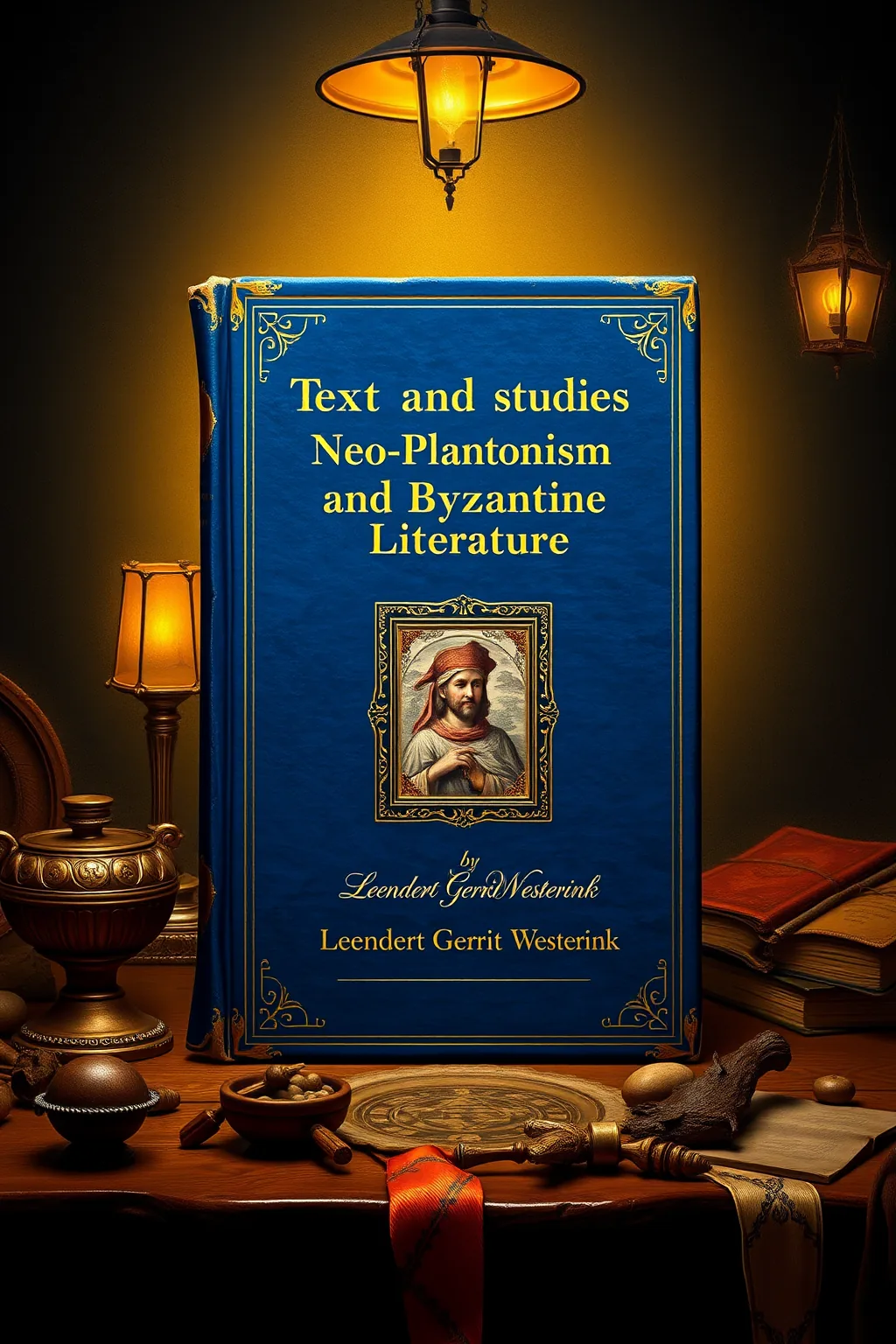
Texts and studies in Neoplatonism and Byzantine literature
 61
61

Texts and studies in Neoplatonism and Byzantine literature



Review by Sophia Crane (Associate Editor) — 'Texts and Studies in Neoplatonism and Byzantine Literature' by Leendert Gerrit Westerink is a masterful exploration of esoteric thought. Westerink's authoritative voice guides readers through the labyrinthine paths of Neoplatonic philosophy and Byzantine literature, revealing hidden insights and symbolic meanings. The book's strength lies in its ability to bridge the gap between ancient mysticism and modern understanding, making it an invaluable resource for both scholars and spiritual seekers. Westerink's meticulous research and eloquent prose create a rich atmosphere of contemplation, inviting readers to engage with the deepest questions of existence and the nature of reality.
📝 Description
61
Leendert Gerrit Westerink published 'Texts and Studies in Neoplatonism and Byzantine Literature' to illuminate obscure philosophical currents.
This collection examines the complex thought found in Neoplatonic and Byzantine texts, focusing on their less apparent philosophical dimensions. Westerink pays close attention to the symbolic language and conceptual frameworks that shaped these traditions. The studies within this volume engage directly with primary sources, aiming to clarify specific arguments and interpretations that have often been overlooked.
Readers will find detailed analyses of figures and ideas central to late antique and early medieval philosophy. The work is structured to build understanding through careful examination of textual evidence. It is a resource for those who wish to move beyond superficial readings of these historical philosophical systems.
Neoplatonism, originating with Plotinus, represents a sophisticated philosophical system that sought to explain reality through a hierarchical structure emanating from the One. Its influence extended through late antiquity and into the Byzantine period, where its concepts were often integrated with Christian theology or preserved in philosophical schools. Westerink's work addresses the ways in which these traditions, particularly their more symbolic and speculative aspects, were transmitted and reinterpreted, touching on themes relevant to later Hermetic and Gnostic traditions.
💡 Why Read This Book?
Why read 'Texts and Studies in Neoplatonism and Byzantine Literature'? This book is a must-read for seekers of hidden knowledge, scholars of Greek literature, and practitioners of Hermetic arts. Westerink's exploration of Neoplatonic philosophy and Byzantine literature offers profound insights into the mystical dimensions of ancient thought, providing a rich source of esoteric wisdom. Whether you are a beginner exploring the world of occult studies or a seasoned scholar, this book will deepen your understanding and enrich your spiritual journey.
⭐ Reader Reviews
Honest opinions from readers who have explored this book.
❓ Frequently Asked Questions
What is the main focus of this book?
The main focus is the exploration of Neoplatonic philosophy and Byzantine literature, uncovering their esoteric themes and hidden knowledge.
Who is the intended audience?
The intended audience includes scholars of Greek literature, seekers of esoteric truths, and practitioners of Hermetic arts.
How does this book contribute to the study of Neoplatonism?
This book provides a comprehensive analysis of Neoplatonic texts, revealing their philosophical significance and symbolic meanings.
What makes this book unique?
The book's unique blend of ancient wisdom and modern scholarship makes it a valuable resource for both academic and spiritual exploration.
Is this book suitable for beginners?
While it is highly informative, beginners may find some sections challenging due to the depth of esoteric content.
🔮 Key Themes & Symbolism
Neoplatonic Philosophy
Neoplatonism, a mystical branch of Platonism, is explored in depth, revealing its esoteric teachings and symbolic meanings. Westerink looks at the works of Plotinus and other Neoplatonic philosophers, uncovering their hidden wisdom and philosophical significance.
Byzantine Literature
The book examines the collection of Byzantine literature, highlighting its mystical and occult themes. Westerink's analysis reveals the hidden knowledge and symbolic wisdom embedded in these ancient texts, providing a deeper understanding of their esoteric significance.
Symbolism and Hidden Knowledge
Westerink's exploration of symbolism and hidden knowledge is a key theme, offering insights into the mystical dimensions of ancient thought. The book reveals the symbolic meanings behind various esoteric concepts, enriching the reader's spiritual journey.
💡 Key Ideas
Editorial paraphrase of the work's core concepts — not direct quotes.
The divine essence is not a thing but a power.
This quote underscores the mystical concept of divine essence as a transcendent power, rather than a physical entity.
The soul's journey is a return to its true nature.
This passage highlights the Neoplatonic belief in the soul's ascent towards divine union.
Wisdom is the knowledge of the divine.
This quote emphasizes the esoteric understanding of wisdom as a spiritual revelation.
The universe is a living organism.
This passage reflects the mystical view of the cosmos as an interconnected, living entity.
Symbolism is the language of the divine.
This quote underscores the importance of symbolic interpretation in esoteric studies.
🌙 Esoteric Significance
Tradition
This book belongs to the Hermetic tradition, which seeks to uncover hidden knowledge and spiritual truths. Westerink's exploration of Neoplatonic philosophy and Byzantine literature reveals the esoteric teachings and symbolic meanings embedded in these ancient texts.
Symbolism
Key symbols in the book include the divine essence, the soul's journey, and the interconnectedness of the universe. These symbols represent the mystical dimensions of ancient thought, offering insights into the nature of reality and the divine.
Modern Relevance
This book remains relevant today, providing a rich source of esoteric wisdom for modern practitioners. Its exploration of Neoplatonic philosophy and Byzantine literature offers clear insights into the mystical dimensions of ancient thought, enriching the spiritual journey of seekers and scholars alike.
👥 Who Should Read This Book
This book is ideal for a diverse audience, including beginners, scholars, spiritual seekers, and practitioners of Hermetic arts. Beginners will find a rich introduction to the esoteric dimensions of Neoplatonic philosophy and Byzantine literature, while scholars will appreciate the depth of Westerink's research. Spiritual seekers will be inspired by the mystical insights and symbolic wisdom, and practitioners will find valuable tools for their spiritual journey.
📜 Historical Context
Written during a time of intellectual and spiritual ferment, 'Texts and Studies in Neoplatonism and Byzantine Literature' emerged as an important work in the study of ancient mysticism. Westerink's exploration of Neoplatonic philosophy and Byzantine literature was groundbreaking, revealing the esoteric dimensions of these traditions. The book's influence extended beyond academia, inspiring a new generation of seekers and practitioners of Hermetic arts. Its historical significance lies in its ability to bridge the gap between ancient wisdom and modern understanding, making esoteric knowledge accessible to a wider audience.
📔 Journal Prompts
Reflect on the concept of the divine essence as a transcendent power.
Consider the soul's journey towards divine union.
Explore the significance of symbolism in esoteric studies.
How does the interconnectedness of the universe influence your spiritual practices?
What insights have you gained from the exploration of Neoplatonic philosophy and Byzantine literature?
🗂️ Glossary
Neoplatonism
A mystical branch of Platonism that emphasizes the divine essence and the soul's journey towards union with the divine.
Byzantine Literature
Ancient texts from the Byzantine Empire, rich in mystical and occult themes.
Symbolism
The use of symbols to represent esoteric concepts and spiritual truths.
Hermetic Arts
Practices and studies focused on uncovering hidden knowledge and spiritual wisdom.
Divine Essence
The transcendent power and nature of the divine, as explored in Neoplatonic philosophy.
This book appears in 3 collections
🔮 Readers Also Liked
Browse all →








More by Leendert Gerrit Westerink
All books →
From the “Neoplatonism” Collection
View all →





More Free Alchemy & Hermeticism Books
View all →