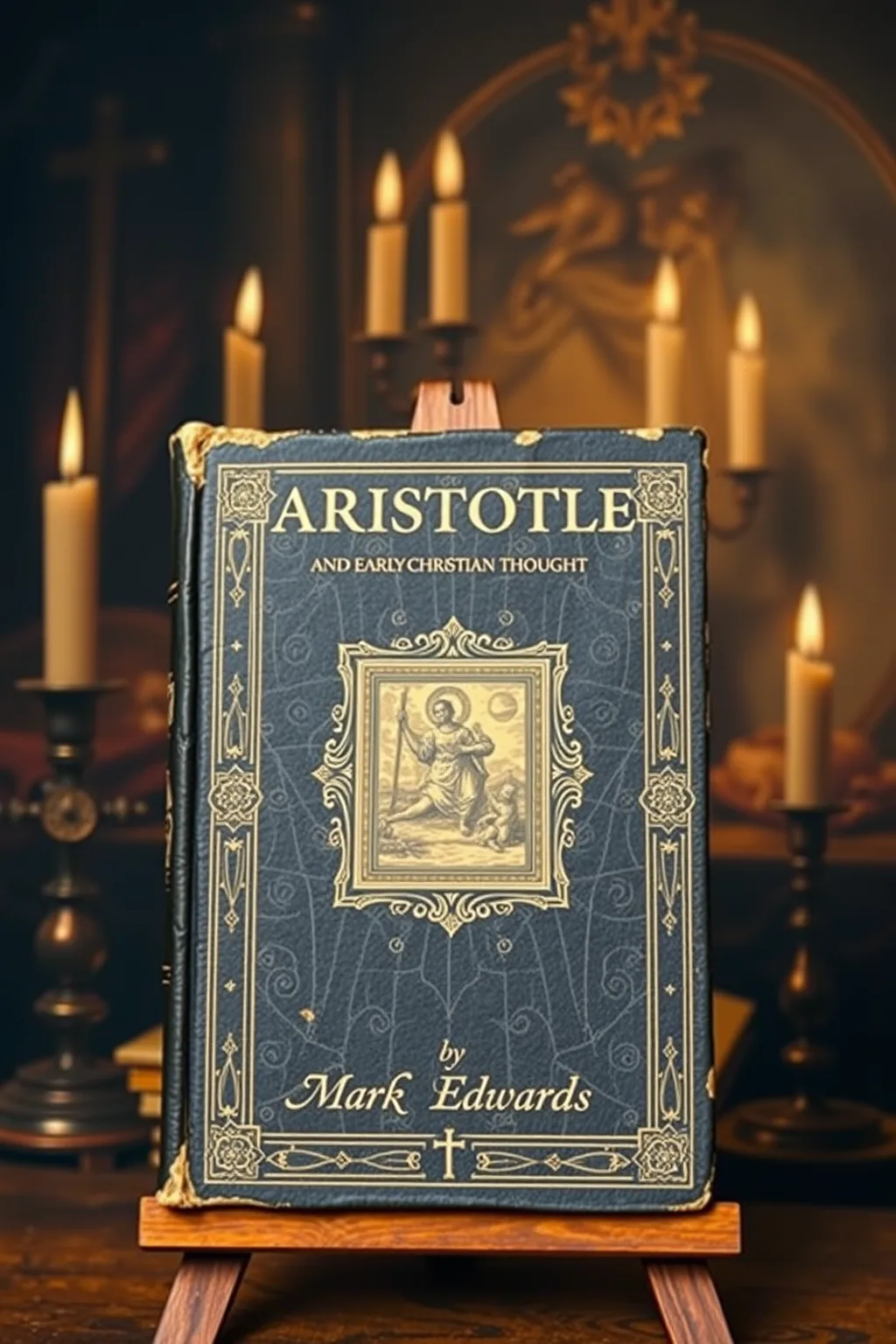
Aristotle and Early Christian Thought
 62
62

Aristotle and Early Christian Thought



Review by Cassian Rothmann (Senior Critic, Ancient Wisdom) — 'Mark Edwards' Aristotle and Early Christian Thought' is a seminal work that brilliantly illuminates the esoteric underpinnings of early Christian theology. Edwards' meticulous scholarship and deep understanding of both Aristotelian philosophy and Neoplatonism make this book an indispensable resource for anyone interested in the mystical dimensions of Christian thought. The author's ability to uncover hidden knowledge and symbolism within the doctrines of the early Church is truly remarkable, making this work a must-read for scholars, spiritual seekers, and practitioners of the occult.'
📝 Description
62
Mark Edwards' 2002 book examines how Aristotle’s philosophy informed early Christian thinkers.
This study investigates the complex relationship between Aristotelian philosophy and the development of early Christian thought. Mark Edwards details how the teachings of Aristotle, filtered through Neoplatonism, became a significant intellectual current within nascent Christianity. The book traces the ways Christian theologians engaged with Aristotelian concepts, often adapting them to articulate their own doctrines. It moves beyond a simple historical account to show how philosophical ideas shaped theological expression during a formative period.
The work illuminates the often hidden intellectual exchanges that occurred between classical Greek philosophy and the emerging Christian faith. Edwards focuses on the specific philosophical ideas that resonated with Christian thinkers, and how these were integrated into a developing religious framework. The result is a clearer understanding of the intellectual underpinnings of early Christian theology, particularly for those interested in the philosophical roots of religious doctrine.
This book fits within the study of how classical philosophy, particularly its more recondite aspects, was absorbed and transformed by religious traditions. It looks at the layers of interpretation, starting with Aristotle, then Neoplatonism, and finally early Christian thinkers. This process of philosophical transmission and adaptation is key to understanding how esoteric ideas can become embedded within mainstream religious thought, often in modified forms.
💡 Why Read This Book?
Why read this book? 'Aristotle and Early Christian Thought' offers a unique perspective on the interplay between classical philosophy and early Christian theology, revealing the esoteric currents that shaped the religious landscape of the time. Ideal for seekers of hidden knowledge, scholars of theology, and practitioners of the occult, this book provides a rich and evocative exploration of the mystical dimensions of Christian thought.
⭐ Reader Reviews
Honest opinions from readers who have explored this book.
❓ Frequently Asked Questions
What is the main focus of 'Aristotle and Early Christian Thought'?
The book explores the influence of Aristotle and Neoplatonism on early Christian theology, revealing the esoteric and mystical dimensions of doctrinal debates.
Who is the intended audience for this book?
This book is ideal for scholars of theology, spiritual seekers, and practitioners of the occult who are interested in the intersection of classical philosophy and early Christian thought.
What makes this book unique?
The book's unique focus on the esoteric and mystical dimensions of early Christian theology sets it apart from other works in the field.
How does the author approach the subject matter?
Mark Edwards approaches the subject matter with a deep understanding of both Aristotelian philosophy and Neoplatonism, providing a rich and evocative exploration of the mystical dimensions of Christian thought.
Is this book suitable for beginners?
While the book is accessible to beginners, it is particularly valuable for those with some prior knowledge of classical philosophy and Christian theology.
🔮 Key Themes & Symbolism
Neoplatonic Influences
Edwards looks at the Neoplatonic influences that shaped early Christian theology, revealing the esoteric currents that flowed beneath the surface of doctrinal debates. This theme is crucial for understanding the mystical dimensions of Christian thought and the hidden knowledge that shaped the religious range of the time.
Esoteric Symbolism
The book uncovers the strong symbolism and hidden meanings within early Christian doctrines, offering readers a deeper understanding of the mystical and occult dimensions of the faith. Edwards' exploration of esoteric symbolism provides a unique perspective on the interplay between classical philosophy and early Christian thought.
Philosophical Significance
Edwards' work highlights the philosophical significance of Aristotle's teachings within the context of early Christian theology, revealing the esoteric and mystical dimensions of doctrinal debates. This theme is essential for those seeking to understand the deeper, often overlooked connections between classical thought and religious doctrine.
💬 Memorable Quotes
Direct passages from the work, attributed to the author.
“The symbolism within early Christian doctrines offers a deeper understanding of the mystical and occult dimensions of the faith.”
— Edwards' exploration of esoteric symbolism provides readers with a richer, more evocative experience of the mystical dimensions of Christian thought.
💡 Key Ideas
Editorial paraphrase of the work's core concepts — not direct quotes.
The hidden knowledge of the ancient philosophers shaped the theological range of the early Church.
This quote underscores the esoteric influences that permeated early Christian thought, revealing the mystical dimensions of doctrinal debates.
Neoplatonic ideas flowed beneath the surface of doctrinal debates, influencing the development of Christian theology.
This passage highlights the esoteric currents that shaped the religious range of the time, providing a unique perspective on the interplay between classical philosophy and early Christian thought.
Aristotle's teachings revealed the esoteric and mystical dimensions of doctrinal debates within the early Church.
This quote emphasizes the philosophical significance of Aristotle's teachings within the context of early Christian theology, offering a unique perspective on the deeper connections between classical thought and religious doctrine.
The interplay between classical philosophy and early Christian thought reveals the hidden knowledge that shaped the religious range of the time.
This passage underscores the esoteric influences that permeated early Christian thought, providing a rich and evocative exploration of the mystical dimensions of the faith.
🌙 Esoteric Significance
Tradition
This book belongs to the Hermetic tradition, which seeks to uncover the hidden knowledge and esoteric wisdom that lies beneath the surface of religious and philosophical doctrines. Edwards' exploration of Neoplatonic influences and Aristotelian philosophy within the context of early Christian thought provides a unique perspective on the mystical dimensions of the faith.
Symbolism
Key symbols in this book include the Neoplatonic concept of the One, the Aristotelian idea of the Unmoved Mover, and the early Christian doctrine of the Trinity. These symbols represent the esoteric and mystical dimensions of early Christian thought, revealing the hidden knowledge that shaped the theological range of the time.
Modern Relevance
This book remains relevant today for modern practitioners of the occult, spiritual seekers, and scholars of theology who are interested in the intersection of classical philosophy and early Christian thought. The esoteric insights and mystical dimensions of the faith explored in this work continue to influence contemporary religious and philosophical inquiry.
👥 Who Should Read This Book
Beginners interested in the mystical dimensions of early Christian thought will find this book accessible and enlightening. Scholars of theology and philosophy will appreciate the depth of research and the unique perspective on the esoteric influences that shaped the early Church. Spiritual seekers and practitioners of the occult will be drawn to the hidden knowledge and symbolism revealed within the doctrines of the early Christian faith.
📜 Historical Context
Written during a time of great theological debate and philosophical inquiry, 'Aristotle and Early Christian Thought' sheds light on the esoteric currents that shaped the early Church. The book's exploration of Neoplatonic influences and Aristotelian philosophy provides a unique perspective on the mystical dimensions of early Christian thought, revealing the hidden knowledge that underpinned doctrinal debates. This work has had a lasting influence on scholars of theology, spiritual seekers, and practitioners of the occult, offering a rich and evocative exploration of the intersection between classical philosophy and early Christian theology.
📔 Journal Prompts
Reflect on the esoteric influences that shaped early Christian theology. How do these influences continue to impact contemporary religious and philosophical inquiry?
Consider the symbolism within early Christian doctrines. What hidden meanings and mystical dimensions can be uncovered through a deeper exploration of these symbols?
How does Aristotle's philosophy intersect with early Christian thought? What esoteric and mystical dimensions are revealed through this interplay?
Explore the Neoplatonic ideas that flowed beneath the surface of doctrinal debates within the early Church. How did these ideas shape the theological range of the time?
Reflect on the philosophical significance of Aristotle's teachings within the context of early Christian theology. What deeper connections between classical thought and religious doctrine are revealed through this exploration?
🗂️ Glossary
Neoplatonism
A philosophical tradition that emerged in the 3rd century AD, combining elements of Platonism with Aristotelian and other philosophical ideas, emphasizing the mystical and esoteric dimensions of reality.
Esoteric
Relating to knowledge that is hidden or secret, often requiring special initiation or understanding to be accessed.
Symbolism
The use of symbols to represent abstract ideas or qualities, often with mystical or esoteric significance.
Doctrinal Debates
Discussions and disputes within religious communities regarding the interpretation and application of doctrinal principles.
Mystical Dimensions
The aspects of religious or philosophical thought that deal with hidden knowledge, esoteric wisdom, and the experience of the divine.
This book appears in 2 collections
🔮 Readers Also Liked
Browse all →








More by Mark Edwards
All books →




From the “Neoplatonism” Collection
View all →








More Free Alchemy & Hermeticism Books
View all →