Hand from A-Z
 71
71

Hand from A-Z
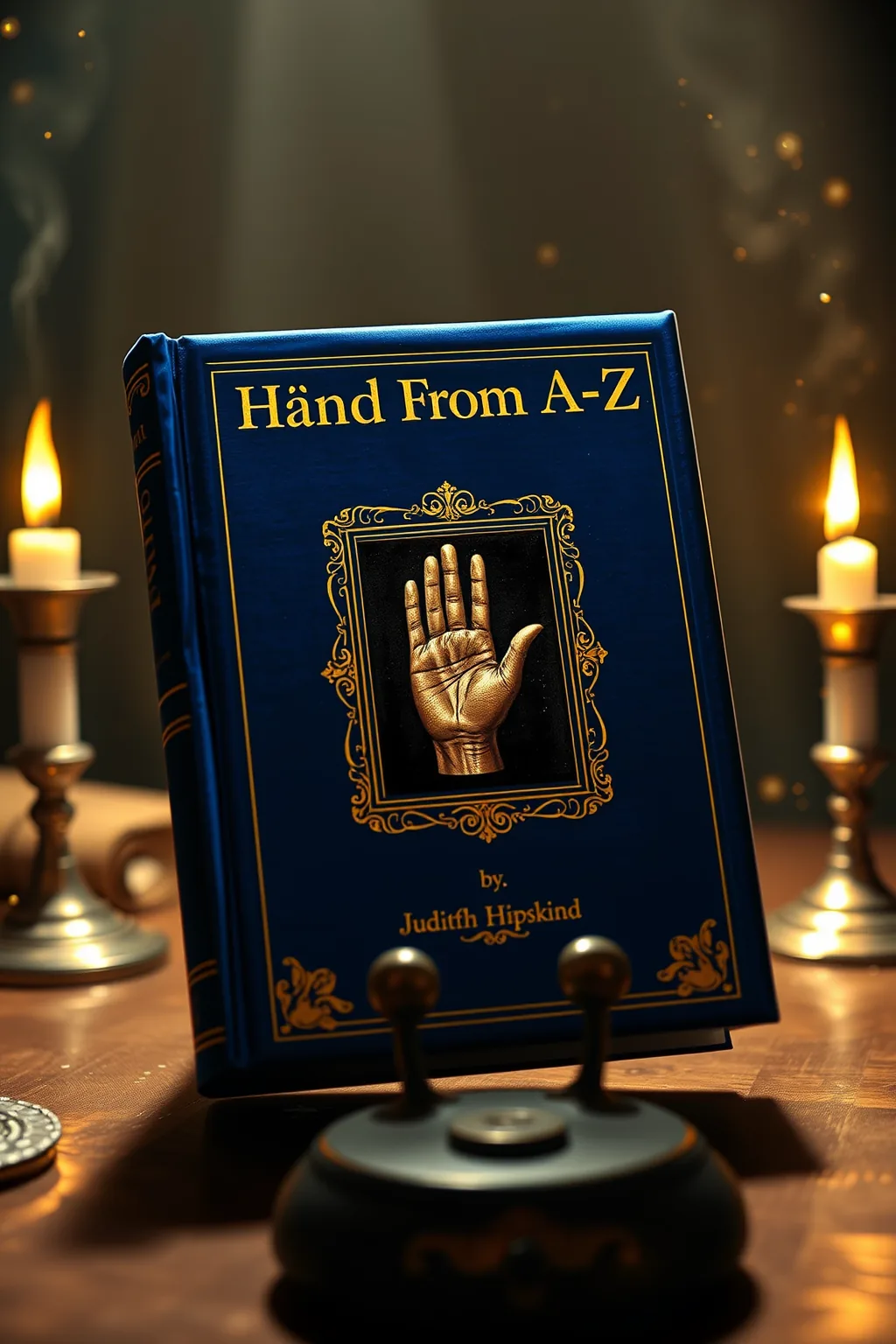
Judith Hipskind's Hand from A-Z provides a refreshingly systematic approach to palmistry. Unlike many superficial guides, Hipskind anchors her interpretations in observable traits, explaining the rationale behind why hand analysis is considered effective. The strength of this book lies in its exhaustive detail; it covers every conceivable facet of the hand, from the subtle curve of the thumb to the precise angle of the little finger. A particular strength is the clear delineation of the mounts, which are often glossed over in less thorough texts. However, the sheer volume of information, while comprehensive, can occasionally feel overwhelming for the absolute beginner. The text is dense, favoring detailed explanation over illustrative anecdotes. Despite this, the clarity of instruction is commendable. Hipskind's work is a thorough compendium for serious students of palmistry.
📝 Description
71
Judith Hipskind's 2005 book, Hand from A-Z, maps the hand's features to personality traits.
Published in 2005, Hand from A-Z presents palmistry not just as a method for predicting the future, but as a system for understanding individual personality and life paths. The book meticulously dissects the hand, beginning with its overall shape and progressing to the fine details of fingerprints. Hipskind structures the information to provide a clear, systematic approach to chiromancy, making it accessible to newcomers interested in self-discovery through their own hands. Those with existing knowledge of palmistry will find the work useful for refining their interpretive abilities.
The analysis covers the significance of hand shapes, such as Earth, Air, Fire, and Water types. It also details the meanings associated with the various mounts on the palm, like those of Venus, Jupiter, and Saturn. The book further examines the lengths and angles of the fingers, the primary and secondary lines of the palm, and their variations. Even subtle aspects like hand flexibility and nail characteristics are discussed for their interpretive value. This comprehensive breakdown aims to connect the physical form of the hand with internal psychological states.
Hand from A-Z is a 21st-century take on chiromancy, a practice with roots in ancient India and Greece. Emerging in 2005, during a time of increased access to esoteric information, this book seeks to integrate traditional palmistry with modern psychological concepts. Unlike earlier interpretations that focused solely on mystical predictions, Hipskind's approach grounds its analysis in the idea that hand structure reflects inner states and personality patterns. This bridges ancient lore with contemporary understanding, offering a systematic guide for those interested in physiognomy and the study of human form.
💡 Why Read This Book?
• Learn to interpret the specific language of the hands, understanding how the shape of the palm and fingers, as detailed in the 'hand shapes' section, reflects core personality traits. • Gain insight into the subtle yet significant information conveyed by the mounts and lines, as explored through Hipskind's detailed explanations of each feature. • Discover the practical application of palmistry beyond fortune-telling, as the book frames hand analysis as a tool for self-awareness and understanding human character, a concept emphasized since its 2005 publication.
⭐ Reader Reviews
Honest opinions from readers who have explored this book.
❓ Frequently Asked Questions
What is the primary focus of Judith Hipskind's Hand from A-Z?
The primary focus is a systematic and detailed exploration of palmistry, presenting hand analysis as a method for understanding personality and life patterns, rather than solely for predicting the future.
When was Hand from A-Z first published?
Hand from A-Z was first published in 2005, placing it within a contemporary wave of interest in esoteric and self-knowledge disciplines.
Does the book cover the interpretation of lines on the palm?
Yes, the book thoroughly covers the interpretation of all primary and secondary lines on the palm, detailing their variations and the information they convey about an individual's life.
What are the 'mounts' in palmistry as discussed in this book?
The mounts are fleshy, raised areas on the palm corresponding to planets and other celestial bodies. Hand from A-Z explains the significance of each mount, such as Venus, Jupiter, and Saturn, in relation to character traits.
Is Hand from A-Z suitable for beginners in palmistry?
Yes, it is suitable for beginners due to its structured approach, but its comprehensive nature also offers depth for those with prior experience in hand analysis.
What unique perspective does Hand from A-Z offer on palmistry?
It offers a perspective that grounds hand analysis in observable traits and psychological understanding, moving beyond purely mystical or predictive interpretations common in older texts.
🔮 Key Themes & Symbolism
The Morphology of the Hand
This theme centers on the physical attributes of the hand as a map of the individual. Hipskind meticulously details how the overall shape of the palm and fingers (categorized into elemental types like Earth, Air, Fire, Water) provides foundational insights into temperament and core personality structures. The work emphasizes that these are not arbitrary classifications but reflect specific energetic patterns that manifest physically, offering a tangible basis for self-understanding and interpersonal dynamics.
Planetary Influences on the Palms
A significant aspect of the book is the interpretation of the palm's mounts, which are named after classical planets. Each mount—such as the Mount of Venus, associated with love and vitality, or the Mount of Saturn, linked to discipline and introspection—is explored for its prominence and markings. This theme connects the physical topography of the hand to astrological principles, illustrating how celestial energies are believed to be reflected in the palm's contours and their impact on an individual's disposition and life path.
The Cartography of Hand Lines
Hand from A-Z dedicates substantial attention to the intricate network of lines etched onto the palm. Beyond the well-known Heart, Head, and Life lines, the book looks at secondary lines and minor markings, interpreting their length, depth, and formations. This theme treats the lines as a dynamic record, charting potential experiences, psychological tendencies, and the flow of vital energy throughout a person's life, offering a detailed system for reading these unique palmographic charts.
Nails and Flexibility as Indicators
Complementing the analysis of mounts and lines, this theme focuses on the often-overlooked details of fingernails and hand flexibility. Hipskind explains how the shape, color, and condition of the nails can reveal aspects of health and temperament, while the degree of flexibility in the fingers and palm offers clues about adaptability and character. These elements are presented as crucial corroborating factors, adding nuance and completeness to the overall hand reading.
💬 Memorable Quotes
Direct passages from the work, attributed to the author.
“The hand is a living document, constantly updating its narrative.”
— This interpretation suggests that the palm is not a static prediction but a dynamic reflection of a person's current state and potential future, emphasizing the ongoing nature of personal development and experience.
“Each line, mount, and finger shape offers a specific vocabulary for self-knowledge.”
— This highlights the book's approach: palmistry is presented as a structured language. Understanding its components allows individuals to 'read' themselves and others with greater precision and insight.
“The Mount of Jupiter governs ambition and leadership potential.”
— This statement identifies a specific element within palmistry—the Mount of Jupiter—and links it to key personality traits, illustrating the book's method of associating distinct hand features with psychological characteristics.
“Nail shape can indicate underlying physical or emotional constitutions.”
— This interpretation emphasizes the holistic view taken by the book, suggesting that even seemingly minor details like nail formation can provide diagnostic clues about a person's overall well-being.
💡 Key Ideas
Editorial paraphrase of the work's core concepts — not direct quotes.
Flexibility reveals adaptability; rigidity suggests resistance to change.
This paraphrased concept points to the practical application of observing physical hand traits. It suggests a direct correlation between a hand's pliability and a person's psychological openness or inflexibility.
🌙 Esoteric Significance
Tradition
Hand from A-Z operates within the broad tradition of Western esoteric palmistry, which has roots in classical divination and astrology. It draws heavily from Hellenistic and later Renaissance interpretations of chiromancy. While not explicitly tied to a single lineage like Hermeticism or Kabbalah, it shares the Hermetic principle of 'As Above, So Below,' viewing the human hand as a microcosm reflecting macrocosmic influences and the individual's place within them.
Symbolism
The primary symbolism revolves around the planets and their associated mounts on the palm. The Mount of Venus symbolizes love and sensuality, the Mount of the Moon intuition and imagination, and the Mount of Saturn represents wisdom and karma. Hand shapes themselves are also symbolic, with 'Earth' hands suggesting groundedness and 'Air' hands indicating intellectuality, each element carrying a distinct energetic signature.
Modern Relevance
Contemporary practitioners of psychological astrology and somatic psychology often find value in Hipskind's systematic approach. Her method of correlating physical hand structures with personality traits speaks to modern efforts to integrate embodied cognition and physiognomic analysis into self-understanding and therapeutic practices. It offers a tangible, observable system that complements less empirical forms of esoteric inquiry.
👥 Who Should Read This Book
• Aspiring palmists and practitioners of divination seeking a detailed, foundational text that covers all aspects of hand analysis systematically. • Individuals interested in psychological self-discovery who want to explore the use of physiognomy and hand reading as tools for understanding their own character and potential. • Students of esoteric traditions looking to compare and contrast modern, analytical approaches to ancient practices like chiromancy with older, more mystical interpretations.
📜 Historical Context
Judith Hipskind's Hand from A-Z, published in 2005, arrived during a period when digital access to esoteric knowledge was rapidly expanding. While palmistry has ancient roots, with evidence of its practice in Vedic India and Hellenistic Greece, Hipskind's work situates itself within a modern context. It contrasts with the more mystical or purely divinatory approaches prevalent in the early 20th century, often associated with figures like Cheiro (Count Louis Hamon). Hipskind's text attempts to bridge traditional chiromancy with contemporary psychological frameworks, offering a more analytical and less overtly supernatural interpretation. This approach aligns with a broader trend in esoteric studies of the late 20th and early 21st centuries to seek rational explanations or psychological correlates for ancient practices, distinguishing it from purely occult traditions.
📔 Journal Prompts
The Mount of Venus's prominence and its relation to your life's passions.
Reflect on the meaning of your dominant hand's finger lengths.
Compare and contrast the flexibility of your hands with the 'flexibility' you exhibit in life situations.
Analyze the primary lines on your non-dominant hand and their potential origins.
Consider how the described 'Earth hand' characteristics manifest in your daily life.
🗂️ Glossary
Mounts
Fleshy, raised pads on the palm, each associated with a planet (e.g., Venus, Jupiter, Saturn) and believed to influence personality traits related to that planet.
Chiromancy
The practice of palm reading or hand analysis, involving the interpretation of the hand's shape, lines, mounts, fingers, and nails.
Hand Shapes
General classifications of palms and fingers (e.g., Earth, Air, Fire, Water) used to describe fundamental personality types and temperaments.
Primary Lines
The major lines on the palm, typically including the Heart Line, Head Line, Life Line, and Fate Line, which are considered most significant for interpretation.
Secondary Lines
Minor lines on the palm that offer supplementary information about specific aspects of life, health, or experiences, such as the Apollo Line or Mercury Line.
Flexibility
The degree to which the fingers and palm can bend or move, interpreted as an indicator of a person's adaptability, open-mindedness, or resistance to change.
Nails
The fingernails, whose shape, color, and condition are analyzed in palmistry for insights into health, temperament, and vitality.