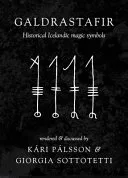
Galdrastafir
 82
82

Galdrastafir
Kári Pálsson and Giorgia Sottotetti's Galdrastafir offers a much-needed scholarly survey of Icelandic magical staves, moving beyond sensationalism to present a grounded analysis. The cataloguing of individual staves is thorough, providing clear illustrations and descriptions of their alleged functions. The text's strength lies in its contextualization within broader European occult currents, particularly the grimoire tradition, while still highlighting the unique Icelandic character. A minor limitation is the occasional density of the prose, which requires focused attention from the reader. The section detailing the stave for 'finding lost things' offers a particularly clear example of how these symbols were intended for practical, everyday application, bridging the gap between the mundane and the magical. This work is an essential reference for serious students of historical European magic.
📝 Description
82
Kári Pálsson and Giorgia Sottotetti's Galdrastafir details Icelandic magical staves from 17th and 18th-century manuscripts.
This book meticulously catalogues Icelandic magical staves, a distinct system of sigils and symbols tied to the island's folklore and early modern European occultism. The authors examine the forms of these staves, their stated functions, and the historical circumstances of their creation. Beyond simple listing, the work analyzes how these staves were constructed and used in various magical applications.
The volume targets serious practitioners and scholars of Western esotericism, especially those focused on folk magic, runology, and comparative occult studies. It will interest readers keen to understand the unique magical systems that developed in Iceland, a region both isolated and connected to broader European currents. Individuals engaged in reconstructing historical magical practices or those looking to incorporate unusual sigil systems into their own work will find considerable material here.
The staves detailed in Galdrastafir emerge from manuscripts dating to the 17th and 18th centuries, a time of significant occult activity across Europe. Iceland's relative isolation allowed its folk magical traditions to persist and develop uniquely, often sharing conceptual ground with European grimoire traditions and sigil magic influenced by figures like Johannes Trithemius. These staves represent a specific manifestation of magical intent, condensed into symbolic configurations for purposes ranging from protection and healing to influencing weather or compelling action.
💡 Why Read This Book?
• Gain an understanding of a unique sigil system: Learn about the specific construction and application of Icelandic Galdrastafir, as detailed in the manuscript cataloguing, offering insights unavailable in general European grimoires. • Explore historical folk magic practices: Discover the practical uses of these staves, such as the 'stave for finding lost things' mentioned in the text, providing concrete examples of their integration into daily life in 17th-century Iceland. • Understand cross-cultural occult influences: See how Icelandic magic, as presented in the work, relates to broader European occult traditions and sigil magic, clarifying its place within the history of Western esotericism.
⭐ Reader Reviews
Honest opinions from readers who have explored this book.
❓ Frequently Asked Questions
What is the historical origin of Galdrastafir?
Galdrastafir, or magical staves, primarily originate from Icelandic manuscripts dating from the 17th and 18th centuries, reflecting a unique blend of Norse folk magic and European occult influences prevalent during that era.
Are Galdrastafir similar to runes?
While both are symbolic systems from Norse traditions, Galdrastafir are distinct from runes. Runes are typically alphabetic characters with divinatory and magical associations, whereas Galdrastafir are complex sigils often designed for specific magical purposes, as catalogued in the book.
What kind of magic do these staves represent?
The staves cover a wide range of magical intent, from protective charms and healing remedies to methods for influencing weather, finding lost items, or compelling others, as explored in the book's detailed descriptions.
Who were the primary authors or collectors of these staves?
The work by Pálsson and Sottotetti compiles staves from various historical manuscripts, often attributed to anonymous practitioners or collected by scholars documenting Icelandic folklore and magic.
Is Galdrastafir still practiced today?
While the original manuscript traditions date primarily to the 17th and 18th centuries, contemporary practitioners of Western esotericism and neo-paganism engage with Galdrastafir, adapting them for modern magical work.
Where can I find examples of Galdrastafir?
The primary source for a comprehensive collection and analysis of Galdrastafir is the book itself, which meticulously illustrates and explains numerous examples from historical Icelandic sources.
🔮 Key Themes & Symbolism
Sigil Craft and Intent
The work emphasizes Galdrastafir as a sophisticated form of sigil magic, where complex visual symbols are meticulously crafted to embody specific magical intentions. Each stave is not merely an image but a codified instruction or a condensed magical formula. The book details how the form, composition, and sometimes even the inscription method contribute to the stave's efficacy, drawing parallels to the principles of symbolic representation found in European grimoire traditions and the theoretical underpinnings of sigil creation.
Icelandic Folk Magic Traditions
Galdrastafir offers a window into the unique magical range of Iceland, particularly as documented in manuscripts from the 17th and 18th centuries. It highlights practices that, while influenced by broader European occultism, retained distinctly local characteristics and applications. The book explores how these staves were integrated into the daily lives of Icelanders for protection against supernatural threats, for healing, and for practical needs, demonstrating a persistent folk magical worldview.
Historical Manuscript Compilations
A significant aspect of the book is its scholarly approach to historical manuscripts containing Galdrastafir. It presents these staves not as isolated curiosities but as part of a documented tradition, analyzing the variations found across different sources. The work discusses the provenance of these texts, the scribes, and the social context in which such magical texts were produced and circulated, contributing to our understanding of occult manuscript culture.
Symbolic Language and Efficacy
The book looks at the symbolic language inherent in Galdrastafir, examining how specific lines, curves, and intersections are understood to represent particular forces or achieve defined outcomes. It discusses the concept that the visual structure of a stave directly correlates with its magical function, a principle that informed much of early modern magical practice. This exploration bridges the gap between esoteric theory and practical application, showing how abstract concepts were given concrete, visual form.
💬 Memorable Quotes
Direct passages from the work, attributed to the author.
“The stave for warding off evil spirits, for example, often incorporates protective geometric forms.”
— This highlights the practical, protective function of many Galdrastafir, suggesting that their design was not arbitrary but carefully considered to create a magical barrier against perceived threats.
“Manuscripts from the 17th century reveal a systematic approach to cataloguing and employing these symbols.”
— This points to the organized nature of magical knowledge transmission during that period, indicating that the use of Galdrastafir was part of a structured system rather than purely ad-hoc spellcasting.
“The concept of 'sending' a stave, or projecting its influence, is key to its operation.”
— This interpretation suggests that the efficacy of these staves relied not just on their static form but on an active magical process of directing their power towards a specific target or outcome.
“Many staves were intended for personal use, to be carried or displayed for immediate benefit.”
— This underscores the personal and often immediate nature of folk magic, showing how Galdrastafir were tools for everyday life, designed to provide tangible results for the individual practitioner.
“The visual grammar of the staves shares commonalities with other European sigil traditions.”
— This observation places Icelandic Galdrastafir within a broader historical context of Western esoteric symbolism, suggesting shared underlying principles in the creation and application of magical signs across different cultures.
🌙 Esoteric Significance
Tradition
Galdrastafir primarily fits within the Western Esoteric tradition, specifically folk magic and grimoire studies, with strong roots in Norse cultural heritage. It represents a localized evolution of sigil magic, a practice found across various esoteric lineages including Hermeticism and ceremonial magic. Unlike more formalized systems, Icelandic staves often exhibit a blend of pre-Christian Norse beliefs, early Christian influences, and adaptations from continental European magical texts circulating during the early modern period.
Symbolism
Key symbols include geometric figures like circles, triangles, and crosses, often combined with runic-like elements or abstract linear designs. For instance, the stave 'Ægishjálmur' (Helm of Awe) is a potent symbol of protection and psychological defense, often depicted as a complex interlaced cross. Another common motif involves creating wards or binding symbols, where lines are intricately woven to contain or direct magical energy, reflecting a deep understanding of symbolic potency and containment.
Modern Relevance
Contemporary practitioners of neo-paganism, witchcraft, and various forms of modern occultism draw upon Galdrastafir for their unique aesthetic and efficacy. Thinkers and artists exploring symbolic systems and historical magical practices often reference these Icelandic staves. They are incorporated into personal sigil work, talismans, and meditative practices by those seeking to connect with ancestral magic or explore non-European forms of symbolic technology.
👥 Who Should Read This Book
• Students of comparative magic systems: Individuals interested in how magical traditions diverge and converge across cultures will find the unique Icelandic context valuable. • Practitioners of sigil magic: Those who work with sigils will gain insights into a distinct historical approach to symbolic creation and intent. • Researchers of early modern European esotericism: Scholars seeking to understand the breadth of occult practices beyond mainstream grimoires will find this a crucial primary source compilation.
📜 Historical Context
The late 17th and early 18th centuries, the primary period for the surviving Galdrastafir manuscripts, were a complex era for European occultism. While the Enlightenment's rationalism was gaining momentum, older traditions of magic, alchemy, and astrology continued to thrive, often in syncretic forms. Iceland, though geographically remote, was not entirely insulated from these currents. The staves documented in this work share conceptual ground with the sigil magic found in European grimoires, particularly those influenced by figures like Johannes Trithemius. However, Galdrastafir possess a distinct visual and functional character, rooted in Norse folklore and unique Icelandic cultural developments. This period also saw intense witch trials across Europe, leading some scholars to suggest that the increased documentation of folk magic might have been partly a response to or a preservation effort amidst societal pressures, though specific reception events for Icelandic staves remain sparsely documented.
📔 Journal Prompts
The concept of the 'Helm of Awe' (Ægishjálmur) and its protective intent.
Reflect on the practical applications of Galdrastafir as documented in the 17th-century manuscripts.
Consider the symbolic language of the staves: how do lines and shapes convey meaning?
Analyze the relationship between Galdrastafir and broader European sigil traditions.
How might a stave for 'finding lost things' be constructed and activated?
🗂️ Glossary
Galdrastafir
Icelandic term for magical staves or sigils, typically inscribed on objects or parchment for various magical purposes, originating from early modern manuscripts.
Sigil
A magical symbol, often abstract or stylized, created to represent a specific intent or to invoke a particular force, widely used in various esoteric traditions.
Ægishjálmur
A specific type of Icelandic magical stave, often translated as 'Helm of Awe,' primarily used for protection and psychological defense, characterized by its intricate, cross-like design.
Grimoire
A textbook of magic or early modern occultism, containing instructions on how to create magical tools, perform rituals, and invoke spirits or forces.
Folk Magic
Magical practices and beliefs that are part of the traditional knowledge of a community or culture, often passed down orally or through informal texts.
Talisman
An object believed to possess magical properties, often inscribed with symbols or sigils, intended to provide protection, luck, or other benefits.
Scribal Tradition
Refers to the practice of copying and transmitting texts, particularly in manuscript form, highlighting the role of scribes in preserving and disseminating knowledge, including magical lore.