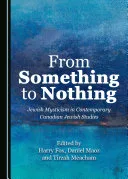
From Something to Nothing
 83
83

From Something to Nothing
Harry Fox, Daniel Maoz, and Tirzah Meacham’s "From Something to Nothing" attempts a difficult feat: to render the abstruse language of Jewish mysticism comprehensible to the uninitiated. The strength of the book lies in its direct confrontation with the paradox of God as 'nothing.' By systematically unpacking terms that often act as barriers, the authors succeed in illuminating the philosophical underpinnings of divine incorporeality. A particularly effective passage details how negation, rather than affirmation, becomes a primary tool for approaching the *Ein Sof*. However, the book sometimes struggles to maintain its accessible tone, occasionally lapsing into jargon that may still challenge a complete novice. While the intention is laudable, the execution, though competent, doesn't entirely erase the inherent difficulty of the subject matter. It is a valuable primer for those willing to engage with its specific vocabulary.
📝 Description
83
Harry Fox, Daniel Maoz, and Tirzah Meacham's 2023 book examines God as 'no-thing' in Jewish mysticism.
This work investigates how Jewish mystical traditions conceive of God not as a defined entity, but as an absence or 'nothingness.' This perspective arises from Judaism's long-standing theological stance on God's incorporeality. The authors aim to clarify this complex idea, making its philosophical underpinnings understandable to those new to Kabbalah or who find scholarly texts difficult. It is designed for readers interested in comparative theology, religious philosophy, and esoteric thought, particularly those seeking an accessible introduction to how a major monotheistic religion discusses the divine in abstract, non-anthropomorphic terms.
Scholars new to Kabbalistic concepts will also find this book useful for its clear explanation of key ideas. The book connects these mystical concepts to historical Jewish thought, such as the medieval German and Spanish schools of Kabbalah and later developments like Lurianic Kabbalah. It addresses the concept of Ein Sof, the Infinite, and the idea that the divine reality is beyond human grasp and often described by what it is not.
Jewish mysticism, or Kabbalah, has a history stretching from early texts like the Sefer Yetzirah to the Zohar and the teachings of Isaac Luria. This tradition grapples with understanding God's nature, especially God's infinite and unknowable essence. 'From Something to Nothing' situates itself within this lineage by focusing on the paradox of describing the divine through negation, a method used to approach the concept of Ein Sof, the limitless divine source from which all existence emanates. It engages with how this tradition uses negative theology to point towards a reality beyond human conceptualization.
💡 Why Read This Book?
• Understand the Kabbalistic concept of *Ein Sof*, the Infinite, and how Jewish mysticism uses negation to describe a reality beyond all form, a perspective distinct from many Western theological traditions. This exploration is grounded in the book's analysis of divine incorporeality. • Gain clarity on the philosophical language surrounding God as 'nothing,' differentiating it from nihilism or atheism, and appreciating it as a sophisticated theological approach to the ineffable, a core idea presented by the authors. • Discover how the esoteric tradition of Jewish mysticism grapples with describing the divine through paradox and negation, offering a unique lens for contemplating ultimate reality, a central theme explored in the book's 2019 publication.
⭐ Reader Reviews
Honest opinions from readers who have explored this book.
❓ Frequently Asked Questions
What is the central argument of "From Something to Nothing" regarding God in Jewish mysticism?
The book argues that Jewish mysticism, particularly Kabbalah, approaches God as 'no-thing' or 'nothing.' This is not an assertion of absence but a reflection of God's incorporeal and transcendent nature, existing beyond all definable forms.
Is "From Something to Nothing" suitable for absolute beginners in mysticism?
Yes, the book is specifically designed to break down technical philosophical language in Jewish mysticism, making its complex ideas accessible to beginners who might otherwise be deterred by dense academic texts.
What does the concept of 'God as nothing' signify in Jewish mysticism?
In this context, 'nothing' refers to God's absolute transcendence and incorporeality. It signifies a divine reality that is beyond all created forms, concepts, and human comprehension, often described through negation rather than positive attributes.
When was "From Something to Nothing" first published?
The book "From Something to Nothing" by Harry Fox, Daniel Maoz, and Tirzah Meacham was first published on May 24, 2019.
What is the significance of incorporeality in relation to God in Judaism?
Judaism traditionally identifies God as incorporeal, meaning God has no physical body or form. This concept is fundamental to Jewish theology and is a key point of departure for mystical interpretations, which explore its implications further.
Does the book discuss the Kabbalah?
Yes, the book's exploration of God as 'no-thing' is deeply rooted in Kabbalistic thought. It breaks down the technical language associated with various expressions of Jewish mysticism, including Kabbalah.
🔮 Key Themes & Symbolism
Divine Incorporeality
The book fundamentally addresses the Jewish theological tenet that God is incorporeal, lacking any physical form. It explores how this attribute shapes mystical thought, moving beyond anthropomorphic conceptions of the divine. The authors demonstrate that this incorporeality is not merely an absence of body but a profound statement about God's transcendent nature. The exploration of God as 'nothing' serves as a direct consequence of this incorporeality, suggesting that the ultimate divine reality lies beyond all perceivable or definable characteristics within the created world.
The 'No-Thing' Paradox
Central to the work is the paradoxical concept of God as 'no-thing.' This is meticulously unpacked to show it doesn't imply non-existence but rather an existence that transcends all categories of being. The authors explain how this approach is a sophisticated method within Jewish mysticism to articulate the ineffable. By defining God through negation—what God is not—mystics aim to approach an understanding of a reality so absolute that it eludes all positive description. This method challenges conventional notions of divinity and being.
Accessible Mystical Language
A primary goal of "From Something to Nothing" is to bridge the gap between complex esoteric terminology and the general reader. The book dedicates significant effort to breaking down the specialized philosophical and mystical language often found in Kabbalistic texts. By clarifying terms and concepts, the authors aim to democratize access to these profound spiritual ideas, allowing individuals without prior academic or esoteric training to engage meaningfully with the subject matter and its implications.
Approaching the Ineffable
The work examines how Jewish mysticism employs specific techniques, particularly negation and paradox, to grapple with the divine essence, which is considered ineffable. The authors illustrate that the mystical path often involves contemplating what God is not, as a means to approach a deeper, albeit incomplete, understanding. This method highlights the limitations of human intellect and language when confronting ultimate reality, guiding the reader toward a contemplative stance rather than a purely intellectual one.
💬 Memorable Quotes
Direct passages from the work, attributed to the author.
“Jewish mysticism approaches God as no-thing or nothing, reflecting Judaism’s traditional identification of God as incorporeal.”
— This foundational statement captures the book's core thesis. It links the mystical conception of God's ultimate nature to a long-standing theological principle within Judaism, setting the stage for an exploration of how abstract philosophical language attempts to articulate the divine.
“Technical philosophical language often employed to discuss Jewish mysticism has a tendency to ward off otherwise interested readers.”
— This observation underscores the authors' motivation for writing the book. It acknowledges a common barrier for newcomers to esoteric studies and highlights their aim to provide a more accessible entry point into complex theological discussions.
“What is not ra”
— This is a fragment from the original blurb, likely implying 'what is not revealed' or 'what is not knowable.' It suggests that a part of the divine mystery is only approachable through understanding its unknowable aspects, a common theme in mystical traditions.
💡 Key Ideas
Editorial paraphrase of the work's core concepts — not direct quotes.
This study sufficiently breaks down the technical language of Jewish mysticism in its various expressions to allow a beginner to benefit.
This is an interpretive paraphrase of the book's stated goal. It emphasizes the practical pedagogical approach taken by the authors, promising to equip beginners with the necessary tools to engage with and derive benefit from esoteric Jewish thought.
The work explores the concept of divine incorporeality.
This is a paraphrase of a core theme. It signifies the book's focus on understanding God not as a physical being, but as a transcendent, formless reality, a concept central to both traditional Jewish theology and its mystical interpretations.
🌙 Esoteric Significance
Tradition
This work is firmly rooted in the Kabbalistic tradition, a major stream of Jewish mysticism. It specifically engages with the concept of *Ein Sof* (the Infinite) and divine emanation, which are central to understanding the Kabbalistic worldview. It departs from more literal or anthropomorphic interpretations of divinity by focusing on the negative theology and paradoxical language used to describe God's ultimate nature, aligning with a mystical path that emphasizes transcendence and the ineffable.
Symbolism
While the book's blurb emphasizes conceptual language over visual symbols, the concept of 'nothing' or 'no-thing' itself functions as a potent symbolic representation of the divine. It symbolizes ultimate transcendence, the unmanifest source from which all manifest reality emanates, and the limits of human comprehension. The paradox inherent in 'nothing' represents the unknowable divine essence, a motif present in many mystical traditions that seek to describe the indescribable.
Modern Relevance
Contemporary thinkers and practitioners interested in comparative mysticism, negative theology, and non-dualistic philosophies may find this work relevant. It offers a Jewish perspective on concepts of ultimate reality that resonate with modern inquiries into consciousness, metaphysics, and the limitations of language in describing profound experiences. Its accessible approach could inform contemporary spiritual seekers and scholars looking to understand diverse theological frameworks beyond Western philosophical norms.
👥 Who Should Read This Book
• Beginning students of Kabbalah and Jewish mysticism who find traditional academic texts daunting, seeking a clear introduction to core theological concepts like divine incorporeality. • Readers of comparative religion and philosophy interested in non-Western conceptions of God, particularly how monotheistic traditions grapple with the ineffable and transcendent divine. • Individuals exploring esoteric traditions who wish to understand the specific approach of Jewish mysticism, characterized by its use of paradox and negation to describe ultimate reality.
📜 Historical Context
Published in 2019, "From Something to Nothing" enters a field of Jewish mystical studies that has evolved significantly since the foundational translations and interpretations of Kabbalistic texts in the late 19th and early 20th centuries, notably by scholars like Gershom Scholem. Scholem's work, while monumental, often presented Kabbalah through a dense academic lens. This book appears to address a similar need for clarity that emerged in the wake of such scholarship. While not directly engaging with contemporary scholars in its blurb, its focus on making abstract Kabbalistic concepts accessible implicitly situates it within a pedagogical tradition aiming to democratize esoteric knowledge. It engages with concepts like *Ein Sof* and divine emanation, which have been subjects of debate and study across different schools of Jewish thought and comparative mysticism for centuries, contrasting with more anthropomorphic or philosophical conceptions of God found in other religious or philosophical traditions.
📔 Journal Prompts
The concept of divine incorporeality and its representation as 'nothing' requires careful consideration.
Reflecting on the paradoxical nature of describing God through negation, as explored in the book.
Consider how the technical language of mysticism acts as both a barrier and a gateway to understanding.
The challenge of approaching the ineffable: how does the book's approach differ from other traditions?
Meditating on the idea that God is 'no-thing' – what personal associations or understandings arise?
🗂️ Glossary
Incorporeal
Lacking a physical body or form. In theological contexts, it refers to a divine being that is spiritual, immaterial, and beyond physical manifestation.
No-thing/Nothing
In Jewish mysticism, this term does not signify absence or void but rather the ultimate, transcendent reality of God that is beyond all definable forms, concepts, and categories of existence.
Ein Sof
A Hebrew term in Kabbalah meaning 'Without End' or 'Infinite.' It refers to God in God's absolute, unknowable essence, prior to any divine emanation or manifestation.
Kabbalah
The esoteric system of Jewish mysticism, concerned with the nature of God, the creation of the universe, and the spiritual purpose of human existence. It involves complex theological doctrines and contemplative practices.
Negation
In theology and mysticism, the use of negative statements (e.g., 'God is not X') to describe the divine, acknowledging that positive attributes are inadequate to capture God's true essence.
Emanation
In mystical cosmology, the concept that the divine reality unfolds or emanates into the created universe through a series of stages or divine powers, as opposed to direct creation.
Ineffable
Too great or extreme to be expressed or described in words. Refers to a divine reality or experience that transcends linguistic and conceptual limitations.