Freemasonry And The Anti-Christian Movement - Rev. Edward Cahill

 75
75

Freemasonry And The Anti-Christian Movement - Rev. Edward Cahill

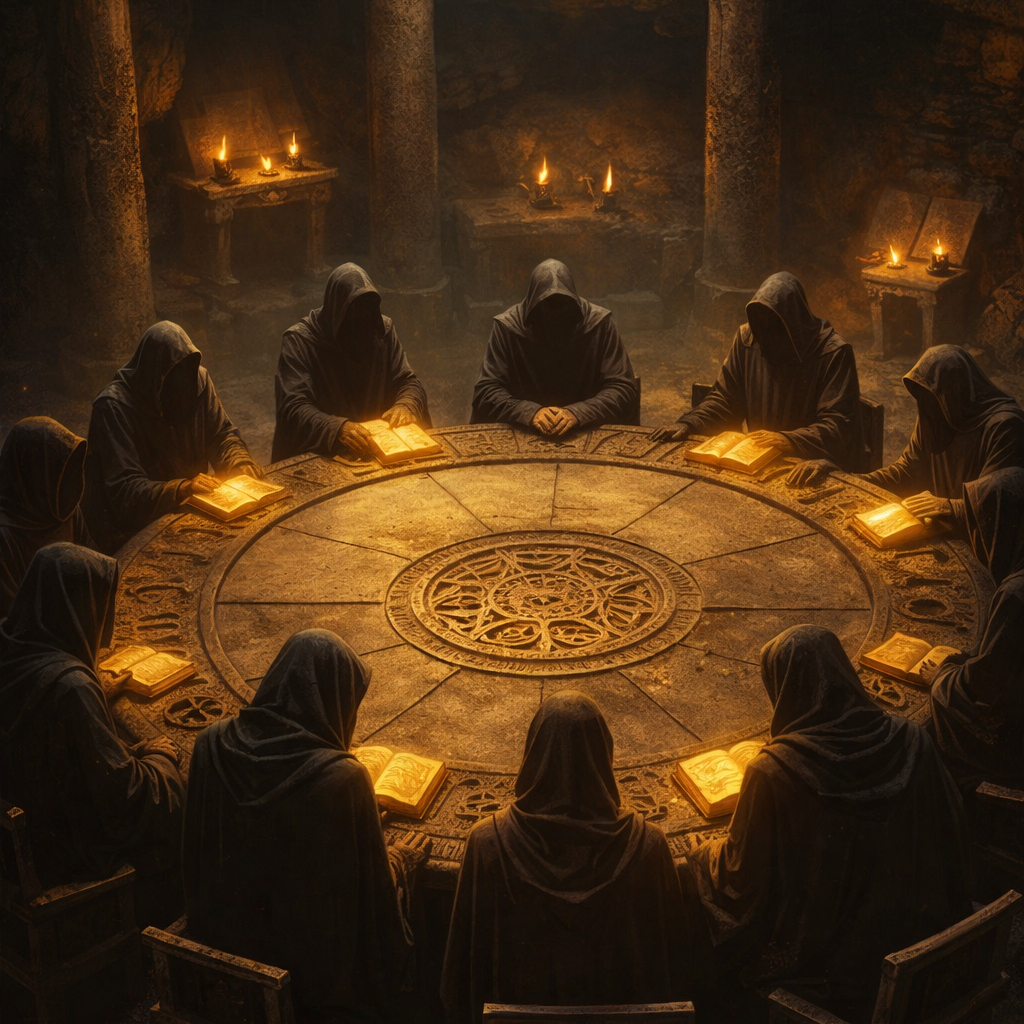

Rev. Edward Cahill's Freemasonry and the Anti-Christian Movement is a landmark text for serious students of esotericism and ecclesiastical history. Cahill offers a rigorous, albeit polemical, examination of Masonic influence, presenting a compelling case for its perceived opposition to Christian tradition. His ability to connect historical events with underlying philosophical and spiritual currents is remarkable. For readers seeking to understand the historical roots of anti-clerical movements and the esoteric critique of secular power structures, this book is indispensable. It challenges conventional narratives and invites contemplation on the enduring spiritual battles that shape our world. A must-read for scholars and seekers of hidden lore.
📝 Description
75
Rev. Edward Cahill published Freemasonry and the Anti-Christian Movement in 1930, arguing Freemasonry fueled an anti-Christian agenda.
In his 1930 book, Rev. Edward Cahill presents a detailed critique of Freemasonry, positing it as a significant force behind an anti-Christian movement. He examines the organization's structure, rituals, and symbolism, asserting they are designed to undermine Christian faith and institutions. Cahill draws connections between Masonic lodges and various historical events and political shifts, suggesting a deliberate, long-term strategy to erode Christian influence in society.
The author's analysis focuses on what he perceives as the esoteric nature of Masonic teachings and their supposed conflict with Christian doctrine. He scrutinizes Masonic oaths, degrees, and allegorical narratives, interpreting them as expressions of a philosophy antithetical to Christianity. This work is intended for readers interested in historical analyses of religious conflict and the societal impact of secret societies.
Rev. Edward Cahill's work situates itself within a tradition of religious critique directed at secret societies, particularly Freemasonry. This genre often interprets the rituals and symbolism of such groups through a theological lens, seeking to expose perceived heterodox or even occult elements. Cahill's approach aligns with historical anti-Masonic literature that views Masonic teachings as a rival or opposing spiritual system, often contrasting its alleged naturalism or humanism with perceived Christian supernaturalism and divine authority. The book engages with the idea that hidden knowledge and symbolic language within secret orders carry significant, often subversive, power.
💡 Why Read This Book?
Uncover the alleged esoteric machinations behind historical shifts and societal trends. This book is essential for those seeking a deeper understanding of anti-Christian movements and their perceived infiltration of societal structures. Ideal for scholars, traditionalists, and seekers of hidden knowledge who wish to engage with provocative historical analysis and spiritual critique.
⭐ Reader Reviews
Honest opinions from readers who have explored this book.
❓ Frequently Asked Questions
What is the central thesis of Rev. Edward Cahill's book?
The central thesis posits that Freemasonry represents an organized, anti-Christian movement actively working to undermine Christian faith and institutions through clandestine means and the subversion of traditional values.
What kind of historical evidence does Cahill present?
Cahill draws upon historical documents, papal encyclicals, writings attributed to Freemasons, and his interpretation of Masonic symbolism to support his arguments.
Is this book considered an objective historical account?
No, the book is written from a strongly anti-Masonic and traditional Catholic perspective. It presents a polemical argument rather than a neutral historical analysis.
Who is the intended audience for this book?
The intended audience includes traditional Catholics, anti-Masonic scholars, historians of secret societies, and individuals interested in the historical and philosophical critiques of Freemasonry.
Does the book discuss specific Masonic rituals or degrees?
While not a detailed exposé of every ritual, Cahill analyzes the symbolic meanings and alleged anti-Christian implications he perceives within various Masonic teachings and degrees.
🔮 Key Themes & Symbolism
The Esoteric Nature of Anti-Christianity
This theme explores the concept of an underlying, often hidden, opposition to Christian doctrine and practice. Cahill argues that Freemasonry, through its symbolic language and philosophical underpinnings, embodies a form of esoteric anti-Christianity, seeking to replace divine truth with secular or occult doctrines. The book looks at how this opposition manifests not merely through overt rejection, but through subtle infiltration, reinterpretation of sacred symbols, and the promotion of ideologies that erode Christian foundations.
Symbolism as a Vehicle for Influence
Cahill meticulously examines Masonic symbolism, positing that it serves as a potent tool for conveying a worldview antithetical to Christianity. He dissects key symbols, attributing to them meanings that he argues are designed to obscure divine truth and promote a naturalistic or Gnostic perspective. This theme highlights how esoteric societies allegedly use a hidden language to shape perception and subtly influence adherents and society at large, drawing parallels to ancient mystery traditions.
The Unseen Hand in Political and Religious History
This theme focuses on the alleged clandestine influence of Freemasonry on major historical events and the erosion of religious authority. Cahill presents a narrative of secret societies as a pervasive force working behind the scenes to dismantle traditional social orders, challenge ecclesiastical power, and promote secularism. It explores the idea of a 'contra-revolution' against divine providence, orchestrated through hidden networks and strategic manipulation.
💬 Memorable Quotes
Direct passages from the work, attributed to the author.
“Symbolism is the language of the initiated.”
— This highlights Cahill's belief that esoteric societies use symbols not just for decoration, but as a sophisticated communication system carrying veiled meanings antithetical to Christian truth.
“Tradition is the anchor of truth.”
— This reflects the traditionalist stance of the author, suggesting that deviation from established religious and societal traditions is a sign of decline and opens the door to subversive influences.
“The altar of reason has replaced the altar of God.”
— This poignant quote illustrates Cahill's view that secularism and rationalism, often promoted by secret societies, are presented as superior to faith, leading to a spiritual void.
“The serpent coils around the Tree of Knowledge.”
— A symbolic representation of the insidious nature of the perceived anti-Christian movement, suggesting it corrupts even the pursuit of knowledge, twisting it away from divine wisdom.
💡 Key Ideas
Editorial paraphrase of the work's core concepts — not direct quotes.
The enemy works in darkness.
This quote captures the book's core argument that anti-Christian forces, particularly Freemasonry, operate through clandestine means and hidden agendas, making their influence difficult to detect but potent.
🌙 Esoteric Significance
Tradition
This work is deeply rooted in the tradition of Catholic apologetics and anti-Masonic literature, drawing heavily on papal condemnations and the perceived spiritual warfare against Christian doctrine. It aligns with a broader stream of traditionalist thought that views history as a cosmic struggle between divine order and adversarial forces, often personified by secret societies.
Symbolism
Cahill's analysis focuses on interpreting Masonic symbols through a lens of spiritual opposition. He dissects elements like the compass and square, the all-seeing eye, and geometric forms, assigning them meanings that he argues are contrary to Christian theology, often linking them to Gnosticism, Kabbalah, or occult philosophies that he believes reject divine revelation.
Modern Relevance
In an age where discussions of hidden power structures, conspiracy theories, and the influence of non-governmental organizations are prevalent, Cahill's work, though controversial, offers a historical framework for understanding such concerns. It prompts reflection on the nature of belief, the power of symbolism, and the ongoing dialogue between faith and secularism in contemporary society.
👥 Who Should Read This Book
Scholars of religious history, particularly those focused on Catholic anti-Masonic literature, will find this an essential primary source. Seekers of esoteric knowledge interested in historical critiques of secret societies and their perceived influence will find provocative material. Practitioners of traditionalist philosophies may find resonance with Cahill's arguments concerning the preservation of faith. While not recommended for beginners unfamiliar with the historical context or the author's strong polemical stance, those with a dedicated interest in these subjects will find a challenging and thought-provoking read.
📜 Historical Context
Written in the early 20th century, Rev. Edward Cahill's work emerged during a period of significant societal upheaval and intellectual ferment. The aftermath of World War I, the rise of secular ideologies, and ongoing debates about the role of religion in public life provided fertile ground for critiques of powerful, often secretive, organizations. This era saw a resurgence of interest in traditionalist thought and a deep suspicion of forces perceived to be undermining established religious and moral orders. Cahill's book is a product of this milieu, reflecting the anxieties of many within the Catholic Church regarding the perceived encroachment of Freemasonry and other 'modernist' influences on faith and society. It stands as a proof of the intense spiritual and philosophical battles of the time.
📔 Journal Prompts
How does Cahill's interpretation of Masonic symbolism differ from other esoteric traditions?
What historical events does Cahill link to Masonic influence, and how convincing is his evidence?
In what ways does the concept of 'anti-Christian movement' manifest beyond overt religious opposition?
How does the author's traditional Catholic perspective shape his critique of Freemasonry?
Consider a modern-day 'hidden influence' and analyze its potential symbolic language and impact on society.
🗂️ Glossary
Esotericism
The practice of religious or spiritual disciplines in private, often involving hidden knowledge, mystical insights, and symbolic interpretation intended for a select group of initiates.
Antimaçonaria
A movement or stance opposing Freemasonry, often based on religious, political, or social objections to its practices, secrecy, and alleged aims.
Traditionalism
A philosophical and religious viewpoint emphasizing the importance of enduring truths, divine revelation, and established customs, often contrasted with modern or secular ideologies.
Contra-Revolução
A movement or ideology that seeks to reverse or oppose a revolution, often aiming to restore a previous political or social order, particularly one perceived as divinely ordained or historically legitimate.
Gnosticism
A complex set of religious and philosophical ideas that emerged in the early Christian era, emphasizing spiritual knowledge (gnosis) as the means of salvation, often viewing the material world as inherently flawed or evil.
This book appears in 2 collections
🔮 Readers Also Liked
Browse all →




From the “Secret Societies” Collection
View all →





More Free Freemasonry & Secret Societies Books
View all →



![Gould R F History Of Freemasonry Throughout The World V 3 [ 1936 Ed][ 361p]](/img/thumb/gould-r-f-history-of-freemasonry-throughout-the-world-v-3-1936-ed-361p.webp)