Freemasonry

 74
74

Freemasonry
Giles Morgan’s *Freemasonry* offers a refreshing departure from sensationalist accounts, grounding its exploration in historical and philosophical inquiry. The author’s strength lies in his meticulous tracing of symbolic lineages, particularly how concepts from Hermeticism and Pythagoreanism appear to inform early Masonic ritual. One passage that particularly stands out is the detailed breakdown of the symbolism associated with the tracing boards, revealing layers of meaning often overlooked. However, the book's academic tone, while a virtue for some, might prove dense for readers new to esoteric studies. It sometimes assumes a prior familiarity with certain philosophical schools, which could be a barrier. Despite this, Morgan presents a compelling argument for Freemasonry as a coherent system of moral and spiritual instruction rooted in ancient wisdom traditions. It’s a valuable resource for those who approach the subject with genuine academic curiosity.
📝 Description
74
Giles Morgan's Freemasonry traces the order's philosophical underpinnings and symbolic language.
Giles Morgan's book examines the historical development and philosophical ideas behind the fraternal order of Freemasonry. It goes beyond simple descriptions to look at the symbolic language and esoteric traditions that have shaped Masonic ritual and beliefs from the beginning. Morgan investigates the historical ideas that influenced its creation, drawing links to older mystical and philosophical systems. The work places Freemasonry within the intellectual context of the Enlightenment and earlier periods, noting its appearance during a time of considerable change in society and philosophy, when ideas about reason, nature, and divine order were being reconsidered. Morgan follows the influences from operative stonemasonry groups to the speculative lodges that started forming in the late 17th and early 18th centuries. Morgan's analysis concentrates on several central ideas that characterize Masonic thought. These include looking at sacred geometry as a way to understand the cosmos, the importance of allegorical stories in rituals, and the quest for moral and spiritual understanding through structured degrees. The book also discusses the concept of the 'Great Architect of the Universe' and how it has been interpreted from various philosophical viewpoints.
This study situates Freemasonry within the broader currents of Western esotericism, connecting its speculative developments to earlier mystical traditions and philosophical inquiries. It acknowledges the order's emergence alongside shifts in Enlightenment thought, where concepts of natural law, divine order, and human reason were being re-examined. The book traces the lineage of ideas that informed its formation, linking it to older systems that sought to understand the cosmos and human potential through symbolic and allegorical means.
💡 Why Read This Book?
• You will gain a structured understanding of Freemasonry’s esoteric roots, learning how concepts from Hermeticism influenced its early development, offering insights distinct from general historical overviews. • You will learn to interpret Masonic symbolism by examining specific motifs like the Square and Compasses, understanding their allegorical significance beyond their common usage. • You will grasp the philosophical framework underpinning Masonic degrees, recognizing its connection to Enlightenment thought and the pursuit of self-improvement through ritual.
⭐ Reader Reviews
Honest opinions from readers who have explored this book.
❓ Frequently Asked Questions
When was Freemasonry first established as a speculative fraternity?
While operative stonemasonry guilds existed for centuries, speculative Freemasonry began to coalesce in the late 17th and early 18th centuries, with the formation of the first Grand Lodge in London in 1717 marking a significant organizational step.
What is the primary philosophical influence on Freemasonry discussed in the book?
The book explores multiple influences, but a significant emphasis is placed on Hermeticism and Pythagoreanism, particularly concerning their impact on Masonic cosmology, geometry, and the pursuit of wisdom.
Does Giles Morgan's book cover modern Masonic practices?
While Morgan grounds his analysis in the historical and philosophical origins, his work provides a foundational understanding that is crucial for comprehending contemporary Masonic practices and their symbolic continuity.
What does the book say about the 'Great Architect of the Universe'?
The work examines the concept of the Great Architect of the Universe not as a specific deity, but as a symbolic representation of a supreme creative principle, allowing for diverse interpretations across different members' beliefs.
Is this book suitable for someone entirely new to esoteric studies?
While informative, the book adopts a scholarly tone and assumes some familiarity with philosophical and esoteric concepts. Beginners might find it beneficial to consult introductory texts on Hermeticism or Western esotericism alongside it.
What historical period is most emphasized in the analysis of Freemasonry's origins?
The book places significant emphasis on the period spanning the late 17th century through the 18th century, a critical era for the transition from operative guilds to the speculative fraternity and the development of its core rituals.
🔮 Key Themes & Symbolism
Symbolic Language
Morgan's work unpacks the rich symbolic language embedded within Masonic ritual and architecture. It argues that symbols such as the rough and perfect ashlar, the tracing boards, and the tools of operative masonry are not mere decorations but vehicles for transmitting complex philosophical and moral lessons. The book examines how these symbols draw from ancient traditions, providing a framework for understanding the cosmos and the individual's place within it, moving beyond literal interpretations to a deeper esoteric meaning.
Hermetic and Pythagorean Roots
A central theme is the deep connection between Freemasonry and earlier esoteric traditions, particularly Hermeticism and Pythagorean philosophy. Morgan meticulously traces how concepts like the correspondence between microcosm and macrocosm, the importance of numbers and geometry in understanding divine order, and the pursuit of wisdom through self-discipline manifest within Masonic teachings. This exploration highlights Freemasonry as a continuation of a long-standing Western esoteric lineage.
Moral and Spiritual Development
The book emphasizes Freemasonry's role as a system for personal growth and spiritual enlightenment. It details how the progressive degrees within the fraternity are designed to guide the candidate through stages of moral refinement and intellectual understanding. The allegorical narratives and symbolic actions within rituals serve as tools for self-examination, fostering virtues like brotherly love, relief, and truth, and encouraging the pursuit of a higher understanding of existence.
The Enlightenment Context
Morgan situates the formalization of Freemasonry within the intellectual ferment of the Enlightenment. He explores how the era's emphasis on reason, natural law, and individual inquiry provided fertile ground for the development of a fraternal organization focused on moral philosophy and speculative thought. The book examines how Masonic principles aligned with, and sometimes challenged, the prevailing intellectual currents of the 18th century.
💬 Memorable Quotes
Direct passages from the work, attributed to the author.
“The tracing boards serve as visual aids, mapping out the symbolic range of Masonic teachings.”
— This highlights the pedagogical function of Masonic symbolism. These visual representations are not merely decorative but are essential tools for conveying complex philosophical and spiritual ideas to initiates.
“The pursuit of knowledge within the Craft mirrors the ancient Hermetic quest for understanding the divine order.”
— This interpretation links Masonic aims directly to the Hermetic tradition, suggesting that Freemasonry functions as a modern vehicle for age-old wisdom concerning the structure of reality and the divine.
“Operative masonry provided the practical framework upon which speculative philosophy would later build.”
— This points to the historical evolution of Freemasonry, indicating that its symbolic and philosophical dimensions emerged from the practical craft traditions of stonemasons.
“The degrees offer a structured path for moral and intellectual refinement.”
— This emphasizes the developmental aspect of Masonic practice, portraying the system as a progressive journey designed to cultivate ethical character and deeper understanding in its members.
“Geometry and number are presented as keys to unlocking the universe's underlying principles.”
— This underscores the Pythagorean influence, illustrating how the study of mathematical and spatial relationships is considered fundamental to comprehending the cosmic order in Masonic thought.
🌙 Esoteric Significance
Tradition
This work fits within the broad umbrella of Western Esotericism, specifically engaging with traditions that emphasize Hermeticism, Pythagoreanism, and Neoplatonism. It positions Freemasonry not as an isolated phenomenon, but as a modern manifestation of an ancient current of thought focused on cosmology, initiation, and the pursuit of gnosis. Morgan explores how Masonic symbolism and ritual serve as a vehicle for transmitting these esoteric principles, drawing parallels to other initiatory systems.
Symbolism
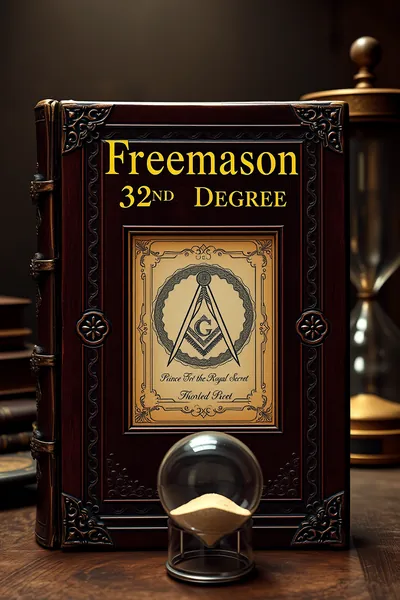
Key symbols explored include the Square and Compasses, representing the earthly and the divine or the material and spiritual planes, and the tracing boards, which act as visual maps of esoteric doctrine. The Rough and Perfect Ashlars are examined as symbols of the individual's transformation from a coarse, unrefined state to one of perfection through the application of Masonic principles and self-discipline.
Modern Relevance
Contemporary practitioners of Hermeticism, Kabbalah, and ceremonial magic often draw upon Masonic symbolism and philosophy, seeing it as a codified system of Western initiatory wisdom. Thinkers and groups interested in comparative religion and the history of secret societies also reference Masonic structures and allegories when exploring the evolution of spiritual and philosophical thought across cultures and centuries.
👥 Who Should Read This Book
• Students of Western Esotericism: Those studying Hermeticism, Kabbalah, or Rosicrucianism will find connections and continuities with Masonic philosophy and symbolism. • Comparative Religion Scholars: Researchers interested in the development of fraternal orders, initiatory societies, and the evolution of religious and philosophical thought will find valuable historical and conceptual material. • Masonic Investigators: Individuals seeking a serious, scholarly examination of Freemasonry's historical context and esoteric underpinnings, beyond popular myths, will benefit from its analytical approach.
📜 Historical Context
Giles Morgan's *Freemasonry* emerged in 2007, a period where academic interest in Western esotericism was gaining momentum, partly fueled by scholars like Nicholas Goodrick-Clarke. The book situates itself within this milieu, offering a scholarly counterpoint to more sensationalist or conspiracy-laden portrayals that often dominated popular perceptions of the fraternity. It engages with the historical trajectory of Freemasonry from its roots in operative guilds of stonemasons to the rise of speculative lodges in the early 18th century, particularly following the establishment of the premier Grand Lodge of England in 1717. Morgan implicitly contrasts his analytical approach with the more ritualistic or purely historical accounts prevalent at the time, aiming to illuminate the philosophical underpinnings. The work acknowledges a debt to earlier Masonic historians and esoteric researchers, implicitly placing itself in dialogue with figures who sought to understand the Order's deeper meanings.
📔 Journal Prompts
The Rough and Perfect Ashlar as symbols of personal transformation.
The function of tracing boards in Masonic pedagogy.
Connections between Pythagorean number theory and Masonic cosmology.
The concept of the Great Architect of the Universe across different interpretations.
Allegorical narratives within Masonic degrees and their moral implications.
🗂️ Glossary
Speculative Masonry
Refers to Freemasonry as practiced today, focusing on philosophical and moral teachings rather than the operative craft of building stone structures, which characterized earlier guilds.
Hermeticism
A religious, philosophical, and esoteric tradition based on writings attributed to Hermes Trismegistus, emphasizing the unity of all things and the pursuit of divine knowledge.
Pythagoreanism
An ancient Greek philosophical and religious movement attributed to Pythagoras, notable for its emphasis on mathematics, geometry, music, and the transmigration of souls.
Tracing Board
A symbolic representation, often painted or embroidered, used in Masonic lodges to illustrate the teachings and allegories associated with specific degrees.
Ashlar
In Freemasonry, refers to a stone, either rough or perfect, symbolizing the candidate's state of development and the work required for moral and spiritual improvement.
Great Architect of the Universe
A term used in Freemasonry to refer to a supreme creative deity or principle, interpreted diversely by members of different faiths.
Enlightenment
An 18th-century intellectual and cultural movement emphasizing reason, individualism, and skepticism towards traditional authority, significantly influencing the development of modern thought and institutions.
🔮 Readers Also Liked
Browse all →





More by Giles Morgan
All books →
More Free Freemasonry & Secret Societies Books
View all →