Esoteric Principles of Vedic Astrology
 81
81

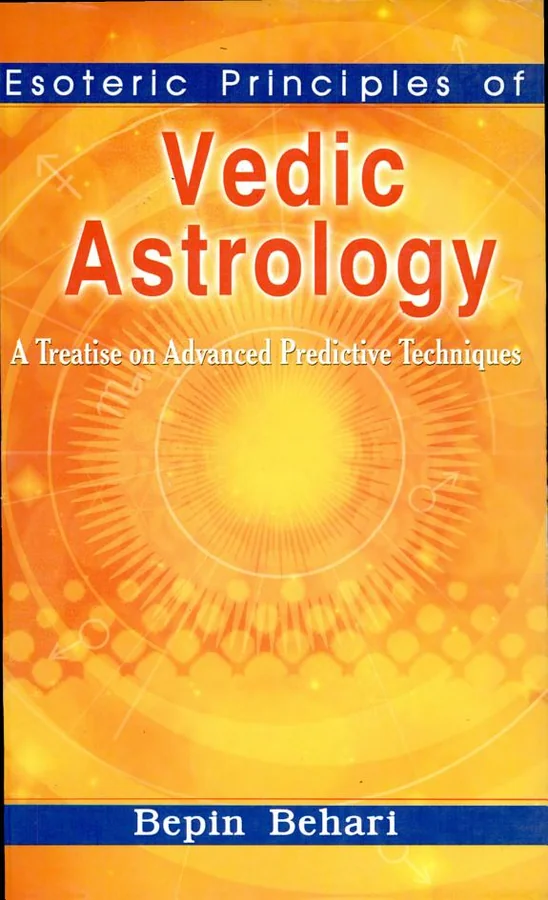
Esoteric Principles of Vedic Astrology
Bepin Behari's *Esoteric Principles of Vedic Astrology* is a dense, intellectually rigorous examination of Jyotish, prioritizing its philosophical architecture over mere predictive efficacy. The author’s insistence on viewing planetary placements as manifestations of karmic trajectories and evolutionary potentials offers a refreshing counterpoint to more deterministic astrological approaches. A particular strength lies in his detailed exegesis of the Navamsa chart, which he elevates beyond a simple marital indicator to a profound map of dharma and spiritual destiny. However, the book's density can be a significant hurdle; Behari assumes a considerable prior knowledge of Vedic astrological principles, at times leaving the reader to connect intricate conceptual dots without explicit guidance. The work's true value is not in providing easy answers but in challenging the reader to rethink the very nature of astrological interpretation. It is an essential text for the dedicated student ready for advanced contemplation.
📝 Description
81
Bepin Behari's 2004 book connects Vedic astrology to consciousness and karma.
Esoteric Principles of Vedic Astrology moves beyond simple prediction to uncover the philosophical and spiritual currents within Jyotish. Bepin Behari wrote this text not for forecasting, but as a map of consciousness and karma. It is intended for practitioners who have mastered foundational techniques and seek a deeper understanding of the philosophical underpinnings of planetary influences.
The book critiques purely materialistic interpretations of astrology. Instead, it advocates for a holistic view that integrates psychological and spiritual dimensions. Behari's work emerged during a period of renewed global interest in Eastern spiritual traditions, offering a distinctly Indian perspective on the karmic and spiritual dimensions inherent in the Vedic system.
Published in 2004, this work appeared as Eastern spiritual traditions saw renewed global interest. While Western astrology had its own esoteric revivals earlier, Behari presented a unique Indian viewpoint. His focus was on the karmic and spiritual dimensions intrinsic to the Vedic system, distinguishing it from other astrological interpretations.
💡 Why Read This Book?
• Gain a profound understanding of the Navamsa chart's role in mapping dharma and spiritual destiny, a concept explored extensively in the text's advanced sections. • Learn to interpret planetary positions not just as predictive indicators but as manifestations of karmic patterns and consciousness evolution, as detailed by Behari. • Explore the philosophical integration of Vedic astrology with subtle body anatomy and spiritual development, a perspective distinct from purely predictive systems.
⭐ Reader Reviews
Honest opinions from readers who have explored this book.
❓ Frequently Asked Questions
What is the primary focus of Esoteric Principles of Vedic Astrology?
The book focuses on the advanced, philosophical, and spiritual dimensions of Vedic astrology, presenting it as a map of consciousness and karma rather than solely a predictive tool.
Who is Bepin Behari?
Bepin Behari was an Indian author and scholar known for his deep explorations into Vedic astrology and philosophy, aiming to reveal the esoteric underpinnings of these ancient sciences.
When was Esoteric Principles of Vedic Astrology first published?
The book was first published on September 1, 2004, reflecting a contemporary interest in the deeper aspects of Vedic knowledge.
Does this book offer beginner-level astrological techniques?
No, this text is intended for experienced practitioners of Vedic astrology seeking advanced, esoteric interpretations and philosophical insights, not introductory material.
What makes the Navamsa chart significant in this book?
Behari elevates the Navamsa beyond its common uses, presenting it as a critical map of dharma and spiritual evolution, offering a unique interpretation.
What is the core philosophical stance on planetary influences presented?
The book posits that planetary influences are not mere external forces but are deeply intertwined with an individual's karma and consciousness, guiding spiritual development.
🔮 Key Themes & Symbolism
Jyotish as Karmic Blueprint
This work reframes Vedic astrology as a profound reflection of an individual's accumulated karma, detailing how planetary configurations in a birth chart are not arbitrary but manifest expressions of past actions. Behari guides the reader to understand the chart as a dynamic blueprint that illustrates the soul's journey through various life experiences and spiritual lessons. The emphasis is on the 'why' behind astrological patterns, connecting them to the subtle mechanics of cause and effect across lifetimes and the unfolding of one's dharma.
Planetary Influence and Consciousness
Behari posits that the planets act as regulators of consciousness, influencing not just external events but the very fabric of our inner awareness and psychological makeup. The book explores how specific planetary energies, when aspected and placed within the astrological grid, shape our perceptions, desires, and spiritual receptivity. This perspective moves beyond simple benefic or malefic designations to a nuanced understanding of how celestial bodies interact with the subtle body and mind.
The Navamsa's Spiritual Significance
A central theme is the elevated importance of the Navamsa (D-9) chart. Behari argues against its reduction to a mere indicator of marriage or spouse, instead presenting it as a crucial map of an individual's dharma, spiritual inclinations, and the higher purpose of their incarnation. The intricate interplay of planets within the Navamsa is analyzed for its potential to reveal one's spiritual path and inherent strengths for soul growth.
Esoteric Jyotish vs. Predictive Mechanics
The book critically distinguishes between the superficial application of predictive astrological techniques and the deeper, esoteric principles that underpin the tradition. Behari encourages readers to look beyond simple event forecasting to understand the underlying spiritual laws and consciousness principles that the astrological system represents. This approach seeks to unlock the transformative potential of Jyotish as a tool for self-realization and spiritual evolution.
💬 Memorable Quotes
Direct passages from the work, attributed to the author.
“The birth chart is not merely a horoscope but a map of the soul's journey.”
— This statement expresses Behari's core thesis: astrology is less about predicting external events and more about understanding the internal, karmic, and spiritual trajectory of an individual's life.
“Planetary influences are intimately connected with the subtle body and the evolution of consciousness.”
— This highlights the esoteric perspective that celestial energies impact not just the material plane but also the subtle energetic and conscious aspects of human existence, guiding spiritual development.
“The Navamsa reveals the deeper dharma and spiritual purpose of the individual.”
— This interpretation emphasizes Behari's unique elevation of the Navamsa chart, viewing it as a key to understanding one's soul mission and innate spiritual predispositions beyond conventional astrological interpretations.
“Astrology, when approached esoterically, becomes a path to self-knowledge and spiritual liberation.”
— This reflects the book's ultimate aim: to present Vedic astrology not just as a science of prediction but as a profound spiritual discipline capable of fostering profound self-awareness and guiding the practitioner towards liberation.
💡 Key Ideas
Editorial paraphrase of the work's core concepts — not direct quotes.
True astrological wisdom lies in understanding the spiritual laws governing the cosmos and their reflection in human life.
This paraphrased concept underscores Behari's call for a philosophical approach to astrology, urging practitioners to seek the underlying spiritual principles rather than focusing solely on predictive techniques.
🌙 Esoteric Significance
Tradition
This work is deeply rooted in the Vedic tradition, specifically the astrological system known as Jyotish. It aligns with the broader esoteric philosophies found in Hinduism that view the cosmos as a manifestation of divine consciousness and human life as a journey of spiritual evolution. Behari's approach emphasizes the concept of karma and reincarnation, positioning the birth chart as a symbolic representation of these principles, a perspective shared with other Indian esoteric sciences like Yoga and Tantra.
Symbolism
Key symbols include the zodiacal signs and planetary deities, which Behari interprets not merely as celestial bodies but as archetypal forces influencing consciousness and karma. The Navamsa (D-9 chart) is a particularly significant symbolic map, representing dharma and the soul's purpose. Planetary conjunctions, aspects, and placements are analyzed for their symbolic resonance within the subtle body and the unfolding spiritual journey.
Modern Relevance
Contemporary practitioners of Vedic astrology seeking a deeper philosophical and spiritual framework often turn to Behari's work. Thinkers in the areas of consciousness studies and comparative religion may also find his integrated approach to astrology, karma, and spiritual development relevant. His emphasis on Jyotish as a tool for self-realization speaks to modern spiritual seekers looking for meaning beyond material success.
👥 Who Should Read This Book
• Advanced Vedic astrologers seeking to deepen their understanding beyond predictive techniques and explore the philosophical underpinnings of Jyotish. • Students of comparative religion and esoteric philosophy interested in how ancient Indian traditions view astrology as a map of consciousness and karma. • Spiritual seekers looking to understand the concept of dharma and the soul's journey as represented through astrological symbolism.
📜 Historical Context
Bepin Behari's *Esoteric Principles of Vedic Astrology*, published in 2004, emerged within a global intellectual landscape increasingly receptive to Eastern philosophical systems. While the late 20th century saw a surge in popular interest in Vedic sciences, Behari’s work distinguished itself by focusing on the esoteric and philosophical dimensions, moving beyond the purely predictive frameworks often emphasized in contemporary Jyotish discourse. This approach offered a counterpoint to the more mechanistic or psychological interpretations of astrology prevalent in both Western and Eastern contexts. The book implicitly engages with the legacy of Indian philosophical traditions, such as Vedanta and Samkhya, framing astrological principles within a broader cosmology of consciousness and karma. It can be seen as contributing to a lineage of thinkers who sought to articulate the spiritual underpinnings of Jyotish, akin to earlier scholars who attempted to bridge ancient wisdom with modern understanding.
📔 Journal Prompts
The Navamsa's representation of dharma and spiritual purpose.
Reflecting on planetary influences as regulators of consciousness.
Connecting birth chart patterns to karmic blueprints.
The esoteric distinction between predictive mechanics and spiritual laws in Jyotish.
Astrology as a pathway to self-knowledge and liberation.
🗂️ Glossary
Jyotish
The traditional Indian system of astrology, also known as Vedic astrology. It is a complex system of divination, prediction, and philosophical inquiry rooted in ancient Indian cosmology.
Navamsa
The ninth division (D-9 chart) in Vedic astrology, considered highly significant for understanding a native's dharma, spiritual inclinations, spouse, and overall life purpose.
Karma
The principle of cause and effect in action, believed to govern the cycle of birth, death, and rebirth. Astrological configurations are seen as manifestations of past karma.
Dharma
One's duty, purpose, or righteous path in life, often seen as divinely ordained and intrinsically linked to spiritual evolution. The Navamsa chart is considered a key indicator of dharma.
Subtle Body
The non-physical aspect of a human being, comprising energy channels (nadis) and centers (chakras), which is believed to be influenced by planetary energies and directly linked to consciousness.
Consciousness
In the Vedic context, the fundamental principle of existence. Planetary influences are interpreted as affecting the quality and evolution of individual consciousness.
Esoteric
Relating to or accessible only by a select group of people with a specialized knowledge or interest. In this context, it refers to the inner, philosophical, and spiritual dimensions of astrology.
This book appears in 1 collection
🔮 Readers Also Liked
Browse all →









From the “Vedic Astrology” Collection
View all →









More Free Astrology & Cosmology Books
View all →