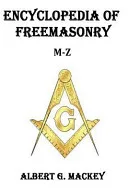
Encyclopedia of Freemasonry (M-z)
 75
75

Encyclopedia of Freemasonry (M-z)
Mackey's "Encyclopedia of Freemasonry" remains a foundational text, even in this later, alphabetically segmented edition. Its strength lies in its meticulous detail and the author's authoritative voice, grounded in extensive Masonic scholarship. The section on "Mysteries" for example, provides a clear, if traditional, overview of ancient initiatory rites and their potential connections to Masonic symbolism. However, the work's 19th-century perspective is also its limitation; some interpretations of Masonic origins and symbolism, particularly those tracing back to ancient Egypt or Solomon's Temple, are now viewed through a more critical, historical lens by contemporary scholars. The discussion of the "Master Mason" degree, while comprehensive for its time, could benefit from modern comparative analysis. Despite these historical caveats, the encyclopedia is an indispensable resource for understanding the internal logic and historical self-conception of Freemasonry.
📝 Description
75
Albert G. Mackey's Encyclopedia of Freemasonry (M-z) was published in the late 19th century.
This volume, the second part of Albert G. Mackey's extensive work on Freemasonry, covers entries from M to Z. It functions as a detailed reference for Masonic principles, history, and associated sciences. The encyclopedia addresses a wide range of subjects pertinent to the fraternity, from its foundational ideas and symbolic language to its societal relevance. Mackey aimed to bring clarity and depth to the complex nature of this fraternal order.
The book is suited for those with a serious interest in Freemasonry. This includes practicing Masons who wish to deepen their understanding or academic researchers studying fraternal groups and esoteric traditions. It is also valuable for individuals interested in the historical and philosophical background of Western esotericism, as Masonic thought has interacted with various mystical and philosophical currents over centuries.
Published in the late 19th century, Mackey's work emerged during a time of considerable attention to esoteric societies and comparative religion. Freemasonry, with its structured rituals and symbolic system, was a central subject for both scholars and enthusiasts. Mackey, a recognized Mason and physician, undertook the task of organizing and explaining the fraternity's lore. He responded to a growing need for reliable texts amid a proliferation of speculative writings and occult interests influenced by figures of the era.
💡 Why Read This Book?
• Gain a structured understanding of Masonic symbolism and allegory, particularly the significance of the "Master Mason" degree, which provides a narrative framework for spiritual development. • Explore the historical connections drawn between Freemasonry and ancient mystery schools, as detailed in the "Mysteries" section, offering a comparative perspective on initiatory traditions. • Uncover the philosophical underpinnings of Masonic ethics and ritual, as presented in Mackey's meticulous definitions, allowing for a deeper appreciation of its intellectual heritage.
⭐ Reader Reviews
Honest opinions from readers who have explored this book.
❓ Frequently Asked Questions
What is the original publication year of Albert G. Mackey's Encyclopedia of Freemasonry?
While this specific volume is a later edition, Albert G. Mackey's "Encyclopedia of Freemasonry" was first published in its entirety in 1873, with subsequent revisions and expansions.
Does this encyclopedia cover all aspects of Freemasonry?
This volume, "Encyclopedia of Freemasonry (M-z)", covers entries from 'M' through 'Z'. The complete encyclopedia, when considering all its parts, aims for a comprehensive overview of the subject.
What is the significance of the '33°' mentioned for Albert G. Mackey?
The '33°' refers to the 33rd degree of the Scottish Rite of Freemasonry, an honorary degree signifying a high level of attainment and recognition within that particular rite of the fraternity.
Is this book suitable for someone entirely new to Freemasonry?
While it is a comprehensive reference, its depth and specialized terminology might be best approached after some foundational knowledge of Masonic principles is acquired.
What kind of 'Kindred Sciences' are discussed in the encyclopedia?
The 'Kindred Sciences' refer to subjects that Mackey believed were related to or illuminated Freemasonry, such as ancient history, mythology, philosophy, and the study of symbolism.
Where can I find the 'A-L' portion of this encyclopedia?
This volume is a specific segment. The complete Encyclopedia of Freemasonry, encompassing all letters, is typically found in multi-volume sets or separate publications covering the full alphabetical range.
🔮 Key Themes & Symbolism
Masonic Symbolism and Allegory
The encyclopedia meticulously dissects the symbolic language inherent in Masonic rituals and teachings. It explores how common objects and actions within the lodge room, such as the tracing board or the use of tools like the plumb and level, are imbued with deeper allegorical meanings related to morality, philosophy, and spiritual progression. Mackey aims to reveal the layers of interpretation embedded within these symbols, connecting them to broader patterns of human understanding and ancient wisdom traditions.
Historical Origins and Influences
A significant portion of Mackey's work is dedicated to tracing the historical lineage of Freemasonry. He examines purported connections to ancient operative guilds, medieval stonemasons, and even older mystery traditions. The encyclopedia studies the historical development of Masonic degrees and rites, attempting to establish a coherent narrative of the fraternity's evolution through various epochs and its entanglement with significant historical events and intellectual movements of Europe.
Philosophical and Ethical Teachings
Beyond its historical and symbolic aspects, the encyclopedia illuminates the philosophical and ethical framework of Freemasonry. It explains how Masonic principles are intended to guide the moral conduct of its members, emphasizing virtues such as brotherhood, charity, truth, and temperance. Mackey presents these teachings not merely as rules but as a system of moral philosophy designed for personal betterment and societal harmony, rooted in the pursuit of knowledge and enlightenment.
The Science of Freemasonry
Mackey often refers to Freemasonry as a 'science,' implying a systematic body of knowledge that can be studied and understood. This 'science' encompasses not just the rituals and symbols but also the underlying philosophical principles and historical context. The encyclopedia functions as a compendium of this knowledge, aiming to systematize Masonic lore and present it as a coherent intellectual discipline worthy of serious academic and personal study.
💬 Memorable Quotes
Direct passages from the work, attributed to the author.
“The Master Mason's degree is the culmination of the symbolic degrees.”
— This statement highlights the important role of the Master Mason's degree within the core structure of Craft Masonry, suggesting it represents a completion of foundational teachings and a transition to deeper understanding.
“The tracing board is a symbolic representation of the Master Mason's lesson.”
— This underscores the pedagogical function of Masonic symbolism, indicating that visual aids within the lodge are not mere decoration but carry profound instructional content related to the highest degree.
“The tools of operative masons were adopted for their symbolic meaning.”
— This concept explains the method by which abstract moral and philosophical lessons are conveyed in Freemasonry, by reinterpreting the practical implements of stoneworking into allegorical tools for character building.
“Ancient mysteries share common roots with Freemasonry.”
— This interpretation suggests a historical and symbolic linkage between the esoteric traditions of antiquity and the modern fraternity, positing a continuity of initiatory knowledge across different eras.
💡 Key Ideas
Editorial paraphrase of the work's core concepts — not direct quotes.
Freemasonry teaches universal morality.
This paraphrased concept emphasizes the broad ethical scope of Masonic teachings, implying that its principles are applicable to all individuals regardless of their specific religious or philosophical beliefs.
🌙 Esoteric Significance
Tradition
Mackey's work is deeply rooted in the Western Esoteric Tradition, particularly within the Hermetic and Kabbalistic streams that have historically informed Freemasonry. It interprets Masonic symbols and rituals through the lens of ancient wisdom, Gnosticism, and Neoplatonism, seeking to uncover a universal, spiritual science. The encyclopedia positions Freemasonry not merely as a social organization but as a vehicle for esoteric initiation, connecting its teachings to older mystery systems and alchemical philosophies.
Symbolism
Key symbols explored include the Square and Compasses, representing the balance between the material and spiritual worlds, and the enforcement of moral rectitude. The concept of the "Winding Stairs" is often interpreted as a symbolic ascent towards higher knowledge, mirroring spiritual progression. The Temple of Solomon serves as a central motif, symbolizing the perfectible spiritual man and the ideal esoteric community, with its various elements offering allegorical lessons on construction, order, and divine presence.
Modern Relevance
Contemporary esotericists, occult historians, and Masonic researchers continue to draw upon Mackey's encyclopedia as a foundational text. His systematic approach to Masonic symbolism and history influences modern interpretations within groups studying Hermeticism, ceremonial magic, and comparative religion. Thinkers exploring the lineage of Western esotericism often reference Mackey's work when examining the philosophical and symbolic underpinnings of fraternal orders and their role in preserving esoteric knowledge across centuries.
👥 Who Should Read This Book
• Freemasons seeking a detailed historical and philosophical reference to deepen their understanding of rituals, symbols, and the broader context of the Craft. • Students of Western Esotericism interested in the intersection of Masonic lore with Hermeticism, Kabbalah, and ancient mystery traditions. • Researchers of comparative religion and fraternal organizations who need a comprehensive overview of Masonic principles, history, and symbolism as presented by a key 19th-century authority.
📜 Historical Context
Albert G. Mackey published his "Encyclopedia of Freemasonry" during the latter half of the 19th century, a period marked by widespread fascination with secret societies and esoteric traditions. This era saw the rise of movements like Spiritualism and Theosophy, alongside a renewed academic interest in comparative mythology and ancient religions. Mackey, a prolific Masonic scholar and physician, aimed to provide an authoritative and comprehensive reference for a fraternity whose public image was often a mixture of reverence and suspicion. His work engaged with existing Masonic literature, seeking to clarify and consolidate its diverse interpretations. Contemporaries like Robert B. Folger were also publishing significant Masonic works, contributing to a rich discourse. Mackey's encyclopedia was particularly influential in shaping the understanding of Masonic symbolism and history for generations of Masons, though some of its historical claims have been debated by later scholars.
📔 Journal Prompts
The tracing board as a symbolic lesson.
Reflect on the ethical teachings presented through Masonic tools.
Compare the historical origins of Freemasonry as described by Mackey with other ancient traditions.
Consider the symbolic significance of the "Winding Stairs" in relation to personal spiritual growth.
Analyze the concept of "universal morality" within the context of Masonic philosophy.
🗂️ Glossary
Entered Apprentice
The first degree in Craft Freemasonry, representing the initial stage of a Mason's journey, focusing on basic moral principles and the introduction to symbolic instruction.
Fellow Craft
The second degree in Craft Freemasonry, symbolizing a stage of intellectual development and proficiency, often associated with the exploration of sciences and arts.
Master Mason
The third and highest degree in Craft Freemasonry, representing completion and the attainment of full Masonic knowledge, involving profound lessons on mortality, fidelity, and the mysteries of life.
Tracing Board
A symbolic diagram used in Masonic lodges, often displayed during degree ceremonies, which visually represents the teachings and allegories pertinent to each specific degree.
Winding Stairs
A symbolic element in Masonic ritual, often depicted as a series of steps leading upwards, representing the progressive journey of a Mason towards greater knowledge and enlightenment.
Operative Masons
Historically, the actual stonemasons and builders who constructed medieval cathedrals and structures. Freemasonry symbolically draws upon their tools and methods.
Speculative Masonry
The modern form of Freemasonry that focuses on moral and philosophical teachings rather than the literal craft of building, having evolved from operative guilds.