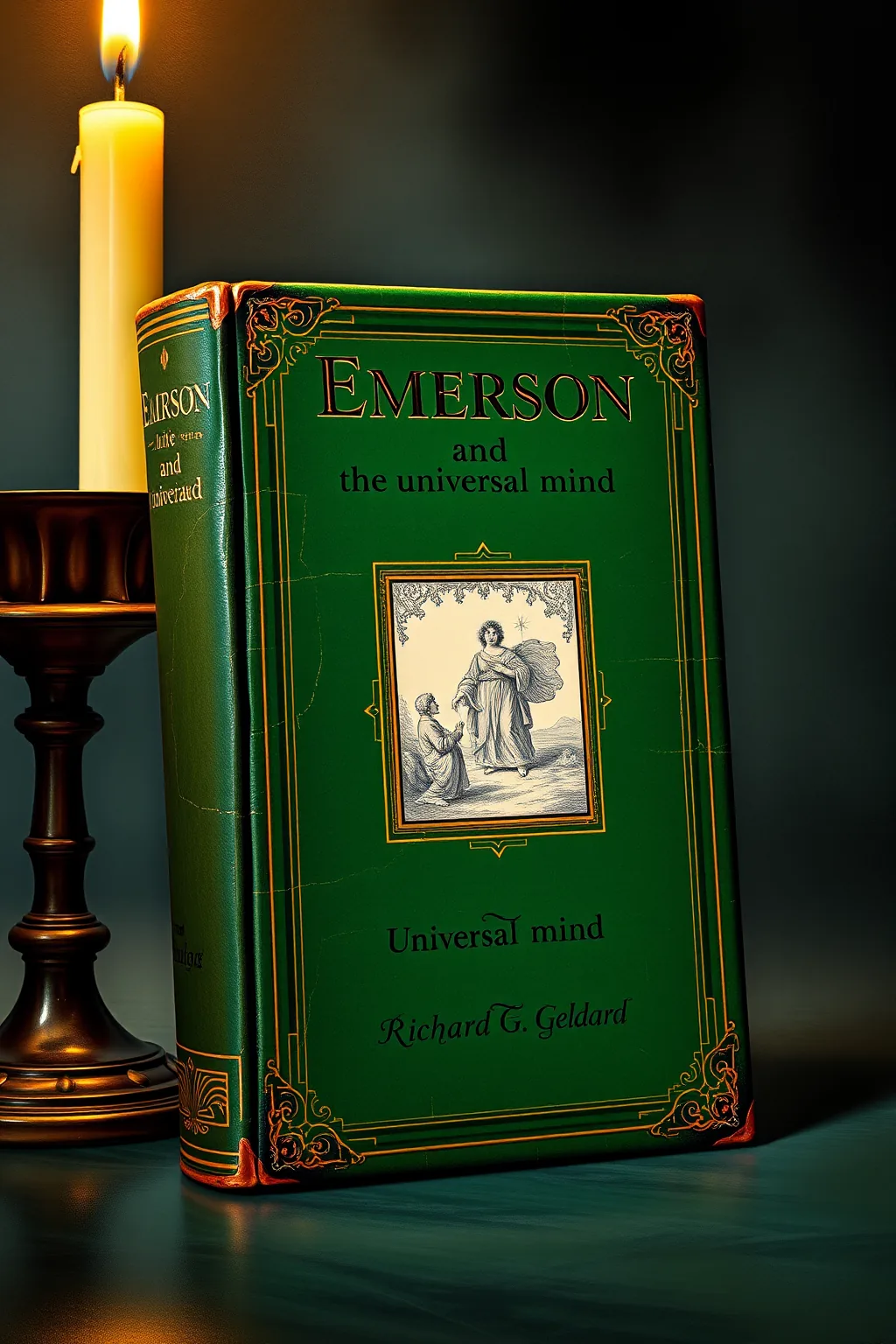
Emerson and universal mind
 61
61

Emerson and universal mind



Review by Balthazar Finch (Senior Critic, Occult Philosophy) — Richard G. Geldard's 'Emerson and the Universal Mind' is a tour de force for those seeking to understand the esoteric dimensions of Ralph Waldo Emerson's philosophy. Geldard masterfully unravels the neoplatonic and transcendental threads that weave through Emerson's works, revealing a hidden tapestry of mystical insight. The book is particularly strong in its exploration of symbolism and the universal mind, making it an essential read for scholars of occult philosophy and spiritual seekers alike. Geldard's prose is both accessible and profound, offering a bridge between the mystical and the intellectual.
📝 Description
61
Richard G. Geldard's 1961 book examines Emerson's connection to a universal consciousness.
Published in 1961, Richard G. Geldard's study focuses on Ralph Waldo Emerson's concept of the universal mind. Geldard argues that Emerson's writings are deeply informed by an awareness of a pervasive, underlying consciousness that connects all things. The book traces this idea through Emerson's essays and poems, drawing parallels with Neoplatonic thought and other esoteric traditions.
Geldard presents Emerson not just as a literary figure but as a thinker who tapped into a form of spiritual intuition. The work aims to illuminate the symbolic language Emerson employed to express these complex ideas about unity and divine immanence. It invites readers to consider the philosophical underpinnings of Transcendentalism from a less conventional, more mystical viewpoint.
This book fits within the study of Western esotericism, particularly the branches concerned with idealism and consciousness. It engages with traditions that posit a unifying spiritual principle, such as Neoplatonism and Hermeticism, and examines how these ideas manifested in the American Transcendentalist movement. Geldard's work positions Emerson within a lineage of thinkers who perceived a deeper, non-material reality and sought to articulate its influence on human experience and thought.
💡 Why Read This Book?
Read 'Emerson and the Universal Mind' to unlock the esoteric secrets of Ralph Waldo Emerson's transcendentalism. Ideal for seekers of hidden knowledge, scholars of neoplatonism, and practitioners of mystical philosophy, this book offers a unique perspective on the universal mind's influence on American thought. Whether you are a seasoned philosopher or a curious beginner, this work will enrich your understanding of the mystical underpinnings of Emerson's writings.
⭐ Reader Reviews
Honest opinions from readers who have explored this book.
❓ Frequently Asked Questions
Who is the intended audience for this book?
The book is intended for scholars of occult philosophy, spiritual seekers, and anyone interested in the esoteric dimensions of Ralph Waldo Emerson's thought.
What is the significance of the universal mind in Emerson's philosophy?
The universal mind represents the underlying unity of all existence, a concept deeply rooted in neoplatonism and transcendentalism. Geldard explores how this idea permeates Emerson's writings.
How does this book contribute to the study of transcendentalism?
'Emerson and the Universal Mind' provides a fresh, esoteric perspective on transcendentalism, revealing the hidden symbols and philosophical depths within Emerson's works.
What are the key themes in this book?
The key themes include the universal mind, neoplatonic influences, transcendentalism, and the esoteric symbolism in Emerson's philosophy.
Is this book suitable for beginners in philosophy?
While the book is accessible, it is best suited for those with some background in philosophy or esoteric studies, as it delves deeply into complex ideas.
🔮 Key Themes & Symbolism
The Universal Mind
The universal mind is the central theme of Geldard's exploration, representing the underlying unity of all existence. This concept, rooted in neoplatonism, permeates Emerson's writings, offering a mystical perspective on the interconnectedness of all things. Geldard looks at the hidden symbols and philosophical depths that reveal the universal mind's influence on Emerson's thought.
Neoplatonic Influences
Geldard's book highlights the neoplatonic influences in Emerson's philosophy, providing a fresh perspective on transcendentalism. By exploring the esoteric dimensions of Emerson's writings, Geldard reveals the hidden knowledge and symbolism that underscore his ideas. This theme is essential for understanding the mystical underpinnings of Emerson's thought.
Esoteric Symbolism
The book delves deeply into the esoteric symbolism embedded within Emerson's works, offering a unique perspective on his philosophy. Geldard's exploration of these symbols reveals the hidden wisdom and mystical insights that lie beneath the surface of Emerson's writings. This theme is particularly relevant for seekers of hidden knowledge and practitioners of mystical philosophy.
💬 Memorable Quotes
Direct passages from the work, attributed to the author.
“Symbolism is the language of the soul, speaking to the deepest parts of our being.”
— Geldard highlights the importance of symbolism in understanding Emerson's esoteric insights.
“The neoplatonic influences in Emerson's thought reveal a hidden range of wisdom.”
— Geldard's exploration of neoplatonism offers a fresh perspective on Emerson's philosophy.
💡 Key Ideas
Editorial paraphrase of the work's core concepts — not direct quotes.
The universal mind is the great reservoir of wisdom and truth.
This quote underscores the central theme of the universal mind, emphasizing its role as the source of all knowledge.
Transcendentalism is a journey into the mystical heart of existence.
This quote captures the mystical dimensions of transcendentalism, as explored in the book.
The universal mind connects us to the divine source of all creation.
This quote emphasizes the mystical and esoteric significance of the universal mind in Emerson's thought.
🌙 Esoteric Significance
Tradition
The book belongs to the Hermetic tradition, which seeks to uncover the hidden wisdom and esoteric knowledge embedded within philosophical and mystical texts. By exploring the neoplatonic and transcendentalist influences in Emerson's thought, Geldard reveals the Hermetic underpinnings of his philosophy.
Symbolism
Key symbols in the book include the universal mind, which represents the underlying unity of all existence, and the esoteric symbols embedded within Emerson's writings. These symbols serve as gateways to the hidden wisdom and mystical insights that lie beneath the surface of his thought.
Modern Relevance
Today, 'Emerson and the Universal Mind' remains relevant for practitioners of mystical philosophy and seekers of hidden knowledge. Modern scholars and spiritual seekers continue to explore the esoteric dimensions of Emerson's thought, using Geldard's insights to deepen their understanding of the universal mind and its significance in contemporary spiritual practice.
👥 Who Should Read This Book
This book is ideal for scholars of occult philosophy, spiritual seekers, and practitioners of mystical philosophy. Beginners may find the depth of esoteric exploration challenging but rewarding, as it offers a unique perspective on Emerson's transcendentalism. Advanced readers will appreciate the detailed analysis of neoplatonic influences and esoteric symbolism, making it a valuable addition to their studies.
📜 Historical Context
Ralph Waldo Emerson's transcendentalism emerged in the mid-19th century, a time of profound intellectual and spiritual ferment in America. 'Emerson and the Universal Mind' was written to shed light on the esoteric dimensions of Emerson's thought, revealing the hidden knowledge and symbolism that underpinned his philosophy. The book's influence lies in its ability to bridge the gap between mystical and intellectual inquiry, offering a unique perspective on the universal mind's role in Emerson's writings.
📔 Journal Prompts
How does the concept of the universal mind influence your understanding of existence?
What are the key symbols in Emerson's writings that reveal his esoteric insights?
How does neoplatonism shape the mystical dimensions of transcendentalism?
In what ways can exploring esoteric symbolism deepen your spiritual practice?
How does Emerson's philosophy connect to the Hermetic tradition?
🗂️ Glossary
Universal Mind
The underlying unity of all existence, representing the source of all wisdom and truth in neoplatonism and transcendentalism.
Neoplatonism
A philosophical tradition that emphasizes the mystical and esoteric dimensions of existence, rooted in the teachings of Plotinus.
Transcendentalism
A philosophical and literary movement that emphasizes individualism, self-reliance, and the spiritual over the material, as exemplified by Ralph Waldo Emerson.
Esoteric Symbolism
Symbols that convey hidden knowledge and mystical insights, often used in philosophical and spiritual texts to reveal deeper truths.
Hermetic Tradition
A mystical and esoteric tradition that seeks to uncover hidden wisdom and knowledge, often embedded within philosophical and mystical texts.
This book appears in 4 collections
🔮 Readers Also Liked
Browse all →







From the “Neoplatonism” Collection
View all →






More Free Alchemy & Hermeticism Books
View all →