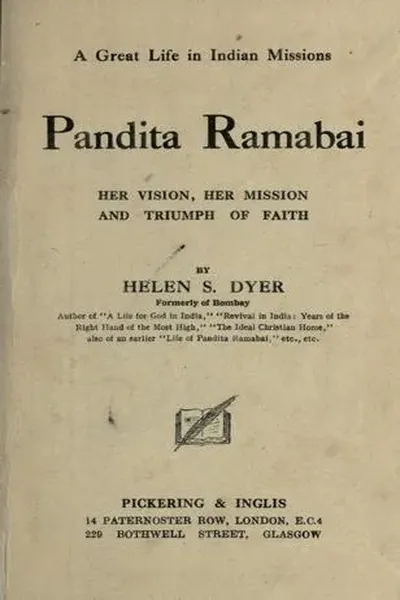
El santo culto

 73
73

El santo culto
Oscar F. Ortiz's El Santo Culto presents a formidable challenge and reward for the serious practitioner of esoteric arts. Its strength lies in its unyielding commitment to detail, offering a framework for understanding ritual as a precise science rather than vague mysticism. The text does not shy away from the demanding nature of its subject matter, which is both its greatest asset and its most significant limitation for a wider audience. A particularly striking section details the "Astral Projection Protocols," where the author moves beyond theoretical discussion to present actionable, albeit complex, instructions. The prose, while dense, maintains an authoritative tone throughout. For those willing to invest the intellectual rigor, El Santo Culto provides a robust system for exploring the hidden dimensions of existence.
📝 Description
73
Oscar F. Ortiz's El Santo Culto, published in 1991, examines esoteric principles and practices.
El Santo Culto, released in 1991 by Oscar F. Ortiz, offers a detailed examination of esoteric principles and practices. It serves as a guide for those who seek a deeper understanding of spiritual concepts beyond conventional frameworks. The work investigates the mechanics of unseen forces and their impact on both individual and collective consciousness.
This text is intended for serious students of occult philosophy and comparative religion. It appeals to individuals dissatisfied with superficial explanations of reality, possessing a disciplined mind ready to engage with complex symbolic language. Prior exposure to metaphysical concepts is recommended for full appreciation of its depth.
The book systematically unpacks concepts such as the nature of energetic currents, the architecture of subtle bodies, and the protocols for invocation and evocation. It details specific ritualistic actions and their psychological and spiritual effects, treating them as applied occult science. Ortiz emphasizes the principle of correspondence, showing how macrocosmic patterns manifest in microcosm.
Published in 1991, El Santo Culto emerged during a period of renewed interest in esoteric traditions, distinct from the more accessible self-help trends of the era. Ortiz's book adopted a rigorous academic and practical approach, aligning with foundational texts of hermeticism and ceremonial magic. Its release predates the widespread digital dissemination of esoteric knowledge, positioning its physical form as a significant artifact of its time.
💡 Why Read This Book?
• Gain a structured understanding of ritual mechanics, moving beyond symbolic interpretation to applied practice, as detailed in the "Ritual Mechanics" chapter. • Learn about the "Subtle Anatomy" of the human energetic system, offering a framework for self-awareness and energetic manipulation distinct from contemporary chakra models. • Grasp the principle of "Universal Correspondence" as articulated by Ortiz, providing a lens to interpret the interconnectedness of all phenomena, a core tenet explored throughout the book.
⭐ Reader Reviews
Honest opinions from readers who have explored this book.
❓ Frequently Asked Questions
What is the primary focus of El Santo Culto?
El Santo Culto primarily focuses on the systematic study and practical application of esoteric principles, particularly concerning ritual, energetic manipulation, and the architecture of subtle bodies, as first explored in its 1991 publication.
Is El Santo Culto suitable for beginners in occult studies?
While valuable, the book's dense and technical nature, first evident in its 1991 release, makes it more suitable for intermediate to advanced students who have a foundational understanding of metaphysical concepts.
What esoteric traditions does El Santo Culto draw upon?
The work synthesizes elements from various esoteric traditions, including hermeticism and ceremonial magic, presenting a unique framework for understanding occult science, as established in its original publication.
Does the book provide practical exercises?
Yes, El Santo Culto offers detailed protocols and instructions for practices such as invocation, evocation, and astral projection, aiming for a scientific approach to spiritual development first outlined in 1991.
Who is Oscar F. Ortiz?
Oscar F. Ortiz is the author of El Santo Culto, a significant work in esoteric literature first published in 1991, known for its rigorous and systematic approach to occult studies.
🔮 Key Themes & Symbolism
Ritual as Applied Science
Ortiz frames ritual not as mere symbolism but as a meticulously designed application of occult principles. The text details specific procedures for invocation and evocation, emphasizing precision in gesture, word, and intent. The underlying philosophy suggests that these actions directly influence energetic currents and subtle planes of existence. This perspective elevates ritual from a devotional act to a form of applied spiritual technology, requiring discipline and understanding of underlying laws, as first detailed in the 1991 edition.
Subtle Anatomy and Energetic Architecture
The book provides an intricate map of the human energetic system, often referred to as the "subtle body." Ortiz outlines various layers and components beyond the physical, detailing their functions and interrelationships. This exploration is crucial for understanding how external esoteric influences interact with the individual and how internal work can be undertaken to achieve specific spiritual or material outcomes. The concept is presented as fundamental to self-mastery and conscious evolution.
The Principle of Correspondence
Central to Ortiz's exposition is the principle of correspondence, stating that "as above, so below." This ancient maxim is dissected and applied to various phenomena, illustrating how patterns observed in the cosmos are mirrored in the microcosm of the human being and the earthly realm. Understanding this principle, as presented in El Santo Culto, allows practitioners to interpret signs, synchronize actions with cosmic cycles, and wield greater influence through aligned practice.
Invocation and Evocation Protocols
El Santo Culto offers detailed methodologies for both internalizing divine or elemental forces (invocation) and projecting them outward or summoning external entities (evocation). These protocols are presented with a high degree of specificity, addressing the necessary preparations, the execution of rites, and the management of the resulting energetic phenomena. The work stresses the importance of ethical considerations and the responsible application of such powerful techniques.
💬 Memorable Quotes
Direct passages from the work, attributed to the author.
“The subtle body is a blueprint for the physical form.”
— This interpretation emphasizes the foundational role of the energetic structure in shaping physical reality. It implies that understanding and working with the subtle anatomy is paramount for influencing one's physical state and manifestation.
“All phenomena echo a cosmic pattern.”
— This statement captures the essence of the principle of correspondence. It suggests that by studying any part of existence, one can discern the universal laws and structures that govern the whole, linking the mundane to the divine.
“Intent must be forged with clarity before action.”
— This concept underscores the importance of mental discipline and focused will in esoteric practice. It posits that a clearly defined objective, consciously held, is a prerequisite for any effective magical or spiritual operation.
“The practitioner becomes the conduit.”
— This interpretation points to the role of the magician or spiritual adept as an intermediary. It suggests that the goal of many esoteric practices is to purify oneself to become an effective channel for higher energies or intelligences.
💡 Key Ideas
Editorial paraphrase of the work's core concepts — not direct quotes.
The precise execution of ritual commands the unseen.
This paraphrased concept highlights Ortiz's view of ritual as a form of directed energy work. It suggests that accuracy in performance is key to achieving the desired effect on spiritual or energetic planes, rather than relying on faith alone.
🌙 Esoteric Significance
Tradition
El Santo Culto aligns primarily with the Western Esoteric Tradition, drawing heavily from Hermeticism and ceremonial magic. It synthesizes principles found in classical grimoires and later occult revivals, presenting them within a coherent, almost scientific, framework. The work departs from purely devotional or philosophical approaches by emphasizing the practical, applied science of ritual and energetic manipulation, positioning itself as a manual for conscious spiritual engineering.
Symbolism
Key symbols include the "Sigil of Power," representing focused intent and the manifestation of will; the "Circumambulation," symbolizing the cyclical nature of creation and the practitioner's journey around sacred space; and the "Altar," serving as the focal point for channeling and directing energetic forces between the practitioner and the divine or elemental realms.
Modern Relevance
Contemporary practitioners of ceremonial magic, chaos magic, and even some forms of psychological astrology find value in Ortiz's systematic approach. His emphasis on precise ritual mechanics and the energetic architecture of the self continues to inform modern occult theory and practice, particularly for those seeking a structured, disciplined path distinct from more fluid, intuitive modern magical systems.
👥 Who Should Read This Book
• Dedicated students of ceremonial magic seeking to refine their understanding of ritual protocols and energetic mechanics. • Comparative religion scholars interested in the practical application of occult doctrines and their historical development. • Advanced practitioners of esoteric arts looking for a rigorous, systematic text to deepen their self-mastery and understanding of subtle forces.
📜 Historical Context
Published in 1991, Oscar F. Ortiz's El Santo Culto emerged within a Western esoteric landscape that was both diverse and fragmented. The preceding decades had seen a surge in popular interest in occultism, often simplified through New Age channels. In contrast, Ortiz's work maintained a rigorous, almost academic, commitment to ceremonial magic and hermetic philosophy, standing apart from more accessible contemporary offerings. The era saw figures like Lon Milo DuQuette exploring the psychological aspects of ceremonial magic, while others continued traditional grimoire studies. El Santo Culto's detailed approach to ritual mechanics and subtle anatomy positioned it as a serious text for practitioners seeking depth, reminiscent of earlier 20th-century occult authors but presented with a distinct systematic rigor for its time.
📔 Journal Prompts
The precise execution of ritual commands the unseen: How can this principle be applied to mundane tasks?
Reflect on the concept of "Subtle Anatomy" and its potential impact on physical well-being.
Analyze the "Principle of Correspondence" in your daily life.
Describe a personal experience where intent was forged with clarity before action.
Consider the practitioner's role as a "conduit" in spiritual endeavors.
🗂️ Glossary
Subtle Body
The energetic or non-physical aspect of a being, comprising various layers and centers (like chakras or nadis) that influence the physical form and consciousness.
Invocation
The act of calling upon or inviting a divine, elemental, or spiritual force to enter into or influence the practitioner or a consecrated space.
Evocation
The act of summoning or calling forth external spiritual or elemental entities, often to a specific point or manifestation, for instruction or interaction.
Principle of Correspondence
An esoteric axiom, often stated as 'As Above, So Below,' suggesting a fundamental relationship and mirroring between different levels of reality, from the macrocosm to the microcosm.
Sigil
A symbol, often created through specific methods, charged with magical intent and used as a focus for manifesting desires or influencing energetic currents.
Astral Projection
The practice of projecting one's consciousness or subtle body outside of the physical body to travel or perceive other realms or locations.
Altar
A consecrated space or surface used in ritual practice as a focal point for offerings, invocations, and the channeling of energies.
🔮 Readers Also Liked
Browse all →








More Free Occult Philosophy Books
View all →