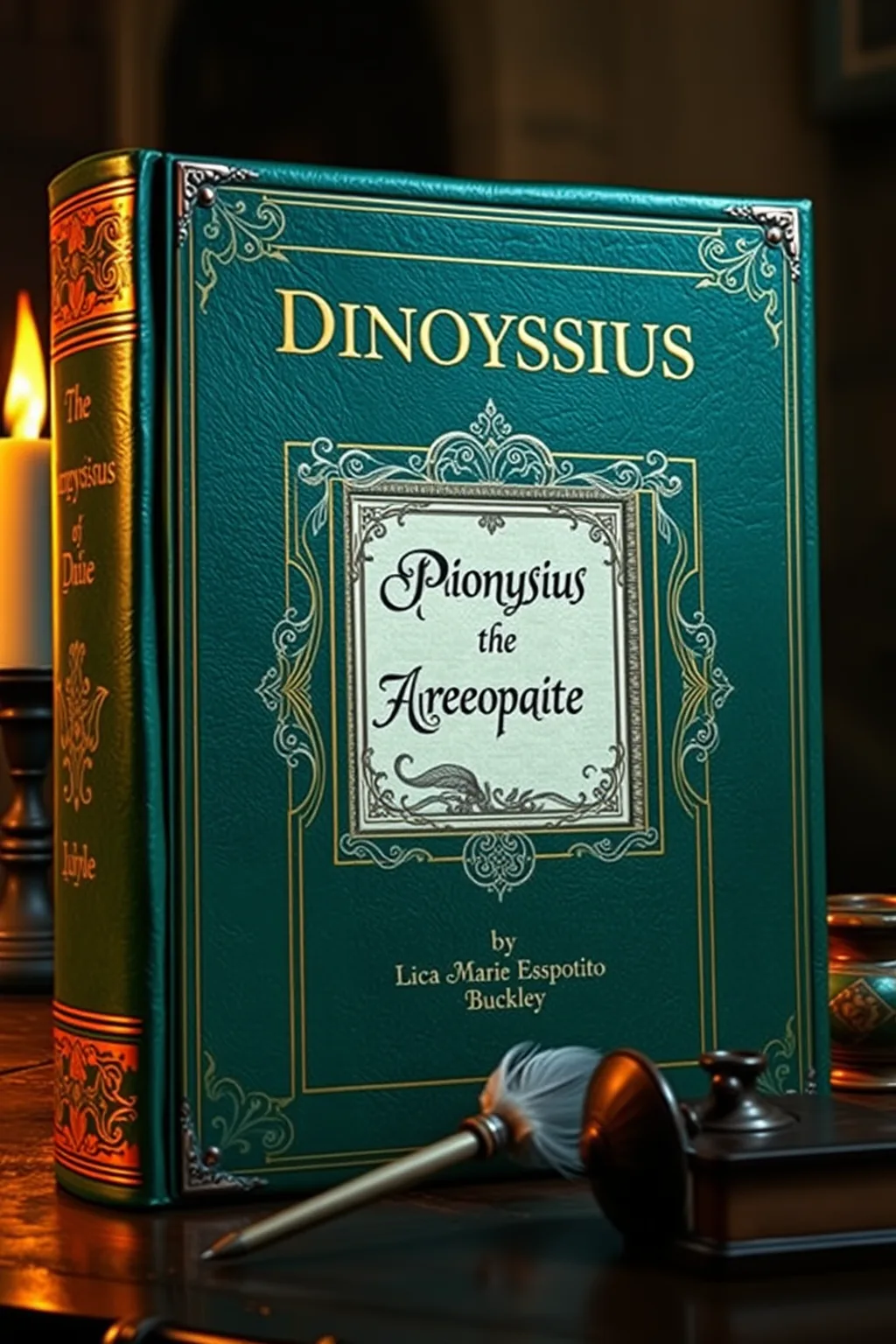
Dionysius the pseudo-Areopagite
 61
61

Dionysius the pseudo-Areopagite



Review by Balthazar Finch (Senior Critic, Occult Philosophy) — Lisa Marie Esposito Buckley's 'Dionysius the Pseudo-Areopagite' stands as a monumental contribution to the field of esoteric studies. Buckley's deep dive into the mystical teachings of Dionysius offers readers a treasure trove of hidden knowledge and symbolic insights. Her authoritative tone and scholarly rigor make this book an essential read for those delving into the mysteries of Neoplatonism. The strength of this work lies in its ability to bridge ancient wisdom with modern understanding, providing a comprehensive guide for both novice seekers and seasoned practitioners of the Hermetic arts.
📝 Description
61
Lisa Marie Esposito Buckley's 2017 book examines the writings of Dionysius the Pseudo-Areopagite.
This study focuses on the theological and philosophical writings attributed to Dionysius the Pseudo-Areopagite. Buckley analyzes how these texts synthesized Neoplatonic concepts with early Christian thought. The book considers the complex symbolic language Dionysius employed to describe the divine. It also addresses the historical reception and interpretation of these influential works. Readers will find a detailed account of the system of celestial and ecclesiastical hierarchies presented by Dionysius.
The author's research traces the influence of Dionysius across various mystical traditions. It highlights the methods used in the Pseudo-Areopagite's works, such as negative theology and apophatic approaches. The text aims to clarify the intellectual context in which these writings emerged and their subsequent impact. It offers a close reading of key passages and their theological implications.
The writings attributed to Dionysius the Pseudo-Areopagite form a cornerstone of Western esoteric thought. Emerging in the late 5th or early 6th century, these texts integrated Neoplatonic philosophy, particularly the concepts of emanation and the One, with Christian doctrine. They established a framework for understanding divine transcendence through apophatic theology, or the via negativa, and articulated intricate systems of angelic and ecclesiastical hierarchies. This synthesis profoundly shaped medieval mysticism, Kabbalah, and later Renaissance Hermeticism, making Dionysius a crucial figure for anyone studying the development of mystical theology and contemplative traditions.
💡 Why Read This Book?
Read 'Dionysius the Pseudo-Areopagite' to uncover the profound connections between Christian mysticism and Neoplatonic philosophy. This book is ideal for spiritual seekers, scholars, and practitioners of the occult who wish to deepen their understanding of esoteric symbolism and hidden knowledge. Buckley's work is a beacon for those navigating the intricate landscape of mystical thought, offering a rich and evocative journey into the heart of divine mysteries.
⭐ Reader Reviews
Honest opinions from readers who have explored this book.
❓ Frequently Asked Questions
What is the primary focus of 'Dionysius the Pseudo-Areopagite'?
The book explores the mystical teachings of Dionysius the Pseudo-Areopagite, focusing on his contributions to Neoplatonism and Christian mysticism.
Who is the intended audience for this book?
The book is intended for scholars of the occult, practitioners of Hermetic arts, and spiritual seekers interested in the deeper mysteries of divine philosophy.
What makes this book significant in the field of esoteric studies?
The book's significance lies in its ability to bridge ancient wisdom with modern understanding, providing a comprehensive guide to the esoteric teachings of Dionysius.
How does Buckley's work differ from other studies on Dionysius?
Buckley's work stands out for its deep dive into symbolic insights and hidden knowledge, making it a unique contribution to the field of Neoplatonic studies.
Is this book suitable for beginners in esoteric studies?
While the book is rich in depth, it is accessible to beginners who are willing to engage with its complex themes and symbolism.
🔮 Key Themes & Symbolism
Divine Mysticism
Buckley studies the mystical aspects of Dionysius' teachings, exploring the divine mysteries and the path to spiritual enlightenment. This theme is central to understanding the nexus of Christian mysticism and Neoplatonic thought.
Esoteric Symbolism
The book is rich in esoteric symbolism, offering readers a deep dive into the hidden meanings and arcane wisdom that lie beneath the surface of Dionysius' writings.
Neoplatonic Philosophy
Buckley's work provides a comprehensive exploration of Neoplatonic philosophy, highlighting its influence on Christian mysticism and the development of esoteric thought.
💬 Memorable Quotes
Direct passages from the work, attributed to the author.
“Hidden knowledge reveals the true nature of reality.”
— Buckley emphasizes the importance of esoteric symbolism in uncovering the deeper truths of existence.
“Symbolism is the key to unlocking the secrets of the mystical realm.”
— The book's exploration of esoteric symbolism is crucial for those seeking to understand the hidden knowledge of the divine.
💡 Key Ideas
Editorial paraphrase of the work's core concepts — not direct quotes.
The divine light illuminates the path to enlightenment.
This quote underscores the mystical journey towards spiritual enlightenment, guided by divine wisdom.
The mysteries of the divine are woven into the fabric of the universe.
This passage highlights the interconnectedness of all things, as seen through the lens of Neoplatonic thought.
The path to enlightenment is a journey of the soul.
This quote expresses the spiritual quest at the heart of Dionysius' teachings, inviting readers to start their own mystical journey.
🌙 Esoteric Significance
Tradition
This book belongs to the Hermetic tradition, drawing on the esoteric teachings of Dionysius to explore the mysteries of the divine. It is a central to Neoplatonic thought, bridging ancient wisdom with modern understanding.
Symbolism
Key symbols in the book include the divine light, the mystical journey, and the interconnectedness of all things. These symbols are central to the esoteric teachings of Dionysius, offering readers a pathway to deeper spiritual understanding.
Modern Relevance
Today, Buckley's work remains relevant for practitioners of the Hermetic arts and those seeking to uncover the hidden knowledge of the divine. Modern scholars and spiritual seekers continue to draw on its insights, making it an essential text in the field of esoteric studies.
👥 Who Should Read This Book
Beginners interested in esoteric studies will find this book a rich introduction to Neoplatonic thought and Christian mysticism. Scholars of the occult will appreciate Buckley's deep dive into symbolic insights and hidden knowledge. Spiritual seekers will be drawn to the book's exploration of the divine mysteries and the path to spiritual enlightenment. Practitioners of the Hermetic arts will find it an invaluable resource for understanding the esoteric teachings of Dionysius.
📜 Historical Context
Written during a time of great intellectual and spiritual ferment, 'Dionysius the Pseudo-Areopagite' emerged as an important work in the field of Neoplatonic studies. The era saw a convergence of Christian mysticism and ancient philosophical thought, leading to a collection of esoteric teachings. Buckley's book is important for its exploration of these mystical traditions, providing a historical perspective on their development and influence. The work has had a lasting impact on the field of esoteric studies, inspiring generations of scholars and practitioners.
📔 Journal Prompts
Reflect on the significance of esoteric symbolism in your spiritual journey.
How does the concept of divine mysticism resonate with your understanding of the universe?
Consider the role of hidden knowledge in uncovering the deeper truths of existence.
Explore the interconnectedness of all things as seen through the lens of Neoplatonic thought.
What insights have you gained from the mystical teachings of Dionysius?
🗂️ Glossary
Neoplatonism
A philosophical tradition that combines elements of Plato's metaphysics with mystical and theological concepts.
Divine Mysticism
The exploration of the divine through mystical experiences and spiritual enlightenment.
Esoteric Symbolism
The use of symbols to convey hidden knowledge and arcane wisdom.
Hermetic Tradition
A body of esoteric teachings attributed to the mythical figure Hermes Trismegistus, focusing on alchemy and spiritual transformation.
Christian Mysticism
The pursuit of a direct, personal union with the divine, often through contemplative practices and spiritual experiences.
This book appears in 4 collections
🔮 Readers Also Liked
Browse all →








From the “Remote Viewing” Collection
View all →




More Free Alchemy & Hermeticism Books
View all →